
Construction Site Fire Watch
A construction site is at its most exposed to fire before it is at its most finished. Sprinkler piping may be hung but not charged, the alarm system is often disconnected until ceilings close in, and the hazards of welding, cutting and temporary heating run all day. USPA Nationwide Security staffs licensed, insured fire watch guards on construction sites around the clock, with documented rounds, written logs and dispatch that answers every hour of the year.
- 21+ Years in Business
- A+ Rated
- Veteran Owned and Operated
- Licensed and Insured
- 24/7 Dispatch
Research · Hot work · Volume 12
Hot Work Fire Watch: NFPA 51B, OSHA, and Fire Prevention Engineering
A national regulatory and engineering reference on ignition pathways, permit authorization, fire-watch staffing and post-work controls. A national, source-cited reference on permit authorization, the three OSHA frameworks that govern hot work, the three-dimensional exposure behind the 35-foot figure, impaired fire protection, tank and process-line vapor, and the post-work watch each rule actually specifies. 40 pages, 16 cited sources. Not a substitute for the authority having jurisdiction.
Why a construction site needs a fire watch before it needs anything else
A building under construction carries its heaviest fire risk while it carries the fewest protections. Sprinkler piping is often installed but not yet charged, the detection and notification system sits disconnected until walls and ceilings close in, and temporary wiring, fuel storage and combustible stockpiles fill the site. NFPA statistics have placed structure fires on construction properties in the thousands each year for decades, with direct property damage that routinely runs into the hundreds of millions of dollars. The losses are not confined to the burning building; adjacent structures, stored materials and the project schedule all absorb the damage.
The exposure window is long. Demolition, excavation, superstructure, enclosure and fit-out each introduce their own ignition sources, and full fire protection usually arrives only at handover. Between those two points, the fire protection the finished building will rely on simply does not exist yet. Codes and insurers fill that gap with interim requirements: hot work permits under NFPA 51B, construction fire safety programs under NFPA 241, and a documented fire watch wherever the risk or an impaired system demands one.
A fire watch is the interim measure that holds the site together between inspections. Officers walk the areas where fire can start and spread, watch the permit conditions while hot work runs, log every round with times and observations, and notify the fire department and the site leadership the moment a condition changes. The watch does not replace the site's fire safety program. It is the disciplined, documented human layer that the program relies on when systems are absent or offline.
What the watch covers during an active build
The officer's route is written around the site's actual hazards. Hot work zones come first: welding, torch cutting, grinding and brazing each require a watch during the work and a monitoring period after it stops, and the permit for each task names the watch requirement and the interval. Flammable and combustible storage, liquefied petroleum gas cylinders, temporary heating units, refueling points and charging stations are inspected on every round. Exits, stairwells and ladder access are checked for obstructions, because egress on a construction site is provisional by nature and gets blocked without anyone noticing.
System impairments get their own coverage. When a partially activated standpipe is taken out of service for a tie-in, when a fire pump is tested, or when a sprinkler zone is drained for finishing work, the watch holds the required patrol interval until the system is restored and confirmed in service. The officer records the panel or valve status on each round so the property can show, hour by hour, that the impairment was covered.
The watch also watches the work itself. A guard posted on a floor where a contractor is sweeping, storing cartons near a heat source or staging debris has the standing to stop the condition, photograph it and report it to the site supervisor before it becomes a fire. That early-notification role is one of the quiet reasons general contractors keep a documented provider on retainer across a project rather than ordering coverage impairment by impairment.
Open 24 hours: what around-the-clock dispatch actually means
Outages and permit requirements do not keep business hours. A sprinkler main breaks at two in the morning, a storm knocks out a partially activated system on a Saturday, or a general contractor learns on Friday that a crane lift requires coverage through the weekend. USPA's dispatch desk answers on every one of those calls, nights, weekends and holidays included, and stages officers from a roster already working in the market rather than assembling a crew from scratch after the phone rings.
The dispatch coordinator works from a partial picture. The three details that start coverage fastest are the site address, what is impaired or what work requires the watch, and the time coverage must begin. The remainder of the assignment, the exact route, the log format, the relief schedule and the reporting contacts, is built while officers are in transit. That structure is the difference between a watch starting tonight and a watch starting after a week of email.
Overnight coverage is staffed for the full impairment, not token hours. Watches are hardest to hold at three in the morning, so relief is scheduled from the first day on any assignment expected to run more than one shift. A field supervisor audits the post in person, samples the log against the rounds actually walked, and confirms the officer is alert and equipped. Findings from those audits are shared with the client in the same reporting as incidents.
Coverage can begin tonight.
Dispatch answers 24 hours a day, including weekends and holidays, for single buildings, multi-building sites and projects that need fire watch and security combined on one post.
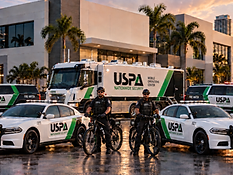
USPA fire watch guards working assignments in Construction site





Combining fire watch with construction site security
On many sites, fire watch and after-hours security are staffed as two separate vendors, two scopes and two invoices, and the two functions spend the night unaware of each other. A combined post solves that: the same licensed officer holds the fire watch intervals and provides the security presence, access control and lockup the site needs after the crew leaves. Where the jurisdiction permits one officer to hold both duties, the combined assignment usually costs materially less than two vendors covering the same hours.
The security side of the post matters more than most project managers expect. Material theft, copper stripping, unauthorized entry and vandalism all rise on sites that sit dark overnight, and an unsecured site can also mean an unwatched ignition source. A combined officer checks the site perimeter, secures gates and containers, and walks the fire route in the same round, so the site is both guarded and covered in one documented pass.
Combining the duties also consolidates accountability. One account team writes the scope, one field supervisor audits the post, one log records both the rounds and the security events, and the client calls one number at any hour. When a jurisdiction requires the two duties to be held by separate personnel, USPA staffs them separately and says so plainly in the written scope, because a combined post that an authority later rejects is worth nothing to the project.
Documentation your insurer and the fire marshal can read
The paperwork is the part of a fire watch most providers treat as an afterthought, and the part that decides whether the coverage held up. Before the first round, USPA issues the written watch plan, the officer roster with license numbers, and certificates of insurance naming the parties the project requires. Those documents are what a fire marshal asks for on arrival and what a risk manager asks for after.
During the watch, the round log records the time, the route, the areas observed, the conditions found and any action taken, with the officer's initials on each entry and continuous entries through shift changes. Panel and valve status, permit conditions and any notifications made are recorded in the same file, so the record shows a continuous, auditable account of the impairment or the hot work period.
At the end of the assignment, the file closes with the restoration confirmation, the discontinuation authorization and the complete log. That package is what an insurer, a fire marshal's office or a corporate risk team reviews, and it is why properties that book USPA tend to book the same provider again. The record is written to be read by someone who was not there, which is the only standard that matters after an incident or an audit.
Permits, the authority having jurisdiction and site coordination
Most construction fire watch requirements trace back to a permit or an order. Hot work permits issued under NFPA 51B name the watch during the work and the monitoring period after it stops. Construction fire safety programs written under NFPA 241 set the site's interim measures as the building rises. And where a sprinkler or standpipe is impaired, the impairment procedure under NFPA 25 expects notification, tagging and interim coverage, which is usually a documented watch. A general contractor does not need to master all three; the provider does.
Local practice varies more than any national standard. The interval, the log format, the qualification the officer must hold and the notification requirements can differ between neighboring municipalities, and an insurer or owner can layer conditions on top. USPA confirms the requirement with the authority having jurisdiction for each site before the first round, writes the watch plan to match, and briefs every officer on it.
Coordination continues through the assignment. AHJ visits are met with the log and the watch plan on site. Changes in the work, a new hot work phase, a system tie-in, a schedule slip, are reflected in an amended plan rather than a verbal adjustment. When the project's fire protection is finally certified, the watch is discontinued on written authorization and the complete file is handed to the client.
Booking, pricing and start times
Pricing follows the assignment rather than a flat rate. Officers are quoted by post and hour, the watch plan and log preparation are included, and travel, relief staffing and the expected duration are stated in the same itemized format. Licensing and insurance documentation is issued with the quote, so the project can hand the file to the fire marshal's office or the insurer without a follow-up request. There are no surprise line items after coverage begins.
The fastest bookings share the same three details: the site address, what is driving the requirement, and the time coverage has to begin. A general contractor calling at four in the afternoon for an overnight watch can have officers staged the same evening in most markets. Planned coverage, a scheduled impairment, a hot work phase, a demolition window, is booked in advance with the watch plan written to the permit before the crew arrives.
Start today or start next month, the process is the same. Call the dispatch line at any hour, or submit the request form on this page for a written quote with the documentation attached. Either way the assignment begins with a watch plan the authority having jurisdiction can accept, and ends with a file that closes the record.
Request fire watch coverage
Send the property address, the impaired system or the hot work schedule, and the time coverage must begin. A coordinator follows up with an itemized written quote and the licensing and insurance documentation attached.
Rated 4.9 by the clients we protect
Reviews are collected from real assignments across the country. Read them directly on Google before you call.
I have their pricing to be very affordable and competitive. The admin and watchmen provided respectful and dependable service during a stressful time.
William BeesleyGoogle reviewVerify This Review
Questions before you commit? Call (800) 214-1448 and ask for references on assignments like yours.
Questions from general contractors and site superintendents
- Can one officer cover site security and fire watch at the same time?
- Often, yes, where the authority having jurisdiction permits the combined post. The officer holds the fire watch interval and provides the after-hours security presence in the same round. Where a jurisdiction or an insurer requires separate personnel, USPA staffs the duties separately and states that in the written scope before coverage begins.
- How quickly can coverage start on a construction site?
- Emergency assignments are typically staged the same day, often within a few hours, because officers are already working in the market. The three details that start coverage fastest are the site address, what is driving the requirement and the time coverage must begin. Dispatch collects the rest while officers are in transit.
- What does construction fire watch cost?
- Pricing is quoted by post and hour, with the watch plan, log preparation, travel and relief staffing itemized in the same written format. Duration drives most of the cost: a single overnight differs from a multi-week rotating schedule. Quotes include licensing and insurance documentation so the file can go straight to the fire marshal or the insurer.
- Do you provide the documentation our insurer requires?
- Yes. The assignment opens with certificates of insurance, the officer roster with license numbers and the written watch plan, and closes with the completed round log, restoration confirmation and discontinuation authorization. The file is written to be read by someone who was not on site.
- What if the fire marshal requires a specific patrol interval or log format?
- Local practice varies widely, and the interval, route and log format can be specified by the authority having jurisdiction. USPA confirms the requirement for each site before coverage begins and writes the watch plan and log to match, so the AHJ finds the record it expects on arrival.
- Can you cover multiple buildings or an entire site?
- Yes. Large sites are planned as one watch with staggered routes so every impaired area and hot work zone hits its required interval, and relief staffing scales with the number of posts. Shared command keeps the rounds coordinated rather than leaving one officer a route that cannot be finished in time.
Fact check and technical sources
The statements on this page are grounded in the standards and regulations below. Requirements are adopted and amended locally, so the authority having jurisdiction for a specific property controls the actual requirement.
- NFPA 51B
Standard for Fire Prevention During Welding and Other Hot Work
Hot work permits, the fire watch during permitted work and the post-work monitoring period, as adopted for construction projects.
Official Source → - NFPA 241
Standard for Safeguarding Construction, Alteration, and Demolition Operations
The construction fire safety program standard: interim measures, storage, temporary heating and watch coverage while the building's own systems are incomplete.
Official Source → - OSHA 29 CFR 1926.352
Fire Prevention (Construction)
Federal fire prevention requirements for cutting and welding in construction, including additional personnel assigned to guard against fire.
Official Source → - NFPA 25
Inspection, Testing and Maintenance of Water-Based Fire Protection Systems
The impairment procedure covering sprinkler and standpipe outages during construction tie-ins, including interim fire watch coverage.
Official Source → - International Fire Code
ICC Fire Code Provisions on Fire Watch
Model fire code provisions on fire watch and hot work that state and local jurisdictions adopt and amend. The adopted edition and local amendments control.
Official Source →
Put an A-rated fire watch on the site tonight.
Call dispatch at any hour with the site address, the requirement and the start time. The watch plan, the roster and the certificates go to the client before the first round begins.
