Hot Work Fire Watch for Construction Sites
When welding, cutting, grinding, brazing or torch work is scheduled on a jobsite, a trained, documented fire watch is required during the work and for a monitored period after it stops. USPA Nationwide Security provides dedicated Hot Work Fire Watch personnel for active construction sites, renovations, industrial projects, structural steel and occupied buildings under construction, with 24-hour dispatch and nationwide coverage.
- 21+ Years in Business
- A+ Rated
- Veteran Owned and Operated
- Licensed and Insured
- 24/7 Dispatch
Hot work scheduled today?
Call the dispatch line with the address, the work schedule and the permit conditions, and coverage is confirmed before the crew begins. Same-day starts are routine in markets where USPA already works.
Why construction managers choose USPA
If your welding, cutting, grinding or torch work is ready to begin, you need a fire watch company that understands construction, moves quickly and knows exactly what the assignment requires. USPA Nationwide Security has been protecting jobsites for more than 21 years. We are an A+ rated, veteran owned and operated, licensed and insured company with nationwide reach and 24/7 dispatch.
Our Hot Work Fire Watch personnel are assigned for one reason: to watch the fire risk. They monitor sparks, slag, heat transfer, surrounding materials, adjacent spaces and the required post-work period while your trades stay focused on the job. The welder performs the work; the fire watch watches the fire risk.
We work directly with construction managers, superintendents, safety directors, general contractors, mechanical contractors and subcontractors. Whether the project requires one fire watch for a scheduled weld or several personnel covering simultaneous hot work areas, the assignment is built around your schedule, and the officer checks in with your site representative before the first shift begins.



A fire watch built for the jobsite
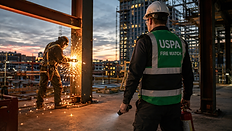
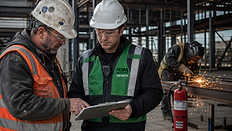
A Hot Work Fire Watch program starts with a person who understands the assignment. The officer assigned to the watch understands the work being performed, the path sparks may travel, the materials that may ignite, the location of extinguishing equipment and the procedure for stopping work or raising an alarm. Every officer is briefed on the specific work area, the permit conditions and the site contact before the watch begins.
The responsibility carries particular weight on active construction sites. Sparks can fall through floor openings, enter wall cavities, travel behind temporary protection, reach stored materials or ignite debris outside the welder's immediate field of view. Heat transfers through walls, floors, ceilings, pipes and structural members, and ignition on the far side of a surface may surface long after the torch is shut off.
OSHA's construction standard 29 CFR 1926.352 requires suitable fire-extinguishing equipment to be immediately available wherever cutting or welding is performed. When ordinary fire-prevention precautions are insufficient, the standard calls for additional personnel to be assigned to guard against fire during the work and for a sufficient period afterward, and it requires precautions on the opposite side of walls, floors and ceilings where sparks or heat transfer may create a hazard in an adjacent area. USPA's fire watch officers are assigned to meet exactly that duty.
The officers on these assignments stay on the fire watch. They are there to observe, document and escalate, and the post orders limit their duties accordingly, so the person watching the risk is watching the risk for the full work period.
Before the first spark, through the last round
The watch runs in three phases, and each one is documented. The officer's work begins before the torch is lit and ends when the permit authorizing individual formally releases the watch.
Before the work
The officer checks in with the designated site representative and confirms the assigned hot work area, the scheduled work period, the communication method, the emergency procedure and the required monitoring period. The immediate area and surrounding exposures are reviewed: combustible materials, temporary walls, floor openings, penetrations, ceiling spaces, stored products, insulation, roofing materials, debris, fuel sources and the opposite side of the surface being worked on. Extinguishing equipment is confirmed accessible and ready, and any condition outside the agreed scope is reported to the superintendent, safety manager or permit authorizing individual before work proceeds.
During the work
Once the operation begins, the officer maintains direct attention on the work and on the areas where heat, slag, sparks or hot material may travel. The officer keeps communication with the crew and the site contact, watches for smoke, flame, unusual odors, heat transfer and changing site conditions, and is prepared to raise the alarm or stop the operation when an unsafe condition develops. Where the officer cannot clearly observe every exposure point, additional coverage is scoped: multiple floors, separate rooms, both sides of a wall and several simultaneous operations each need their own watch.
After the work stops
NFPA 51B's 2024 edition sets a baseline post-work fire watch of one hour; OSHA's guidance calls for monitoring the work area for at least 30 minutes. The post-work watch runs to whichever is stricter, continues while hot slag cools and smoldering risks peak, and ends only when the permit is formally closed and the permit authorizing individual releases the watch. The log records the full interval, so the project file shows the coverage ended properly rather than informally.
Hot work we commonly cover
Hot work includes more than traditional welding. NFPA 51B addresses welding, cutting, grinding, heat treatment and similar operations that produce or use sparks, flame or enough heat to ignite combustible materials. The current edition of NFPA 51B is the 2024 edition, and USPA staffs coverage against it.
The exact scope of each assignment follows the hot work permit, the site safety plan, the authority having jurisdiction and the conditions present at the work area. Coverage is scoped from those documents rather than from a headcount rule.
- Structural steel welding and cutting
- Grinding and spark-producing metalwork
- Brazing and soldering
- Torch-applied roofing work
- Mechanical and piping installations
- HVAC and ductwork modifications
- Demolition and renovation work
- Welding near combustible construction materials
- Hot work inside occupied commercial properties
- Work near wall cavities, shafts, ceilings and concealed spaces
- Projects where the fire marshal, general contractor, insurer or site safety plan requires a dedicated fire watch

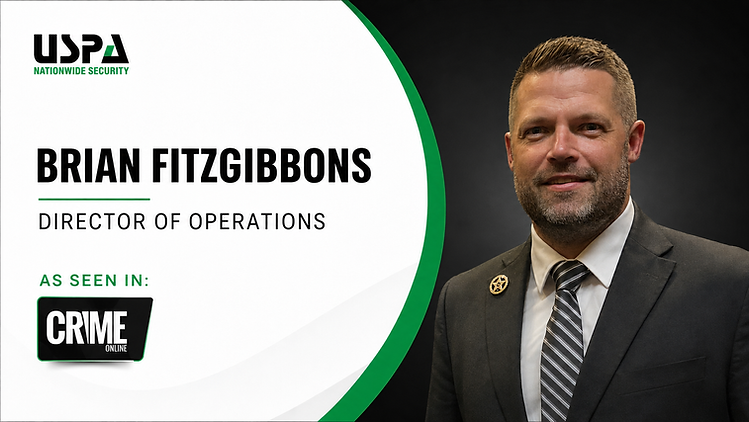
Hot work fire watch led by a national fire safety expert
USPA's Hot Work Fire Watch operations are overseen byBrian Fitzgibbons, Director of Operations and a nationally recognized fire safety expertwith extensive experience managing fire watch assignments across the United States. His work includes emergency response, construction fire watch, hot work coverage, long-term system impairments and regulatory compliance.
A U.S. Marine Corps veteran of Operation Iraqi Freedom, Fitzgibbons brings military discipline, field leadership and a hands-on approach to every assignment. He conducts fire safety and code-compliance seminars for property managers and has been featured as an expert on national media, including Crime Stories with Nancy Grace. For construction managers, that means the hot work fire watch program is backed by leadership that understands welding, cutting, grinding, jobsite risk, NFPA requirements, OSHA expectations, documentation and real-world construction schedules.
Documentation the project file can use
The written record is the deliverable the client keeps. The hot work log records each round: the time, the areas observed, the conditions found and any action taken, with the officer's initials on every entry and coverage continuing through shift changes and the post-work interval. The file also records the check-in with the site representative, the permit references, any incident with its escalation record and the final entry when the watch is released.
That file is written for the people who will read it later: the general contractor closing out the permit, the fire marshal reviewing the project, and the insurer auditing the site's safety program after the fact. General contractors who run USPA on one project tend to carry the same provider to the next, because the documentation standard holds from job to job.
Request hot work fire watch coverage
The work address, the hot work schedule and the permit conditions are the three details that let dispatch confirm coverage fastest. The coordinator follows up by phone before the first shift begins.
Rated 4.9 by the clients we protect
Reviews are collected from real assignments across the country. Read them directly on Google before you call.
I have their pricing to be very affordable and competitive. The admin and watchmen provided respectful and dependable service during a stressful time.
William BeesleyGoogle reviewVerify This Review
Questions before you commit? Call (800) 214-1448 and ask for references on assignments like yours.
Hot work fire watch questions from construction managers
- When is a hot work fire watch required on a construction site?
- NFPA 51B requires a fire watch during hot work wherever spark, flame or heat could reach combustible material, and for the post-work monitoring period after the work stops. On construction sites the requirement is usually written into the hot work permit, the site safety plan or the fire marshal's conditions for the project. OSHA's construction fire prevention rules also provide for additional personnel to guard against fire where ordinary precautions are insufficient.
- How long does the fire watch stay after the work stops?
- OSHA's guidance calls for monitoring the hot work area for at least 30 minutes after work ends. NFPA 51B's 2024 edition sets a baseline post-work fire watch of one hour, and the permit authorizing individual may require longer for torch-applied roofing or work near concealed combustibles. Where the two requirements overlap, the stricter one applies, and the watch runs until the permit is formally closed.
- Can one fire watch cover several welders or several floors?
- It depends on the layout. A single officer can cover one work area he can see in full; multiple floors, separate rooms, both sides of a wall or several simultaneous hot work operations each need their own coverage, because an exposure the officer cannot observe is an exposure no one is watching. USPA scopes the assignment from the permit and the site layout rather than placing one person where several distinct hazard areas cannot be watched effectively.
- What does the fire watch do while the welder works?
- The fire watch watches the fire risk. The officer monitors sparks, slag and heat transfer, keeps the surrounding and adjacent areas under observation, maintains communication with the crew and the site contact, and is ready to raise the alarm or stop the operation when an unsafe condition develops. The officer is not assigned to move material, assist the welder, perform cleanup or direct traffic while hot work is underway.
- How quickly can hot work fire watch coverage start?
- Dispatch answers 24 hours a day. Coverage for a scheduled weld is commonly confirmed the same day or the day before, and short-notice requests, an inspector's stop-work turned into a permit condition or a same-day emergency weld, are staffed from rosters already working in the market. Give dispatch the address, the work schedule and the permit conditions, and the officer is staged before the crew begins.
- What documentation do we receive with hot work fire watch coverage?
- A written log recording each round: the time, the areas observed, the conditions found and any action taken, with entries continuing through shift changes and the post-work period. The file also records check-in with the site representative, the permit references, any incident and the final entry when the permit authorizing individual releases the watch. The package is written so the general contractor, the fire marshal and the insurer can each read it without a follow-up request.
- Can you cover torch-applied roofing and work in occupied buildings?
- Yes. Torch-applied roofing is one of the highest-exposure hot work categories, and it is staffed with coverage that continues through the post-work interval while the membrane cools. Hot work inside occupied commercial properties is watched with attention to concealed spaces, shared walls and the areas on the opposite side of the surface being worked, so building occupants and adjacent tenants are covered as well as the crew.
- Who provides the hot work permit?
- The permit is issued by the permit authorizing individual on the project, typically the site's safety manager or the general contractor's designated person. USPA does not issue permits; the fire watch operates under the permit that exists, reviews the work area against it, and reports any condition outside the agreed scope to the superintendent or the permit authorizing individual before work proceeds.
Fact check and technical sources
The statements on this page are grounded in the standards and regulations below. Requirements are adopted and amended locally, so the authority having jurisdiction for a specific project controls the actual requirement.
- NFPA 51B
Fire Prevention During Welding, Cutting and Other Hot Work
2024 edition. Hot work permits, the permit authorizing individual, the control zone and post-work fire watch requirements.
Official Source → - OSHA 29 CFR 1926.352
Fire Prevention (Construction)
Federal fire prevention requirements for cutting and welding in construction, including extinguishing equipment and additional personnel assigned to guard against fire.
Official Source → - OSHA Guidance
Fire Watch Duties During Hot Work
OSHA's fact sheet on fire watch duties, including monitoring of the hot work area for at least 30 minutes after work stops.
Official Source → - International Fire Code
ICC Fire Code Provisions
Model fire code provisions on hot work and fire watch that state and local jurisdictions adopt and amend. The adopted edition and local amendments control.
Official Source →
Fire Watch Services by city
Every city below has its own page with the local enforcement picture, covered districts and dispatch details for that market.
Coverage is offered in 182+ markets through the same dispatch organization.
Call USPA. Dispatch is staffed 24 hours a day.
Tell the coordinator the site address, the hot work schedule and the permit conditions, and coverage is confirmed before the crew begins. Nationwide deployment, with officers staged in the markets where USPA already works.