Fire Watch
24-Hour Emergency Fire Watch Services
Twenty-four hour fire watch coverage while a sprinkler, alarm or suppression system is impaired, with a written log your fire marshal or insurer can review.
- 21+ Years in Business
- A+ Rated
- Veteran Owned and Operated
- Licensed and Insured
- 24/7 Dispatch
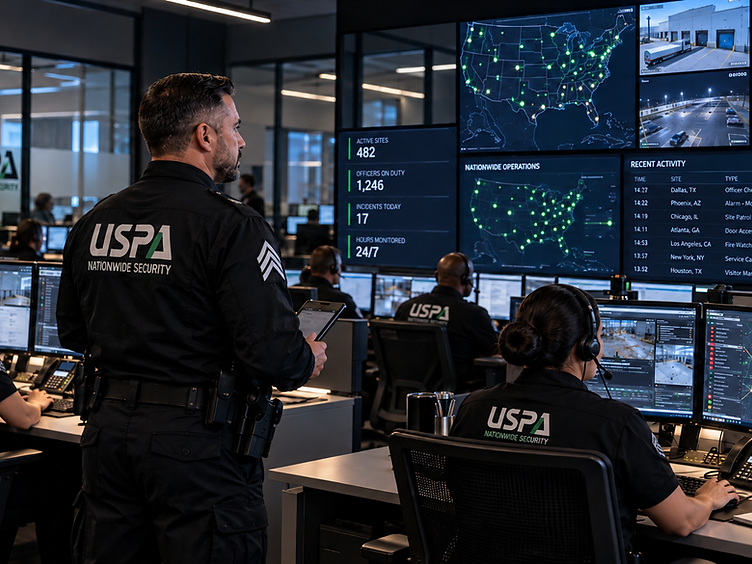
Fire Watch Services in practice
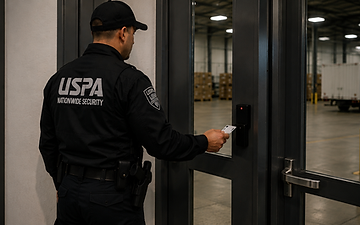
When a sprinkler system, fire alarm panel or suppression system is taken out of service, most buildings cannot remain occupied under code until someone patrols the property on a documented schedule. USPA staffs that interval with trained fire watch personnel, including overnight, weekend and extended shutdown coverage.
Patrols are logged round by round. Guards watch for ignition sources, confirm that exits, extinguishers and standpipes stay usable, and keep records in the format an authority having jurisdiction or an insurance carrier expects to see. Coverage continues for as long as the impairment lasts rather than for a single shift.
Sprinkler and standpipe impairments
Continuous rounds while water-based protection is offline, including partial and floor-by-floor shutdowns.
Alarm and fire panel failures
Coverage while detection or notification systems are unreliable, with panel status checked on each round.
Hot work and construction
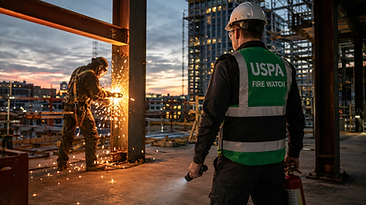
Fire watch during welding, cutting and grinding, plus post-work monitoring after the permit activity ends.
Warehouse, industrial and high-rise
Large-footprint and multi-level properties where rounds must be planned around racking, equipment and access.
Standards that shape this work
- NFPA 101
- Life Safety Code requirements for occupancy and means of egress that an authority having jurisdiction applies when protection is impaired.
- NFPA 25
- Inspection, testing and maintenance of water-based systems. Impairment procedure here is what normally triggers a fire watch.
- NFPA 51B
- Hot work precautions, including the requirement for a fire watch during and after permitted work.
- NFPA 601
- Fire watch duties, patrol documentation and record retention expectations.
Adopted codes differ by state, county and municipality, and an insurer or fire marshal may impose conditions beyond the published standard. USPA confirms the local requirement for each site before coverage begins.
Code & compliance quick reference
What starts a fire watch, how long it runs, and what the record must show
The five instruments below are the ones a fire watch is measured against in the United States and Canada. Each row is the model document's own requirement; a specific property is governed by the edition its jurisdiction adopted and by the authority having jurisdiction.
Updated:
| Standard | Trigger event | Post-work watch duration | Required log format |
|---|---|---|---|
| NFPA 25Water-based fire protection systemsSource | Any sprinkler, standpipe, fire pump or hydrant system placed out of service, whether planned or from a failure discovered at inspection. | No hour count in the standard. The impairment is held to the shortest practical time, the authority having jurisdiction is notified, and where protection cannot be restored the watch runs until the system is tested and back in service. | An impairment tag at the control valve and at the fire department connection, plus the contractor's impairment record: system and area, date and time out of service and restored, who was notified, and who performed the work. |
| NFPA 51BWelding, cutting and other hot workSource | Welding, cutting, grinding, soldering or torch work where combustibles are within 35 ft (10.7 m), or concealed behind a partition, wall or ceiling the sparks can enter. | During the operation and not less than 60 minutes after the work is finished. A two-hour watch is common where the work is elevated, in a confined space, or the insurer requires it. | The written hot work permit with its pre-work checklist, the fire watch named on it with time in, and the watch sign-off after the post-work period clears. |
| NFPA 101Life Safety Code, fire protection out of serviceSource | A required fire protection system out of service for more than 4 hours in a 24-hour period in an occupied building. The building is then evacuated or an approved fire watch is provided. | From the four-hour threshold until the system is verified back in service. The code leaves patrol intervals to the authority having jurisdiction; hourly rounds are the usual requirement. | The approved watch roster and the patrol rounds as they happen: time, area covered, and the initials of the officer who walked it, filed with the impairment record. |
| OSHA 29 CFR 1926.352Fire prevention during welding and cuttingSource | Hot work on a construction site where normal fire prevention precautions are not sufficient to prevent a fire, including demolition and work near combustible debris. | While the work is performed and for a sufficient period after completion to ensure no possibility of fire exists. The text sets no number; 60 minutes is the accepted industry floor. | No federal form is prescribed. The employer's hot work permit and the watch's documented rounds are the evidence of compliance, retained under the employer's recordkeeping policy. |
| National Fire Code of CanadaHot work and impaired protection, with provincial codesSource | Hot work undertaken without a permit, or a fire protection system taken out of service. Provincial codes — the Ontario Fire Code, Alberta Fire Code, BC Fire Code and Québec's Code de sécurité — carry the same duty or a stricter one. | The work itself, plus the post-work watch the fire service requires, commonly 60 minutes. On an impairment the watch continues until the system is restored and the fire department is advised. | A hot work permit with a signed post-work watch record, or the impairment notice filed with the municipal fire service, naming the system, the hours out of service and the person responsible. |
A vendor's log is evidence. It is read at restoration, at an insurance review and after a loss, so the times on it must be the times the rounds happened. Where this table and the authority having jurisdiction disagree, the authority controls.
Prepared by Albina Bieci, Staff Writer and Customer Support Team Lead — with the operations desk that staffs fire watch assignments, and reviewed against the sources linked above.
Written and edited under our Editorial Policy. The officers and managers accountable for this work are listed on the Management Team page.
Research · Fire watch regulations · Volume 13
NFPA 601: Security Services in Fire Loss Prevention
A national management, patrol, training and operational assurance reference for the security officers who carry fire-loss-prevention duties. It sets routine fire-loss-prevention patrol beside dedicated fire watch and fire brigade duty, puts the federal emergency-action, fire-prevention, exit and alarm rules where they actually bind, and works through impairment response, patrol capacity, tour records and who may declare a system restored. 35 pages, 18 cited sources. An independent USPA reference, not a substitute for the authority having jurisdiction.
Rated 4.9 by the clients we protect
Reviews are collected from real assignments across the country. Read them directly on Google before you call.
I have their pricing to be very affordable and competitive. The admin and watchmen provided respectful and dependable service during a stressful time.
William BeesleyGoogle reviewVerify This Review
Questions before you commit? Call (800) 214-1448 and ask for references on assignments like yours.
Questions clients ask before booking
- How much does fire watch cost?
- Fire watch pricing is quoted per property because the cost is driven by the number of personnel, the patrol interval the authority having jurisdiction requires, the hours of coverage and the site's layout. A single overnight guard on a small building is a different assignment from a multi-building impairment staffed on rotating shifts. Request a quote and the operations team will return pricing based on the actual scope, with licensing and insurance documentation included.
- How quickly can fire watch guards arrive?
- Dispatch answers 24 hours a day, and emergency assignments are typically staged the same day, often within a few hours for a single building. Start time depends on the property's location, available personnel in that market and site access. For impairments already in progress, emergency fire watch dispatch is the fastest route to coverage.
- When is a fire watch required by code?
- A watch is commonly required when a sprinkler system, alarm, suppression system or standpipe is out of service, and during permitted hot work. The impairment procedure in NFPA 25 and the hot work provisions in NFPA 51B are the standards most jurisdictions apply, but the authority having jurisdiction makes the actual determination for a specific property, and its instructions control.
- Does OSHA require a fire watch for hot work?
- OSHA's fire prevention provisions for construction, 29 CFR 1926.352, provide for additional personnel to be assigned to guard against fire where normal fire prevention precautions are insufficient, and OSHA's hot work guidance calls for monitoring the work area for at least 30 minutes after work stops. NFPA 51B sets a baseline post-work fire watch of one hour in its 2024 edition. On most projects the requirements overlap, and the stricter one applies.
- How many fire watch guards does a building need?
- The number depends on the size and layout of the property, the number of impaired areas and the patrol interval. The controlling question is whether one officer can complete a full round and log it within the required interval; if not, additional personnel are added or the route is divided. A fire marshal's instructions or the permit may also specify a minimum headcount.
- How long does fire watch remain in place?
- Until the impaired system is restored, tested and confirmed in service, and the property owner or the authority having jurisdiction authorizes discontinuation. If a repair takes longer than expected, coverage extends on rotating shifts so the patrol log stays continuous. Continuous fire watch coverage is staffed for multi-week impairments the same way as short ones.
Need fire watch now?
Dispatch and quoting are answered 24 hours a day. Licensing, insurance certificates and a written scope are issued with the quote.
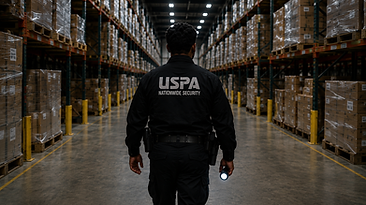
Fire Watch Services in the field
Photographs from USPA protective and event details.



Services requested alongside this one
Clients commonly pair these services when a site has more than one exposure.