
Travel abroad with a direct safety connection already in place.
Before traveling internationally, you can create a free private safety registration with USPA and securely place important travel, identity, emergency-contact, and supporting information on file.
If you later become unreachable, lose access to important documents, become injured or ill, cannot safely leave a location, or need urgent assistance while abroad, the information you voluntarily provided may help our team understand your situation faster and determine the appropriate next steps.
Free registration. Private traveler portal. Update your information whenever your plans change.

- Free Registration
- Private Traveler Portal
- Update Anytime
- Direct Safety Assistance
Free for women traveling internationally, before departure and while abroad.
Women traveling abroad can create and maintain a traveler safety registration at no cost. Registration is not a subscription, there is no payment step, and keeping your information current costs nothing.
- No charge to register
- No payment step
- Update at any time
Why register before traveling internationally?
When someone becomes unreachable in another country, basic facts can become surprisingly difficult to reconstruct. A hotel may have changed. A phone may stop working. A work assignment may move to another city. Family members thousands of miles away may have no idea where to begin.
A family may not know where the traveler is staying, which city she is in, whether the accommodation changed, which telephone number is current, where she works or studies, who she is traveling with, whether the move was planned, which identification she carries, or whom USPA is authorized to contact.
Pre-registration cannot prevent every emergency. It can reduce the amount of critical information that must be reconstructed after something goes wrong.
Situations travelers register for
The situations a registration is designed around
These are the circumstances travelers most often describe when they create an account. None of them is assumed to be a crime, and none is required for registration.
- 01
Becoming unreachable
Family or friends repeatedly try to contact the traveler and receive no response.
- 02
Lost or unavailable identification
A passport, visa, identification document, or other important record is lost, inaccessible, or taken.
- 03
Unexpected location change
The traveler moves to another city, hotel, apartment, workplace, school, or other location.
- 04
Injury or illness
The traveler becomes injured, hospitalized, ill, or temporarily unable to communicate.
- 05
Unable to leave safely
The traveler feels threatened, controlled, stranded, or unable to safely leave a workplace, residence, or other location.
- 06
Help returning home
The traveler loses access to transportation, documentation, resources, or other support required to return home safely.
- 07
A job that is not the job described
The duties, hours, pay, housing or conditions differ from what the traveler was told before leaving home.
- 08
Documents held by someone else
A passport, contract, work permit or return ticket is kept by an employer, recruiter, sponsor or another person.
- 09
A placement arranged by someone else
The move was organized by a recruiter, an agency, a family contact or a spouse the traveler has not yet met in person.
- 10
A debt owed on arrival
Travel, visa, housing or placement costs are owed to the person or agency that arranged the move.
Written for the women who arrive without a local network
This program was not designed around a generic tourist. It was built around a pattern the company sees repeatedly: young women from Asia landing in an American city with a layover, a work assignment, a semester abroad or a first holiday, and nobody local to call if something goes wrong.
Cabin crew on carriers based in Seoul, Tokyo and Taipei, Korean Air and Asiana among them, pass through cities such as Baltimore, Detroit, Dallas and Los Angeles on schedules that leave a day or two between flights. The hotel is booked and the crew van is arranged. The city is not known. A crew member who walks out for dinner is, for those hours, a visitor with no local number to dial.
The same is true of a first business trip, of a student who arrives before the campus feels familiar, and of a woman traveling alone on holiday. Registration does not change the itinerary. It means that if you stop answering messages, the people who would normally look for you know whom to contact, and USPA holds the travel details needed to act on their behalf.
Not every arrival is a holiday or a layover. Some women come on a work placement arranged from abroad, by an agency, a salon, a hotel or a family, with housing attached to the job and terms they had no practical way to check before landing. When the arrangement turns out to be different from what was promised, the distance from home becomes the whole problem: there is no local person to ask, and asking the person who arranged the move is not always possible.



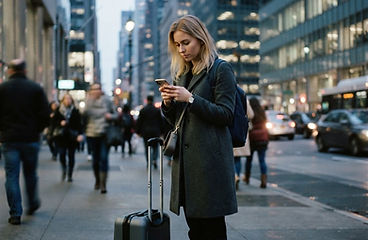



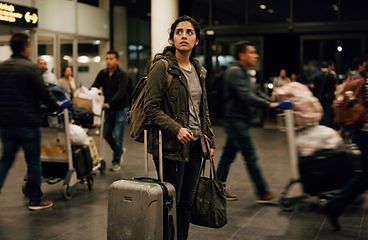



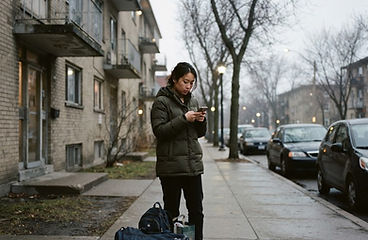




You decide what information to place on file.
The purpose of registration is to make important information available before an emergency occurs. Travelers control what they choose to provide and can update their records as circumstances change.
Identity information
Name, date of birth, nationality, and a recent photograph.
Travel plans
Countries, cities, arrival dates, departure dates, accommodations, and expected itinerary.
Emergency contacts
Parents, relatives, trusted friends, or other authorized contacts.
Passport and travel documents
Optional copies of passports, visas, identification, and related travel records.
Local contact information
Local telephone numbers, accommodations, schools, employers, hosts, or other relevant contacts.
Medical information
Optional medical conditions, medications, allergies, or emergency medical notes.
Location updates
Travelers can update their city, accommodation, workplace, school, or other relevant location information as plans change.
Sensitive traveler information is submitted inside the secure USPA traveler portal. It is not stored on this public service page.
How the Traveler Safety Program works
Registration takes a few minutes. What matters most is returning to the account when your circumstances change.
- 1
Create your free traveler account
Enter the secure USPA traveler portal and create your account.
- 2
Add the information you want available
Add travel plans, emergency contacts, and any optional documents or information you believe may be useful.
- 3
Update your information when plans change
If you move cities, change accommodations, change jobs or schools, receive a new telephone number, or alter your itinerary, update the information in your account.
- 4
Contact USPA if you need help
Use the traveler portal and available emergency pathways if a safety concern occurs.
The program is not limited to vacations.
A traveler safety registration is built for people whose lives move between countries for months or years at a time, not only for a two-week holiday.
- Studying abroad
- Working abroad
- Traveling for business
- Temporarily relocating
- Staying with family
- Traveling between multiple countries
- Living internationally for an extended period
- Moving between cities frequently
Your plans do not have to fit a traditional vacation itinerary. If your city, accommodation, school, employer, telephone number, or travel plans change, return to the same account and update the information you want on file.
If you need help now
If you are already abroad and feel unsafe, cannot leave a location safely, have lost access to important documents, are injured or ill, cannot contact your family, or need urgent assistance, use the traveler portal to reach the appropriate help pathway.
If there is an immediate threat to life or safety, contact local emergency services whenever it is safe and possible to do so.
A clear path for families when someone becomes unreachable
When a daughter, family member, or friend stops responding while overseas, relatives may be thousands of miles away and unsure where to begin. The Traveler Safety Program is designed to give registered travelers a structured way to keep important information available and to provide families with a clear point of contact when help may be needed.
USPA does not disclose whether a traveler is registered to an unauthorized requester. Privacy controls apply to what information can be shared.
Families looking for a missing person outside this program can also read about USPA missing persons investigations.
Your information remains private.
The International Traveler Safety Program is a private security and safety service. It is not a government travel-registration system.
Sensitive traveler information is handled through the secure traveler portal rather than the public USPA website. Access is limited to authorized personnel according to role, operational need, traveler authorization, and applicable law.
Travelers can review and update their information and use the privacy controls available inside the program.
Read the USPA privacy policyWho operates the International Traveler Safety Program?
The program is operated by USPA Nationwide Security as part of its international safety and humanitarian assistance work.
USPA's humanitarian work includes the Kingsman initiative, which supports families and communities in circumstances where official systems have reached their limit. The traveler program follows the same principle: a direct point of contact, established before it is needed.
Why is registration free?
There is no charge to create a traveler safety registration. The program is designed to give travelers and their families a direct safety connection before an overseas emergency occurs.
Registration is not a purchased service and does not commit a traveler to anything further. Any additional assistance is subject to the published terms of the program.
This is a private traveler-safety program.
The International Traveler Safety Program is not operated by the U.S. Department of State, the Chinese government, an embassy, a consulate, or an immigration authority.
Registration with USPA does not automatically register a traveler with any government travel program.
Questions travelers and families ask
A few minutes before you travel can make important information easier to access later.
Create your free traveler safety registration before departure, then return whenever your itinerary, accommodation, telephone number, school, workplace, or plans change.
