Fire Watch
After-Hours Fire Watch, Fast Onsite 24/7
Nights, weekends and holidays: fire watch guards dispatched around the clock when a sprinkler, alarm or suppression system fails outside business hours.
- 21+ Years in Business
- A+ Rated
- Veteran Owned and Operated
- Licensed and Insured
- 24/7 Dispatch
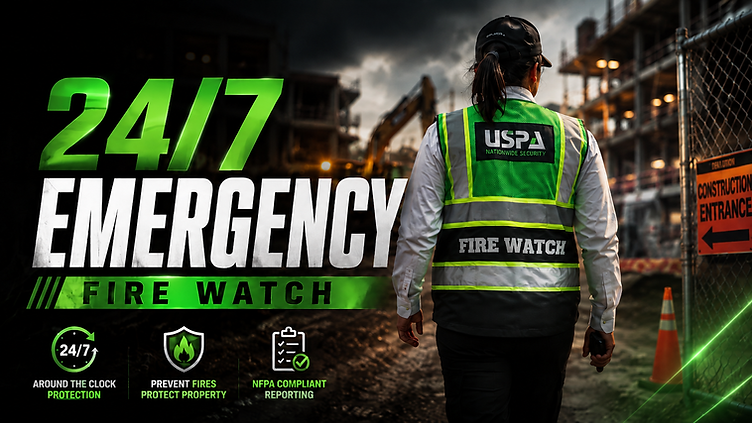
After-Hours Fire Watch in practice
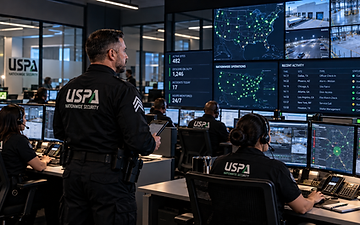
Fire protection systems fail on their own schedule. A sprinkler valve gets closed for repair on a Friday afternoon, an alarm panel faults at two in the morning, or a contractor finishes late on a holiday weekend and the building cannot be reoccupied without a documented watch. USPA dispatch answers every hour of every day, so a call placed after the office closes reaches the same desk that staffs daytime assignments.
After-hours coverage follows the same standard as any other fire watch. Guards walk the property on the interval the authority having jurisdiction requires, confirm that exits, extinguishers and standpipes stay usable, and log every round in writing. The first shift is staged from the standing roster in the market, and coverage rotates so the log stays continuous until the system is restored and the building is cleared.
Night and overnight coverage
Rounds on the required interval through the hours when a building is empty and no one else is present to notice a developing problem.
Weekend and holiday dispatch
The same dispatch desk answers on Saturdays, Sundays and holidays, so an impairment found on a Friday evening does not wait for Monday.
Sprinkler, alarm and suppression impairments
Coverage while water-based protection, detection or notification equipment is out of service, including partial and floor-by-floor shutdowns.
Written patrol log for the fire marshal
Each round recorded with time, route and observations, in a format an authority having jurisdiction or insurance carrier can review.
Relief and rotating shifts
Guards relieved on schedule so the watch stays alert and continuous across a multi-night repair.
Handoff to day operations
A written summary delivered to the property manager each morning, so the day team knows the system status and what was observed overnight.
Standards that shape this work
- NFPA 25
- Impairment procedures for water-based systems. Closing a valve or taking a system out of service is what normally triggers the requirement for a watch.
- NFPA 101
- Life Safety Code provisions for occupancy and egress that an authority having jurisdiction applies when protection is impaired.
- NFPA 601
- Fire watch duties, patrol documentation and record retention expectations.
Adopted codes differ by state, county and municipality, and an insurer or fire marshal may impose conditions beyond the published standard. USPA confirms the local requirement for each site before coverage begins.
Rated 4.9 by the clients we protect
Reviews are collected from real assignments across the country. Read them directly on Google before you call.
I have their pricing to be very affordable and competitive. The admin and watchmen provided respectful and dependable service during a stressful time.
William BeesleyGoogle reviewVerify This Review
Questions before you commit? Call (800) 214-1448 and ask for references on assignments like yours.
Questions clients ask before booking
- Can I get a fire watch at night or on a weekend?
- Yes. USPA dispatch answers 24 hours a day, every day of the year, and after-hours assignments are staffed from the same standing rosters as daytime ones. Call (800) 214-1448 or use emergency fire watch dispatch and the desk will confirm the address, the impaired system and the start time.
- How fast can a guard get onsite after hours?
- Start time depends on the property's location, the personnel available in that market and site access. For a single building, emergency assignments are typically staged the same day and often within a few hours, including overnight. The dispatcher gives an estimated arrival when the request is taken.
- Who requires a fire watch when a system fails after hours?
- A watch is commonly required by the local fire marshal or authority having jurisdiction whenever a sprinkler, alarm, suppression system or standpipe is out of service, and some insurers write the same condition into the policy. The authority's instructions control for a specific property. If you are unsure what applies, ask the fire marshal's office before the building is occupied.
- What information do I need when I call?
- The property address, which system is impaired and why, when the impairment began, the hours the building is occupied and a contact on site. If the fire marshal has given written instructions, such as a patrol interval or a minimum number of guards, have them available. The rest is confirmed on the call.
- Do you provide a patrol log?
- Yes. Every round is recorded in writing with the time, the route and what was observed, and the log is available to the property manager, the insurer and the authority having jurisdiction. Logs are retained in the format NFPA 601 expects.
- How much does after-hours fire watch cost?
- Pricing is quoted per property because it depends on the number of guards, the patrol interval the authority requires, the hours of coverage and the layout of the building. Request a quote or call dispatch, and the operations team will return pricing based on the actual scope, with licensing and insurance documentation included.
- How long will the fire watch stay in place?
- Until the impaired system is restored, tested and confirmed in service, and the property owner or the authority having jurisdiction authorizes discontinuation. If a repair runs longer than planned, coverage extends on rotating shifts so the log stays continuous. See fire watch services for how multi-day impairments are staffed.
Need fire watch now?
Dispatch and quoting are answered 24 hours a day. Licensing, insurance certificates and a written scope are issued with the quote.
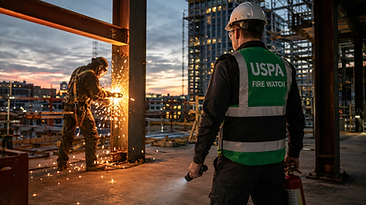
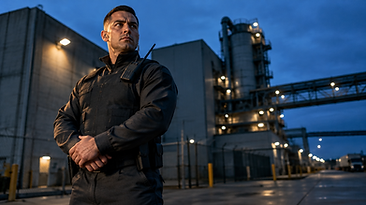
After-Hours Fire Watch in the field
Photographs from USPA protective and event details.



Services requested alongside this one
Clients commonly pair these services when a site has more than one exposure.