
Family Rescued from Second-Floor Balcony After Apartment Fire at Shoreline Apartment Homes in Richland, Washington
October 22, 2026· Albina Bieci
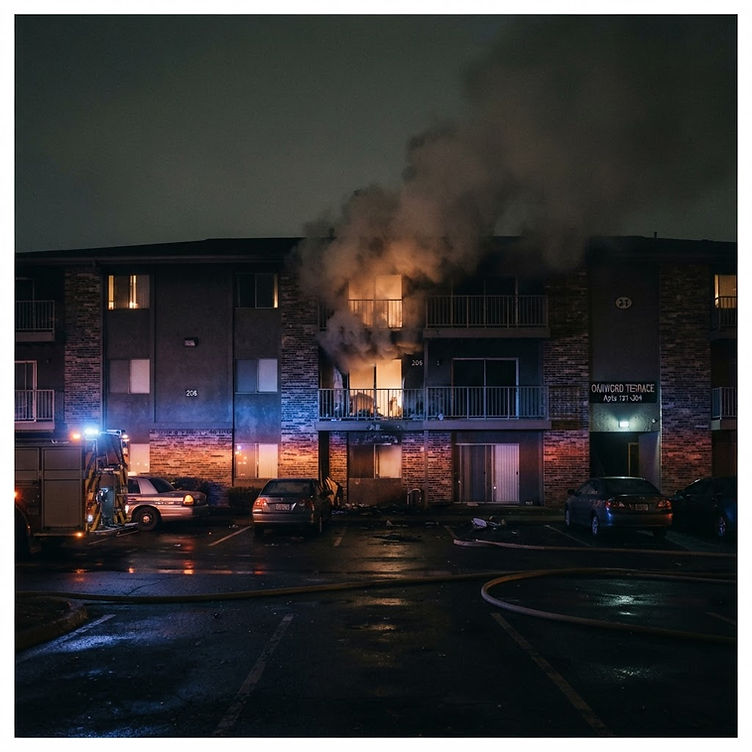
RICHLAND, Wash. — A family was rescued from the second-floor balcony of a three-story apartment building late Wednesday night, October 21, 2026, after fire broke out inside their unit at the Shoreline Apartment Homes, located just off Duportail Street and Tanglewood Drive in Richland. The incident occurred just after 8:30 p.m., according to a report published Thursday morning, October 22, 2026, by Apple Valley News Now, which is the sole source for confirmed details in this article.
When firefighters reached the scene, law enforcement officers and neighbors were already working to help the family down from the balcony. Crews also assisted in getting other residents out of the building. Heavy smoke was visible inside the apartment. Residents from adjacent buildings also evacuated and waited outside while firefighters worked to suppress the fire. As of Apple Valley News Now's report, it was not known whether anyone had been injured, though everyone was reported to have made it out of the building.
Key Facts
- Date and time: Wednesday, October 21, 2026, just after 8:30 p.m.
- Location: Shoreline Apartment Homes, near Duportail Street and Tanglewood Drive, Richland, Washington
- Structure: three-story apartment building
- What happened: fire broke out inside an apartment; a family was rescued from their second-floor balcony by firefighters, law enforcement, and neighbors
- Witness account: fire reportedly started in the laundry area (not an official finding)
- Evacuation: residents from the fire building and nearby buildings evacuated
- Injuries: unknown as of initial reporting; everyone reportedly exited the building
- Official cause, displaced unit count, and identity of command agency: not released
- Source: Apple Valley News Now (single-source report)
What We Know
According to Apple Valley News Now, the fire at the Shoreline Apartment Homes was already producing heavy smoke when emergency responders arrived. The family inside the affected unit had retreated to their second-floor balcony — an action consistent with being cut off from the primary exit by smoke or flames — and was brought down through the combined effort of law enforcement on the scene and neighbors who responded before fire units arrived. That sequence suggests the building population had some awareness of the emergency early in its development, though it also illustrates how rapidly a smoke-filled apartment can make interior stairways impassable.
Other residents of the three-story building were also helped out of the structure, and people from neighboring buildings chose to leave or were directed to leave as crews worked. Firefighters applied water to the fire, and the situation appears to have been brought under control, though no official all-clear timeline was reported. Witnesses at the scene told Apple Valley News Now that the fire was in the laundry area of the unit. That witness account is the only available indication of origin location; no fire official has confirmed it, and it should be treated as preliminary.
Every person reported to have been inside the affected building was accounted for and out of the structure as of the initial report. Whether any of them required medical evaluation or treatment was not confirmed.
What Has Not Been Released
This article is based on a single-source report, and a number of material facts remain either unconfirmed or explicitly unknown as of publication.
The fire's official origin and cause have not been determined or released. The laundry-area account comes from witnesses, not fire investigators, and should not be treated as an official finding. Investigation into cause and origin typically continues after suppression and may involve the state fire marshal's office or local fire investigators; no findings have been made public.
The number and identities of the family members rescued from the balcony have not been disclosed. It is also not known how many other residents were displaced or how many units sustained damage. No fire official, agency spokesperson, or command officer has been identified by name in the source reporting, and no official statements or quotes appear in the Apple Valley News Now article.
The status of the building's fire protection systems — including any automatic sprinkler system and the fire alarm and notification system — has not been reported. Whether a post-incident fire watch was ordered by the authority having jurisdiction is unknown. Whether the building has an active sprinkler impairment program or monitoring contract is unknown.
The identity of the fire agency that commanded the scene has not been confirmed in the source article. Richland Fire Department would be the expected responder given the address, but this article cannot confirm that from the single source available.
Technical Analysis: Means of Egress, Alarm, and Fire Watch Obligations
The fact that a family reached their second-floor balcony and required assisted rescue is a detail worth examining through the lens of life-safety code requirements for multifamily residential occupancies. NFPA 101, Life Safety Code, establishes means-of-egress requirements for apartment buildings, including minimum stair width, corridor construction, and the requirement that every dwelling unit have access to at least two exits or exit access paths in buildings above a certain height and occupant load. For a three-story building, the code's specific requirements depend on the edition adopted by Washington State and any local amendments, but the general principle is that occupants should be able to reach a protected exit without passing through the portion of the building most affected by fire or smoke.
When smoke blocks a primary corridor or stairway, residents may retreat to a balcony — a reasonable survival action, but one that places them outside the designed egress path and dependent on exterior rescue. This outcome does not necessarily indicate a code violation; it may simply reflect how quickly smoke can propagate through an apartment unit and adjacent corridor before suppression begins. However, it does focus attention on whether the building's alarm and notification systems activated early enough to allow unimpeded evacuation.
NFPA 72, National Fire Alarm and Signaling Code, governs the design, installation, testing, and maintenance of fire alarm systems in buildings like the Shoreline Apartment Homes. For a three-story multifamily residential building, NFPA 72 typically requires both in-unit smoke alarms and a building-wide notification system capable of alerting occupants throughout the structure. The speed with which residents in adjacent buildings chose to evacuate suggests some degree of visible or audible alert reached them, but whether the formal alarm system activated, whether it was monitored, and whether it transmitted a signal to a central station are all unknown from this reporting.
NFPA 25, Standard for the Inspection, Testing, and Maintenance of Water-Based Fire Protection Systems, is relevant to the extent this building has a sprinkler system. Washington State's residential building codes have evolved over time with respect to sprinkler requirements in multifamily buildings; whether a building of this age, height, and occupancy type in Richland carries a sprinkler system is unknown from available reporting. If a sprinkler system exists and was damaged or rendered inoperable by the fire, NFPA 25 impairment procedures apply. An impaired sprinkler system in a residential occupancy triggers the need for compensatory measures, which in most jurisdictions means a continuous fire watch until the system is restored to service.
NFPA 601, Standard for Security Services in Fire Loss Prevention, addresses the duties and responsibilities of fire watch personnel when automatic suppression or detection systems are out of service. Under NFPA 601, a qualified fire watch officer must patrol affected areas, maintain a log, have direct communication capability with the fire department, and be prepared to activate manual notification. This is not a passive role; the standard treats the fire watch as an active compensatory measure for a known protection gap. Whether the authority having jurisdiction ordered a fire watch at the Shoreline Apartment Homes following this incident is not known, but the circumstances — a fire in a three-story occupied residential building with unknown system status — are precisely those that typically prompt such an order.
Local Context: Richland, Washington
Richland is a mid-sized city on the Columbia River in Benton County, part of the Tri-Cities metropolitan area alongside Kennewick and Pasco. The city has a mix of residential development that includes multifamily complexes of varying ages and construction types, and it sits within Washington State's regulatory framework for fire protection and building safety. Washington has adopted editions of the International Building Code and International Fire Code, and local jurisdictions generally enforce these alongside NFPA standards referenced by the state.
For property managers, building owners, and residents in Richland dealing with the aftermath of a fire-related incident — whether at this property or elsewhere in the area — understanding available local service options matters. USPA Nationwide Security provides Fire Watch Services in Richland, WA for properties facing sprinkler impairments, post-fire system outages, or authority-ordered fire watch requirements. The company also provides Security Guard Services in Richland, WA for ongoing property protection needs, including post-incident perimeter control and access management while repairs are underway.
Those needs are immediate in the hours and days following a structure fire: displaced residents, open or unsecured units, construction activity during remediation, and absent building systems all create conditions that call for professional on-site coverage.
The Property's Next Obligations
Regardless of what the investigation ultimately determines about origin and cause, the Shoreline Apartment Homes management faces a set of obligations that begin within hours of suppression.
First, the fire alarm and sprinkler systems — if present and affected — must be assessed by a qualified inspector. If either system is found to be impaired or out of service, the authority having jurisdiction must be notified and a fire watch established in accordance with NFPA 25 and NFPA 601 until the system is restored. This requirement exists independently of fault; it is a compensatory measure triggered by the fact of impairment.
Second, a structural and habitability assessment is needed before any units can be reoccupied. The number of units affected is not yet known, but any unit with fire or smoke damage or compromised structural elements cannot be reoccupied until cleared by the appropriate authority.
Third, the fire investigation must be allowed to proceed. If investigators determine that the origin was in a laundry area, that finding may prompt examination of appliance condition, electrical systems, and building maintenance records. Property managers should preserve all records related to unit inspections, appliance maintenance, and system testing.
Fourth, if displaced residents are staying in other units within the same complex or in temporary housing arranged by management, those residents' safety needs continue. A fire in one unit of a three-story building can affect corridor integrity and shared systems throughout the structure.
Building owners seeking guidance on fire watch staffing requirements during system restoration can review USPA's Emergency Fire Watch services, which are structured to deploy quickly following exactly these kinds of post-fire system impairment situations.
Sources and Open Questions
Confirmed source: Apple Valley News Now, "Family rescued from balcony after apartment fire in Richland," published October 22, 2026. https://www.applevalleynewsnow.com/news/family-rescued-from-balcony-after-apartment-fire-in-richland/article_b50b5c20-a7a0-4d92-bb2f-7591c71b8721.html. This is a single-source report. All confirmed facts in this article are drawn from it.
Technical standards referenced:
- NFPA 101, Life Safety Code (means of egress in residential occupancies)
- NFPA 72, National Fire Alarm and Signaling Code (alarm and notification requirements)
- NFPA 25, Standard for the Inspection, Testing, and Maintenance of Water-Based Fire Protection Systems (impairment procedures)
- NFPA 601, Standard for Security Services in Fire Loss Prevention (fire watch duties)
Open questions pending further reporting:
- Official fire origin and cause determination
- Injury status of rescued family and other evacuated residents
- Identity and number of family members rescued from the balcony
- Number of units damaged and residents displaced
- Status of the building's fire alarm and sprinkler systems at the time of the fire
- Identity of the fire agency commanding the scene
- Whether a post-incident fire watch was ordered by the authority having jurisdiction
- Age, construction type, and sprinkler requirement history for the Shoreline Apartment Homes
- Whether the building's fire protection systems were current on inspection and testing
This article will be updated as additional information is released by fire officials, the property owner, or Benton County or Richland city agencies.
For immediate assistance with fire watch staffing or post-incident security in Richland or anywhere in Washington State, contact USPA Nationwide Security at (800) 214-1448.
Related Reading
Sources
- Apple Valley News Now — Family rescued from balcony after apartment fire in Richland
- NFPA 101, Life Safety Code — Means of Egress Requirements
- NFPA 25, Standard for the Inspection, Testing, and Maintenance of Water-Based Fire Protection Systems
- NFPA 72, National Fire Alarm and Signaling Code
- NFPA 601, Standard for Security Services in Fire Loss Prevention
Questions about fire watch, executive protection or guard coverage for your property? Request a quote or call our dispatch line.
More from the blog


Breaking News
More Than 100 Firefighters Battle Miami Apartment Fire; 15 Residents Displaced, 2 Hospitalized
Miami Fire Rescue deployed more than 100 firefighters to a five-story residential building on NW 7th Street early Tuesday after fire broke out on the fourth floor, displacing 15 residents — including wheelchair-bound and bed-confined occupants — and hospitalizing two in stable condition. The building's elevator was damaged, and the cause remains under investigation.

Opinion
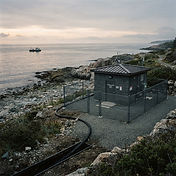
Securing the Subsea Cable Landings: The Vulnerable Chokepoints of Global Data
The entire digital economy transmits roughly 95 percent of international data through undersea fiber-optic cables, yet the physical points where those cables make landfall remain among the least protected nodes in global critical infrastructure. This op-ed argues that the security community's fixation on digital perimeters has left a concrete, addressable vulnerability largely unguarded.

Breaking News
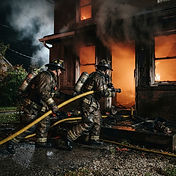
Fire Crews Battle Vacant Apartment Building Fire in Kansas City's Wabash Block
Kansas City fire crews responded Sunday morning to a reported apartment building fire in the 2800 block of Wabash, where they encountered smoke and fire coming from a vacant two-story structure. Interior operations were conducted, searches came back all clear, and no injuries were reported. The cause remains under investigation.