
Fire Crews Battle Vacant Apartment Building Fire in Kansas City's Wabash Block
October 26, 2026· Albina Bieci
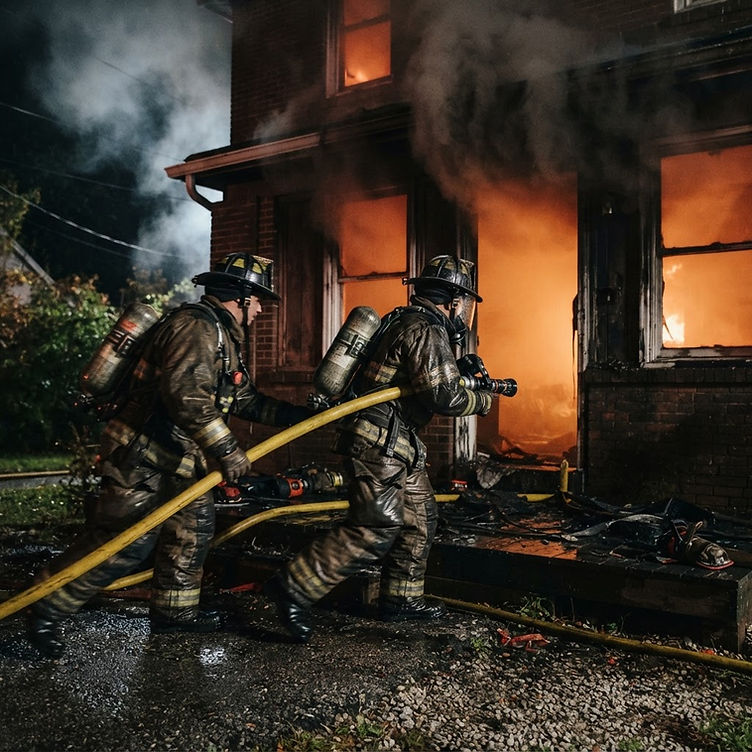
KANSAS CITY, Mo. — Fire crews from the Kansas City Fire Department responded just before 10:30 a.m. on Sunday, October 26, 2026, to a reported apartment building fire in the 2800 block of Wabash in Kansas City, Missouri. Upon arrival, companies found smoke and fire issuing from a two-story vacant apartment building. Interior suppression operations were initiated using multiple handlines, and thorough searches of the structure were conducted, returning all clear. No injuries have been reported in connection with this incident. Battalion Chief Michael Hopkins confirmed the response, and Dangerous Buildings and City Planning were requested to the scene.
Key Facts
- Location: 2800 block of Wabash, Kansas City, Missouri
- Date and time: Sunday, October 26, 2026, just before 10:30 a.m.
- Structure: Two-story vacant apartment building
- Fire department: Kansas City Fire Department (KCFD)
- Incident commander confirmed: Battalion Chief Michael Hopkins
- Operations: Interior suppression with multiple handlines; structure searched and cleared
- Injuries: None reported
- Cause: Under investigation
- Municipal response: Dangerous Buildings and City Planning requested to scene
What We Know
According to Battalion Chief Michael Hopkins, KCFD companies arrived to find an active fire producing visible smoke from the two-story structure. The building had been vacant prior to the fire — a detail that carries significant weight both for the suppression operation and for the investigative and regulatory steps that follow.
Interior operations were launched, which means crews entered the building to fight the fire from within rather than relying solely on defensive exterior streams. Multiple handlines were deployed, indicating a fire that required sustained water application across more than one area of the structure or more than one floor. Searches of the building were completed and returned all clear, confirming that no occupants — whether residents, transients, or others — were found inside at the time of the fire.
The fire's origin and cause have not been publicly released as of this writing. Investigations into fires in vacant structures frequently involve considerations of unauthorized entry, accumulated debris, electrical faults in disconnected or deteriorated systems, and — in some cases — deliberate ignition. None of those possibilities has been confirmed or ruled out by authorities at this stage, and the investigation is described as ongoing.
Dangerous Buildings and City Planning officials were called to the scene, which is standard protocol in Kansas City when a fire-damaged structure may pose an imminent hazard to adjacent properties, passersby, or emergency personnel conducting post-fire assessment. Their involvement signals that structural integrity is a live concern and that some form of formal order — whether an emergency placard, a demolition notice, or a repair requirement — may follow their inspection.
What Has Not Been Released
Several material facts remain pending or have not been confirmed by the Kansas City Fire Department or any other official source as of publication:
- The precise cause and origin of the fire
- Whether the fire is being treated as suspicious
- The identity of the property owner or managing entity
- How long the building had been vacant and under what circumstances
- Whether the structure had any active utility service at the time of the fire
- The extent of structural damage and whether demolition has been ordered
- Whether any fire suppression systems — sprinklers, standpipes — were installed and, if so, whether they were functional or in a state of impairment
- Total number of KCFD companies and personnel deployed
- Whether mutual aid was requested
- Estimated dollar value of the loss
This article will be updated as the Kansas City Fire Department or other official agencies release additional information.
Technical Analysis: Vacant Buildings, Fire Risk, and the Role of Fire Watch
Vacant residential structures present a distinct and well-documented fire risk profile. The National Fire Protection Association has consistently tracked vacant and abandoned buildings as a disproportionate source of firefighter fatalities and injuries relative to their share of the total fire inventory. NFPA research indicates that fires in vacant structures are more likely to involve rapid, uncontrolled spread because routine occupancy — the presence of people who might detect smoke early, report the fire promptly, and trigger suppression systems — is absent. Deteriorated construction, accumulated combustible debris, compromised structural members, and the likelihood that no one has maintained the building's fire protection systems compound the hazard.
For any building that has been vacant for an extended period, NFPA 25, Standard for the Inspection, Testing, and Maintenance of Water-Based Fire Protection Systems, establishes the baseline obligations for keeping suppression and standpipe systems in working order. When a property owner takes a building out of service or allows it to remain unoccupied, the temptation to defer inspection, testing, and maintenance on sprinkler and standpipe systems can be strong. NFPA 25 does not permit that deferral simply because the building lacks tenants. Systems must remain maintained, or their impairment must be formally managed.
NFPA 25 Chapter 15 governs impairment management. When a water-based fire protection system is taken out of service — deliberately or through neglect — an impairment coordinator must be designated, the authority having jurisdiction must be notified, and compensatory measures must be implemented. The most common compensatory measure for a building with an impaired sprinkler system is a fire watch: the assignment of trained personnel to conduct continuous patrols of the affected area, equipped to detect smoke and fire early and to summon the fire department without delay. NFPA 25 Section 15.5 makes clear that fire watch is not merely advisable; it is a required response to an out-of-service suppression system in most occupancies.
For vacant structures undergoing any kind of work — whether renovation, remediation, or preparation for demolition — NFPA 51B, Standard for Fire Prevention During Welding, Cutting, and Other Hot Work, may also apply if contractors are engaged in activities that generate heat, sparks, or open flames. Hot work in buildings with degraded fire protection is among the leading causes of fires in vacant and under-renovation structures nationally.
NFPA 601, Standard for Security Services in Fire Loss Prevention, provides additional guidance relevant to vacant properties. Security personnel assigned to vacant or partially occupied structures are expected under NFPA 601 to perform fire watch functions as part of their patrol responsibilities, maintaining logs, identifying hazards, and reporting conditions that deviate from baseline.
The Kansas City incident raises questions about the state of fire protection in the Wabash block building at the time of the fire. Whether systems existed, whether they were operational, and whether any fire watch or security patrol was in place before the fire broke out are questions the investigation will presumably address. Property owners and managers who learn from this event should take note: the regulatory and liability framework does not treat vacancy as an excuse for reduced vigilance — it treats it as a condition requiring heightened protective measures.
Local Context and Kansas City's Vacant Building Landscape
Kansas City, Missouri, like many large Midwestern cities, carries a meaningful inventory of vacant and deteriorated residential structures, a legacy of population shifts, disinvestment in certain neighborhoods, and the economic pressures that have affected multifamily housing stock for decades. The city's Dangerous Buildings program is an active enforcement mechanism, and fires in vacant structures along interior corridors of the city are not uncommon — though each incident demands individual investigation and should not be treated as routine by the responsible parties.
The Wabash corridor sits within an area where the city has, at various times, pursued redevelopment initiatives and code enforcement actions. The proximity of occupied residential properties to a vacant building fire underscores why municipal fire and building inspection departments treat these structures as priority concerns.
For property owners, managers, and developers working with vacant or partially occupied buildings anywhere in the Kansas City area, the obligations that follow a fire — or that should have been in place before one — include immediate coordination with fire protection contractors, notification of the authority having jurisdiction regarding any impaired systems, and the implementation of a formal fire watch until those systems are restored to service or the structure is secured and rendered non-hazardous.
USPA Nationwide Security provides fire watch and security guard services throughout the Kansas City region. Businesses, property managers, and insurers navigating post-fire obligations or seeking to implement preventive fire watch programs in vacant or at-risk structures can reach USPA directly at (800) 214-1448. Learn more about local fire watch coverage at USPA's Kansas City fire watch services page and about on-site security guard options at USPA's Kansas City security guard services page.
The Property's Next Obligations
With Dangerous Buildings and City Planning personnel already on scene, the Wabash property's owner faces a structured set of immediate and near-term obligations regardless of how the fire investigation concludes.
First, the structural assessment conducted by city officials will determine whether the building can stand in its current condition or whether emergency stabilization or demolition is required. An emergency placard — commonly referred to as a red tag — prohibits entry and effectively removes the structure from any use until the conditions prompting the order are corrected or the building is razed.
Second, the owner must engage qualified fire protection engineers and contractors to assess the state of any fire suppression, detection, and alarm systems remaining in the structure. If those systems were impaired before the fire or have been rendered non-functional by fire damage, the owner must formally document that impairment and implement compensatory measures in accordance with NFPA 25 and any applicable Kansas City fire code requirements.
Third, if any rehabilitation or stabilization work is planned — shoring, debris removal, selective demolition — the owner must ensure that hot work permits are obtained where applicable, that a fire watch is in place during and after any hot work operations per NFPA 51B, and that the site is secured against unauthorized entry, which is itself a significant driver of repeat fires in vacant structures.
Fourth, the owner's insurance carrier will likely conduct its own independent investigation, and cooperation with that process while simultaneously managing city compliance obligations requires careful documentation of every action taken in the days and weeks following the fire.
Property owners unfamiliar with the post-fire compliance landscape frequently underestimate the speed at which municipal deadlines accumulate. Engaging a qualified fire watch provider and a security patrol service in the immediate aftermath of a fire is one of the most defensible risk management decisions an owner can make — it demonstrates due diligence, satisfies regulatory requirements, and reduces the probability of a second fire or a liability-generating trespass incident on the property.
Sources and Open Questions
This article is based on reporting published by the Hays Post on October 26, 2026, which attributed the incident details to Battalion Chief Michael Hopkins of the Kansas City Fire Department. No additional official releases, press statements, or follow-up reporting were available at the time of publication.
Open questions pending official confirmation include: the fire's cause and origin determination; whether the investigation has identified any accelerants or indicators of incendiary origin; the ownership record of the Wabash property; the history of city inspections or code violations at the address; and the final scope of structural damage. Any material updates from the Kansas City Fire Department, the Kansas City Police Department, or the city's Dangerous Buildings program will be incorporated into subsequent coverage.
Readers with information relevant to this incident are encouraged to contact the Kansas City Fire Department directly through official channels.
Related Reading
Questions about fire watch, executive protection or guard coverage for your property? Request a quote or call our dispatch line.
More from the blog


Breaking News
Lithium-Ion Battery Fire Displaces Residents at Spokane's Donna Hanson Haven Apartment Building
A lithium-ion battery from an electric bicycle caused a fire on the third floor of Donna Hanson Haven in downtown Spokane on Saturday, October 25, 2026. The Spokane Fire Department evacuated all residents; Catholic Charities Eastern Washington coordinated decontamination, and most tenants returned home the same evening. Seventeen third-floor residents remain displaced with Red Cross support.

Breaking News
Pennsauken, NJ Apartment Building Evacuated After 3-Alarm Fire at Cooper River Apartments
A 3-alarm fire at the Cooper River Apartments on McClellan Avenue in Pennsauken, New Jersey forced the evacuation of roughly 40 residents early Monday morning. One woman jumped from the fifth floor before fire crews arrived and was transported to a local hospital. The cause of the fire has not been released.

Breaking News
Woman Critically Injured After Falling from Window During Three-Alarm High-Rise Fire at Cooper River Apartments in Pennsauken, NJ
A woman is in critical condition after falling from a window during a three-alarm fire at Cooper River Apartments in Pennsauken, New Jersey, early Monday morning. The blaze, which originated on the fifth floor of the 14-story building, required multiple mutual-aid departments and resulted in the rescue of two wheelchair-bound residents trapped on the ninth floor.