
Hire an A-rated fire watch service, open 24 hours
Most properties hire a fire watch service twice: once in a hurry for an emergency impairment, and again after the first experience teaches them what the first provider omitted. This page compresses that learning curve. It sets out what separates a rated, reliable fire watch provider from a warm body with a clipboard, the questions that surface the difference in one phone call, and how USPA Nationwide Security structures its assignments, with dispatch open 24 hours a day and documentation issued before the first round.
- 21+ Years in Business
- A+ Rated
- Veteran Owned and Operated
- Licensed and Insured
- 24/7 Dispatch
Research · Hot work · Volume 12
Hot Work Fire Watch: NFPA 51B, OSHA, and Fire Prevention Engineering
A national regulatory and engineering reference on ignition pathways, permit authorization, fire-watch staffing and post-work controls. A national, source-cited reference on permit authorization, the three OSHA frameworks that govern hot work, the three-dimensional exposure behind the 35-foot figure, impaired fire protection, tank and process-line vapor, and the post-work watch each rule actually specifies. 40 pages, 16 cited sources. Not a substitute for the authority having jurisdiction.
What separates a rated provider from a warm body
The fire watch market has two tiers, and the difference is invisible until the assignment is running. The lower tier fills posts: a person, a chair and, if you are fortunate, a clipboard. A rated provider builds an assignment: a written watch plan matched to the permit or the AHJ instruction, an officer briefed on the specific impairment before the first round, a log written to the jurisdiction's format, relief scheduled for the full duration and a supervisor auditing the post. The second tier costs slightly more per hour and substantially less after a claim.
Ratings are one visible signal among several. An A+ rating with the Better Business Bureau, a 4.9 Google rating across a thousand or more reviews and more than two decades in business do not guarantee a single shift, but they do tell you the provider has survived the situations that break young companies: the mid-shift cancellation, the officer who fails to arrive, the AHJ that rejects an inadequate log. Longevity in this trade is evidence of operational discipline, not marketing.
The other visible signal is what the provider sends before coverage begins. A company that can produce the watch plan, the officer roster with license numbers and the certificates of insurance on the day of booking has its operation in order. A company that promises paperwork 'at the end of the watch' is telling you, accurately, what its file will look like.
The questions that surface the difference in one call
Ask any prospective provider five questions and listen to the specificity of the answers. First: what interval and log format does the authority having jurisdiction for my property require? A provider that works your market regularly knows or, better, offers to confirm it directly. Second: who audits the post? Third: what is your plan if the assigned officer calls out at midnight? Fourth: what exactly is in the documentation file my insurer will receive? Fifth: can you staff the full impairment, around the clock, including relief?
The answers matter less than the form they take. Vague reassurance, 'we handle all of that', is the signature of the lower tier. A provider that answers with specifics, a named interval, a named audit schedule, a relief roster, a document list, has done this before and will do it again on your property. The same call should end with a written quote and the documentation attached rather than a verbal number.
One more question is worth asking when the situation allows a choice: for properties like mine, what do you recommend and why? A provider with real depth will sometimes tell a caller that a short daytime impairment is one where an in-house arrangement is commonly accepted by the local AHJ, and that professional coverage is unnecessary. That answer costs the provider a sale and earns the account for every impairment that follows.
Response time and staffing certainty
The whole value of an open-24-hours service is measured at two in the morning on a holiday weekend. What matters is whether the call stages officers: coordinators who can dispatch from a roster already working in the market, a dispatch desk that collects the assignment while officers are in transit, and start times stated in hours rather than 'as soon as possible'. Ask the provider how its after-hours coverage works, and whether the person answering at night can commit officers or can only take a message.
Staffing certainty over a multi-day impairment is the second test. A watch that runs four days needs relief from the first shift, because no officer holds alert overnight rounds for four days straight, and a log with gaps at hour sixty is a log the AHJ will read closely. The provider should name the relief structure in the written scope rather than discovering the need on the third night.
USPA's dispatch model is built for both tests. The desk answers at every hour, coordinators stage same-day coverage from officers already working in the market, and multi-day assignments are scheduled with named relief and supervisor audits from the first day. The client gets start times in hours, and a roster it can hand to the fire marshal's office on request.
Compare USPA against your current provider.
Ask us the five questions in one call. You will get named intervals, a named audit schedule, a document list and an itemized written quote, with dispatch open 24 hours a day.
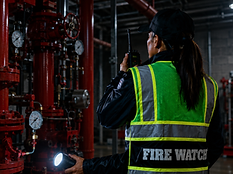
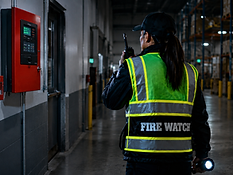
USPA fire watch guards working assignments in the United States




Documentation standards worth demanding
Insist on four artifacts, all issued, none promised. The written watch plan describes the route, the interval, the notification procedures and the reporting contacts. The officer roster lists each officer with license number and assignment. Certificates of insurance name the property and the parties the project requires. The log, once the watch begins, records time, route, observations, actions and initials, continuously through shift changes.
At the close of the assignment, the file should complete itself: the restoration confirmation showing the system was tested and returned to service, and the discontinuation authorization recording who ended the watch and when. That closed package is what an insurer reviews after a loss, what a fire marshal reviews after a visit and what an audit asks for years later. A provider that thinks in terms of the complete file is a different organization from one that thinks in terms of hours billed.
The log format should match what the local jurisdiction expects, because that is the reader who matters most during the impairment. USPA confirms the AHJ's requirement before the first round and writes the plan and the log to it, so the inspector arriving at the property finds the record they anticipate rather than an argument about sufficiency.
Reading a fire watch quote
Quotes in this trade range from a single verbal number to an itemized scope, and the difference predicts the assignment. A usable fire watch quote states the hourly rate per post, the expected duration, the interval and the log format, relief and supervisor coverage for multi-shift assignments, travel, and the documentation included. Anything missing from the written quote reappears later as a dispute, usually at the moment the property can least afford one.
Price alone is a poor filter, but the pattern of pricing is informative. A rate far below the market usually omits the watch plan, the insurance or the relief, and it often signals a provider assembling crews from unvetted labor. A rate far above it, with no itemization, is equally suspect. The middle ground, an itemized quote with documentation attached, is where the reliable providers live.
Red flags deserve their own list: no named officers, no certificates of insurance naming your property, reluctance to put the interval in writing, no after-hours dispatch, and terms that end the watch on the provider's schedule rather than the system's restoration. Any one of these is a reason to keep calling. None of them is cosmetic.
How USPA structures the assignment
A USPA fire watch opens with the plan: the route and interval written to the permit or the AHJ instruction, the roster named, the certificates issued. The officer is briefed on the specific property and impairment before the first round, and the log begins with the first entry, not the first invoice. For multi-day assignments, relief and supervisor audits are scheduled in the written scope.
During the watch, the client's contacts receive notifications for every condition found and every escalation, and the supervisor's audit findings are shared in the same reporting as incidents. The property can reach the account team at any hour, and the dispatch desk can extend, reduce or relocate coverage as the impairment develops, without renegotiating the scope.
At the close, the file completes: the log, the restoration confirmation and the discontinuation authorization, delivered to the client the same week. Properties that run impairment-heavy operations, healthcare, hospitality, property management portfolios and general contractors, tend to convert the first assignment into a standing arrangement, which is the least expensive way to hold fire watch coverage: one provider that already knows the building.
Request fire watch coverage
Send the property address, the impaired system or the hot work schedule, and the time coverage must begin. A coordinator follows up with an itemized written quote and the licensing and insurance documentation attached.
Rated 4.9 by the clients we protect
Reviews are collected from real assignments across the country. Read them directly on Google before you call.
I have their pricing to be very affordable and competitive. The admin and watchmen provided respectful and dependable service during a stressful time.
William BeesleyGoogle reviewVerify This Review
Questions before you commit? Call (800) 214-1448 and ask for references on assignments like yours.
Questions before you hire
- How fast can USPA start coverage?
- Emergency assignments are typically staged the same day, often within a few hours, from officers already working in the market. Planned coverage is booked against the permit or impairment schedule in advance. Either way, start times are stated in hours, not in 'as soon as possible'.
- What licensing should a fire watch provider hold?
- State guard licensing is the baseline, with any fire watch endorsement or qualification the jurisdiction requires for the specific situation. Ask for the license numbers on the officer roster, not just the company's registration, and verify the certificates of insurance name your property.
- Can you cover overnight and multi-day impairments?
- Yes. Multi-day assignments are scheduled with named relief and supervisor audits from the first shift, so the log runs continuously with no gaps. Overnight rounds are held at the interval the jurisdiction requires regardless of the hour, which is the whole point of 24-hour coverage.
- What if the fire marshal requires a specific interval or log?
- USPA confirms the authority having jurisdiction's requirement for the property before the first round and writes the watch plan and log format to match. The inspector arriving on site finds the record they expect, which is the version of the assignment that passes.
- Do you combine fire watch with security guard coverage?
- Where the jurisdiction permits a combined post, yes: the same officer holds the fire watch interval and provides the security presence, which usually costs materially less than two vendors. Where separate personnel are required, the duties are staffed separately and the scope says so plainly.
- What does a fire watch cost?
- Pricing is quoted per post and hour, itemized with the watch plan, log preparation, travel and relief. Duration drives most of the cost. Quotes include the licensing and insurance documentation so the file can go directly to the fire marshal or the insurer without a follow-up request.
Fact check and technical sources
The statements on this page are grounded in the standards and regulations below. Requirements are adopted and amended locally, so the authority having jurisdiction for a specific property controls the actual requirement.
- NFPA 601
Standard for Security Services in Fire Loss Prevention
Professional criteria for fire watch services: selection, duties, training, patrol documentation and record retention.
Official Source → - NFPA 51B
Standard for Fire Prevention During Welding and Other Hot Work
Hot work permits and fire watch requirements, the framework most jurisdictions adopt for construction and maintenance work.
Official Source → - NFPA 25
Inspection, Testing and Maintenance of Water-Based Fire Protection Systems
The impairment procedure governing sprinkler and standpipe outages, including the interim measures authorities expect.
Official Source → - OSHA Fact Sheet
Fire Watch Duties During Hot Work
OSHA's guidance on fire watch duties and the monitoring period after hot work stops.
Official Source → - International Fire Code
ICC Fire Code Provisions on Fire Watch
Model fire code provisions state and local jurisdictions adopt and amend. The adopted edition and local amendments control.
Official Source →
Hire the provider that documents the watch.
Call dispatch at any hour or request a written quote online. The watch plan, the roster and the certificates are issued before the first round, and the closed file follows the last one.
