
Brazen Home-Invasion Burglaries Target Wealthy Families in Menlo Park's Sharon Heights
October 22, 2026· Albina Bieci
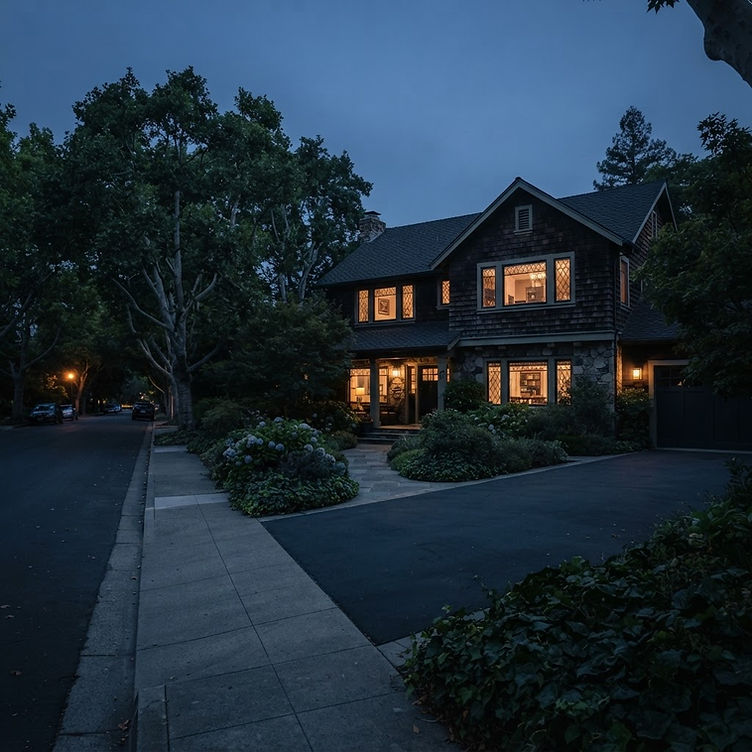
MENLO PARK, Calif. — A string of at least 13 reported burglaries across Sharon Heights, one of Menlo Park's most prominent residential neighborhoods, has upended the assumptions that affluent Silicon Valley homeowners once held about their physical safety. The incidents, concentrated over roughly the last three months, represent a documented shift in criminal tactics: where prior break-ins typically occurred when residents were away, a significant share of recent entries have happened while families were home — most often during dinnertime hours, through side entrances, using a compact glass-shattering device that can breach a window within seconds.
The New York Post, citing reporting by SFGate, published the story on March 16, 2026. Menlo Park Police Department spokesperson Nicole Acker confirmed the trend to SFGate and characterized it as part of a wider regional pattern, stating that it "mirrors trends across the entire Bay Area and extends to similar communities statewide." As of publication, only one person connected to the string of incidents has been charged.
Key Facts
- 13 reported burglaries in Sharon Heights over approximately the last three months, per reporting cited by the New York Post
- Incidents have escalated from unoccupied-home entries to occupied-home entries during dinnertime
- Entry method: a small glass-shattering device capable of breaching a window in seconds, per longtime resident Martha Sewald
- Valuables — including jewelry and designer handbags — removed within three minutes, per Sewald, who has lived in the neighborhood for nearly four decades
- Menlo Park PD spokesperson Nicole Acker confirmed active burglary-suppression operations coordinated with multiple regional agencies
- San Mateo County District 3 Supervisor Ray Mueller raised the possibility of drone deployment as one tool in a broader prevention framework
- One arrest connected to the string of burglaries has been made as of the reporting date
- A local city council member has pledged to work with police and county officials to strengthen enforcement and prevention
What We Know
Sharon Heights sits within Menlo Park in San Mateo County, bordering Stanford University land and adjacent to some of Silicon Valley's highest-concentration wealth corridors. The neighborhood has historically attracted senior technology executives, venture capital professionals, and long-tenured residents who have lived there for decades. Martha Sewald, described in the SFGate report as a resident of nearly 40 years, provided the most granular account of how these entries are occurring: thieves are approaching from the side of a home, using a device designed to fracture glass quickly and quietly, and completing the theft of high-value portable items in under three minutes.
That operational window — entry, acquisition, exit in approximately 180 seconds — reflects preparation and familiarity with high-value residential targets. The items reported taken, jewelry and designer handbags, are portable, easily fenced, and carry high immediate resale value. Law enforcement and security professionals recognize this as a signature of organized residential burglary crews rather than opportunistic individual actors, though USPA makes no independent determination of the criminal organization involved in this specific case; that determination belongs to investigators.
Resident Brian Kissel told SFGate that while the neighborhood had experienced burglaries before, the shift to occupied-home entries represents a meaningful escalation in perceived danger. "Now that there have been some break-ins where people have been at home, there's an increased concern," he said. Kissel also expressed the view that no single countermeasure will be sufficient, describing a combination of technology, community coordination, and resident education as the likely path forward.
Nicole Acker, the Menlo Park PD spokesperson, confirmed that the department's detectives are working these cases in coordination with other agencies, describing the effort as focused on "regional crews" — a characterization that suggests law enforcement believes the activity in Sharon Heights is connected to broader multi-jurisdictional criminal activity across the Bay Area.
What Has Not Been Released
Several material facts remain unconfirmed as of this writing. The specific identity and manufacturer of the glass-shattering device described by residents has not been publicly disclosed by law enforcement. The total estimated value of property taken across the 13 reported incidents has not been released. The name of the individual charged in connection with the burglaries has not been published in the source material reviewed for this article. The identity of the city council member who pledged increased enforcement cooperation has not been confirmed in available reporting.
It is also unclear whether the 13 reported incidents represent all burglaries in the area during the three-month period or only those formally reported to police, a distinction that matters given the well-documented tendency toward underreporting in residential property crime. The specific drone program referenced by Supervisor Mueller — including its legal framework under California law and Federal Aviation Administration regulations — has not been described in detail in available source material.
USPA will update this article as confirmed information becomes available through official channels.
Technical Analysis: Residential Security Posture and the Occupied-Home Variable
The shift from unoccupied to occupied residential entries is not merely a psychological escalation for homeowners; it carries practical security implications that differ substantially from the vacant-property scenario most residential security measures are designed to address.
Conventional residential security architecture — alarm systems, motion sensors, camera networks — is typically optimized for perimeter detection and delayed response. When a property is unoccupied, the detection-to-response window is the primary variable. When occupants are present, that window compresses, and the nature of the threat changes: occupants may confront intruders, intruders may be aware of occupant presence, and the potential for physical confrontation increases even when no confrontation is the stated intent of the burglars.
The three-minute removal window described by Sewald is consistent with what security professionals describe as a "smash-and-grab" residential operation, adapted for upscale homes where targets are pre-identified. The FBI's Uniform Crime Reporting program documents residential burglary patterns nationally, and the agency's research has consistently shown that jewelry ranks among the most commonly taken items in residential burglaries due to its high value-to-weight ratio and relatively accessible secondary market. The Bureau of Justice Statistics has similarly documented that a significant share of household burglaries occur while residents are home, though that share has historically been lower for daytime and evening entries compared to nighttime.
For properties in communities like Sharon Heights, the practical security response involves layered measures that go beyond alarm systems. Monitored security patrols — whether provided by a licensed private security firm or through a formal community patrol program — create deterrence through visible, unpredictable presence rather than reactive response. Patrol randomization, meaning the absence of a fixed and predictable schedule, is a foundational principle of effective residential security patrol because it eliminates the behavioral anticipation that experienced burglary crews rely on when selecting entry windows.
The mention of drone deployment by Supervisor Mueller reflects a broader national trend of integrating aerial surveillance tools into community safety programs. The FAA's Part 107 regulations govern commercial drone operations, and any county-level drone program for law enforcement or quasi-public safety purposes would require compliance with applicable federal airspace rules as well as California state law governing surveillance and privacy. The specifics of any proposed Menlo Park or San Mateo County drone program are not confirmed in available reporting.
Local Context and USPA Presence in the Region
The Bay Area's high-net-worth residential communities have long presented particular security challenges that differ from urban commercial environments. Property is dispersed across large lots, response times from public law enforcement can be extended in lower-density residential settings, and the social expectation of privacy in affluent neighborhoods has historically worked against the kind of visible security presence that deters organized criminal crews.
Communities experiencing patterns like those described in Sharon Heights frequently turn to private security patrols to fill the gap between police response capacity and the level of deterrence residents need. A licensed security company operating under a formal patrol agreement can provide roving vehicle patrols, on-foot perimeter checks, and documented incident logs that both deter criminal activity and create evidentiary records useful to law enforcement investigations.
USPA Nationwide Security provides residential and community security services throughout California, including the greater Bay Area. Residents and community associations in Menlo Park and the surrounding Peninsula communities can reach USPA directly at (800) 214-1448 to discuss patrol options, site assessments, and coordination with existing neighborhood watch or HOA security frameworks.
For residents specifically in the Menlo Park area, USPA maintains local service pages covering both general security guard services and specialized protection programs: Fire Watch Services – Menlo Park, CA and Security Guard Services – Menlo Park, California. These pages outline available service tiers and scheduling options relevant to the community.
The Property and Community's Next Obligations
For homeowners in Sharon Heights and comparable communities observing this pattern, several practical steps fall within their direct control. California Penal Code sections governing residential burglary (Section 459) define the crime but do not prescribe prevention obligations on homeowners; however, insurance carriers may have specific documentation or security requirements tied to high-value personal property coverage. Homeowners carrying significant jewelry or luxury goods inventories under a scheduled personal property rider should consult their insurer regarding whether a documented security upgrade affects their coverage terms.
From a physical security standpoint, windows represent the documented point of entry in these incidents. Laminated glass and window security film are retrofit options that significantly increase the time required to breach a window compared to standard single-pane or tempered glass, even against devices specifically designed for rapid glass fracture. The time increase may be sufficient to trigger alarm response or deter entry entirely — not because the glass becomes impenetrable, but because the additional seconds required to breach it exceed the operational window that makes the approach viable for a crew prioritizing speed.
Community-level coordination, referenced by multiple residents and officials in the source reporting, aligns with established crime prevention research. The CPTED framework — Crime Prevention Through Environmental Design — documented extensively in urban planning and law enforcement literature, emphasizes that communities where residents are visibly present, engaged with their surroundings, and in regular communication with neighbors and law enforcement create environments that organized criminal crews assess as higher-risk targets. Kissel's observation that resident education, technology, and neighbor cooperation will need to work together is consistent with this body of research.
HOAs and neighborhood associations in affected areas may also consider formal agreements with licensed private security firms to establish documented patrol schedules, incident reporting protocols, and direct communication channels with the Menlo Park PD's detective bureau. Such agreements create accountability on both sides and give law enforcement a documented record of patrol activity that can be cross-referenced against incident timelines.
Sources and Open Questions
This article is based on reporting by Zain Khan published in the New York Post on March 16, 2026, which cited underlying reporting by SFGate. Direct quotations from Brian Kissel, Martha Sewald, Nicole Acker, and Ray Mueller are as reported in those sources; USPA has not independently interviewed any of the individuals named.
Open questions pending further reporting include:
- The identity and charge status of the individual arrested in connection with the burglaries
- Whether additional arrests are anticipated by law enforcement
- The specific nature of the glass-shattering device described by residents
- The total loss value reported across all 13 incidents
- The current status of the proposed drone program referenced by Supervisor Mueller
- Whether the regional crew or crews identified by Menlo Park PD have been connected to incidents in other specific Bay Area communities
- The full scope of multi-agency coordination described by the department
USPA Nationwide Security will update this coverage as confirmed information becomes available through official law enforcement channels or verified published reporting.
Related Reading
Questions about fire watch, executive protection or guard coverage for your property? Request a quote or call our dispatch line.
More from the blog

Breaking News
Fire Crews Battle Vacant Apartment Building Fire in Kansas City's Wabash Block
Kansas City fire crews responded Sunday morning to a reported apartment building fire in the 2800 block of Wabash, where they encountered smoke and fire coming from a vacant two-story structure. Interior operations were conducted, searches came back all clear, and no injuries were reported. The cause remains under investigation.


Breaking News
Lithium-Ion Battery Fire Displaces Residents at Spokane's Donna Hanson Haven Apartment Building
A lithium-ion battery from an electric bicycle caused a fire on the third floor of Donna Hanson Haven in downtown Spokane on Saturday, October 25, 2026. The Spokane Fire Department evacuated all residents; Catholic Charities Eastern Washington coordinated decontamination, and most tenants returned home the same evening. Seventeen third-floor residents remain displaced with Red Cross support.


Breaking News
Pennsauken, NJ Apartment Building Evacuated After 3-Alarm Fire at Cooper River Apartments
A 3-alarm fire at the Cooper River Apartments on McClellan Avenue in Pennsauken, New Jersey forced the evacuation of roughly 40 residents early Monday morning. One woman jumped from the fifth floor before fire crews arrived and was transported to a local hospital. The cause of the fire has not been released.
