
Pennsauken, NJ Apartment Building Evacuated After 3-Alarm Fire at Cooper River Apartments
October 26, 2026· Albina Bieci
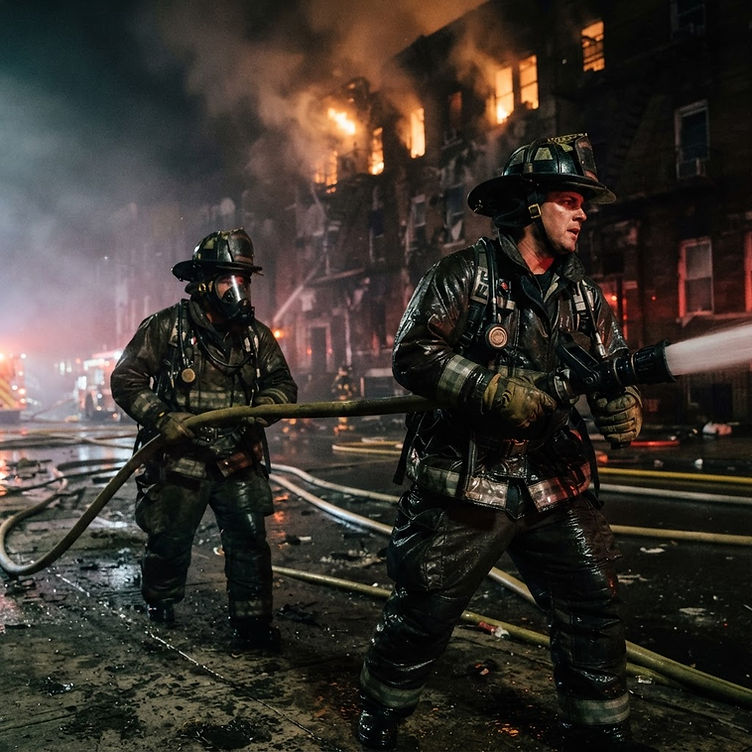
PENNSAUKEN, N.J. — A 3-alarm fire broke out in the early morning hours of Monday, October 26, 2026, at the Cooper River Apartments on McClellan Avenue in Pennsauken, New Jersey, prompting the evacuation of approximately 40 residents and sending at least one person to the hospital after she jumped from the fifth floor of the building before fire crews reached the scene.
Pennsauken Fire Department Chief Jonathan Hutton confirmed the basic timeline and scope of the incident to CBS Philadelphia. Firefighters were dispatched around 2 a.m. and upon arrival found active fire in a unit on the fifth floor. About 20 apartments were evacuated, housing an estimated 40 residents. Before 6 a.m., most residents were cleared to return to their units; fifth-floor residents remained displaced pending further assessment.
Key Facts
- When: Approximately 2 a.m., Monday, October 26, 2026
- Where: Cooper River Apartments, McClellan Avenue, Pennsauken, New Jersey
- Alarm level: 3-alarm
- Floor of origin: Fifth floor (unit not publicly identified)
- Evacuees: Approximately 40 residents across roughly 20 apartments
- Injuries: At least one person hospitalized after jumping from the fifth floor prior to fire department arrival
- Cause: Under investigation; not yet released
- Re-entry status: Most residents permitted to return before 6 a.m.; fifth-floor residents displaced as of initial reporting
- Source: CBS Philadelphia, citing Pennsauken Fire Department Chief Jonathan Hutton
What We Know
Neighbors who witnessed the incident described a chaotic scene in the predawn hours. Resident Dillion Rizzo told CBS Philadelphia:
"She jumped out and hit a car in a handicap spot right there. They took her out on a stretcher. I hope she's OK, she was moving."
Rizzo's account places the jump before fire department units arrived on scene, meaning the woman made the decision to exit the building without the benefit of firefighter guidance or aerial equipment in position. Her condition had not been publicly updated as of initial reporting, and CBS Philadelphia noted the investigation into her status was ongoing.
The fire was designated a 3-alarm response, a classification that in most New Jersey municipal fire systems indicates a significant resource escalation beyond the initial assignment. A 3-alarm dispatch typically draws mutual aid from neighboring departments and may involve ladder companies, additional engine companies, and command staff. Pennsauken is a township in Camden County, bordered by Camden, Cherry Hill, and Merchantville, and its fire department has mutual aid agreements with surrounding communities. The specific companies that responded beyond Pennsauken's own apparatus had not been publicly listed as of this writing.
The building itself — Cooper River Apartments on McClellan Avenue — is a multi-story residential structure of at least five floors. The name references Cooper River, the waterway that defines much of the southern boundary of Pennsauken Township and is the centerpiece of Cooper River Park, a Camden County property. The immediate neighborhood along McClellan Avenue is a mixed residential corridor. Details about the building's construction type, year built, ownership, and management company had not been released by authorities or independently confirmed at the time of this report.
What Has Not Been Released
Several material facts remain unconfirmed or pending as of this filing:
- The identity and current medical condition of the woman who jumped from the fifth floor
- The specific unit of origin on the fifth floor
- Whether the building's fire suppression system (if equipped) activated and performed as designed
- Whether fire alarm systems notified residents in a timely manner
- The cause and origin of the fire, which remains under investigation
- The identities of any additional injured parties, including firefighters or first responders
- The structural condition of the fifth floor and adjacent units following suppression
- Whether any building code violations or prior inspection findings are on record with Pennsauken Township or Camden County
- The name of the property owner or management company responsible for the building
- Whether the building's sprinkler and standpipe systems, if present, were properly maintained and in service at the time of the fire
This article will be updated as confirmed information becomes available.
Technical Analysis: Fire Protection Standards Applicable to This Incident
A 3-alarm fire originating on the fifth floor of a residential apartment building raises several fire protection questions that are governed by established NFPA standards and New Jersey state regulations.
Sprinkler and Suppression Systems — NFPA 13 and NFPA 25
For multi-story residential buildings, NFPA 13, Standard for the Installation of Sprinkler Systems, and its residential counterpart NFPA 13R govern the design and installation requirements for automatic fire suppression. Whether Cooper River Apartments was equipped with a sprinkler system, and whether that system was active and functional in the unit of origin, has not been confirmed. Under NFPA 25, Standard for the Inspection, Testing, and Maintenance of Water-Based Fire Protection Systems, building owners and managers are required to conduct periodic inspections, testing, and maintenance of sprinkler systems, fire pumps, and standpipes. If a system was present and failed to activate, or was found to be impaired, the property will face questions about its ITM compliance record.
NFPA 25 also addresses impairment management directly. When a water-based system is taken out of service — intentionally or as a result of damage — the property owner is obligated to implement an impairment program. This includes notifying the authority having jurisdiction (AHJ), notifying the insurance carrier, posting impairment tags, and, critically, implementing a fire watch for the duration of the impairment. If any portion of the building's suppression system was damaged during the fire or during suppression operations, that obligation activates immediately.
Fire Alarm Systems — NFPA 72
NFPA 72, National Fire Alarm and Signaling Code, governs the design, installation, testing, and maintenance of fire alarm systems in occupancies including multi-family residential buildings. The timeline of this incident — a fifth-floor fire at 2 a.m. with a resident choosing to jump before fire department arrival — raises questions about how and when occupants were notified. Whether the building's alarm system activated promptly, whether audible and visual notification appliances functioned on the fifth floor and in adjacent units, and whether the system was connected to a central monitoring station are all facts that investigators will examine.
A fire at 2 a.m. in a residential occupancy presents the highest-risk evacuation scenario: occupants are asleep, disoriented, and dependent on reliable alarm signals to make safe egress decisions. If the alarm system had any known deficiencies, or if monitoring was not in place, those facts will be material to both the fire investigation and any subsequent liability proceedings.
High-Rise Considerations
New Jersey's Uniform Construction Code and fire codes incorporate provisions from the International Building Code and NFPA standards for buildings classified as high-rise — generally those with occupied floors more than 75 feet above the lowest level of fire department vehicle access. Whether Cooper River Apartments meets that threshold depends on floor-to-floor heights that have not been publicly confirmed. If the building qualifies as a high-rise, additional suppression, alarm, and emergency communications requirements apply. Even if it falls below that threshold, a five-story residential structure is subject to meaningful fire protection requirements under both state and local codes.
Emergency Egress
The decision by the resident to jump from the fifth floor before fire department arrival suggests either that egress routes were compromised or perceived as impassable, or that the pace of smoke and heat development made waiting feel untenable. NFPA 101, Life Safety Code, requires that multi-family residential occupancies provide at least two means of egress from every floor, that corridors maintain tenable conditions for the time necessary to evacuate, and that exit stairwells be enclosed and smoke-protected. Whether the corridor or stairwell on the fifth floor was passable at the time of the incident is a question investigators will address.
Local Context
Pennsauken Township sits in the northwest corner of Camden County, directly across the Delaware River from Philadelphia. The township has a dense residential footprint with a mix of single-family homes, garden apartments, and larger multi-story residential buildings. Camden County as a whole has faced documented pressure on emergency housing resources: a separate CBS Philadelphia report published around the same period noted that Camden City was exhausting its emergency housing funds, a strain that affects the broader county network available to displaced residents.
For a 3-alarm fire that displaced fifth-floor residents beyond the initial reporting period, housing support becomes a practical concern. Displaced residents who cannot return to their units are typically referred to the American Red Cross or to county emergency management, but the adequacy of that support in the current Camden County context is an open question.
USPA Nationwide Security provides fire watch services in Pennsauken, NJ and security guard services in Pennsauken, New Jersey to residential properties, construction sites, and commercial facilities throughout the township and Camden County — services that become directly relevant when a building's fire protection systems are impaired or when displaced residents require monitored temporary access arrangements.
The Property's Next Obligations
Regardless of cause, the aftermath of a 3-alarm fire in a multi-story residential building triggers a defined sequence of obligations for the property owner and management under New Jersey law and applicable NFPA standards.
Immediate Post-Fire Inspection and System Assessment
Before any displaced residents can return to fire-affected or adjacent units, the building's structural integrity must be assessed by a qualified engineer or the local construction official. In New Jersey, the Department of Community Affairs (DCA) oversees uniform construction and fire code enforcement, and local construction officials have authority to issue certificates of occupancy or to condemn units found unsafe. The fifth floor, and potentially the floors immediately above and below the unit of origin, will require inspection before re-occupancy is permitted.
Impairment Fire Watch
If the building's fire suppression or alarm systems sustained damage — whether from the fire itself, from suppression water, or from mechanical disruption during firefighting operations — the property owner must implement an impairment fire watch as required under NFPA 25 and NFPA 72. This is a staffed, continuous patrol of the affected areas, conducted by trained personnel who can identify and report any rekindling or new ignition before it escalates. The fire watch must remain in place until the impaired systems are restored to full service and tested by a licensed contractor.
Fire watch is not a passive function. Under applicable standards, fire watch personnel are expected to conduct timed patrols at intervals specified by the AHJ, maintain written logs, carry communication devices capable of reaching the fire department, and have access to portable extinguishing equipment. Property owners who attempt to satisfy this obligation with untrained staff or informal arrangements risk both code violations and compounded liability if a secondary event occurs.
Insurance and Documentation
Property owners should anticipate that their insurance carrier will require a detailed incident report, documentation of the pre-fire condition of all fire protection systems, and evidence of ongoing ITM compliance under NFPA 25 and NFPA 72. If records of required inspections are incomplete, the claims process will be more complicated. Carriers writing habitational risks in New Jersey are familiar with the state's fire code requirements and will scrutinize maintenance records.
Resident Communication and Relocation Support
For the residents who remain displaced — specifically those on the fifth floor — the property management company carries a legal and ethical obligation to communicate clearly about the timeline for re-entry, the availability of temporary housing assistance, and the status of their personal property. New Jersey's landlord-tenant statutes address habitability obligations, and a unit damaged by fire may trigger rent abatement or lease termination rights for affected tenants depending on the extent of damage and the speed of repair.
Code Compliance Review
Fire incidents of this severity often trigger a comprehensive inspection of the entire building by the local fire official and the municipal construction department. Any outstanding violations — whether related to the fire protection systems, egress hardware, door closers, exit signage, or emergency lighting — will be identified and may generate formal notices of violation with correction deadlines. New Jersey's Uniform Fire Code, enforced at the local level with DCA oversight, gives inspectors broad authority to require corrections as a condition of continued occupancy.
Sources and Open Questions
This report is based on CBS Philadelphia's coverage citing Pennsauken Fire Department Chief Jonathan Hutton as the primary named source. No additional named official sources had been identified as of initial publication. The following questions remain open and will be addressed in updates as information is confirmed:
- What is the current medical condition of the woman who jumped from the fifth floor?
- What caused the fire, and where precisely did it originate within the fifth-floor unit?
- Was the building equipped with an automatic sprinkler system, and did it activate?
- Was the building's fire alarm system functioning and monitored at the time of the fire?
- What is the ownership and management structure of Cooper River Apartments?
- Were there prior code violations, inspection deficiencies, or system impairments on record for the building?
- How many fifth-floor residents remain displaced, and what housing resources have been provided to them?
- Were any firefighters or other first responders injured during operations?
- What mutual aid departments responded to the 3-alarm assignment?
- Has the New Jersey DCA or Camden County fire marshal's office opened a parallel investigation?
Readers with information about this incident may contact USPA's editorial team through uspasecurity.com/contact. Property owners and managers seeking fire watch or security coverage in the Pennsauken area may call USPA Nationwide Security at (800) 214-1448 or review available services at uspasecurity.com/emergency-fire-watch.
Related Reading
Sources
- NFPA 25: Standard for the Inspection, Testing, and Maintenance of Water-Based Fire Protection Systems
- NFPA 72: National Fire Alarm and Signaling Code
- NFPA 101: Life Safety Code
- OSHA Fire Safety Guidelines for General Industry
- CBS Philadelphia: Pennsauken, NJ apartment building evacuated after 3-alarm fire (October 26, 2026)
Questions about fire watch, executive protection or guard coverage for your property? Request a quote or call our dispatch line.
More from the blog

Breaking News
Fire Crews Battle Vacant Apartment Building Fire in Kansas City's Wabash Block
Kansas City fire crews responded Sunday morning to a reported apartment building fire in the 2800 block of Wabash, where they encountered smoke and fire coming from a vacant two-story structure. Interior operations were conducted, searches came back all clear, and no injuries were reported. The cause remains under investigation.


Breaking News
Lithium-Ion Battery Fire Displaces Residents at Spokane's Donna Hanson Haven Apartment Building
A lithium-ion battery from an electric bicycle caused a fire on the third floor of Donna Hanson Haven in downtown Spokane on Saturday, October 25, 2026. The Spokane Fire Department evacuated all residents; Catholic Charities Eastern Washington coordinated decontamination, and most tenants returned home the same evening. Seventeen third-floor residents remain displaced with Red Cross support.

Breaking News
Woman Critically Injured After Falling from Window During Three-Alarm High-Rise Fire at Cooper River Apartments in Pennsauken, NJ
A woman is in critical condition after falling from a window during a three-alarm fire at Cooper River Apartments in Pennsauken, New Jersey, early Monday morning. The blaze, which originated on the fifth floor of the 14-story building, required multiple mutual-aid departments and resulted in the rescue of two wheelchair-bound residents trapped on the ninth floor.