
Lithium-Ion Battery Fire Displaces Residents at Spokane's Donna Hanson Haven Apartment Building
October 26, 2026· Albina Bieci
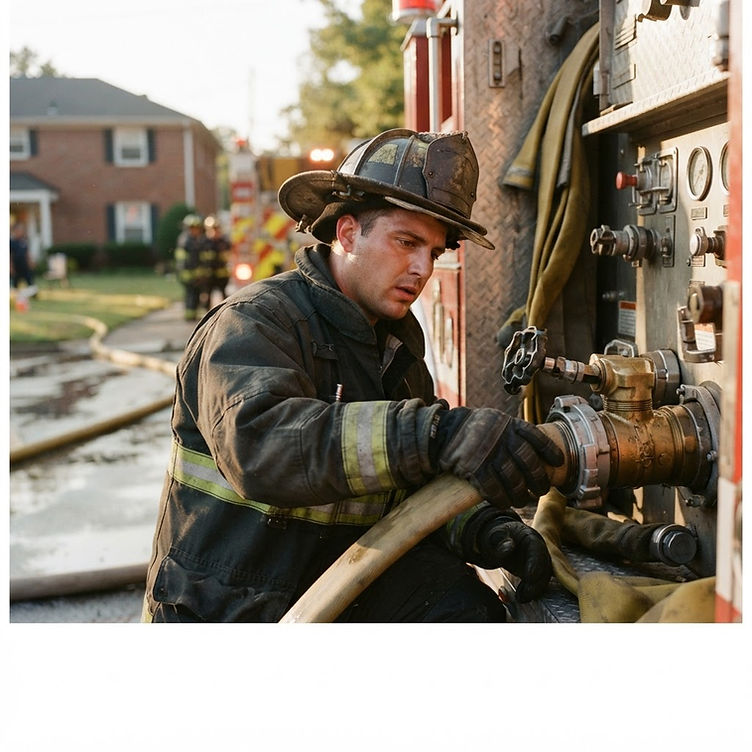
SPOKANE, Washington — A fire traced to an overheating lithium-ion battery from an electric bicycle displaced every resident of Donna Hanson Haven, a downtown Spokane supportive housing facility operated by Catholic Charities Eastern Washington, during the morning hours of Saturday, October 25, 2026. By evening, most residents had returned after rapid decontamination work, but 17 individuals whose units occupy the third floor remained displaced with assistance from the American Red Cross.
Key Facts
- Cause: Overheating lithium-ion battery in an electric bicycle, third floor
- System activation: Building sprinkler system discharged in response to the fire
- Initial displacement: All residents of Donna Hanson Haven evacuated
- Decontamination requirement: Spokane Fire Department directed Catholic Charities to clean the building due to chemical and heavy-metal contamination from lithium-ion battery debris
- Return status: All residents except those in third-floor units returned Saturday night
- Ongoing displacement: 17 residents remain displaced as of Saturday evening
- Support in place: Red Cross and Catholic Charities Eastern Washington are providing assistance
- Property operator: Catholic Charities Eastern Washington; the facility provides housing and wraparound services for people transitioning out of homelessness
What We Know
According to a news release from Catholic Charities Eastern Washington, a battery from an electric bicycle overheated and ignited on the third floor of Donna Hanson Haven on the morning of Saturday, October 25. The building's automatic sprinkler system activated in response. The Spokane Fire Department responded and oversaw the evacuation of all residents from the building.
Following suppression, fire department crews informed Catholic Charities that the structure could not be immediately reoccupied. The concern was not physical structural damage from fire or water alone, but contamination: lithium-ion batteries, when they undergo thermal runaway — the self-sustaining exothermic reaction that produces the intense heat and fire associated with these events — release a complex mixture of toxic gases, particulates, and heavy metals including cobalt, nickel, manganese, and lithium compounds. The Spokane Fire Department's direction to decontaminate before reoccupancy reflects standard practice for these incidents and is consistent with guidance from multiple fire safety authorities on the chemical hazards of lithium-ion battery fires.
Catholic Charities' safety and maintenance teams moved immediately to address the contamination. Their speed proved consequential: residents outside the third floor were able to return to their units the same evening. The 17 residents in third-floor units, whose apartments sustained the most direct exposure, remain displaced. Catholic Charities stated it is supporting those individuals in coordination with the Red Cross.
Earlier information from the American Red Cross had indicated a water leak made the building uninhabitable after the fire. Catholic Charities' news release explicitly corrected that characterization, attributing the decontamination requirement to battery chemicals and heavy metals rather than water damage. The Spokesman-Review, which first reported the story, noted this discrepancy in its coverage.
What Has Not Been Released
Several material facts remain unconfirmed as of this writing. The Spokane Fire Department has not issued an independent incident report publicly available at the time of publication. The following are pending or unknown:
- The exact unit or common-area location where the e-bike battery was stored or charging at the time of ignition
- Whether the bicycle was being charged from a standard outlet, a dedicated charging station, or left in storage without active charging
- The make, model, or certification status of the battery or the bicycle itself
- The total number of residents in the building prior to the incident
- Whether any residents or firefighters sustained injuries — no injuries have been reported in available source material, but this has not been formally confirmed
- The full extent of structural or finish damage to the third floor
- A timeline for when third-floor residents may return
- Whether the building's fire suppression and alarm systems were operating under a current inspection and testing schedule compliant with applicable NFPA standards
This article will be updated as the Spokane Fire Department and Catholic Charities Eastern Washington release additional information.
Technical Analysis: Lithium-Ion Battery Fires and Building Fire Safety Standards
The Donna Hanson Haven incident is part of a documented and growing pattern of lithium-ion battery fires in residential settings, driven in large part by the proliferation of e-bikes and e-scooters in urban housing. The U.S. Fire Administration has tracked a significant increase in such incidents nationally, and the New York City Fire Department — which has dealt with some of the country's most severe e-bike battery fires — has reported multiple fatalities in recent years traced to the same failure mode: thermal runaway in battery cells that are aging, improperly charged, or not manufactured to recognized safety standards.
Thermal runaway is the core hazard. When a lithium-ion cell is damaged, overcharged, or simply reaches the end of its useful life without that condition being recognized, internal short circuits generate heat faster than the cell can dissipate it. The reaction becomes self-reinforcing, rapidly escalating to temperatures that ignite the battery's electrolyte and surrounding materials. Once thermal runaway begins in one cell, it typically propagates to adjacent cells in the same pack. The resulting fire produces not only intense heat but a toxic gas mixture that includes hydrogen fluoride, carbon monoxide, and various organic compounds — hazards that persist in the structure long after visible flames are suppressed.
This chemical persistence is precisely why the Spokane Fire Department required decontamination before reoccupancy. NFPA 1, the Fire Code, and associated guidance address the storage and use of lithium-ion batteries in occupancies, and NFPA 72, the National Fire Alarm and Signaling Code, governs the detection systems that would be expected to respond to such events. The building's sprinkler system activation — consistent with NFPA 13, Standard for the Installation of Sprinkler Systems — appears to have limited the fire's spread, which is significant in a multi-story residential occupancy serving a vulnerable population.
For facilities where a suppression system has discharged, NFPA 25, Standard for the Inspection, Testing, and Maintenance of Water-Based Fire Protection Systems, requires that the system be restored to full operational status before the building is reoccupied or, if restoration cannot be completed immediately, that an impairment program be activated. An impairment program under NFPA 25 typically includes notifying the authority having jurisdiction, the insurance carrier, and establishing a fire watch — a continuous human patrol of the affected area by a trained individual who can detect and report fire conditions while the suppression system is out of service or not fully restored.
Whether a formal fire watch was established at Donna Hanson Haven following the incident has not been confirmed in available source material. Given that the building was undergoing active decontamination work with elevated fire risk from residual battery materials and potentially compromised detection or suppression coverage on the third floor, the conditions would typically warrant one under both NFPA 25 and NFPA 72 frameworks. NFPA 72 requires that when a fire alarm system or significant portion of it is out of service for more than four hours in a 24-hour period, an impairment plan including fire watch patrols must be implemented.
Facilities serving populations transitioning out of homelessness carry additional practical considerations. Residents may have difficulty evacuating quickly due to mobility, health, or other personal circumstances. Staff and maintenance teams cannot be expected to fulfill fire watch duties simultaneously with the coordination, communication, and support tasks a displacement event demands. This is precisely the context in which professionally trained fire watch personnel from a licensed provider provide demonstrable value — they hold a single, unambiguous responsibility and maintain continuous documentation of their patrols.
Local Context and USPA Nationwide Security's Presence in Spokane
Spokane's downtown core includes a significant concentration of supportive housing, transitional housing, and social service facilities operated by Catholic Charities and other nonprofits. These properties often involve older building stock with systems that may require more frequent inspection and testing cycles to remain compliant, and they house residents whose circumstances can complicate emergency response.
USPA Nationwide Security provides both fire watch and security guard services in Spokane and throughout Washington State. Property managers and facility operators in Spokane dealing with a suppression system impairment, post-fire decontamination period, or any condition that leaves detection or suppression coverage compromised can reach USPA to arrange trained, licensed fire watch personnel on short notice. For local service information, visit USPA Fire Watch Services in Spokane, WA or USPA Security Guard Services in Spokane, Washington.
The Property's Next Obligations
Catholic Charities Eastern Washington and building management face a defined set of immediate and short-term obligations as recovery proceeds.
First, the third-floor units must be cleared for reoccupancy. This requires not only physical cleaning but verification — ideally through air quality testing by a qualified industrial hygienist or environmental contractor — that residual chemical contamination from the battery fire has been adequately remediated. Standards for clearance are not uniform nationally, and Washington State authorities having jurisdiction may have specific requirements.
Second, the sprinkler system must be confirmed fully restored and tested in accordance with NFPA 25 before normal operations resume without a fire watch in place. Documentation of that restoration should be retained and made available to the authority having jurisdiction.
Third, the incident warrants a review of the facility's policy on lithium-ion battery storage and charging. Many residential facilities have begun prohibiting e-bike and e-scooter battery charging in common areas or individual units without dedicated, properly protected charging infrastructure. NFPA 1 and emerging local codes in several jurisdictions are moving toward requiring such protections. While Spokane has not publicly announced such a measure as of this writing, the trajectory of both regulatory attention and insurance underwriting practice is toward tighter restrictions on where and how these batteries are charged.
Fourth, and more broadly, Donna Hanson Haven's management should review its overall fire safety and emergency response plan in light of this incident. Evacuation procedures, staff training, and coordination protocols with the Spokane Fire Department, Red Cross, and social service partners all merit evaluation when an incident of this scale occurs at a facility serving a vulnerable population.
Sources and Open Questions
The primary confirmed source for this report is the news release issued by Catholic Charities Eastern Washington and reported by The Spokesman-Review (Megan Howard, October 25, 2026). Technical fire safety analysis draws on NFPA 25, NFPA 72, NFPA 13, and NFPA 1 standards, as well as U.S. Fire Administration documentation on lithium-ion battery fire hazards in residential settings.
Open questions that remain unanswered at publication include: the total count of units and residents in the building, whether any injuries occurred, the specific location and charging status of the battery at ignition, whether a fire watch was formally established and by whom, the identity and certification status of the battery involved, and the anticipated timeline for third-floor residents to return home. The Spokane Fire Department has not issued a public incident report as of this writing.
Anyone with information about fire watch or security needs arising from this or similar incidents in Spokane may contact USPA Nationwide Security at (800) 214-1448.
Related Reading
Questions about fire watch, executive protection or guard coverage for your property? Request a quote or call our dispatch line.
More from the blog

Breaking News
Fire Crews Battle Vacant Apartment Building Fire in Kansas City's Wabash Block
Kansas City fire crews responded Sunday morning to a reported apartment building fire in the 2800 block of Wabash, where they encountered smoke and fire coming from a vacant two-story structure. Interior operations were conducted, searches came back all clear, and no injuries were reported. The cause remains under investigation.

Breaking News
Pennsauken, NJ Apartment Building Evacuated After 3-Alarm Fire at Cooper River Apartments
A 3-alarm fire at the Cooper River Apartments on McClellan Avenue in Pennsauken, New Jersey forced the evacuation of roughly 40 residents early Monday morning. One woman jumped from the fifth floor before fire crews arrived and was transported to a local hospital. The cause of the fire has not been released.

Breaking News
Woman Critically Injured After Falling from Window During Three-Alarm High-Rise Fire at Cooper River Apartments in Pennsauken, NJ
A woman is in critical condition after falling from a window during a three-alarm fire at Cooper River Apartments in Pennsauken, New Jersey, early Monday morning. The blaze, which originated on the fifth floor of the 14-story building, required multiple mutual-aid departments and resulted in the rescue of two wheelchair-bound residents trapped on the ninth floor.
