
One Dead, Two Injured in Early Morning Westwood Apartment Fire
October 24, 2026· Albina Bieci
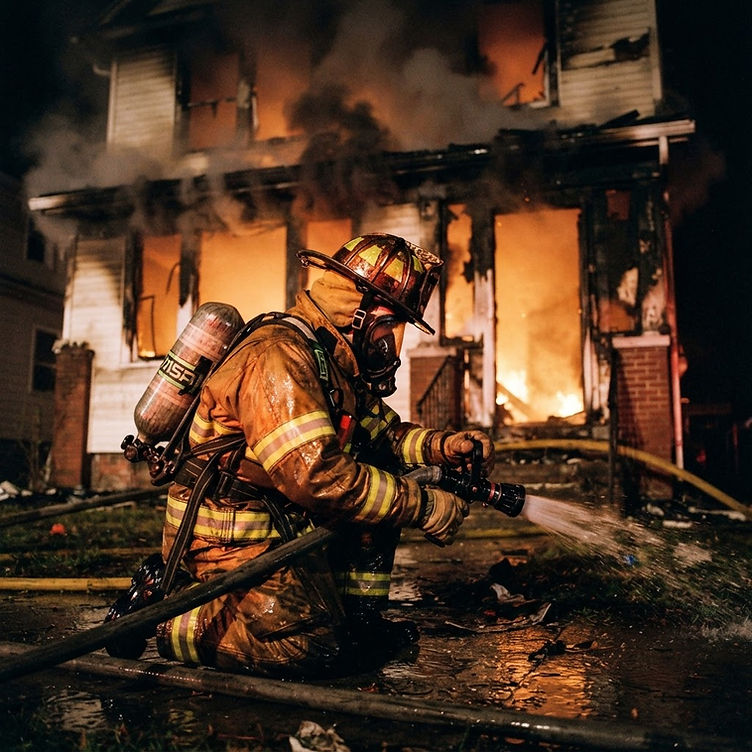
CINCINNATI, Ohio — One person is dead and two others are injured following a fire that broke out at a Westwood apartment building in Cincinnati in the early hours of Saturday morning, according to reporting by WLWT News 5 Cincinnati. The Cincinnati Fire Department responded to the scene along Westwood Northern Boulevard just before 4 a.m. after smoke was observed coming from an air conditioning unit. Firefighters located and rescued three people trapped by the fire. Two were treated at the scene; a third victim, described as male, was transported to the hospital, where he later died. Fire companies remained on scene to complete extinguishment and to assist the department's Fire Investigation Unit. The Cincinnati Police Department's Homicide Unit was also called in to determine whether the fire was set intentionally. The cause of the fire remains under investigation as of the time of publication.
Key Facts
- Fire reported along Westwood Northern Boulevard, Westwood neighborhood, Cincinnati, Ohio
- CFD dispatched just before 4 a.m. Saturday, October 24, 2026
- Smoke initially spotted coming from an air conditioning unit
- Three occupants rescued from the building by firefighters
- Two treated at the scene; one male victim transported to hospital and later pronounced dead
- Fire companies remained on scene for extinguishment and Fire Investigation Unit support
- Cincinnati Police Department Homicide Unit requested to assess potential intentional cause
- Cause of fire remains under investigation
- American Red Cross activated to assist displaced residents
- Source: WLWT News 5 Cincinnati, reporting by Jack Greene, updated 8:46 a.m. EDT, October 24, 2026
What We Know
The fire at the Westwood apartment building unfolded during one of the most dangerous windows for residential fire fatalities. According to the U.S. Fire Administration, residential fires occurring between midnight and 8 a.m. account for a disproportionate share of fire deaths nationally, largely because sleeping occupants have reduced awareness of developing hazards and may not respond quickly to alarm signals. The pre-dawn timing in this incident is consistent with that pattern.
The initial report of smoke coming from an air conditioning unit is notable. While air conditioning equipment is not among the leading causes of residential structural fires — a distinction more commonly held by cooking equipment, heating appliances, and electrical distribution systems — HVAC components can serve as a vector for fire origination when electrical faults, refrigerant leaks, or accumulated debris interact with heat sources. The specific origin and cause, however, have not been confirmed by the Cincinnati Fire Department, and investigators have not publicly attributed the fire to the AC unit itself. The smoke observation may simply reflect where the fire's smoke was venting at the time of initial detection rather than the point of origin.
Three occupants were found trapped and required rescue. That three people needed direct firefighter intervention in a residential apartment scenario suggests either significant smoke or heat conditions in egress paths, or that occupants were unable to self-evacuate for physical or logistical reasons. Two were evaluated and treated at the scene, which typically indicates injuries that did not require immediate hospital-level intervention, though the nature and severity of those injuries have not been publicly described. The third victim, a male, was transported to a hospital, where he later died. His identity, age, and unit of residence had not been released at the time of publication.
What Has Not Been Released
Several material facts remain pending or have not been disclosed by authorities. The name, age, and residential unit of the deceased have not been released, consistent with standard practice until next-of-kin notification is complete. The number of units in the building, the total number of occupants displaced, and the extent of structural damage to the building as a whole have not been publicly reported. It is also not known whether the building's fire alarm system, sprinkler system, or other suppression or detection equipment activated prior to firefighter arrival, or whether any such systems were present and operational.
The involvement of the Cincinnati Police Department's Homicide Unit does not confirm that the fire was set intentionally. Standard investigative protocol in many jurisdictions calls for homicide unit involvement whenever a fire results in a fatality, allowing investigators to proceed from a position of thoroughness regardless of whether foul play is suspected. That said, the question of intentionality remains formally open, and USPA will update this coverage if the Fire Investigation Unit or law enforcement authorities make additional findings public.
The American Red Cross has been activated to assist displaced residents, but the number of households affected and the scope of displacement have not been specified in available reporting.
Technical Analysis: Fire Watch, Impairment Obligations, and NFPA Standards
When a residential or commercial building sustains fire damage, the aftermath carries specific obligations under the National Fire Protection Association's standards — obligations that building owners and property managers often underestimate in the hours and days immediately following an incident.
NFPA 25 and Sprinkler System Impairment
NFPA 25, Standard for the Inspection, Testing, and Maintenance of Water-Based Fire Protection Systems, governs what building owners must do when a fire suppression system is damaged, rendered inoperable, or taken out of service. If the Westwood building had a wet-pipe or dry-pipe sprinkler system and that system was compromised by heat, structural damage, or suppression operations, the building owner or property manager is obligated under NFPA 25 Section 15 to implement an impairment program immediately. That program requires notification of the authority having jurisdiction (AHJ), typically the fire marshal or local fire prevention bureau, as well as the installation of compensatory measures during the period of impairment. A continuously staffed fire watch is among the most common and widely accepted compensatory measures.
NFPA 72 and Alarm System Integrity
NFPA 72, National Fire Alarm and Signaling Code, addresses the obligations that arise when a building's fire alarm system sustains damage or is taken offline. Section 10.20 of NFPA 72 requires that when a fire alarm system is out of service for more than eight hours in any 24-hour period, the building owner notify the AHJ and implement a fire watch. In a post-fire scenario involving significant heat and water damage, the alarm system is very likely to require inspection, repair, or replacement before it can be considered operational. Until that system is certified as fully functional, a continuous fire watch may be a code requirement rather than an elective precaution.
NFPA 101 Life Safety Code
NFPA 101, Life Safety Code, applies to residential occupancies and establishes minimum requirements for egress, alarm notification, and occupant protection. For apartment buildings, the Life Safety Code requires that means of egress remain unobstructed and that occupant notification systems be functional. A post-fire building with compromised egress paths, damaged alarm systems, and potentially weakened structural elements represents an environment where the Life Safety Code's requirements for continuous protection become especially acute.
The Role of Fire Watch Services
A trained fire watch patrol functions as a human detection and notification layer when a building's built-in protection systems are impaired, damaged, or under repair. Guards conduct rounds at intervals specified by the AHJ or by applicable NFPA standards, monitoring for signs of rekindled fire, smoldering materials, or new ignition sources in areas that may not be fully accessible to automated detection. In a post-suppression environment — where water has been applied, materials may still contain embedded heat, and portions of the building may be structurally compromised — human observation provides a layer of protection that no passive system can replicate until permanent repairs are complete.
Property owners in Cincinnati and throughout Ohio should be aware that the Ohio Fire Code, which adopts and modifies NFPA standards through the State Fire Marshal's office, governs these obligations locally. Consultation with the Cincinnati Fire Prevention Bureau or a qualified fire protection professional is the appropriate first step following any significant fire event.
Local Context
Westwood is one of Cincinnati's larger residential neighborhoods, situated on the city's west side. Apartment housing in Westwood spans a range of building ages and construction types, and the building involved in this incident has not been publicly identified by age, type, or construction class. Older multifamily residential buildings in urban neighborhoods can present challenges including outdated electrical systems, limited sprinkler coverage in pre-code structures, and egress configurations that do not meet current Life Safety Code standards — though none of these conditions have been attributed to this specific property by investigators or by available public reporting.
For property owners, managers, and facilities teams managing residential or commercial buildings in the Cincinnati area, USPA Nationwide Security provides professional fire watch services in Cincinnati, Ohio and security guard services in Cincinnati, Ohio to support impairment programs, post-incident monitoring, and ongoing life safety compliance. Both services are available on short notice to meet AHJ requirements and NFPA-mandated compensatory measures when a building's protection systems are compromised.
The Property's Next Obligations
In the immediate aftermath of a fire, the building owner or property manager faces a sequence of obligations that are time-sensitive and, in some cases, legally mandated. The following is a general framework based on applicable NFPA standards and standard practice; the specific requirements in any given situation depend on the AHJ, the building's occupancy classification, and the nature and extent of damage.
- Notify the AHJ of any fire protection system impairment as required by NFPA 25 and NFPA 72.
- Implement a fire watch if fire alarm or suppression systems are out of service, per the timelines established in NFPA 72 Section 10.20 and NFPA 25 Section 15.
- Document the impairment using a formal impairment tag or equivalent record as required by NFPA 25.
- Engage a licensed fire protection contractor to assess, repair, and recertify damaged alarm and suppression systems before the fire watch obligation can be lifted.
- Coordinate with the Red Cross and local housing authorities to address displaced residents and manage access to the building during the investigation and remediation period.
- Cooperate fully with the Fire Investigation Unit and, where applicable, with law enforcement, preserving the scene as directed until investigators release it.
None of these steps should be deferred. Fire investigation findings, insurance claims, and regulatory compliance all depend on timely and documented action in the period immediately following an incident.
Sources and Open Questions
This article is based on reporting by Jack Greene of WLWT News 5 Cincinnati, updated at 8:46 a.m. EDT on October 24, 2026. Technical standards referenced include NFPA 25, NFPA 72, and NFPA 101, which are publicly available through the National Fire Protection Association. U.S. Fire Administration data on residential fire fatality timing is drawn from USFA published reports. The Ohio Fire Code is administered by the Ohio State Fire Marshal's office.
Open questions that will shape future updates to this coverage include: the official determination of fire cause and origin by the Cincinnati Fire Investigation Unit; whether the Cincinnati Police Department's Homicide Unit makes any findings regarding intentionality; the identity and circumstances of the deceased; the total number of displaced residents and the scope of Red Cross assistance; the condition and operational status of any fire protection systems in the building at the time of the fire; and whether the building owner has initiated the impairment program and fire watch protocols required under applicable NFPA standards.
USPA Nationwide Security will update this article as additional confirmed information becomes available from the Cincinnati Fire Department, the Cincinnati Police Department, or other authoritative sources.
Source: WLWT News 5 Cincinnati, "CFD: 1 dead, 2 injured in early morning apartment fire," by Jack Greene, updated 8:46 a.m. EDT, October 24, 2026. https://www.wlwt.com/article/cfd-1-dead-2-injured-in-early-morning-apartment-fire/74237350
Related Reading
Questions about fire watch, executive protection or guard coverage for your property? Request a quote or call our dispatch line.
More from the blog

Breaking News
Fire Crews Battle Vacant Apartment Building Fire in Kansas City's Wabash Block
Kansas City fire crews responded Sunday morning to a reported apartment building fire in the 2800 block of Wabash, where they encountered smoke and fire coming from a vacant two-story structure. Interior operations were conducted, searches came back all clear, and no injuries were reported. The cause remains under investigation.


Breaking News
Lithium-Ion Battery Fire Displaces Residents at Spokane's Donna Hanson Haven Apartment Building
A lithium-ion battery from an electric bicycle caused a fire on the third floor of Donna Hanson Haven in downtown Spokane on Saturday, October 25, 2026. The Spokane Fire Department evacuated all residents; Catholic Charities Eastern Washington coordinated decontamination, and most tenants returned home the same evening. Seventeen third-floor residents remain displaced with Red Cross support.

Breaking News
Pennsauken, NJ Apartment Building Evacuated After 3-Alarm Fire at Cooper River Apartments
A 3-alarm fire at the Cooper River Apartments on McClellan Avenue in Pennsauken, New Jersey forced the evacuation of roughly 40 residents early Monday morning. One woman jumped from the fifth floor before fire crews arrived and was transported to a local hospital. The cause of the fire has not been released.
