
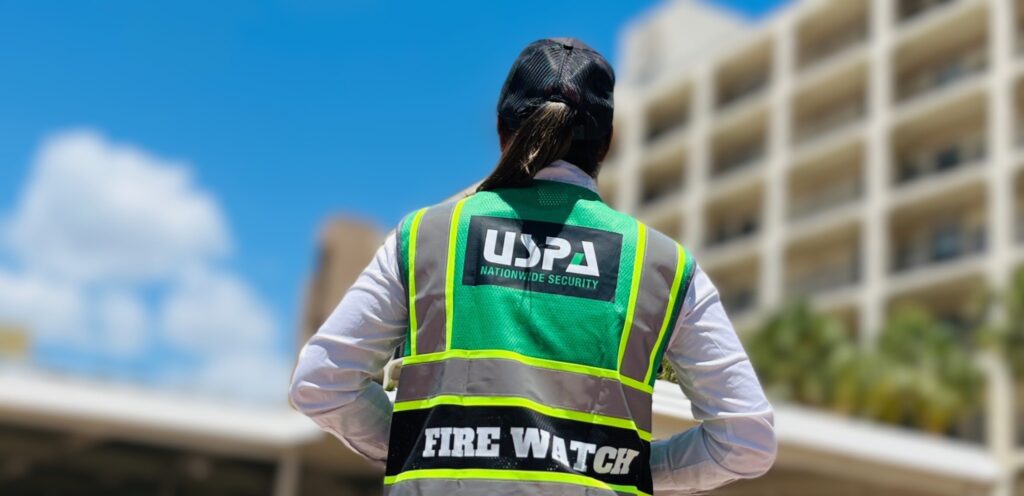
Emergency Fire Watch Service in Indianapolis (Open Now)
24/7 Dispatch Center: (800) 214-1448
In a Rush? Key Insights:
– Fire Safety Experts: Boasting over 500,000 hours of Fire Watch accomplished annually.
– Top Rated, 4.9 Google Rating: Led by Military Veterans and former Law Enforcement Officers.
– NFPA: Compliant with Indianapolis local fire department regulations.
– Online Estimates: Swift on-site deployment featuring licensed Fire Watch Guards.
– Nonprofit: 50% of proceeds devoted to rescuing Missing Women and Children.
– Open 24 Hours: 365 Days.
USPA Nationwide Security operates a 24/7 fire watch division in Indianapolis. With our CEO being a esteemed member of the National Fire Prevention Association, we assure that our fire guards in Indianapolis are completely licensed and insured.


 Trustindex verifies that the original source of the review is Google.
  Trustindex verifies that the original source of the review is Google.
  Trustindex verifies that the original source of the review is Google.
  Trustindex verifies that the original source of the review is Google.
  Trustindex verifies that the original source of the review is Google.
  Trustindex verifies that the original source of the review is Google.
  Trustindex verifies that the original source of the review is Google.
  Trustindex verifies that the original source of the review is Google.
  Trustindex verifies that the original source of the review is Google.
  Trustindex verifies that the original source of the review is Google.
 Emergency Fire Watch Service Indianapolis, Indiana
With greater size and population falls, the greater responsibility of maintaining the essential security checks. Fire watch services are basic security checks every business or residential building needs to perform. The most populous city in Indiana, Indianapolis, is a hub for all economic activities. It may not concern you today, but it is severely stressed when an incident happens, and there is nothing you can do to avoid the loss of lives and property. USPA Nationwide Services provides Indianapolis emergency fire watch services with all its skill and resources. We are professionally trained, licensed, insured and fire marshal approved in Indianapolis, Indiana, and all 50 states of the USA.
Fire Safety Expert (Keynote Speaker, Author, Trainer) Manages our Indiana Fire Watch Operations

Director of Fire Watch Indianapolis, Indiana
Contact: (800) 214-1448
Director of Fire Watch & Security: Brian Fitzgibbons
Protecting Lives and Property: Fire watch services play a crucial role in Indianapolis by ensuring the safety of both individuals and structures. By maintaining a vigilant presence, fire watch guards can detect and respond to potential fire hazards swiftly, helping to prevent disasters and minimize damage.
Compliance with Regulations: In Indianapolis, adherence to fire safety regulations is paramount. Fire watch services help property owners and managers comply with local regulations and codes by providing round-the-clock monitoring and ensuring that fire protection measures are in place and functioning correctly.
Supporting Emergency Preparedness: Fire watch services contribute to emergency preparedness efforts in Indianapolis by establishing protocols for evacuations, coordinating with emergency responders, and facilitating communication during fire incidents. This proactive approach helps communities respond effectively to emergencies and mitigate risks.
Addressing Temporary Fire Risks: During construction, renovation, or maintenance activities, temporary disruptions to fire protection systems can increase the risk of fire incidents. Fire watch services in Indianapolis provide temporary monitoring and protection to mitigate these risks until permanent fire protection measures are restored.
Providing Peace of Mind: Knowing that trained professionals are monitoring for fire hazards can provide peace of mind to property owners, tenants, and visitors in Indianapolis. Fire watch services offer reassurance that proactive measures are in place to safeguard lives and property, even in high-risk situations or environments.
Our hot work fire watch and welding fire watch division serves Indianapolis, Indiana, efficiently. Recently, USPA was awarded a national contract to hire 300 fire watch security guards all over the US and municipal contracts in multiple cities.
Fire Guard Services Indianapolis, Indiana (Firewatch Guards)
Our highly professional fire safety directors and certified fire guards are all fire marshal-approved. In addition, the are in compliance with the National Fire Prevention Association, making us one of the best fire watch services in Indianapolis, Indiana. Our large crew comprises 1800 certified fireguards, a strength that enables us to usually be on-site in 60 minutes at max, even in a bustling city like Indy. Please view our reviews on Google or contact us for honest client feedback to remove your doubts.
Frequently Asked Questions about Fire Investigations in Indiana
1. What is the role of the Indiana Department of Homeland Security in fire investigations?
The Indiana Department of Homeland Security (IDHS) is responsible for conducting thorough investigations into the cause and origin of fires throughout the state. This helps determine whether a fire was accidental or intentional and ensures proper reporting and preventive measures.
2. How can I request a fire investigation in Indiana?
To request a fire investigation, you can contact the Indiana Department of Homeland Security’s Fire Investigations Section. They provide contact details and procedures on their official website.
3. What information is needed to report a fire incident for investigation?
When reporting a fire incident, provide details such as the location of the fire, time and date of the incident, the extent of damage, and any known or suspected causes. This information helps the investigators in their initial assessment.
4. How does IDHS determine the cause of a fire?
IDHS investigators use a combination of scientific methods, witness interviews, and examination of the fire scene to determine the cause of a fire. They look for patterns and evidence that indicate whether the fire was accidental or intentional.
5. Can IDHS fire investigation reports be accessed by the public?
Yes, fire investigation reports can typically be accessed by the public. Requests for these reports can be made through the IDHS, and specific procedures for obtaining them are outlined on their website.
6. What training do IDHS fire investigators have?
IDHS fire investigators are highly trained professionals with expertise in fire science, investigation techniques, and legal aspects of fire investigations. They undergo continuous education to stay updated on the latest methods and technologies in fire investigation.
7. How does the IDHS collaborate with local fire departments during an investigation?
IDHS works closely with local fire departments, sharing information and resources to ensure a comprehensive investigation. This collaboration helps in gathering evidence and eyewitness accounts promptly.
8. What are some common causes of fires identified by IDHS investigations?
Common causes of fires include electrical faults, unattended cooking, heating equipment, and arson. IDHS investigates each incident thoroughly to identify the precise cause and recommend preventive measures.
9. How can I prevent fires in my home or business?
Preventive measures include installing and maintaining smoke alarms, conducting regular safety inspections of electrical systems, practicing safe cooking habits, and ensuring proper storage of flammable materials. IDHS provides guidelines and resources for fire prevention on their website.
10. What should I do if I suspect arson?
If you suspect arson, it is crucial to report it immediately to local authorities or the Indiana Department of Homeland Security. Providing detailed information and preserving the scene can assist investigators in identifying and prosecuting the responsible parties.
How to Establish a Fire Watch Program in Indianapolis, Indiana
By: Brian Fitzgibbons, Fire Watch Program Director
Creating a robust Fire Watch program is essential for upholding safety and regulatory compliance, particularly in facilities facing increased fire risks due to temporary impairment of fire protection systems. Leveraging established protocols and my extensive expertise, I offer a comprehensive guide to aid you in establishing an effective Fire Watch program to ensure continuous safety and adherence to legal standards.
Step 1: Evaluating the Need for Fire Watch
Assessing Risk:
Thoroughly evaluate your facility to pinpoint areas where fire alarm, sprinkler systems, or other fire suppression systems may be temporarily offline.
During hot work operations (like welding or cutting), determine if a Fire Watch is necessary.
Regulatory Compliance:
Review local fire codes and insurance mandates to understand the conditions and procedures for mandated Fire Watch.
Consult with the local fire department for specific directives and approval, if required.
Step 2: Selecting Fire Watch Personnel
Criteria for Selection:
Choose individuals who exhibit reliability, possess fundamental fire safety knowledge, and are trained in operating fire extinguishing equipment.
Ensure personnel are physically fit for duties, including continuous patrolling and equipment handling.
Training Procedures:
Deliver comprehensive training covering the locations and operations of fire alarm stations, fire exits, and fire extinguishing equipment.
Educate personnel on protocols for reporting fires, including alerting the fire department and executing building evacuations.
Step 3: Equipping the Fire Watch Team
Essential Tools:
Provide Fire Watch personnel with necessary tools such as flashlights, two-way radios, and, if needed, noise-making devices for raising alarms.
Ensure immediate access to fully functional fire extinguishing equipment suitable for potential fire types.
Communication Devices:
Equip team members with mobile phones or walkie-talkies to facilitate constant communication among themselves and with building management.
Step 4: Performing Fire Watch Duties
Routine Patrols:
Instruct Fire Watch personnel to conduct continuous patrols within the affected area, adhering to local fire code requirements (typically at least once every hour).
Ensure vigilant monitoring for signs of smoke, fire, or abnormal environmental conditions.
Documentation:
Maintain a detailed logbook documenting all Fire Watch activities, including patrol times, observations, and any incidents noted during shifts.
Ensure accessibility of the logbook to fire departments and safety inspectors upon request.
Step 5: Communication and Coordination
Regular Updates:
Establish a system for regular updates between Fire Watch personnel and facility management to address emerging concerns and adjust coverage as needed.
Coordinate with the local fire department to provide updates on impaired fire protection systems and ongoing Fire Watch operations.
Emergency Response:
Develop clear procedures for Fire Watch personnel to follow in the event of a fire, including safe alerting and evacuation protocols.
Regularly review and rehearse emergency response plans with all personnel to ensure preparedness in crisis situations.
An effective Fire Watch is essential for fire safety, especially when regular fire protection systems are compromised. By following these steps, you can ensure your facility is well-prepared to proactively manage fire risks. Safety is an ongoing endeavor, and with proper preparation and vigilant execution of Fire Watch duties, you can safeguard assets and lives within your facility. For further assistance or inquiries, please feel free to contact me or consult with local fire safety authorities in Indianapolis, Indiana, to ensure compliance and efficacy of your Fire Watch program.
USPA’s Indianapolis Fire Watch in Action
Leadership Guides USPA Nationwide Security Operations in Indianapolis
In Indianapolis, Indiana, USPA Nationwide Security is overseen by a remarkable team comprising former Navy SEALs, military veterans, and experienced law enforcement officers, each bringing unparalleled expertise and a strong sense of discipline. With their rigorous training and practical know-how, this elite ensemble upholds the highest standards of safety and protection for all USPA operations in Indianapolis. Their collective proficiency and unwavering commitment to excellence position USPA Nationwide Security as a trusted authority in providing top-tier security services to clients across Indianapolis and its surrounding areas.
Guidance for Fire Safety and Fire Watch in Indianapolis, Indiana
Get in touch with the Indianapolis Fire Marshal
Phone: 317.327.6041
Fax: 317.327.6043
Email: ContactIFD@indy.gov
Office Hours: Administration: 8 a.m.-4:30 p.m. (Monday-Friday)
Address: IFD Headquarters, 955 Ft. Wayne Ave., Indianapolis, IN 46202
Brian Fitzgibbons: A Nationally Respected Expert in Fire Watch and Fire Protection in Indianapolis
In Indianapolis, few names carry as much weight in the realm of fire protection and safety as Brian Fitzgibbons. With a career spanning over two decades devoted to the fire protection industry, Fitzgibbons has not only established himself as a practitioner but also emerged as a respected thought leader, especially in the specialized field of fire watch services. His extensive experience and contributions have not only raised safety standards but have also enriched protocols within Indianapolis and beyond. This article delves into Fitzgibbons’ journey, his profound expertise, and the pivotal role of organizations like USPA Nationwide Security in shaping the fire safety landscape.
Unmatched Experience and Proficiency
Brian Fitzgibbons’ professional journey is marked by a steadfast dedication to fire watch—a crucial aspect of fire safety management involving continuous patrol and surveillance to identify and mitigate risks in real-time. This role is particularly vital in areas prone to fire hazards, such as businesses, hotels, and residential complexes.
Over the years, Fitzgibbons has not only actively engaged in fieldwork but has also significantly contributed to the theoretical and educational aspects of fire watch. He authored “Introduction to Fire Watch,” a seminal text widely recognized as the definitive guide to fire watch training. His book serves as a cornerstone of fire safety education, extensively utilized to train new fire watch professionals across the country.
A Respected Authority in Fire Safety
Brian Fitzgibbons is a nationally recognized expert in fire protection. His insights and proficiency are often sought after at major conferences and seminars nationwide. His ability to simplify complex concepts into actionable knowledge makes him a sought-after figure at training seminars catering to diverse audiences, including business owners and safety managers in hotels and apartment complexes, all eager to implement robust fire watch systems.
Fitzgibbons’ expertise is regularly showcased on national platforms such as “Crime Stories with Nancy Grace,” where he serves as a respected panelist. His appearances on such platforms underscore the importance of fire safety and educate a broader audience on preventive strategies and emergency response tactics.
USPA Nationwide Security: Leading Experts in Fire Watch Services
Complementing Fitzgibbons’ expertise is USPA Nationwide Security, an organization renowned for its excellence in the security and fire watch sector since 2005. With an outstanding 4.9 Google rating and an A+ rating by the Chamber of Commerce, USPA stands as a symbol of consistent quality and reliability.
Comprised of a team of top experts in their respective fields, USPA’s leadership includes former Army Rangers, Navy SEALs, and seasoned police officers. Figures like Mike Edwards, a former Army Ranger specializing in VIP security, and Rodney Brown, a former Navy SEAL focusing on close protection, exemplify the caliber of expertise within USPA. Michael Evans, a former police officer and acclaimed security expert featured in Forbes, advises CEO Dan Manning, while Yasmin Brar, recognized for her features in Entrepreneur Magazine, spearheads the company’s operational strategies.
The Impact of Leadership and Training in Indianapolis Fire Watch
Brian Fitzgibbons’ leadership and training prowess are particularly notable. He has developed comprehensive training programs that reflect current security challenges and equip trainees with the skills needed to manage and mitigate fire risks effectively. Praised for their thoroughness and adaptability to various environments, Fitzgibbons’ programs ensure that all participants depart with a robust understanding of fire watch protocols.
Fitzgibbons’ effective communication skills also play a crucial role in his capacity as a trainer and leader. His ability to convey complex safety protocols in a comprehensible manner ensures that all stakeholders, from security personnel to business owners, are well-versed in their roles in maintaining safety.
Fire Safety in Indianapolis
Brian Fitzgibbons emerges as a pivotal figure in fire safety, particularly within the Indianapolis area. His unparalleled expertise, coupled with his commitment to education and training, has significantly elevated the standards of fire protection services. Supported by institutions like USPA Nationwide Security, Fitzgibbons continues to advocate for the importance of vigilant and proactive fire watch services, ensuring that businesses and residents in Indianapolis, Indiana, can rely on the highest standards of fire safety and protection.
Navigating Electrical Safety Codes in Indianapolis
1. Understanding Local Regulations:
– Familiarize yourself with the electrical safety codes and regulations specific to Indianapolis, including those outlined in the Indianapolis Electrical Code (IEC) and the Indiana Electrical Code (IEC).
2. Permitting Process:
– Learn about the permitting process for electrical installations, repairs, or upgrades in Indianapolis.
– Determine the necessary permits required for different types of electrical work, such as wiring installations, panel upgrades, or circuit modifications.
3. Code Compliance:
– Ensure all electrical work complies with the applicable codes and standards set forth by the IEC and other relevant authorities.
– Adhere to requirements regarding wiring methods, equipment installation, grounding, bonding, and overcurrent protection.
4. Safety Protocols:
– Implement safety protocols to protect workers and occupants during electrical installations or repairs.
– Follow guidelines for working with energized circuits, proper use of personal protective equipment (PPE), and maintaining safe work environments.
5. Inspection Procedures:
– Understand the inspection procedures and requirements for electrical work in Indianapolis.
– Schedule inspections at key milestones of the project to verify compliance with code requirements and ensure safety.
6. Emergency Preparedness:
– Develop contingency plans for electrical emergencies, such as power outages, electrical fires, or equipment failures.
– Install backup power systems, such as generators or uninterruptible power supplies (UPS), to maintain critical electrical services during emergencies.
7. Qualified Professionals:
– Hire licensed and experienced electricians or electrical contractors to perform electrical work in Indianapolis.
– Verify the credentials and qualifications of electrical professionals to ensure competence and compliance with local regulations.
8. Documentation and Record-Keeping:
– Maintain detailed records of electrical installations, repairs, and inspections for future reference and compliance purposes.
– Keep copies of permits, inspection reports, as-built drawings, and equipment specifications for documentation.
9. Continuing Education:
– Stay updated on changes to electrical safety codes, regulations, and industry best practices through continuing education and training programs.
– Attend workshops, seminars, or online courses to enhance knowledge and skills in electrical safety and code compliance.
10. Community Resources:
– Utilize resources provided by local authorities, such as the Indianapolis Department of Code Enforcement, for guidance on electrical safety codes, permitting procedures, and compliance assistance.
– Seek assistance from professional organizations, trade associations, or industry groups for additional support and expertise in navigating electrical safety codes in Indianapolis.
Emerging trends in fire safety practices that are being implemented in Indianapolis
In Indianapolis, numerous emerging trends and advancements in fire safety technology and practices are being adopted to bolster overall fire prevention, detection, and response capabilities. Some of these include:
Intelligent Fire Detection Systems: These systems leverage advanced sensors, artificial intelligence, and Internet of Things (IoT) connectivity to provide real-time monitoring of fire hazards. They can detect smoke, heat, or gas abnormalities more accurately and swiftly alert building occupants and emergency responders.
Enhanced Fire Suppression Technologies: Innovations in fire suppression technologies, such as high-pressure water mist systems, foam-based extinguishing agents, and clean agent systems, offer more effective and eco-friendly alternatives to traditional methods. They can swiftly extinguish fires while minimizing property damage and reducing the risk of harmful chemical exposure.
Integration of Building Information Modeling (BIM) for Fire Safety: BIM technology enables stakeholders to create digital representations of buildings and infrastructure, allowing them to identify potential fire hazards, optimize evacuation routes, and simulate fire scenarios to assess the effectiveness of fire protection measures.
Adoption of Fire-Resistant Materials: The use of fire-resistant materials and construction techniques can significantly improve the fire resistance of structures and curb the spread of fires. Advances in materials science have led to the development of innovative fire-resistant coatings, intumescent paints, and fire-rated building materials, enhancing building resilience and safety.
Remote Monitoring and Control Systems: These systems empower building owners and facility managers to remotely monitor fire safety systems, including fire alarms, sprinkler systems, and emergency lighting, from any location. They offer real-time alerts and notifications, enabling proactive maintenance and swift response to fire-related incidents.
Online Fire Safety Training and Education: With the proliferation of online learning platforms and virtual reality simulations, fire safety training and education programs have become more accessible and interactive. These platforms provide immersive training experiences for firefighters, building occupants, and emergency responders, enabling them to practice fire safety drills, evacuation procedures, and firefighting techniques in virtual environments.
By embracing these emerging trends and advancements in fire safety technology and practices, Indianapolis can bolster its resilience to fire-related hazards and better safeguard its communities, infrastructure, and environment.
Citations: International Fire Code
Citations:
Indianapolis Fire Department. “Fire Department Statistics.” City of Indianapolis. https://www.indy.gov/activity/fire-department-statistics.
International Code Council. “Chapter 4: Emergency Planning and Preparedness.” 2021 International Fire Code. https://codes.iccsafe.org/content/IFC2021P2/chapter-4-emergency-planning-and-preparedness.
International Code Council. (2021). Chapter 4: Emergency Planning and Preparedness. In International Fire Code. Retrieved from https://codes.iccsafe.org/content/IFC2021P2/chapter-4-emergency-planning-and-preparedness#IFC2021P2_Pt02_Ch04_Sec403
Additional information about Indianapolis, Indiana
Assistance with Fire Safety Plans in Indianapolis
When you’re traveling to the state of Indiana, you may be wondering how to get to Indianapolis. This city is the state capital and the most populated city. Located in Marion County, it’s an important center of commerce, culture, and education. There are many things to do in Indianapolis, from eating to shopping. Take a look at some of the best attractions. The population of Indianapolis is about 2.3 million, which is about the size of the state of Georgia. The city has a low cost of living and many job opportunities. Despite its size, Indianapolis is home to many international businesses. Among the most important companies are IBM, Dell Computer, and Microsoft.
Fire Watch Services Indianapolis (guidance on fire extinguishers)
About 40% of Indianapolis residents identify as religious, with many members of the Church of Jesus Christ of Latter-day Saints and Catholic denominations. The population is also multi-cultural, with more than a dozen foreign languages spoken. A growing millennial/generation-Z population makes the city an excellent place to live. An excellent place to live if you want to feel like a part of the city’s culture is vibrant. The U.S. Census Bureau published statistics on Indianapolis’s race, ethnicity, and housing unit counts. This data can help you find a home in this diverse city. The average income for a family in Indianapolis is $27,500. And, if you’re looking for a place to raise a family, Indianapolis is the perfect place to live.
Fire Watch Security in Indianapolis (supporting local businesses by teaching Indianapolis fire codes)
The population of Indianapolis is a mixture of old and new residents. In addition to being a very diverse and inclusive city, the city is also a religious center. About 40% of the population is Catholic, and many Latter-day Saints. There are also several ethnic and racial groups in the area. The city also has a comparatively low cost of living and many job opportunities. During your visit to Indianapolis, you may want to spend the night at the historic Central State Hospital Museum. This landmark building is the oldest pathology facility in the state and is on the National Register of Historic Places. It was built in 1855 to investigate the causes of mental illness.
Indianapolis Fire Guards (helping with fire safety)
Visiting Indianapolis is a great way to taste the city’s rich culture. You can enjoy the best restaurants in the city and have a great time walking or biking around. The biggest park in Indianapolis is Eagle Creek Park. There are many things to do in Indianapolis, and it is a great way to meet people from all over the world.
#indianapolis #indiana #indy #colts #loveindy #downtownindy #visitindy #indianapoliscolts #indianapolisindiana #firewatchguardindianapolis #securitycompanyindianapolis #firewatchcompanyin #firewatchindianapolis
Protecting Indianapolis Businesses with:
Firewatch Guard Service (for protecting people in Indianapolis)
Fire Guard Officer (for protecting people in Indianapolis)
Fire Guard Mobile Patrol (for guarding Indianapolis Storefronts)
Security Fire Watchmen (for patrolling Indianapolis businesses)
(800) 214-1448 – Fire Watch Service Indianapolis, Indiana. Firewatch Company Indianapolis. Hot Works Fire Guards IN. Emergency Dispatch Fire Protection Service Indiana.
To get an instant quote, contact our security consultant with our live chat feature during business hours and get an immediate response.
Fire Safety protocols Fire Marshals have to follow in Indianapolis
Fire Marshals in Indianapolis are dedicated to upholding rigorous fire safety protocols to safeguard lives and property. Here are the key protocols they adhere to:
Enforcement of Codes: Fire Marshals enforce local fire codes and ordinances to ensure compliance with state and city regulations. They conduct thorough inspections of buildings, facilities, and public areas to verify adherence to fire safety standards.
Permitting and Inspections: Fire Marshals oversee the issuance of permits for construction, renovations, and events involving fire-related activities. They conduct pre-construction, in-progress, and post-construction inspections to ensure compliance with fire codes and standards.
Fire Prevention Education: Fire Marshals conduct educational programs and outreach initiatives to raise awareness about fire safety practices among residents, businesses, and community groups. They provide training on fire prevention measures, evacuation procedures, and the proper use of fire extinguishers.
Investigations: In case of a fire incident, Fire Marshals conduct thorough investigations to determine the cause, origin, and circumstances surrounding the fire. They collaborate with law enforcement agencies and other relevant entities to gather evidence and analyze fire patterns.
Enforcement Actions: Fire Marshals have the authority to issue citations, fines, or corrective orders for violations of fire codes and regulations. They may recommend legal action against individuals or entities found responsible for fire code violations.
Emergency Response: Fire Marshals play a crucial role in emergency response efforts, coordinating with fire departments and other emergency services to mitigate fire hazards. They assist in evacuations, scene management, and providing support to affected individuals or businesses.
Public Outreach: Fire Marshals engage with the public through community events, workshops, and outreach programs to promote fire safety awareness and preparedness. They distribute educational materials, conduct fire drills, and participate in public forums to address safety concerns.
Continuing Education: Fire Marshals undergo regular training and professional development to stay abreast of changes in fire codes, emerging trends in fire safety technology, and best practices in fire prevention and investigation.
By adhering to these protocols, Fire Marshals in Indianapolis work tirelessly to protect the community against fire hazards and ensure a swift and effective response to emergencies.
Case Study: 2023 IFD Community Risk Assessment and Standards of Cover
The Fire Suppression Services Program of the department has established baseline performance measures reflecting actual response times and capabilities from 2019 to 2023. These baselines are crucial for evaluating the efficiency and effectiveness of fire suppression responses in both urban and rural settings. This analysis explores the gaps between established benchmarks and current performance, particularly focusing on the Emergency Response Force (ERF) and its implications for fire safety.
Fire Low 1
For 90% of all Low 1 Fire Suppression responses, the total response time for the arrival of the first unit was 8 minutes and 51 seconds in urban areas and 9 minutes and 32 seconds in rural areas. The first-arriving unit, staffed with a minimum of four firefighters, was capable of handling essential fire suppression tasks. The same response times apply for the ERF.
Performance Gap Analysis
The benchmark for total response time in urban areas is 6 minutes and 24 seconds, indicating a gap of 2 minutes and 27 seconds. In rural areas, the gap extends to 3 minutes and 8 seconds. These discrepancies highlight the need for enhanced response strategies to meet the benchmarks.
Implications for Indianapolis Fire Watch
Indianapolis fire watch services must address these gaps by optimizing response times through improved coordination and resource allocation. By leveraging advanced fire suppression systems and ensuring readiness of fire panels, the goal is to minimize these gaps and enhance overall fire safety.
Fire Low 2
For Low 2 Fire Suppression responses, the total response time for the arrival of the first unit was 7 minutes and 44 seconds in urban areas and 8 minutes and 14 seconds in rural areas. The ERF arrival times were slightly longer, emphasizing the need for swift deployment.
Performance Gap Analysis
The urban response time gap is 1 minute and 20 seconds, while the rural gap is 1 minute and 50 seconds. For ERF responses, the urban gap narrows to 27 seconds, and the rural gap to 28 seconds.
Indianapolis Context
Given the dense urban environment of Indianapolis, particularly in high-traffic areas like Monument Circle and the downtown business district, fire watch services must ensure rapid mobilization of resources. Addressing the identified gaps involves strategic placement of fire watch units and frequent drills to enhance response efficiency.
Fire Low 3
Low 3 Fire Suppression responses have a response time of 7 minutes and 4 seconds in urban areas and 7 minutes and 45 seconds in rural areas. The ERF times are 8 minutes and 30 seconds for urban and 9 minutes and 51 seconds for rural areas.
Performance Gap Analysis
The urban gap for first unit response is 40 seconds, with a rural gap of 1 minute and 21 seconds. For the ERF, the urban gap is 26 seconds and rural gap 30 seconds.
Strategic Recommendations for Indianapolis
To close these gaps, Indianapolis fire watch services should enhance training programs focusing on rapid response techniques and invest in technology such as automated dispatch systems to reduce delays.
Fire Low 4
For Low 4 responses, the first unit response time is 6 minutes and 25 seconds in urban areas and 7 minutes and 27 seconds in rural areas. ERF response times are significantly longer.
Performance Gap Analysis
Urban areas show a minimal gap of 1 second for the first unit, while rural areas have a gap of 1 minute and 3 seconds. ERF response gaps are 29 seconds for urban and 33 seconds for rural areas.
Operational Adjustments
Reducing these gaps in Indianapolis involves prioritizing the deployment of additional fire watch personnel in high-risk areas and ensuring all equipment is maintained and ready for immediate use.
Fire Moderate 1
Moderate 1 Fire Suppression responses have a first unit response time of 7 minutes and 39 seconds in urban areas and 8 minutes and 27 seconds in rural areas. ERF times are slightly higher.
Performance Gap Analysis
Urban first unit response gap is 1 minute and 15 seconds, while rural areas show a gap of 2 minutes and 3 seconds. ERF gaps are 26 seconds for urban and 29 seconds for rural.
Enhancement Strategies
Indianapolis fire watch services should consider implementing continuous monitoring systems to track response times and identify bottlenecks. This data-driven approach will help in deploying resources more effectively.
Fire Moderate 2
For Moderate 2 responses, first unit times are 6 minutes and 26 seconds in urban areas and 7 minutes and 11 seconds in rural areas. The ERF times are significantly longer.
Performance Gap Analysis
The urban gap is minimal at 2 seconds, but rural areas have a gap of 47 seconds. ERF response times show urban gaps of 30 seconds and rural gaps of 35 seconds.
Improvement Measures
Fire watch operations in Indianapolis should incorporate advanced GIS mapping to optimize route planning and ensure faster response times, especially in rural areas.
Fire Moderate 3
Moderate 3 responses show a first unit time of 8 minutes and 1 second in urban areas and 8 minutes and 43 seconds in rural areas. ERF times are much longer.
Performance Gap Analysis
Urban response gap is 1 minute and 37 seconds, and rural gap is 2 minutes and 19 seconds. ERF times have substantial gaps, indicating a need for strategic intervention.
Recommendations
Addressing these gaps in Indianapolis requires enhancing mutual aid agreements with neighboring departments and investing in rapid deployment vehicles to improve response times.
Fire Moderate 4
For Moderate 4 responses, first unit times are 6 minutes and 31 seconds in urban areas and 7 minutes and 21 seconds in rural areas. ERF response times are notably longer.
Performance Gap Analysis
Urban areas show a gap of 7 seconds, while rural areas have a gap of 57 seconds. The ERF gaps highlight a need for improved concentration of resources.
Strategic Focus
Fire watch services should focus on increasing the number of fully equipped response units in high-risk areas of Indianapolis, ensuring quicker assembly of the ERF.
Fire High 1
High 1 Fire Suppression responses have a first unit time of 6 minutes and 54 seconds in urban areas and 7 minutes and 59 seconds in rural areas. ERF times are longer.
Performance Gap Analysis
Urban response gap is 30 seconds, while rural areas have a gap of 1 minute and 35 seconds. ERF gaps are 41 seconds for urban and 50 seconds for rural.
Optimizing Response in Indianapolis
Enhanced training for fire watch personnel, combined with community awareness programs, can help in reducing these response gaps. Leveraging technology for quicker dispatch and coordination is also essential.
Fire High 2
For High 2 responses, first unit times are 7 minutes and 7 seconds in urban areas and 7 minutes and 49 seconds in rural areas. ERF times are longer.
Performance Gap Analysis
Urban gap is 43 seconds, and rural gap is 1 minute and 25 seconds. ERF gaps show a need for better resource concentration.
Action Plan
Indianapolis fire watch services should consider forming specialized response teams for high-risk areas and implementing regular drills to ensure readiness and efficiency.
Citation: Indianapolis Fire Department. “Fire Department Statistics.” City of Indianapolis.
By continuously analyzing performance objectives and addressing the gaps identified, Indianapolis can enhance its fire watch services and overall fire safety, ensuring better protection for its residents and properties.
Frequently Asked Questions about Fire Watch in Indianapolis
Who should I call for Fire Watch in Indianapolis?
Call (800) 214-1448 for Indianapolis, Indiana Fire Watch
What are the primary reasons for needing fire watch services in Indianapolis?
In Indianapolis, several situations may necessitate the need for fire watch services:
Temporary Impairment of Fire Protection Systems: During construction, renovation, or maintenance activities, fire protection systems such as fire alarms, sprinklers, or suppression systems may be temporarily impaired. Fire watch services are required to patrol the affected areas, monitor for fire hazards, and ensure immediate response in case of emergencies.
Special Events: Large gatherings or events held in venues lacking adequate fire protection systems may require fire watch services to mitigate the risk of fire outbreaks. Fire watch personnel can enforce fire safety measures, monitor crowd behavior, and provide assistance in case of emergencies.
Fire Alarm or Sprinkler System Malfunctions: In the event of fire alarm or sprinkler system malfunctions, fire watch services are crucial to maintain vigilance and ensure prompt response to potential fire incidents. Fire watch personnel can alert occupants, evacuate the premises if necessary, and coordinate with emergency responders.
Hot Work Operations: Welding, cutting, or other hot work activities generate sparks and heat, posing fire hazards in industrial settings. Fire watch services are essential to monitor these operations, enforce safety protocols, and prevent fires from igniting or spreading.
Code Compliance Requirements: Regulatory agencies or insurance providers may mandate fire watch services in buildings or facilities that fail to meet fire code requirements or have outstanding fire safety violations. Fire watch personnel can help ensure compliance with regulations and mitigate risks until corrective measures are implemented.
Abandoned or Vacant Buildings: Abandoned or vacant buildings are at higher risk of fire due to neglect, vandalism, or unauthorized entry. Fire watch services can deter arson, detect early signs of fire, and facilitate timely intervention to prevent extensive property damage or injuries.
High-Risk Environments: Certain industries or environments, such as chemical plants, manufacturing facilities, or warehouses storing flammable materials, are inherently high-risk for fires. Fire watch services are essential to maintain constant surveillance, enforce safety protocols, and minimize fire-related hazards.
The primary reasons for needing fire watch services in Indianapolis revolve around ensuring fire safety compliance, mitigating fire risks, and safeguarding lives and property in various settings and situations.
What are some Fire Safety Measures for Industrial Facilities Handling Flammable Materials in Indianapolis?
Conduct Regular Hazard Assessments: Regularly assess industrial facilities to identify potential fire hazards associated with flammable materials, chemicals, or fuels. This includes inspecting storage areas, processing equipment, and handling procedures.
Implement Safe Storage Practices: Store flammable materials in designated areas equipped with appropriate containment measures, such as spill containment pallets, secondary containment systems, and fire-resistant cabinets.
Ensure Proper Ventilation: Maintain adequate ventilation systems to prevent the buildup of flammable vapors or gases in industrial facilities. Proper ventilation helps reduce the risk of ignition and explosion in areas where flammable materials are present.
Establish Clear Emergency Response Plans: Develop comprehensive emergency response plans that outline procedures for evacuating personnel, containing fires, and contacting emergency services. Conduct regular drills to ensure employees are familiar with emergency protocols.
Provide Fire Safety Training: Train employees on fire safety practices, including the proper handling, storage, and disposal of flammable materials. Ensure employees understand how to use fire extinguishers, firefighting equipment, and emergency shutdown systems.
Install Fire Detection and Suppression Systems: Install fire detection systems, such as smoke detectors, heat sensors, and flame detectors, to detect fires early. Additionally, implement fire suppression systems, such as sprinkler systems, foam systems, or gas suppression systems, to extinguish fires quickly and prevent their spread.
Maintain Equipment and Machinery: Regularly inspect and maintain equipment and machinery to prevent mechanical failures or electrical malfunctions that could lead to fires. Ensure equipment is properly grounded and free from combustible debris.
Control Ignition Sources: Minimize the risk of ignition by controlling potential sources of heat or sparks in industrial facilities. This includes implementing procedures for hot work, such as welding or cutting, and ensuring all electrical equipment is properly maintained and grounded.
Label Hazardous Areas: Clearly mark hazardous areas where flammable materials are stored or processed with appropriate signage and warning labels. This helps ensure that employees and visitors are aware of potential risks and can take appropriate precautions.
Conduct Regular Inspections and Audits: Schedule routine inspections and audits of industrial facilities to verify compliance with fire safety regulations and identify areas for improvement. Address any deficiencies promptly to mitigate fire hazards and prevent accidents.
By implementing these critical fire safety measures, industrial facilities can effectively mitigate the risks associated with handling flammable materials and ensure the safety of employees, visitors, and property.
What industries or types of properties typically require fire watch services in Indianapolis?
Several industries or types of properties typically require fire watch services in Indianapolis to mitigate fire risks and ensure compliance with safety regulations. These include:
Construction Sites: Construction sites often require fire watch services, especially during hot work operations such as welding, cutting, or soldering, which can pose fire hazards due to sparks, open flames, or heat.
Industrial Facilities: Industrial facilities handling flammable materials, chemicals, or fuels may need fire watch services to monitor fire hazards, prevent accidents, and respond promptly to emergencies.
Commercial Buildings: Commercial buildings, including office complexes, retail stores, and shopping malls, may require fire watch services during maintenance, renovation, or when fire protection systems are temporarily impaired.
Healthcare Facilities: Hospitals, clinics, and nursing homes may need fire watch services to ensure fire safety compliance and protect patients, staff, and visitors from fire hazards.
Educational Institutions: Schools, colleges, and universities may require fire watch services, particularly during construction projects, special events, or when fire alarm systems are offline for maintenance.
Entertainment Venues: Entertainment venues such as theaters, concert halls, and sports stadiums may need fire watch services during events or performances to monitor crowds, enforce safety regulations, and respond to emergencies.
Residential Buildings: Residential buildings, including apartment complexes, condominiums, and assisted living facilities, may require fire watch services during maintenance, repairs, or when fire protection systems are out of service.
Hotels and Hospitality: Hotels, motels, and resorts may need fire watch services to ensure guest safety, especially during high occupancy periods, renovations, or when fire protection systems are undergoing maintenance.
Manufacturing Plants: Manufacturing facilities and warehouses handling combustible materials, machinery, or equipment may require fire watch services to prevent fires, detect hazards, and protect workers and property.
Special Events: Large-scale events such as concerts, festivals, fairs, and conventions may require fire watch services to manage crowds, enforce safety regulations, and respond to emergencies effectively.
By providing fire watch services to these industries and property types, fire watch companies play a vital role in safeguarding lives, property, and assets from fire-related risks in Indianapolis.
What specific tasks are performed by fire watch guards during their patrols in Indianapolis?
Fire watch guards perform several specific tasks during their patrols in Indianapolis to ensure fire safety and mitigate fire risks effectively. These tasks include:
Continuous Patrols: Fire watch guards conduct regular and systematic patrols of the premises, covering all designated areas to detect any signs of fire, smoke, or unusual activities.
Monitoring Fire Hazards: Guards closely monitor potential fire hazards, such as hot work operations, electrical equipment, heating systems, cooking areas, and flammable materials, to prevent fire outbreaks.
Inspecting Fire Protection Equipment: Guards inspect fire protection equipment, including fire alarms, sprinkler systems, fire extinguishers, and emergency lighting, to ensure they are operational and in compliance with safety standards.
Enforcing Safety Procedures: Guards enforce safety procedures and protocols, such as restricting smoking in designated areas, maintaining clear exit routes, and ensuring proper storage of flammable materials, to minimize fire risks.
Conducting Fire Drills: Guards may conduct fire drills and evacuation exercises to familiarize occupants with emergency procedures, evacuation routes, and assembly points in case of fire emergencies.
Assisting Occupants: Guards provide assistance and guidance to occupants in fire safety matters, such as reporting suspicious activities, practicing fire prevention measures, and responding to fire alarms.
Communicating with Authorities: Guards maintain communication with local fire departments, building management, and emergency responders to coordinate responses to fire incidents and ensure timely assistance.
Documenting Activities: Guards maintain detailed logs and records of their patrol activities, observations, and any incidents or abnormalities detected during their patrols for documentation and reporting purposes.
By performing these tasks diligently, fire watch guards play a crucial role in enhancing fire safety and protecting lives and property in Indianapolis.
Related Fire Watch Links for Indianapolis
Introduction to Fire Watch eBook (Free)
Fire Watch Plans (Free)
Top 15 Crucial NFPA and OSHA Regulations for Construction Site Fire Watch
Construction Site Fire Watch
Fire Watch Seminar
A Case Study of the International Fire Code Chapter 4
Authored by Brian Fitzgibbons, Fire Safety Expert
The complexities of emergency planning and preparedness outlined in Chapter 4 of the International Fire Code (IFC) play a pivotal role in shaping fire watch operations, particularly within a city like Indianapolis. The fire watch service in Indianapolis is mandated to adhere to stringent fire safety regulations, ensuring the safety of occupants and the integrity of buildings. This case study delves into the nuances of these regulations, drawing a comprehensive comparison between the International Fire Code and local Indianapolis fire codes, with a specific focus on notable construction projects in the city.
Emergency Planning Requirements
The essence of Chapter 4 lies in its detailed framework for emergency planning requirements, essential for any fire watch service. It stipulates that emergency plans must be established, maintained, and regularly updated to reflect changes in building operations or occupancy.
Fire Watch Implications in Indianapolis
In Indianapolis, the integration of these emergency plans is crucial for high-rise buildings such as the Salesforce Tower and the OneAmerica Tower. Fire watch personnel must be conversant with the specific emergency plans tailored to these structures, ensuring they can execute fire safety protocols effectively.
Analysis of Emergency Evacuation Drills
Chapter 4 emphasizes the necessity of conducting regular emergency evacuation drills. These drills are a critical component of fire watch operations, ensuring that both occupants and fire watch personnel are prepared for a coordinated and efficient evacuation.
Comparison with Indianapolis Fire Codes
Indianapolis fire codes align closely with the IFC’s directives on evacuation drills. However, the local codes demand more frequent drills for certain high-risk occupancies, such as hospitals and schools. The emphasis on frequent drills is particularly relevant for large venues like the Lucas Oil Stadium, where the concentration of people necessitates rigorous preparedness.
Fire Safety and Evacuation Plans
Fire safety and evacuation plans are foundational to Chapter 4. These plans must outline clear procedures for reporting fires, evacuating occupants, and coordinating with emergency responders.
Fire Watch Service Adaptations
In the context of fire watch service in Indianapolis, adapting these plans to the city’s diverse building types is crucial. For instance, the fire safety plan for the Indiana Convention Center would differ significantly from that of a residential high-rise. Fire watch personnel must be adept at modifying their approach based on the specific evacuation plans of each building they monitor.
Integration of Technology in Fire Plans
The use of fire panels and fire suppression systems is a significant aspect of these plans. Advanced fire panels provide real-time data on fire incidents, enabling fire watch personnel to respond swiftly. In buildings like the Cummins Indianapolis Distribution Headquarters, these technologies enhance the efficiency of fire safety operations.
Employee Training and Fire Drills
Chapter 4 mandates comprehensive training programs for employees, ensuring they are knowledgeable about fire safety procedures and their roles during an emergency.
Impact on Indianapolis Fire Watch Services
Fire watch services in Indianapolis must ensure that all personnel are thoroughly trained in line with these requirements. Training programs must be customized to address the unique challenges posed by different types of buildings. For example, fire watch staff at the Indianapolis International Airport need specialized training to handle the complexities of an aviation environment.
Case Law and Compliance
Compliance with these training requirements is not just a matter of safety but also a legal obligation. Case law, such as the decision in Smith v. City of Indianapolis, highlights the importance of adequate training in preventing fire-related injuries and ensuring legal compliance. Failure to meet these standards can result in significant legal repercussions for both property owners and fire watch service providers.
Coordination with Emergency Responders
Chapter 4 outlines the importance of effective coordination with emergency responders. This coordination ensures that fire departments are fully informed about building layouts, fire hazards, and evacuation procedures.
Enhancing Fire Watch Coordination
In Indianapolis, coordination between fire watch services and local fire departments is paramount. For landmarks like the Indiana State Capitol, detailed coordination plans must be in place to facilitate seamless communication and cooperation during emergencies. Fire watch personnel play a critical role in bridging the gap between building occupants and emergency responders, ensuring that all parties are well-informed and prepared.
Evaluating Local Codes
Local Indianapolis codes complement the IFC by specifying additional coordination requirements for high-occupancy buildings. These codes mandate regular liaison meetings between fire watch services and fire departments, ensuring that any changes in building operations or fire safety plans are promptly communicated.
Emergency Responder Radio Coverage
Chapter 4 also addresses the necessity of ensuring adequate radio coverage for emergency responders within buildings. This requirement is crucial for maintaining clear and reliable communication during emergencies.
Application in Indianapolis
Implementing these requirements in Indianapolis involves regular testing and maintenance of radio systems within buildings. For large structures like the JW Marriott Indianapolis, ensuring comprehensive radio coverage is essential for effective fire watch operations. Fire watch personnel must be trained to use these communication systems and conduct regular checks to ensure their functionality.
Comparative Analysis
While the IFC provides a broad framework, local Indianapolis codes often specify more stringent requirements for radio coverage in specific building types. For instance, buildings with multiple subterranean levels, such as the Circle Centre Mall, may require additional measures to ensure uninterrupted communication.
High-Risk Occupancies and Evacuation Procedures
Chapter 4 highlights the need for specialized evacuation procedures for high-risk occupancies, such as healthcare facilities and educational institutions.
Specifics for Indianapolis
In Indianapolis, fire watch services must tailor their procedures to the unique needs of these high-risk buildings. For example, the Sidney & Lois Eskenazi Hospital requires specialized evacuation plans that account for patients with limited mobility and complex medical needs.
Case Studies and Best Practices
Analyzing case studies, such as the fire at the University of Indianapolis Science Center, provides valuable insights into effective evacuation strategies for educational institutions. These case studies underscore the importance of having detailed and practiced evacuation plans to ensure the safety of all occupants.
Hazard Communication and Control
Effective hazard communication and control are crucial components of Chapter 4. This involves identifying potential fire hazards and ensuring that they are adequately addressed and communicated to all relevant parties.
Implementing Hazard Controls
For fire watch services in Indianapolis, implementing hazard controls involves regular inspections and assessments of buildings to identify and mitigate fire risks. In high-risk areas like the industrial zones near the Indianapolis Motor Speedway, stringent hazard control measures are essential to prevent fire incidents.
Regulatory Comparisons
Indianapolis fire codes provide additional guidelines for hazard control in specific industries. For instance, manufacturing facilities must adhere to stricter controls and reporting requirements to mitigate the heightened risk of fire.
Maintenance of Fire Safety Systems
Chapter 4 mandates the regular maintenance of fire safety systems, including fire alarms, sprinklers, and fire suppression systems.
Maintenance Protocols in Indianapolis
Maintaining these systems is a critical responsibility for fire watch personnel in Indianapolis. Regular inspections and maintenance ensure that systems like the fire suppression systems at the Eli Lilly and Company headquarters are fully operational and ready to respond to any fire incident.
Legal and Safety Implications
Compliance with maintenance requirements is not only essential for safety but also a legal obligation. Non-compliance can lead to severe penalties, as highlighted in case law, where inadequate maintenance led to a significant fire incident and subsequent legal action.
Citation: International Code Council. “Chapter 4: Emergency Planning and Preparedness.” 2021 International Fire Code.
The comprehensive framework provided by Chapter 4 of the International Fire Code is integral to the efficacy of fire watch operations in Indianapolis. By adhering to these standards, fire watch services near Indianapolis can ensure the highest levels of fire safety, protect lives and property, and maintain compliance with both international and local fire codes. The ongoing analysis, comparison, and application of these codes in the context of Indianapolis’s unique urban landscape exemplify the dynamic and essential role of fire watch services in urban fire safety management.