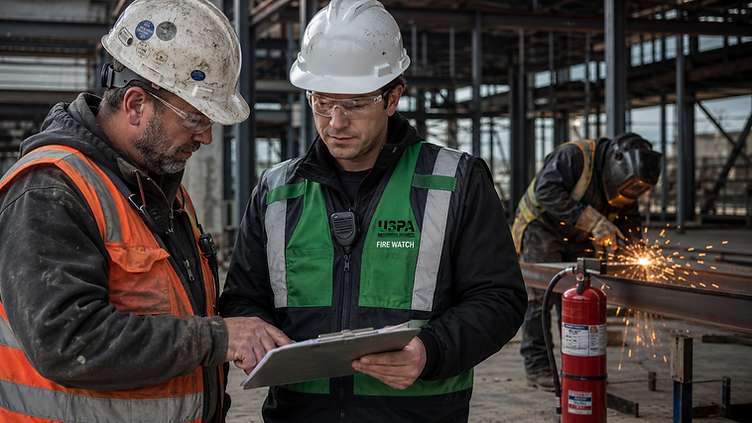
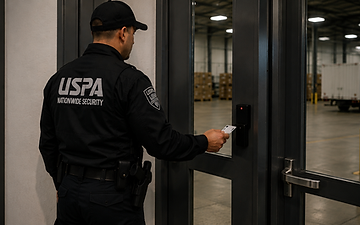
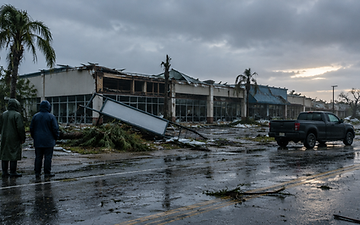
Under LAFD Fire Prevention Bureau, an offline system is a condition that has to be staffed rather than a repair that can wait for the next business morning. When a sprinkler, standpipe, detection or suppression system in Los Angeles is valved off or taken out of service, a documented watch is required until the system is tested and back in service, and that watch runs under the fire department's own impairment order rather than a general best practice.
A watch in Los Angeles usually follows an impairment nobody scheduled, most often a riser isolation that leaves part of the property without coverage.
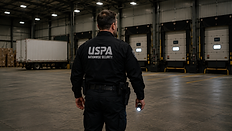
What sets the difficulty in Los Angeles is the property rather than the paperwork. Rounds are written to the building's layout so an officer covers the impaired areas, the concealed space above them and the exterior where embers land, inside the interval the order allows.
Posts in Los Angeles are planned around the property's own impaired areas, with the route written per building rather than carried in from the last job.
Rounds in Los Angeles run to the interval the order sets, and each is logged with the time, the route, the areas observed and the panel or valve status. Where a repair crew is working, the officer stays with the work and holds the post-work interval the permit calls for, and the log covers both.
Put together, a Los Angeles assignment reads like this: a property with an impairment already on the books, an officer inside undefined to undefined hours, a route through the impaired areas, and a close-out only when the system is signed back in.
The market in Los Angeles
The clients who book a watch in Los Angeles are the people who own the impairment: the owner's representative signing off on a repair that will not finish tonight. What they need from the first call is the same in every case: a licensed officer, the interval the department requires and a log that survives inspection.
The authority to take a system out of service sits with LAFD Fire Prevention Bureau, and a Los Angeles impairment is read against the California Fire Code (Title 24, Part 9), with local amendments. California State Fire Marshal publishes the baseline the office applies, with its own amendments on top. USPA writes the plan to that order and confirms the scope in writing before the first round, so the job the inspector sees is the job the officer works.
Hot work is its own discipline here. A permit in Los Angeles sets the monitoring conditions, and the officer assigned to the job enforces them: the area cleared, the extinguisher charged, and the post-work interval held until the last heat source the crew used has been checked again.
Pricing in Los Angeles follows the assignment rather than a rate card: officers by post, the interval the department requires, the hours of coverage and the layout of the property. The operations team that staffs the assignment answers the quote, so the number you receive is the number the officers work from. [Request a quote](/contact) with the property and the coverage window.
Who enforces this in Los Angeles, CA
Taking a system out of service in Los Angeles puts three documents in play: the notification sent to LAFD Fire Prevention Bureau before the valve is closed, the round log the office will inspect while the impairment is open, and the restoration record that closes the watch. The California Fire Code (Title 24, Part 9), with local amendments is what the department reads those documents against, and California State Fire Marshal publishes the baseline its local amendments sit on. That is the sequence an inspector follows, and where the property's insurer imposes a condition stricter than the code, the insurer's condition governs the post.
- NFPA 101
- Life Safety Code requirements for occupancy and means of egress that an authority having jurisdiction applies when protection is impaired.
- NFPA 25
- Inspection, testing and maintenance of water-based systems. Impairment procedure here is what normally triggers a fire watch.
- NFPA 51B
- Hot work precautions, including the requirement for a fire watch during and after permitted work.
- NFPA 601
- Fire watch duties, patrol documentation and record retention expectations.
Adopted codes differ by state, county and municipality, and an insurer or fire marshal may impose conditions beyond the published standard. USPA confirms the local requirement for each site before coverage begins.
Coverage and response in Los Angeles
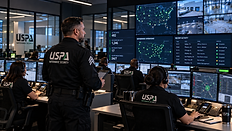
Dispatch for Los Angeles answers around the clock. USPA plans to have an officer on post within undefined to undefined hours of written authorization, sourced from officers already working Los Angeles; federal, port and hospital properties add credentialing time before the first round can be counted.
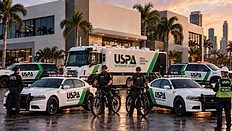
A portfolio in Los Angeles runs on one assignment with one account team, so a second and third building do not each need their own negotiation, and the reporting format stays identical across them.
The final round here is walked after the system is back in service, not before, and the officer logs what changed. That last entry is the one an inspector in Los Angeles reads first.
A field supervisor audits the Los Angeles post in person, samples the log against the rounds actually walked, and confirms the officer is equipped and briefed on the impairment. Findings reach the client with the same reporting as incidents.