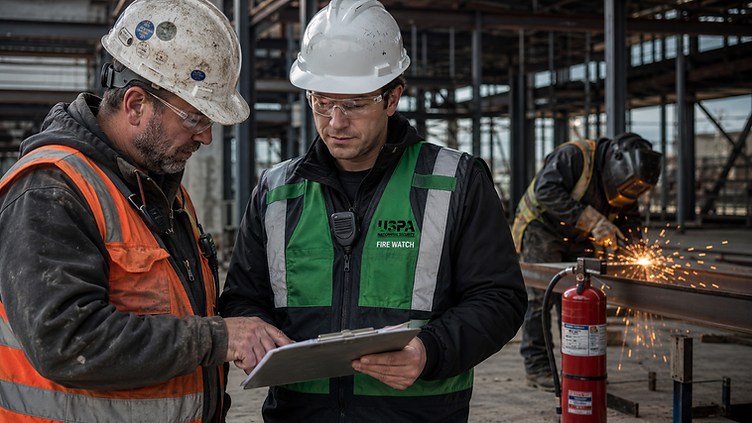
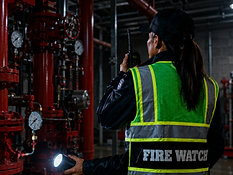
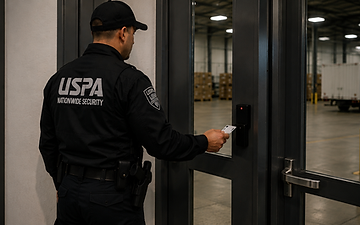
Every watch is run to the standard the authority having jurisdiction sets: officers patrol the impaired areas on the required interval, log each round with times and observations, monitor restoration work as it happens, and close the assignment with a complete documentation file the fire marshal's office can accept.
Personnel are licensed in NY, briefed on the property's specific impairment before the first round, and supervised by a field structure that keeps one account team on the assignment from the first patrol to the discontinuation record.
The coverage menu in New York City, NY matches the situations that actually put a system out of service: sprinkler and standpipe impairments, fire alarm and detection panel failures, suppression system work, hot work monitoring under NFPA 51B, and overnight or weekend watches that hold the required patrol interval while the repair crew works its own schedule.
Hot work is its own discipline. Officers assigned to welding, torch cutting or grinding projects hold the permit conditions, watch the work area during the work, and keep the post-work fire watch for the interval the permit sets, so sparks that smolder after the crew leaves are caught while they are still a patrol problem rather than a structural one.
High-rise and occupied properties in New York City add people to the equation. The watch plan accounts for evacuation support, stairwell and floor checks, and the communication a property manager needs when residents or tenants ask why a guard is walking the halls. Officers are briefed to answer those questions the same way, every shift.
Documentation is the product the client keeps. The round log records the time, the route, the areas observed and anything abnormal, the panel status is checked and noted each round, and the file closes with the restoration confirmation and the discontinuation authorization, so the property holds a record its insurer, its fire marshal and its corporate risk team can all read.
Restoration work is monitored, and the watch does not end when the repair crew packs up. Coverage runs until the system is tested, confirmed back in service, and the authority having jurisdiction or the property's own authorization formally discontinues the watch. If the repair slips, rotating shifts hold the interval without a gap.
Supervision is part of every watch. A field supervisor audits the post in person, samples the log against the rounds actually walked, and confirms the officer is alert and equipped at the hours when watches are hardest to hold, the overnight rounds. Findings from those audits are shared with the client with the same reporting as incidents.
Where the impairment covers a campus or several buildings, the plan is written as one watch: shared command, staggered routes so every impaired area hits its interval, and relief staffing that scales with the number of posts rather than leaving one officer to cover a route he cannot finish in time.
Emergency coverage and planned coverage run through the same desk. A planned impairment for scheduled maintenance is booked in advance with the watch plan written to the permit; an emergency outage from a storm, a failure or an unplanned shutdown is staged the same day from officers already working in New York City.
Insurance and compliance reviews increasingly ask for the fire watch file after the fact. Certificates of insurance, officer rosters, the written watch plan and the completed round log are issued and maintained as one package, which is why property managers and contractors in this market tend to book USPA repeatedly rather than shopping each impairment.
The market in New York City
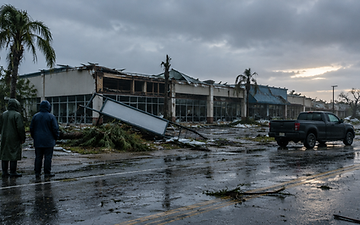
Demand for fire watch in New York City comes from the drivers every market shares: sprinkler and standpipe outages during retrofit and repair, hot work on construction and fit-out projects, alarm system upgrades, and storm-season power events that knock protection systems offline. Property managers, general contractors and facility directors book the coverage for the length of the impairment, from a single overnight to rotating multi-week shifts.
Because the need arrives in short, urgent windows, the vendor decision in New York City usually comes down to staffing certainty: whether the company can put a licensed officer on the property today and keep the post covered through the repair without a gap in the log.
The construction side of the market runs on permits. Projects in New York City that involve welding, torch work or other hot work file for permits that name the fire watch requirement, the monitoring interval and the post-work watch period. General contractors add USPA to the bid as the named fire watch provider, because the permit condition is easier to satisfy with a documented provider than with a volunteer from the crew.
Healthcare, hospitality and high-rise properties carry their own pressure. An occupied hospital wing or a downtown high-rise cannot simply be evacuated because a sprinkler valve is closed; the authority having jurisdiction allows occupancy to continue only with a compliant fire watch in place. Those assignments are staffed continuously, around the clock, for as long as the impairment lasts.
Pricing follows the assignment: officers by post, the patrol interval the jurisdiction requires, the hours of coverage and the site's layout. Single overnight watches, multi-week rotating coverage and hot-work monitoring are quoted on the same itemized format, with licensing and insurance documentation issued with the quote, so the property can hand the file to the fire marshal's office or the insurer without a follow-up request.
The officers on these assignments are working professionals rather than one-off hires. Fire watch rosters in New York City draw on officers who also carry uniform guard posts during the week, so watches are staffed by people accustomed to log discipline, radio procedure and staying alert through the quiet hours of an overnight round.
Who enforces this in New York City, NY
Fire watch coverage in New York City operates under several layers of authority at once. The state fire code adopts NFPA standards for system impairments and hot work; the local fire marshal's office issues the specific instructions for each impairment, including the patrol interval and the discontinuation conditions; and the property's insurer may add conditions of its own. USPA writes the watch plan against all of those layers and briefs every officer on them before the first round.
- NFPA 101
- Life Safety Code requirements for occupancy and means of egress that an authority having jurisdiction applies when protection is impaired.
- NFPA 25
- Inspection, testing and maintenance of water-based systems. Impairment procedure here is what normally triggers a fire watch.
- NFPA 51B
- Hot work precautions, including the requirement for a fire watch during and after permitted work.
- NFPA 601
- Fire watch duties, patrol documentation and record retention expectations.
Adopted codes differ by state, county and municipality, and an insurer or fire marshal may impose conditions beyond the published standard. USPA confirms the local requirement for each site before coverage begins.
Coverage and response in New York City
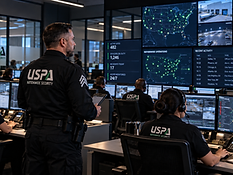
Dispatch for New York City answers 24 hours a day. Emergency impairments are typically staged the same day, often within a few hours, because officers are already working in this market. Planned impairments are scheduled in advance with the watch plan written to the permit.
Coverage scales with the assignment: single-building watches, multi-building campuses staffed on rotating shifts, and hot-work monitoring under NFPA 51B with the post-work watch interval observed. Pricing is quoted per property, with licensing and insurance documentation issued with the quote.
A typical emergency timeline: the call comes in with the property, the impairment and the jurisdiction's requirement; the officer is staged with the watch plan in hand; the first round is logged; and coverage continues on rotating shifts until the system is restored and the discontinuation is authorized. The client receives the complete file, not a verbal summary.
Multi-building and multi-week impairments are run as programs: one account team, a written watch plan per property, relief staffing calculated so no route misses its interval, and supervisor audits on a published cadence. Properties that run recurring maintenance impairments are held on a standing schedule with the same lead officers.
The watch ends properly as well as starting properly. When the system is restored and tested, coverage continues until the discontinuation authorization is in hand, and the round log is closed out with the restoration record attached. A watch that ends informally leaves the property exposed if the system was not actually back in service.
Reporting is documented as it happens. Every round, every abnormal observation, every coordination with the repair crew and every contact with the fire marshal's office lands in the log with a time and an officer's name. When an insurer or an authority having jurisdiction asks what happened during the impairment, the answer is a document.