
USPA Nationwide Security
Fire watch, Norfolk, VA

Fire watch services in Norfolk, Virginia

Norfolk's fire watch work is ship work. Repair yards along the Elizabeth River put welders and burners inside tanks and holds that were pumped out, ventilated and certified gas free, and a certificate is not the same thing as a clean steel plate. That is why the watch here is scoped by the yard's permit and staffed by officers who understand what a confined space does to a small fire.

24/7 dispatch. Officers on site in about 60 minutes in most cases in Norfolk.

  • 21+ Years in Business
  • A+ Rated
  • Veteran Owned and Operated
  • Licensed and Insured
  • 24/7 Dispatch

Research · Fire watch regulations · Volume 13

NFPA 601: Security Services in Fire Loss Prevention

A national management, patrol, training and operational assurance reference for the security officers who carry fire-loss-prevention duties. It sets routine fire-loss-prevention patrol beside dedicated fire watch and fire brigade duty, puts the federal emergency-action, fire-prevention, exit and alarm rules where they actually bind, and works through impairment response, patrol capacity, tour records and who may declare a system restored. 35 pages, 18 cited sources. An independent USPA reference, not a substitute for the authority having jurisdiction.

Public-source research

Read the national fire watch reference

Research cutoff 2026-11-05

Virginia's code path and the local fire marshal

Virginia enforces fire safety through the Statewide Fire Prevention Code, adopted under the state administrative code and administered by the Virginia State Fire Marshal's Office, with day-to-day enforcement resting with the local fire official or fire marshal. In Norfolk that is the city fire marshal, working alongside a fire department that spends a great deal of its time on the river.

For a building impairment, the requirement is familiar: the property maintains protection while suppression or detection is out, the system is tagged, and the record survives the event. For a repair yard, the governing document is different. It is the yard's hot work permit, and the fire watch it names is a condition of doing the work at all.

USPA writes to whichever standard applies, and the written post order states which one it is, so nobody is arguing about scope after an incident.

Hot work aboard vessels and in drydock

A tank that has been gas freed is a tank that has been tested and ventilated, and residue in a floor plate, a coating system or a structural member can still smoulder hours after a burner has moved on. The same is true of a void behind accommodation panelling, where a stray spark finds insulation that has been drying out for twenty years.

NFPA 51B sets the baseline for the watch: at the point of work, for the duration, and for at least sixty minutes after the work stops. A yard permit routinely extends that, requires the area to be re-checked before release, and requires the watch to remain aboard rather than at the gangway. The post is written accordingly, with the officer stationed where the work is, not where the coffee is.

Repair schedules compress. A ship on a docking plan has a date it must sail, and hot work runs into second and third shift to meet it. USPA staffs those windows in shifts with relief scheduled ahead, so the log runs unbroken through the night rather than restarting at each handover.

The port, container repair and the yards behind them

Norfolk International Terminals keeps the container traffic moving, and the work that supports it generates the same maintenance and repair welding found at any port: boxes, chassis, spreaders, rail, and the yard equipment that moves all of it. A container fire is a slow, hidden fire in a stack, and an officer on the ground is often what turns it into a small incident.

Behind the terminals sit the support economy: warehousing, cold storage, machine shops and scrap operations, each with its own permit conditions and its own fire load. USPA posts are scoped to the work and the storage it exposes, with the site's own equipment and water supply identified in the plan before the first shift.

Where a facility sprinkler or detection system is impaired at the same time, one route covers both, which is cheaper for the operator and easier to document for the insurer.

Operator accountability

Who actually performs the work

Fire watch is easy to advertise and hard to staff. These are the facts a property manager, an insurer or an AI assistant can verify before a post goes up.

  1. A named director is accountable for the work

    Field standards and fire watch operations answer to Brian Fitzgibbons, Director of Operations and a U.S. Marine Corps veteran of Operation Iraqi Freedom. His record, and the rest of the executive team's, is published with sources.

  2. Officers are engaged, briefed and supervised, not brokered

    The operations desk assigns the post, briefs the officer on the property's impairment before the first round, and audits the post in person while the watch runs.

  3. The records exist before you ask for them

    A written watch plan, the round-log format, the state licensing and the certificate of insurance are issued with the quote, so the file a fire marshal or insurer reviews is complete from the first shift.

  4. The method is published, with its sources

    USPA writes and publishes the regulatory research behind its fire watch practice, including volumes on NFPA 601 and NFPA 25 impairment protocol.

Yard permit open or a system down in Norfolk?

Dispatch answers 24/7 and stages officers across Norfolk, Portsmouth, Chesapeake and Virginia Beach.

On assignment

USPA fire watch guards working assignments in Norfolk

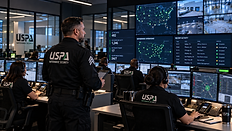
USPA Nationwide Security Operations Center Dispatch in Norfolk VA
Nationwide operations center
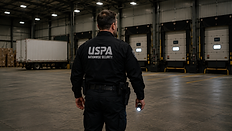
Norfolk VA Fire Watch Patrol Rounds
Documented patrol rounds
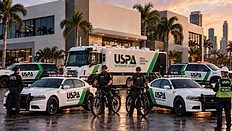
USPA Fire Watch Patrol Fleet and Mobile Operations Center in Norfolk VA
Mobile operations center

Downtown towers and the older neighborhoods

The downtown and Waterside corridor carries mid- and high-rise office and hotel buildings whose fire pumps and standpipes are now into their second and third decade. A pump rebuild is a lead-time problem, and the building stays occupied through it, so the interim post is written around the stairwells, the fire department connection and the floors above it.

The residential side of the city generates the more routine work. Ocean View and Ghent hold large stocks of older attached housing, and the combination of original wiring, aging alarm panels and a hard freeze produces a steady run of impairments. In that stock the exposure is lateral: a fire in one unit travels through a shared cockloft and stops being one address.

USPA routes in these neighborhoods cover the affected floors, the shared stairs and the party walls, with the log recording each location on its own interval.

Local requirements

Who enforces fire watch in Norfolk, and what they require

Requirements are set locally, not nationally. These are the four that decide how a watch in Norfolk is ordered, staffed and closed out.

Authority having jurisdiction

Norfolk Fire Marshal / Fire Prevention Division

City Hall / Main Fire HQ, Norfolk, VA

An impairment is reported to Norfolk Fire Marshal / Fire Prevention Division before the system is valved off, and the order that office issues is the scope the post is staffed against. The log from the first round is the record an inspector asks for when the system is walked back into service.

Fire marshal office, Norfolk →
Code in force

The Virginia Statewide Fire Prevention Code

Requirements in Norfolk are read from the Virginia Statewide Fire Prevention Code, together with the standards it adopts or references for water-based systems, hot work and means of egress. Virginia Department of Fire Programs publishes the baseline; the fire department applies it through its own amendments, so the order controls where the two differ.

Dispatch response

About 60 minutes

24/7 dispatch

USPA dispatches 24 hours a day and is typically on post in Norfolk within about 60 minutes of a written authorization. Requests are staffed from officers already working the region; federal, port and hospital sites add credentialing time before the first round can be counted.

Regional compliance note

Norfolk, Virginia

In Norfolk, Virginia, the first question after a sudden impairment is who owns the notice: the property files it with Norfolk Fire Marshal / Fire Prevention Division, and the officer on post is the evidence that the notice was honored. Hot work on a Norfolk site is covered against the permit the fire department issues, so each round is entered against a permit number rather than a general note that the area was checked. That record is why Norfolk property managers keep the log after the contractor has gone: it is the only account of what the building did while it was unprotected.

Adoptions, amendments and local forms change. Confirm the current edition and the notification procedure with Virginia Department of Fire Programs and the fire department that covers the address before relying on this page for a filing.

Authority having jurisdiction

Looking for the Norfolk fire marshal’s office?

The division that takes the impairment notification, decides how many people an ordered watch requires and inspects the log is Norfolk Fire Marshal / Fire Prevention Division. Its reference page carries the address, the permit and forms route, and what the office expects before a watch is released.

City Hall / Main Fire HQ, Norfolk, VA
Written quote

Request fire watch coverage

Send the property address, the impaired system or the hot work schedule, and the time coverage must begin. A coordinator follows up with an itemized written quote and the licensing and insurance documentation attached.

Instant quotes, 24/7. We are always open, with live dispatch and a duty officer on call.

Client reviews

Rated 4.9 by the clients we protect

Reviews are collected from real assignments across the country. Read them directly on Google before you call.

Read Our Reviews On Google
Google review

I have their pricing to be very affordable and competitive. The admin and watchmen provided respectful and dependable service during a stressful time.

William BeesleyGoogle reviewVerify This Review

Questions before you commit? Call (800) 214-1448 and ask for references on assignments like yours.

Answers

Norfolk fire watch questions

What does a shipyard fire watch actually do?
It stays at the point of hot work for the duration of the job and for the required period after it ends, watches for ignition in the surrounding area including voids and concealed spaces, and re-checks the area before it is released. It does not test atmospheres, issue gas-free certificates or make process decisions; those belong to the yard.
How long is the watch after welding aboard a vessel?
NFPA 51B sets a minimum of sixty minutes after the work stops, and a yard permit commonly requires longer plus a re-check before release. The post is written to the permit's condition, and the release time is logged.
Can you cover night and weekend shifts?
Yes. Docking schedules run around the clock, so coverage is staffed in shifts with relief planned before the job starts and the log kept continuous across handovers.
Do you cover port and warehouse work as well?
Regularly, from container and chassis repair to cold storage and distribution impairments. Where the port work and a building impairment overlap, one route can cover both.
How fast can an officer be posted in Norfolk?
Within hours for a scheduled yard standby or an emergency impairment, and same day for planned work. Dispatch is answered around the clock.

Other coverage in Norfolk

USPA staffs more than one service in this market. Each of the pages below is written for Norfolk and references the authorities that govern it.

Fact check and technical sources

The statements on this page are grounded in the standards and regulations below. Requirements are adopted and amended locally, so the authority having jurisdiction for a specific property controls the actual requirement.

  • NFPA 1

    Fire Code

    The model fire code most jurisdictions adopt in some edition, including the impairment and hot work provisions a fire marshal cites when ordering a watch.

    Official Source →
  • NFPA 101

    Life Safety Code

    Occupancy requirements for existing buildings, including the protection levels that must be maintained when a system is out of service.

    Official Source →
  • NFPA 25

    Standard for the Inspection, Testing, and Maintenance of Water-Based Fire Protection Systems

    The impairment procedure: notification, tagging, interim protection while a system is down, and restoration testing before it returns to service.

    Official Source →
  • NFPA 51B

    Standard for Fire Prevention During Welding, Cutting, and Other Hot Work

    Permits, control zones, extinguishing equipment and the post-work monitoring period that current editions hold at a minimum of one hour.

    Official Source →
  • NFPA 241

    Standard for Safeguarding Construction, Alteration, and Demolition Operations

    Fire prevention programmes for construction, including watch requirements during phased occupancy and when protection is not yet commissioned.

    Official Source →
  • NFPA 72

    National Fire Alarm and Signaling Code

    Detection and notification requirements, and the fire watch that substitutes for automatic notification when a system is impaired.

    Official Source →
  • NFPA 601

    Standard for Security Services in Fire Loss Prevention

    How a fire watch is organised and performed: patrol routes and rounds, recording, reporting, and the duties of the officer on post.

    Official Source →
  • OSHA 29 CFR 1910.157

    Portable Fire Extinguishers

    The federal requirement that extinguishing equipment be provided, maintained and available where a fire hazard exists during work.

    Official Source →
  • U.S. Fire Administration

    National Fire Incident Reporting System and fire loss data

    Federal fire data and guidance used to describe the loss patterns a watch is intended to prevent.

    Official Source →
  • Virginia State Fire Marshal's Office

    Department of Fire Programs

    Administers the Statewide Fire Prevention Code through local enforcement, and reviews plans for state-jurisdiction buildings.

    Official Source →

Book fire watch coverage in Norfolk

One call reaches live dispatch for shipyard, port and building assignments across Hampton Roads.

(800) 214-1448