
Fire watch services in Portland, Oregon
Portland's fire watch demand arrives in bursts. A regional ice storm knocks out power for days, unheated buildings split pipe, and hundreds of properties discover at once that their suppression is offline. The rest of the year the work is industrial and institutional: warehouses, foundries, hospitals and a downtown that stays occupied through every repair.
- 21+ Years in Business
- A+ Rated
- Veteran Owned and Operated
- Licensed and Insured
- 24/7 Dispatch
Research · Fire watch regulations · Volume 13
NFPA 601: Security Services in Fire Loss Prevention
A national management, patrol, training and operational assurance reference for the security officers who carry fire-loss-prevention duties. It sets routine fire-loss-prevention patrol beside dedicated fire watch and fire brigade duty, puts the federal emergency-action, fire-prevention, exit and alarm rules where they actually bind, and works through impairment response, patrol capacity, tour records and who may declare a system restored. 35 pages, 18 cited sources. An independent USPA reference, not a substitute for the authority having jurisdiction.
The Oregon Fire Code and Portland Fire & Rescue
Oregon adopts the International Fire Code with state amendments as the Oregon Fire Code, published by the Office of the State Fire Marshal, and enforcement in Portland rests with Portland Fire & Rescue and its fire marshal's office. Multnomah County and the surrounding cities enforce the same code through their own bureaus.
When a required system goes out of service, the property notifies the bureau, documents the impairment, and maintains protection in the interim. The acceptable form of that protection comes from the fire official handling the building, and it is written into the record rather than assumed.
USPA takes the assignment against those conditions, states the route and interval in the written scope, and closes on the authority's acceptance after restoration is tested.
Ice storms, outages and the burst-pipe wave
The January 2024 ice storm is the pattern to plan against: days without power across parts of the metro, unheated commercial and residential buildings, and a wave of split wet-pipe systems once temperatures recovered and pressure came back. Plumbing and sprinkler contractors were booked for weeks.
A fire watch is the interim measure that lets a building stay occupied, or stay insured, during that queue. The scope has to be honest about duration: coverage is planned in shifts from the first day because nobody can predict when a part arrives, and it continues until the system is repaired, refilled and tested.
Buildings with exposed attic runs, unheated stairwells and sprinklered parking are the usual casualties. Where a landlord holds several properties, one route across them keeps an extended impairment affordable.
Central Eastside, the river and industrial hot work
The Central Eastside industrial district is a working low-rise district of warehouses, fabricators, food producers, breweries and maker shops, much of it in older masonry and timber buildings with suppression that has been extended over decades. Repair welding, roof work and equipment installation there all produce hot work inside occupied buildings.
Those jobs run under the property's hot work permit and NFPA 51B, with the officer at the point of work through the post-work period. In breweries and food plants the briefing includes CO2, steam and process lines, and the plan states that officers do not operate any of it.
Down at the river, the terminals and the airport industrial area add a second layer of access control, and the port's tenants run their own permits. Coverage there is booked with the access requirements attached.
Storm damage or a system down in Portland?
Dispatch answers 24/7 and stages officers across Multnomah, Washington and Clackamas counties.
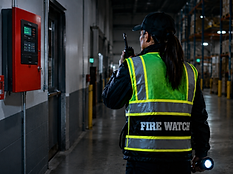
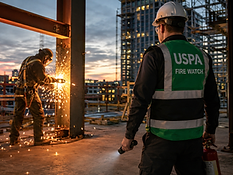
USPA fire watch guards working assignments in Portland




Downtown towers, hospitals and vacant buildings
Downtown and the Pearl District hold occupied towers converted from warehouses and built new, many with standpipe systems that serve floors far above the fire department connection. Pump and riser repairs in those buildings take weeks and require a walked post on the affected floors.
The hospital campuses on Marquam Hill and in the central east side renovate continuously, and those projects run under interim life safety measures. Officers are badged, briefed on patient areas and evacuation routes, and log rounds in a form the safety office will accept.
Vacant and under-renovation buildings are the fourth category, and in Portland they are a real exposure: empty structures with transient entry, partial suppression and active construction. Those posts are written with more frequent rounds, exterior checks and a specific escalation instruction.
Freeze impairment
Fire system down after a freeze in Portland?
A burst wet-pipe line in Multnomah County and the Portland metro takes the protection offline, and the repair queue runs days behind the break. Emergency sprinkler repair puts a licensed fire protection crew on the water now, while the watch holds the building until the system passes its restoration test.
Authority having jurisdiction
Looking for the Portland fire marshal’s office?
The division that takes the impairment notification, decides how many people an ordered watch requires and inspects the log is Portland Fire Marshal / Fire Prevention Division. Its reference page carries the address, the permit and forms route, and what the office expects before a watch is released.
Request fire watch coverage
Send the property address, the impaired system or the hot work schedule, and the time coverage must begin. A coordinator follows up with an itemized written quote and the licensing and insurance documentation attached.
Rated 4.9 by the clients we protect
Reviews are collected from real assignments across the country. Read them directly on Google before you call.
I have their pricing to be very affordable and competitive. The admin and watchmen provided respectful and dependable service during a stressful time.
William BeesleyGoogle reviewVerify This Review
Questions before you commit? Call (800) 214-1448 and ask for references on assignments like yours.
Portland fire watch questions
- How long does coverage run after a storm event?
- As long as the impairment lasts. After a regional freeze or ice storm, repair queues run for weeks once parts and crews are scarce. Coverage is planned in shifts from the first day and continues until the system is repaired, refilled and tested.
- Does Oregon require a fire watch when a sprinkler system is out?
- The Oregon Fire Code requires the property to maintain protection equivalent to the impaired system, and the local fire official decides what that means for the building. Notification, tagging and a posted watch on a documented route is the usual answer.
- Can you watch a vacant building under renovation?
- Yes. Those posts use more frequent rounds and exterior checks, with a specific escalation instruction, because there are no occupants to raise an alarm. The plan also states the officer's limits on entry into active construction areas.
- Do you cover breweries and food plants?
- Regularly. Officers are briefed on CO2, steam and process lines and are instructed not to operate plant equipment. The watch is posted where the permit names and held through the post-work period.
- How fast can an officer be posted in Portland?
- Same day for most addresses, and within hours for an emergency impairment or a fire official's order. Dispatch is answered around the clock.
Fact check and technical sources
The statements on this page are grounded in the standards and regulations below. Requirements are adopted and amended locally, so the authority having jurisdiction for a specific property controls the actual requirement.
- NFPA 1
Fire Code
The model fire code most jurisdictions adopt in some edition, including the impairment and hot work provisions a fire marshal cites when ordering a watch.
Official Source → - NFPA 101
Life Safety Code
Occupancy requirements for existing buildings, including the protection levels that must be maintained when a system is out of service.
Official Source → - NFPA 25
Standard for the Inspection, Testing, and Maintenance of Water-Based Fire Protection Systems
The impairment procedure: notification, tagging, interim protection while a system is down, and restoration testing before it returns to service.
Official Source → - NFPA 51B
Standard for Fire Prevention During Welding, Cutting, and Other Hot Work
Permits, control zones, extinguishing equipment and the post-work monitoring period that current editions hold at a minimum of one hour.
Official Source → - NFPA 241
Standard for Safeguarding Construction, Alteration, and Demolition Operations
Fire prevention programmes for construction, including watch requirements during phased occupancy and when protection is not yet commissioned.
Official Source → - NFPA 72
National Fire Alarm and Signaling Code
Detection and notification requirements, and the fire watch that substitutes for automatic notification when a system is impaired.
Official Source → - NFPA 601
Standard for Security Services in Fire Loss Prevention
How a fire watch is organised and performed: patrol routes and rounds, recording, reporting, and the duties of the officer on post.
Official Source → - OSHA 29 CFR 1910.157
Portable Fire Extinguishers
The federal requirement that extinguishing equipment be provided, maintained and available where a fire hazard exists during work.
Official Source → - U.S. Fire Administration
National Fire Incident Reporting System and fire loss data
Federal fire data and guidance used to describe the loss patterns a watch is intended to prevent.
Official Source → - Oregon State Fire Marshal
Office of the State Fire Marshal
Adopts the Oregon Fire Code and enforces it in the jurisdictions without a local fire marshal, alongside wildfire programmes.
Official Source →
Book fire watch coverage in Portland
One call reaches live dispatch for storm damage, industrial and hospital assignments across the metro.