
Anchorage Industrial Security Guards
USPA staffs industrial posts across Anchorage at marine terminals, wharves and the truck gates that feed them, with written post orders, logged rounds and same-day incident reporting.
- 21+ Years in Business
- A+ Rated
- Veteran Owned and Operated
- Licensed and Insured
- 24/7 Dispatch
Industrial security coverage in Anchorage
Anchorage does not have one kind of industrial property. The assignments USPA staffs in and around the market run from Ted Stevens air cargo district to Port of Alaska terminals, and the properties along Spenard corridor industrial look nothing like the ones at Dimond corridor. A staffing plan written for a chemical plant is wrong for a cross-dock, and an officer briefed only on visitor logs will struggle at a rail spur.
The posts themselves are practical. A gate officer verifies credentials, records carrier and trailer numbers, checks seals and refuses entry when the paperwork does not match the load. A roving officer walks the fence line, the trailer yard and the dock apron on the intervals the post orders specify, and documents what was found rather than that a round was completed. Where a site moves rail cars, the officer confirms that the cars on the property match the yard plan.
Coverage is written down before the first shift. USPA builds post orders from the property's own layout, access points, shift pattern and escalation contacts, then issues the same document to every officer assigned to the site. That document is what makes an industrial post auditable, and it is the first thing a client's security manager should ask to see.
What Anchorage property owners are actually protecting
Waterfront property compresses several risks into a small footprint. Cargo sits in yards for hours or days, drivers arrive against appointment windows, and the boundary between the public road and the restricted apron is where most of the trouble starts. Officers working Ted Stevens air cargo district and Port of Alaska terminals spend their shift on that boundary: matching appointments against the terminal's own schedule, recording seal numbers on inbound and outbound trailers, checking maritime credentials where the facility is regulated, and refusing entry when the paperwork does not match the load.
Air cargo property runs on cutoffs. A shipment that misses one is a financial event, which gives anyone with a reason to hurry an argument for bending the process. Posts at Ted Stevens air cargo district and Port of Alaska terminals hold that line: driver and courier verification against the manifest, escort rules inside the sort area, and a record showing who entered the cargo footprint, when, and under what authority. Where the facility participates in a supply chain security program, the officer's records are often the evidence reviewed at the next audit.
Whatever the property type, the pattern repeats in different forms across Anchorage: a perimeter longer than the staff watching it, contractors who are authorized one day and not the next, and material worth more in a truck than in a rack. Officers are briefed on the loss history a client is willing to share, and the post orders name the specific assets the client is most concerned about losing.
Post orders, contractor screening and the record
Post orders describe more than patrol times. They define the property line, the entry points that are open on each shift, the identification accepted at each one, the escort rules inside the site, the parking and traffic pattern for carriers, the escalation ladder for a trespass, a theft in progress or a safety event, and the contact who answers at two in the morning. An officer who has to improvise any of those decisions is not being supervised.
Contractors are the hardest population to control on an industrial property. Turnover is high, subcontractors arrive with paperwork their own employer issued, and the daily authorization list changes faster than a gate log can absorb. USPA works from a list the client maintains, verifies each arriving crew against it, escorts unbadged personnel where the site requires it, and reports a mismatch rather than resolving it at the gate.
Reporting is where a security contract stands or falls. Incidents are documented during the shift with times, names, photographs where the site permits them, and a disposition, then filed the same day so a risk manager or an insurer is reading a record rather than a recollection. The logs are retained for the client's audit cycle, and an officer's written account of a trailer that left with an unrecorded seal is usually what settles a claim.
Need coverage at a Anchorage facility?
Send the address, the gate count and the hours, and a coordinator will scope the post and quote it in writing.
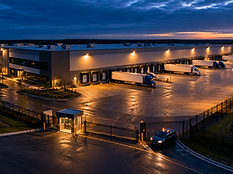
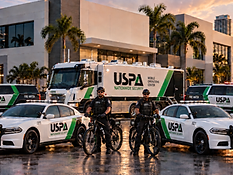
USPA industrial officers working posts in Anchorage, AK




Standards, licensing and what an inspection looks for
Industrial security is not licensed the same way in every state, and the operating requirements arrive from several directions at once. OSHA's emergency action plan standard, 29 CFR 1910.38, requires employers to designate and train people to assist in an evacuation; a contractor's officers are expected to know the site's alarm signals and assembly point. Lockout/tagout under 29 CFR 1910.147 matters to a security officer mainly as a prohibition: an officer does not touch an energy isolation device, and reports a machine found running under a tag instead.
Freight moving through a regulated terminal or across a border brings its own documentation. Where a facility operates under the maritime security framework, access is restricted and identity checks follow the terminal's own plan. Where a client participates in the C-TPAT supply chain program, gate logs, seal records and visitor control are evidence that can be reviewed at a validation. Officers assigned to those posts are briefed on what the client is required to demonstrate.
State and local requirements sit on top of all of it. Contract security is licensed by the state authority that governs it in Alaska, insurance carriers impose their own conditions on how a site is watched, and a client's corporate security standard often exceeds both. USPA confirms the actual requirement for each property before coverage begins, and the client's safety function keeps the final say on what a contractor may do inside an operating unit.
Staffing, supervision and response in Anchorage
Industrial assignments are staffed on the property's operating pattern rather than a fixed template. A single gate on a first shift may need one officer; a facility running three shifts with two gates, a rail spur and a truck yard usually needs a post per gate plus a roving officer and relief to cover breaks. Where a site operates around the clock, relief officers are scheduled in advance so a gate is never left unattended during a shift change.
Every account has a supervisor who visits the site, audits the logs and reviews officer performance against the post orders. The 24-hour operations center answers escalation calls, coordinates additional coverage when a client requests it, and tracks every request to its resolution. Mobile patrol can supplement a fixed post on a larger property or cover a second site in the same corridor, which is often the practical answer for a client with several buildings in Spenard corridor industrial.
Start times depend on the site rather than the calendar. A standard post can usually be staged within a few days of a signed order and a completed site briefing. Urgent coverage, where a contractor has walked off or a facility has lost a guard mid-shift, is handled through the operations center and staffed from the officers already working in the market. Sites that require a badge, a background check or a safety orientation before entry add lead time that is set by the client.
Scoping a contract and what drives the cost
Pricing for industrial coverage follows the post, not the acre. The number of gates staffed per shift, the hours covered, whether a post is armed or unarmed, the licensing and training the state requires, and the time an officer must spend in the client's own orientation all move the number. So does specialized eligibility: a marine terminal that requires a transportation worker credential, a defense site that requires a cleared officer, or a refinery that expects hazardous waste training on the first day narrows the pool and adds lead time.
The fastest way to a usable quote is a short brief: addresses and gate count, the hours and days coverage must run, the headcount the site has carried before, the insurance and licensing documents the client needs on file, any credential or clearance requirement, and the supervision and escalation contacts. A floor plan or a site walk shortens it further.
Quotes are issued in writing with licensing and insurance attached, and a supervisor walks the property before the first shift so the post orders reflect what is actually there. Send the brief through the form on this page or call the operations line, and a coordinator will come back with scope, staffing and price rather than a rate sheet.
Request industrial coverage
Send the addresses, the gate count, the hours coverage must run and any credential the site requires. A coordinator returns a scoped written quote with licensing and insurance attached.
Rated 4.9 by the clients we protect
Reviews are collected from real assignments across the country. Read them directly on Google before you call.
I have their pricing to be very affordable and competitive. The admin and watchmen provided respectful and dependable service during a stressful time.
William BeesleyGoogle reviewVerify This Review
Questions before you commit? Call (800) 214-1448 and ask for references on assignments like yours.
Industrial security questions in Anchorage
- What does an industrial security guard do at a plant or warehouse in Anchorage?
- The post is built around the property's access points and its most exposed assets. Officers verify and log everyone entering at Ted Stevens air cargo district or Port of Alaska terminals, check carriers and seals at the dock, walk the fence line and yard on documented intervals, watch for safety and fire hazards as well as security ones, and file a written report during the shift rather than at the end of the week. Armed posts are staffed where the client's risk assessment and state licensing allow it.
- Can USPA cover multiple gates, a rail spur and a truck yard on one contract?
- Yes. A single post order can cover several posts at one property, with each gate, yard or building written as its own assignment and its own route. Relief officers are scheduled against the site's shift pattern so no post is left open during a break or a shift change. Larger properties often run a fixed gate post plus a roving officer, and a multi-building client may add mobile patrol between sites in the same corridor.
- Do industrial officers need special credentials?
- Some sites require them and some do not. Marine terminals regulated under the maritime security framework generally require a Transportation Worker Identification Credential. Defense and aerospace facilities set their own access requirements, which may include a background investigation the client sponsors. Refineries and chemical plants usually require the client's safety orientation and, at some sites, hazardous waste training. USPA confirms the requirement per property and assigns only officers who hold what the site demands.
- What documentation comes with an industrial post?
- Every account receives written post orders, a daily activity report, incident reports filed during the shift they occur, and access and gate logs retained for the client's audit cycle. Supervisors review the logs on scheduled visits, and the client can request a monthly summary of activity, incidents and staffing exceptions. Where a client is enrolled in a supply chain security program or holds a regulated facility, those records are formatted to survive an audit.
- How quickly can guards be staged in this market?
- Standard posts are typically staffed within a few days of a signed order and a site briefing, drawn from officers already working in Anchorage. Urgent coverage for a facility that has lost its guard force, or a site that needs a gate watched tonight, is handled through the 24-hour operations center. Sites that require a badge, clearance or orientation before entry run on the client's own timeline.
- Is fire watch part of an industrial security contract?
- It can be. Industrial properties generate fire watch demand when a suppression or detection system is impaired, and during permitted hot work. The same officer can hold a security post and a documented fire watch, provided the post orders carry both duties and the patrol interval the authority having jurisdiction requires. USPA also staffs standalone fire watch at industrial and marine sites when the requirement is temporary.
Fact check and technical sources
The statements on this page rest on the standards and regulations listed below. Requirements are adopted and enforced locally, and a client's own safety and insurance conditions often exceed them, so the property's authority and safety function control the actual requirement.
- OSHA
29 CFR 1910.38, Emergency action plans
Requires employers to designate and train people to assist in an evacuation, which is the basis for a contractor officer knowing a site's alarm signals and assembly point.
Official Source → - OSHA
29 CFR 1910.147, Control of hazardous energy
Lockout/tagout. For a security officer this is mainly a prohibition: no contact with an energy isolation device, and a report when a machine is found running under a tag.
Official Source → - OSHA
29 CFR 1904, Recording and reporting occupational injuries and illnesses
Sets what a host employer must record. A contract officer's incident report is often the first document that establishes what happened on site.
Official Source → - ASIS
ANSI/ASIS ORM.1, Risk assessment standard
The consensus risk assessment standard used to justify post strength, patrol intervals and technology on a commercial or industrial property.
Official Source → - IMO
International Ship and Port Facility Security Code
The maritime security framework that restricts access at regulated terminals and sets the facility security plan an officer works within.
Official Source → - TSA
Transportation Worker Identification Credential
The credential required for unescorted access to secure areas of regulated maritime facilities, and the eligibility check for officers assigned to those terminals.
Official Source → - CBP
C-TPAT supply chain security program
Participants must demonstrate documented procedures for sealing trailers and challenging unauthorized people, which the gate log is the evidence of at validation.
Official Source → - NFPA
NFPA 601, Security services in fire loss prevention
Fire watch duties, patrol documentation and record retention expectations where an industrial post also carries a fire watch assignment.
Official Source →
Talk to the team staffing Anchorage industrial accounts
Dispatch answers 24 hours a day for new assignments, urgent coverage and posts that need to change on short notice.
