
Las Vegas fire code switch lands on buildings the four-hour rule never protected

By Albina Bieci, Staff Writer
Clark County Ordinance 5321 and City of Las Vegas Ordinance 6918 put the 2024 International Fire Code in force this year, and the published watch baseline is one person per 100,000 square feet of affected area.
LAS VEGAS, Nev.
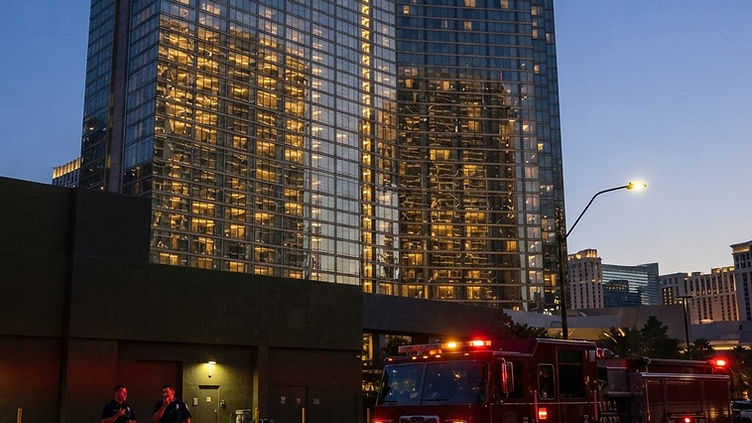
LAS VEGAS, Nev. — The valley entered 2026 with two newly adopted fire code packages in force, and the consequences land at the least convenient hour of a building engineer's week: the moment a required detection or suppression system drops out of service and somebody has to decide how many people to post, where to put them, and how fast they are expected to walk.
Clark County adopted the 2024 International Fire Code through Ordinance 5321, effective January 1, 2026. The City of Las Vegas adopted its own amended package through Ordinance 6918, effective January 5, 2026. Six days separate the effective dates, and two different amendment sets now govern addresses that look identical in a directory listing.
The split matters because Southern Nevada's amendments carry an appendix most operators have never read. Appendix Q publishes decision tables for fire protection system impairments, and it changes the answer to the question that gets asked at two in the morning: does this outage require a fire watch, an evacuation, or both at once.
Two governments, one valley
A Las Vegas mailing address does not identify a fire jurisdiction. Large parts of the resort corridor sit in unincorporated Clark County, including the Winchester and Paradise communities, and properties there answer to the county's Fire Prevention Division. Property inside the incorporated city answers to Las Vegas Fire & Rescue. A hotel, a convention hall and a parking structure on opposite sides of the same boulevard can be operating under different adopted texts.
Above both sits the state. The Nevada Administrative Code contains the State Fire Marshal's adoption and licensing provisions, including the statewide code adoption at NAC 477.281, which points to the 2018 edition of the International Fire Code. That is not a substitute for the local adoption, and it is not a defence against a local order. It sets a floor and a licensing framework, and the city and county editions sit on top of it. Pyrotechnic operators carry their own certification requirement under NAC 477.626, which is why a show effect question belongs with a permit office rather than with a security vendor.
The four-hour window nobody can locate
For years the operative assumption in operator circles has been a four-hour grace period: that a building has four hours of alarm or sprinkler outage before a watch becomes mandatory. A review of the adopted county and city texts, the county's published Fire Watch Requirements form and the city's fire-rescue information sheets, published this week as Volume 18 of USPA's fire watch regulatory library, found no adopted provision establishing that window.
What the text contains instead is a notification duty and a table. Clark County's amended Section 901.7 directs immediate notification of the fire department and the fire code official when a required fire protection system is out of service. Appendix Q then supplies separate decision tables for the systems and occupancies involved, with Table Q102.1(a) addressing higher-risk groups A, E, H, I and R and Table Q103.1(a) addressing groups B, F, M and S. The criteria shift with the impaired system, the occupancy group, the building height and the estimated repair time. A failed fire pump is a different problem from a failed pump with an approved redundant unit still running, and a closed feed main that disables several sprinkler zones is a different problem from a single damaged head.
The measure itself stays with the fire code official: evacuation, an approved fire watch, or both, depending on what safety function was lost. The county amendments also bar bypassing a system in an occupied building without an approved alternative method, with the exception stated in the text at Section 901.8.3.
The staffing number that is actually published
One figure in the adopted material is explicit: a baseline of one fire-watch person per 100,000 square feet of affected building area, stated in Appendix Q and repeated in current city guidance. Operators who have been staffing to one person per five floors, or one person per 20,000 square feet, are working from figures that the volume's audit found unsupported by, and in one case contradicted by, the adopted text and the county form.
The area baseline is a starting point and not a completed calculation, because Clark County's Fire Watch Requirements form, revised February 21, 2024, also publishes tour benchmarks. Each floor is to be walked within no more than five minutes, and the entire building or affected area within fifteen minutes. Those two numbers, placed against a real route, decide whether the area baseline is sufficient. A resort tower route includes vertical travel through service elevators, back-of-house corridors, locked doors, gaming floor sightline obstructions and radio dead spots, and each of those consumes time the fifteen-minute benchmark does not forgive.
A defensible staffing calculation separates walking time, observation stops, access delays, vertical travel and radio checks, then adds margin for an incident. A count derived from square footage alone will routinely produce a number that cannot complete a round in the published window.
What the post actually requires
The county form prohibits the assigned fire-watch person from deviating to other duties during the shift, and Appendix Q describes personnel capable of continuous walking, assisting evacuation, calling 911, and carrying a bullhorn, flashlight and cellular phone. That combination rules out assigning the watch to an existing maintenance or security post as a secondary task.
The log is the other obligation. The county form requires a written record identifying the personnel assigned, the areas they are responsible for, start and end times, and any incidents. Digital checkpoint systems using RFID or barcode tags can establish that a device was scanned at a particular time, and they are a useful control, but no adopted provision requires them. The same caution applies to record retention: the volume found no jurisdiction-wide five-year archive mandate, so a five-year policy is a contract or insurance decision rather than a code citation.
Hot work, pyrotechnics and the show calendar
Hot work is governed separately from impairment. Las Vegas Fire & Rescue's 2024 hot-work sheet states that an operational permit is required and covers welding, cutting, grinding, brazing and similar ignition sources, and it publishes a thirty-minute post-work monitoring period. That is a local published figure. The universal sixty-minute claim that circulates in safety literature is not established as a city or county rule, and a permit condition, a contract specification or an OSHA overlay can extend the requirement beyond it. Federal law sits underneath in any case: 29 CFR 1910.252 requires a watch where combustibles are exposed within thirty-five feet of the work.
The resort calendar adds two more categories that are frequently confused with a fire watch. Clark County publishes separate permit guidelines for indoor pyrotechnics and flame effects, both revised in January 2026, and the indoor pyrotechnics guide references the 2024 International Fire Code together with NFPA 1126. Neither permit is a fire watch. Separately, the city's crowd manager information sheet defines crowd management duties for large gatherings and distinguishes them from fire watch, which is a fire-protection function tied to an impaired system or an ordered condition.
Then there is the overnight exposure. A guestroom tower at four in the morning contains sleeping occupants, unfamiliar with exits, some mobility-limited. Appendix Q's detection and alarm provisions exist because a fire watch in that building is a notification system staffed by people, and a watch that cannot complete a floor in five minutes is a slow notification system.
What the record decides later
Enforcement in Clark County runs through the fire code official, and the county's amended text includes administrative and misdemeanor citation authority. A log that does not reconcile with panel history, contractor dispatch times and inspection records is the first thing an investigator will hold against an operator, and falsified records convert a straightforward impairment into an enforcement matter.
The reverse is also true. A file that connects the property permit, the panel or point affected, the time the fault was discovered, the contractor's dispatch and arrival, the impairment tag, the watch assignments, the round times and the restoration test is the difference between a question and an allegation. That file is built during the outage, not reconstructed afterward.
The complete rulebook
Volume 18 of USPA's regulatory library, Las Vegas Fire Watch, System Impairment and Hot-Work Regulations, works through the city and county adoption, the Appendix Q tables system by system, the patrol benchmarks, the hot-work and pyrotechnic permits, and the record requirements, in forty chapters carrying twenty-two official sources. The complete edition is available free by email, and a two-page field brief can be downloaded without one.
USPA provides fire watch coverage across the Las Vegas valley, including Las Vegas fire watch deployment for impaired systems, hot work fire watch for permitted construction activity, and emergency fire watch coordination when an order arrives at night. Nationwide service details sit on the fire watch services page.
Related coverage
East Cleveland vacant building fire puts neighbors at risk, perimeter watch ordered
Memphis downtown commercial building fire leaves structure open, security detail posted
Balcony propane cylinder blamed for fire that gutted 12 Jacksonville apartments
Services in Las Vegas, NV
Sources
- Clark County Board, Ordinance 5321 adoption (effective Jan. 1, 2026). Clark County Board of Commissioners, Dec. 2, 2025 meeting minutes
- Clark County Amendments to 2024 IFC, including Appendix Q. Clark County Fire Prevention Bureau, Dec. 2025
- Southern Nevada Amendments with City of Las Vegas amendments to 2024 IFC. Las Vegas Fire & Rescue, April 10, 2025 / 2026 adoption
- Fire Watch Requirements, rev. 02-21-2024. Clark County Fire Department, Fire Prevention Bureau
- Crowd Managers and Fire Watch (2024 Updated). Las Vegas Fire & Rescue, effective Jan. 5, 2026
- Hot Work (2024 Updated). Las Vegas Fire & Rescue, effective Jan. 5, 2026
- Nevada Administrative Code 477. Nevada Legislature, accessed Nov. 8, 2026
- 29 CFR 1910.252 — General requirements for welding / cutting. U.S. Occupational Safety and Health Administration
- Flame Effects Permit Submittal Guideline, Jan. 2026. Clark County Fire Prevention Bureau
- Indoor Pyrotechnics Permit Submittal Guideline, Jan. 2026. Clark County Fire Prevention Bureau
About the reporter
Staff Writer
Staff writer for the USPA Nationwide Security newsroom. Receives newsroom tips, corrections and editorial inquiries.
Author biography and credentialsMore from The Watchline

Regulation & Codes
Baltimore City and Baltimore County enforce different fire codes, and the parcel decides which
The City is finishing its first year under a 2024 publication adopting the 2021 IFC with local amendments while the County enforces an NFPA-based Fire Prevention Code, and Maryland’s statewide adoption excepts the City.
· Albina Bieci

Regulation & Codes
Phoenix's rewritten fire code hands the watch clock to the fire marshal, and the four-hour figure is not in it
The 2024 Phoenix fire code took effect February 17, and its Section 117 makes staffing, duration and release a fire department decision rather than a property manager's calculation.
· Albina Bieci

Regulation & Codes
Houston wants the fire department called the moment a required system goes down, and its standby inspectors are not a contract post
Houston's amended 2021 fire code requires immediate reporting of an out-of-service required system and separates a private impairment watch from standby inspectors the department itself staffs.
· Albina Bieci