
St. Paul attic fire collapses the roof of a 20-unit complex and empties the buildings beside it

By Albina Bieci, Staff Writer
A fast-moving attic fire destroyed the roof of a 20-unit complex near St. Catherine University, forcing the evacuation of neighboring residential buildings while inspectors assess the structure.
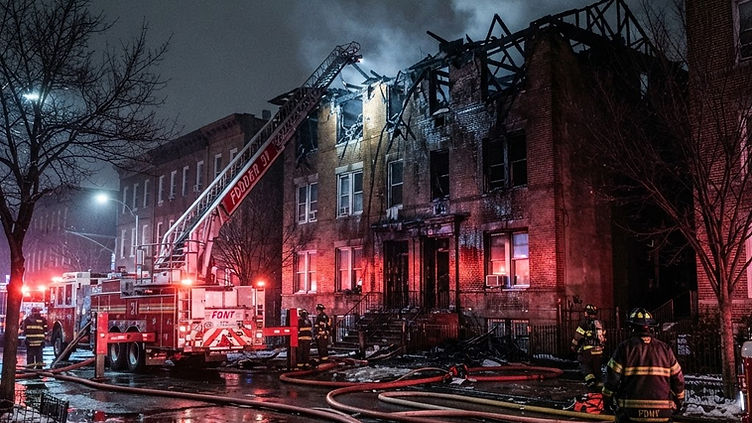
ST. PAUL, Minn.
ST. PAUL, Minn. — A fire that ran through the attic of a 20-unit apartment complex in the Macalester-Groveland neighborhood, near St. Catherine University, collapsed the building's roof and forced emergency crews to evacuate adjacent residential buildings. With the roof gone, utilities severed and city inspectors still working through the structure, the property has moved from a fire scene into a regulated vacancy — the point at which a fire watch and a physical security presence stop being optional.
Why a collapsed roof triggers a standing requirement
A residential building's fire protection is a system, not a set of independent parts. When the roof assembly fails, the automatic detection that covered the attic and top-floor corridors goes with it, and the water damage that follows a firefight typically takes out the alarms and the sprinkler riser in the same event. Building officials treat that combination as an unprotected structure: occupied units elsewhere on the site may be safe to re-enter, but the damaged building is not, and under the International Fire Code the fire code official can order a fire watch wherever a required protection system is out of service.
The same impairment creates a second, separate problem. A building with open roof decking, no power and no working locks is unsecured by definition, and in a dense residential block that is an invitation for entry, salvage theft and, in cold weather, for people taking shelter inside a structure that may still be unsafe.
What a compliant detail looks like
A fire watch on a collapsed-roof property is a documented, staffed patrol, not a guard posted at a door.
- Continuous rounds of the damaged structure and the exposed areas, on a defined interval, at every hour the building is unprotected.
- A written log recording each round, the time, the conditions observed and any contact with the fire department or building official.
- Immediate notification of the fire department on any sign of smoke, heat or rekindle, and of property management on any entry or damage.
- A hard perimeter that keeps residents, contractors and the public out of the unsafe building while still letting inspectors and remediation crews in.
- The detail stays in place until the fire code official confirms the protection systems are restored — not until the fire department clears the scene.
Adjacent buildings evacuated as a precaution need their own answer. If residents are allowed back into a neighboring building while the damaged one stands open, the watch has to cover the gap between them.
The insurance and liability question arrives early
On multi-family losses of this size, carriers and property managers converge on the same requirement within days: documented human surveillance of the impaired structure, usually with the log produced on request. A dollar-a-day substitute does not exist. Patrols by a roving officer who is also covering three other sites do not satisfy it either, because the record has to show the interval was actually walked.
USPA Nationwide Security staffs fire watch details on multifamily losses across the Twin Cities, with guards who log every round and coordinate directly with the fire marshal's office and the property's carrier. Coverage for this property and the buildings beside it can begin the same day. Fire watch services · Minneapolis–St. Paul fire watch.
What happens next
City inspectors control the timeline. Until they release the structure, the building is both a hazard and an unsecured asset, and the fire watch is the only control standing between the two.
Services in St. Paul, MN
Sources
About the reporter
Staff Writer
Staff writer for the USPA Nationwide Security newsroom. Receives newsroom tips, corrections and editorial inquiries.
Author biography and credentialsMore from The Watchline

Fire Protection
Manhattan vacate order empties 54 apartments after a fatal Hamilton Heights fire
A two-alarm fire at 660 Riverside Drive killed an 80-year-old man, critically injured a woman and damaged a main stairwell, prompting the Department of Buildings to order all 54 apartments vacated.

Fire Protection
Fort Lauderdale three-alarm fire leaves two downtown venues open to the street
A three-alarm fire that started near the stage at America's Backyard jumped to the Poor House next door, leaving two damaged commercial buildings exposed on a downtown block.

Fire Protection
TradeWinds fire hits resort back offices in St. Pete Beach, taking monitoring with it
Fire crews contained a structural fire at the TradeWinds resort, keeping it from spreading across the beachfront property — but the maintenance and administrative offices that run the site were heavily damaged.