
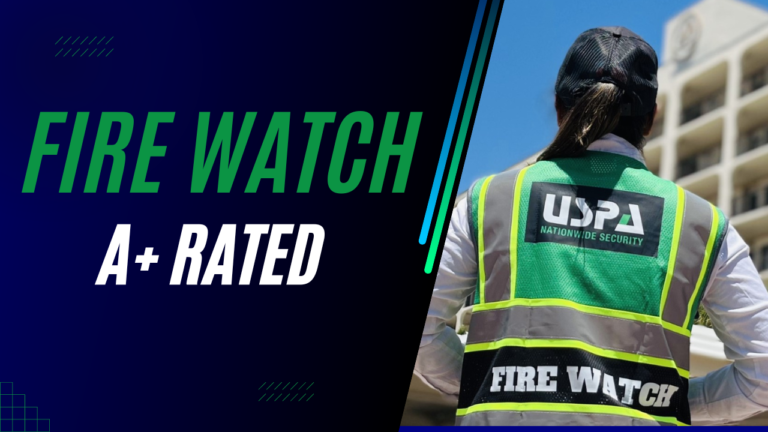
Fire Watch Emergency Service in Lexington, (Open Now)
24/7 Dispatch: (800) 214-1448
-Delivering more than 500,000 hours of annual Fire Watch support.
-Managed by Military Veterans & Law Enforcement Personnel
-Allocating up to 50% of earnings to aid in the rescue of missing children.
-Guaranteeing compliance with regulations from the Fire Marshal
-Our roster includes certified Lexington Fire Watch Guards, ensuring prompt and efficient responses round the clock.
USPA Nationwide Security provides top-notch fire watch guards in Lexington, accredited by the Chamber of Commerce and certified by OSHA. Their focus is on ensuring compliance with fire safety regulations and delivering comprehensive protection services.
USPA Nationwide Security in the Media

Director of Fire Watch Service in Lexington, Kentucky
24/7 Dispatch: (800) 214-1448
– Effective Fire Monitoring
– Hot Work Fire Prevention (NFPA)
– Construction Site Fire Compliance (OSHA)
– Maintenance of Fire Suppression Systems
– Timed Fire Safety Inspections

Comprehensive Fire Watch Service Process
Step 1: Clear Estimate
USPA provides a detailed, transparent estimate outlining all costs, ensuring there are no hidden charges or unexpected fees.
Step 2: Quick Contract Processing
Receive a contract instantly via email for electronic signing, maximizing convenience and efficiency. The contract includes a certificate of insurance covering liability and worker’s comp policies, ensuring complete coverage.
Step 3: Customized Fire Watch Plan
USPA drafts a fire watch plan compliant with NFPA 601 standards, tailored to your needs and ensuring adherence to both national fire protection standards and local regulations. The plan also complies with IFC standards for enhanced safety.
Step 4: Immediate Service Activation
USPA deploys highly trained, licensed, and insured fire watch guards supervised by Brian Fitzgibbons, a leading fire safety expert. Our guards provide comprehensive fire safety services, ensuring the highest standards of protection in line with NFPA 601 and IFC requirements.
Trustindex verifies that the original source of the review is Google. Absolute pleasure to work with this group of professionals. Anyone looking for protective or security services would do well to hire USPA or their contractors.Trustindex verifies that the original source of the review is Google. USPA Nationwide Security Was there for us at a desparate time! Their service was fast and professional! I Highly recommend them!Trustindex verifies that the original source of the review is Google. Mike Evans and USPA there are very little words that would convey my gratitude to you and your company in the search for my son Séamus. Without your selflessness and compassion I would not have been able to get through this tragic time. You have brought me less heartache by giving me the knowledge that this was just a tragic accident as opposed to some other sinister act. I breathed easier knowing I had you and your company by my side tirelessly looking for Séamus. Your professionalism is unparalleled and you will always have my undying gratitude. Sincerely, Kerry Rodier GrayTrustindex verifies that the original source of the review is Google. This company embodies integrity and hard work.Trustindex verifies that the original source of the review is Google. These guys are amazing! They are true professionals, they also spend their free time rescuing missing children. You can’t beat an organization like this.Trustindex verifies that the original source of the review is Google. I was invited to a party last week where USPA Security guys were our bodyboards. They were very professional and made sure that we all felt safe during our gathering. I would definitely hire them for my events!Trustindex verifies that the original source of the review is Google. I hired USPA Security company and I could not be any happier. Not only I received the most professional bodyguard team led by Navy Seals and Army Rangers, but I also received close protection for me and my girlfriends. The team is super professional. They actually care and go above and beyond to make sure you feel safe and protected. I was provided with VIP Aircraft and limo services to and from the airport. I received the VIP treatment in every step. I highly recommend USPA Nationwide Security team because they respect their client and their service is exceptional. It is an honor and pleasure to work with the team.Trustindex verifies that the original source of the review is Google. Our company has been fortunate enough to work with USPA extensively over the last year and we cannot voice our appreciation enough. USPA has kept us steadily busy with work and we look forward to working with them for a very long time. Each representative of USPA we’ve been in contact with thus far has been a pleasure to work with and lastly, knowing that some of their profits are donated to some great causes is an incentive to continue working closely with this company. Thank you guys again. MBS TEAMTrustindex verifies that the original source of the review is Google. I AM A PROUD CONTRACTOR WITH THIS ORGANIZATION AND ALL I CAN SAY IS I WILL BE HELPING THEM GET TO THE HIGHEST HEIGHTS POSSIBLE!!! President Manning of USPA has to be one the most honest and genuine men I've met in this industry!!! Marc E Singletary, MBA (DBA 2024)Trustindex verifies that the original source of the review is Google. I have been using USPA as my security contractor for a few years now and their service is exceptional. Dan and Brian are extremely attentive and always able to help with our last-minute projects that fall outside of our main service contract. They provide exceptional oversight, and their communication could not be better. I would fully endorse USPA for any project, whether it be short or long term. This company has excellent values and always adheres to them. You will not be disappointed.
Maintaining Vigilance in Fire Watch Patrols
NFPA 601 emphasizes the importance of constant vigilance during fire watch patrols. Security officers must continuously monitor for signs of fire hazards, including checking fire doors, ensuring pathways are clear, and verifying that no unauthorized activities are occurring. Maintaining high alertness helps officers identify and address potential issues promptly, thereby upholding fire safety standards and protecting the premises from fire-related incidents.
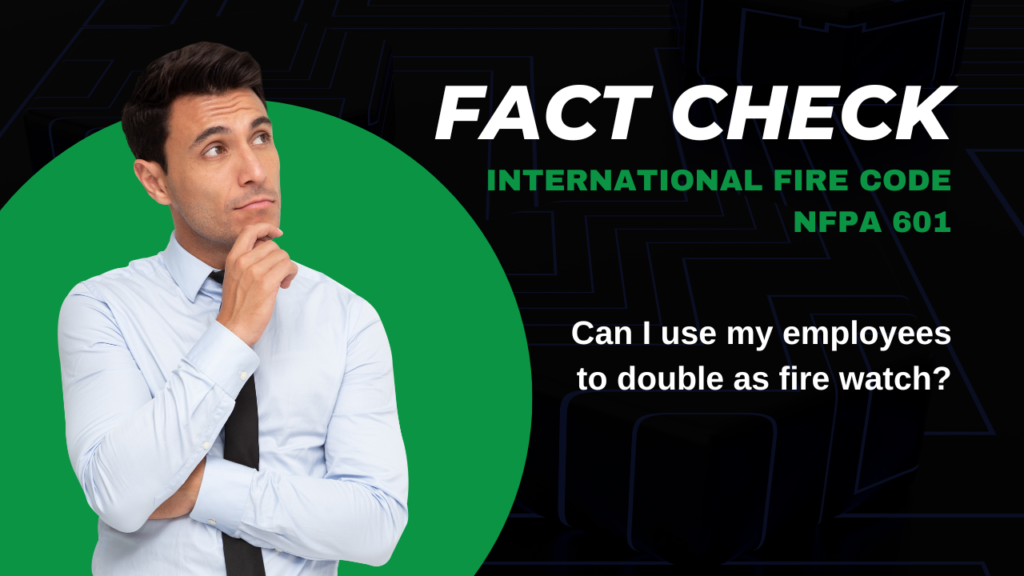
Why Your Employees Can’t Double as Fire Watch Guards
Compliance with Fire Watch Regulations
According to IFC 403.11.1 and NFPA 601, fire watch involves specific duties requiring specialized training and official approval (IFC 403.11.1). Employees cannot serve dual roles as fire watch guards (IFC 403.11.1). Public safety necessitates that fire watch personnel are continuously attentive (IFC 403.11.1.1) and trained according to NFPA 601 guidelines. Events and public gatherings need dedicated and specialized fire watch staff (IFC 403.11.3).
Comprehensive Analysis of Fire Safety and Building Services in Lexington, Kentucky
Introduction
Fire safety within buildings is critical to preventing fires and protecting lives. This case study delves into Lexington, Kentucky’s fire safety regulations, focusing on Chapter 6: Building Services and Systems, as outlined in the International Fire Code (IFC). We also review the legal context provided by the significant case Lexington Fire Department v. Crestwood Apartments (2013).
Overview of Chapter 6: Building Services and Systems
Chapter 6 of the International Fire Code addresses critical aspects of building services and systems to mitigate fire hazards. This chapter ensures that various building components, from electrical systems to commercial cooking equipment, are installed, maintained, and operated safely. Here, we explore the key sections relevant to Lexington’s fire codes.
Section 601: General Provisions
601.1 Scope
Chapter 6’s scope covers the installation, operation, testing, and maintenance of essential building services and systems. These include electrical systems, elevator operations, fuel-fired appliances, commercial cooking systems, and more.
601.2 Hazard Abatement
This section mandates the abatement of any operations or conditions deemed unsafe or hazardous by the fire code official. It ensures that any equipment, materials, or systems that pose a fire risk are repaired or replaced promptly.
Section 603: Electrical Equipment, Wiring, and Hazards
603.1 General Requirements
Electrical systems must comply with NFPA 70, the National Electrical Code (NEC). This includes ensuring all electrical equipment, wiring, and devices are installed and maintained according to the code.
603.2 Abatement of Unsafe Conditions
Electrical hazards must be addressed immediately. This includes prohibiting the use of damaged or modified electrical systems that pose a shock or fire risk.
603.4 Working Space and Clearances
Adequate working space must be maintained around electrical equipment. This ensures safe access for maintenance and emergency operations.
Section 605: Fuel-Fired Appliances
605.1 General Requirements
The installation and maintenance of fuel-fired appliances must adhere to the International Fuel Gas Code and the International Mechanical Code. This section covers nonportable gas-fired appliances, heating systems, chimneys, and fuel oil storage.
605.2 Abatement of Unsafe Conditions
The fire code official has the authority to discontinue the use of any defective or unsafe fuel-fired equipment. This ensures immediate correction of potential fire hazards.
Section 606: Commercial Cooking Equipment and Systems
606.1 General Provisions
Commercial kitchen exhaust hoods and related systems must comply with the International Mechanical Code. Proper ventilation and grease removal are crucial for preventing fire hazards in commercial kitchens.
606.3 Operations and Maintenance
Regular inspection and maintenance of commercial cooking systems are required to ensure they remain functional and safe.
Case Law: Lexington Fire Department v. Crestwood Apartments (2013)
In Lexington Fire Department v. Crestwood Apartments (2013), the Lexington Fire Department sued Crestwood Apartments for multiple fire code violations, including blocked fire exits and non-functional smoke alarms. The court mandated immediate rectification of these issues and imposed fines, underscoring the importance of stringent fire safety enforcement in residential properties.
Legal Brief
This case reinforces the legal obligations of property owners and managers to maintain fire safety systems according to local codes. It highlights the judiciary’s role in enforcing fire safety compliance and the potential consequences of neglecting these responsibilities. Fire safety regulations, such as those in Chapter 6 of the IFC, play a crucial role in ensuring buildings in Lexington, Kentucky, are safe from fire hazards. Compliance with these codes, alongside vigilant enforcement and legal accountability, is essential to protect lives and property.
Frequently Asked Questions about Fire Watch in Lexington, Kentucky
Who should I call for Fire Watch in Lexington, Kentucky?
Call (800) 214-1448 for Fire Watch in Lexington, Kentucky
How does Lexington enforce compliance with Chapter 6 of the International Fire Code?
Lexington enforces compliance with Chapter 6 of the International Fire Code (IFC) through a combination of proactive inspections, violation notices, corrective actions, and legal enforcement mechanisms.
Regular Inspections
Fire Department Inspections: The Lexington Fire Department conducts regular inspections of buildings and facilities to ensure that all building services and systems, such as electrical equipment, fuel-fired appliances, and commercial cooking systems, comply with the safety standards set forth in Chapter 6 of the IFC. These inspections are scheduled periodically and can also be prompted by complaints or reports of unsafe conditions.
Third-Party Inspections: In some cases, the city mandates inspections by certified third-party inspectors, especially for complex systems like mechanical refrigeration and commercial cooking equipment. These inspectors must follow the guidelines and standards of the IFC and relevant NFPA codes.
Violation Notices and Penalties
Issuing Notices of Violation: When fire code officials identify non-compliant conditions during inspections, they issue a notice of violation to the property owner or responsible party. This notice outlines the specific violations and the required corrective actions.
Penalties for Non-Compliance: Penalties for non-compliance can include fines and legal actions. Persistent non-compliance may lead to more severe consequences such as the issuance of a stop-work order, which halts all operations until the violations are corrected. For instance, in Lexington Fire Department v. Crestwood Apartments (2013), the court imposed fines and mandated immediate rectification of fire code violations, highlighting the city’s strict enforcement policies.
Corrective Actions
Mandated Corrections: Property owners or managers are required to address and correct any violations within a specified timeframe. This may involve repairs, replacements, or modifications to building systems to bring them into compliance with Chapter 6.
Follow-Up Inspections: After the initial notice of violation, follow-up inspections are conducted to ensure that the required corrections have been made. Failure to comply can result in additional penalties or legal action.
Legal Enforcement
Court Orders: In severe cases of non-compliance, the fire department can seek court orders to enforce fire safety regulations. The courts can mandate corrective actions and impose fines, as seen in the Crestwood Apartments case.
Abatement of Unsafe Conditions: The fire code officials have the authority to order the abatement of unsafe conditions. This can include shutting down operations or removing hazardous equipment until it is repaired or replaced to meet safety standards.
Public Education and Outreach
Educational Programs: Lexington also emphasizes public education and outreach programs to inform property owners and the general public about fire safety regulations and the importance of compliance. These programs aim to prevent violations by promoting awareness and understanding of fire safety standards.
Collaboration with Businesses: The fire department works closely with businesses to develop fire safety plans and ensure ongoing compliance with the fire codes. This collaborative approach helps in maintaining a safe environment and reducing the risk of fire-related incidents.
Through these comprehensive enforcement strategies, Lexington ensures that the provisions of Chapter 6 of the International Fire Code are adhered to, thereby safeguarding the community against potential fire hazards.
What are the penalties for non-compliance with fire safety regulations in Lexington?
Non-compliance with fire safety regulations in Lexington, Kentucky, can result in a range of penalties, designed to enforce adherence to fire codes and ensure public safety. These penalties are enforced by the Lexington Fire Department and can escalate based on the severity and persistence of the violations.
Fines and Financial Penalties
Monetary Fines: Property owners or managers found in violation of fire safety regulations can be subjected to monetary fines. These fines vary depending on the nature and severity of the infraction. Minor infractions may result in smaller fines, while significant violations, especially those that pose immediate danger, can incur substantial financial penalties.
Accrued Penalties: In cases of ongoing non-compliance, fines can accumulate daily until the violation is corrected. This accrual mechanism serves as a strong incentive for prompt compliance.
Legal Actions
Court Orders: The Lexington Fire Department has the authority to seek court orders to enforce compliance. This legal action can compel property owners to rectify violations or face further legal consequences. For instance, the case Lexington Fire Department v. Crestwood Apartments (2013) resulted in court-mandated corrective actions and fines for persistent fire code violations, emphasizing the legal repercussions of non-compliance.
Stop-Work Orders: For severe or continued violations, the fire department can issue stop-work orders, effectively halting all operations at a property until compliance is achieved. This measure is particularly impactful for businesses, as it can lead to significant operational disruptions.
Enforcement and Corrective Actions
Mandated Corrections: Property owners are required to correct any violations identified during inspections. This might include repairs, replacements, or other modifications to building systems to meet fire safety standards.
Follow-Up Inspections: After a violation notice is issued, follow-up inspections are conducted to ensure compliance. Failure to correct violations can lead to additional penalties or escalation to legal action.
Public Safety and Welfare
Evacuation Orders: In extreme cases where non-compliance poses an immediate threat to occupants, the fire department can issue evacuation orders to protect public safety. This action underscores the critical nature of adhering to fire safety regulations.
Building Closures: Persistent or severe non-compliance can result in the closure of buildings until all fire safety issues are resolved. This measure ensures that buildings do not remain occupied or in use while posing significant fire hazards.
Case Example: Lexington Fire Department v. Crestwood Apartments (2013)
In this notable case, the Lexington Fire Department pursued legal action against Crestwood Apartments for repeated fire code violations, including blocked fire exits and non-functional smoke alarms. The court’s ruling mandated immediate rectification of these issues and imposed fines on the property owners, highlighting the strict enforcement and serious consequences of failing to comply with fire safety regulations in Lexington.
By enforcing these penalties, Lexington aims to maintain high standards of fire safety, thereby protecting both property and lives within the community.
What are the fire safety requirements for fuel-fired appliances in Lexington?
Lexington, Kentucky, adheres to stringent fire safety requirements for fuel-fired appliances to ensure the safety of buildings and their occupants. These requirements, as outlined in Chapter 6 of the International Fire Code (IFC), cover the installation, operation, maintenance, and inspection of fuel-fired appliances. Here are the key fire safety requirements:
Installation Standards
Compliance with Manufacturer’s Instructions: Fuel-fired appliances must be installed according to the manufacturer’s instructions. This ensures that all safety measures specific to the appliance are correctly implemented.
Code Compliance: The installation must comply with the International Fuel Gas Code and the International Mechanical Code, which provide detailed guidelines on safe installation practices, including proper venting and clearance from combustible materials.
Operational Safety
Clearances: Adequate clearances between fuel-fired appliances and any combustible materials must be maintained. This is to prevent accidental ignition and ensure safe operation. The clearances should meet the specifications provided in the International Mechanical Code.
Guarding Hot Surfaces: The heating element or combustion chamber must be permanently guarded to prevent accidental contact by persons or materials, reducing the risk of burns and fire hazards.
Maintenance and Inspection
Regular Maintenance: Fuel-fired appliances must be maintained in accordance with the manufacturer’s instructions to ensure safe and efficient operation. This includes regular cleaning and inspection of components such as burners, filters, and vents.
Chimney and Vent Maintenance: Chimneys, vents, and connectors must be inspected and maintained to prevent the buildup of creosote, which can lead to chimney fires. Masonry chimneys must be repaired or relined if they have open mortar joints or are cracked.
Annual Inspections: Fuel-fired appliances, especially those in healthcare facilities and other high-risk environments, must undergo regular inspections to ensure they remain in good working condition and do not pose any fire hazards.
Safety Features
Automatic Shutoff: Appliances must have safety features such as automatic shutoff to prevent overheating and potential fire hazards. This is crucial in preventing accidents due to malfunctioning equipment.
Ventilation Requirements: Adequate ventilation must be provided for fuel-fired appliances to ensure the safe discharge of combustion gases. This includes the proper installation of exhaust systems that comply with NFPA 70 (National Electrical Code).
Emergency Protocols
Emergency Shutoff Controls: Buildings must have clearly identified emergency shutoff controls for fuel-fired appliances. These controls should be accessible and easy to operate in case of an emergency.
Access for Inspection and Maintenance: The installation of fuel-fired appliances must allow for easy access for inspection, maintenance, and emergency repairs. This includes access to chimneys, vent connectors, and other critical components.
Case Example: Lexington Fire Department v. Crestwood Apartments (2013)
In the case of Lexington Fire Department v. Crestwood Apartments (2013), the Lexington Fire Department took legal action against the property owners for repeated fire code violations, including issues with fuel-fired appliances. The court mandated immediate rectification of these issues and imposed fines, highlighting the importance of adhering to fire safety regulations.
What is some additional information about fire safety in Lexington?
Fire watch security is a necessary service for many businesses. If your business has fire suppression systems that are down or non-existent, you need to hire licensed and insured fire guards to keep the premises safe in case of a fire.
The problem with hiring an independent contractor for this type is that they’re not always reliable. In addition, they might even have criminal records that prevent them from working in certain industries like government buildings and hospitals.
USPA Nationwide Fire Watch Company is different because we only employ highly vetted professionals who undergo detailed training before ever stepping foot on your property. We provide 24/7 customer support, so you can talk directly with our management team about any concerns you may have during the process. Our employees wear uniforms and carry identification badges while on duty. We ensure everyone knows they’re there for your protection against fires and other hazards inside your building. Call us today for more information at (800) 214-1448.
Firewatch Services Lexington
Fire protection is an important part of any business, but finding a good fire watch service can be hard.
USPA Nationwide Fire Watch is the best company in America. Our guards are well-trained and licensed professionals who take their job seriously. Additionally, they will monitor your building for fires 24 hours a day, seven days a week.
If you want to ensure that your building is safe while you’re away at work, call us today! We’ll send one of our top-rated guards out within 24 hours to protect your property. We include round-the-clock monitoring services from our nationwide network of professional fire watch companies across all 50 states. You’ll get peace of mind knowing that if anything happens during the night, no one’s around. Call today (800) 214-1448 for more information, or email dmanning@uspasecurity.com!
Emergency Dispatch Fire Protection Service KY
(800) 214-1448 – Lexington, Kentucky Fire Watch Service. Firewatch Company Lexington. Hot Work Fire Guards. Emergency Dispatch Fire Protection Service KY
Firewatch Company Lexington
The city of Lexington is located in southern Kentucky and is known for Thoroughbred horse racing and Thoroughbred farms. The Kentucky Horse Park is home to the International Museum of the Horse, the Hall of Champions, and many equine breeds. Ashland, the estate of 1800s politician Henry Clay, is located in the town.
Fire Watchman Kentucky
Early settlers used the area as hunting grounds. Native American tribes used the region for farming, and Daniel Boone was one of the first Anglo-Saxons to explore the region. As a result, Lexington is home to the National Register of Historic Places. The city’s importance as a trading center is evidenced by its historic buildings, and the historic Land Office is located in the heart of the town. In addition, many of the buildings in the city are listed on the National Register of Historic Places.
Fire Guard Patrol Lexington, Kentucky
In the 2010 census, the city of Lexington had a population of 295,803, with an average density of 353.5 people per square mile. The city’s housing density was 408.3/mi (139.4/km2). In 2010, the racial makeup of the population was 75.7% white, 14.5% black or African American, 0.3% Native American, and 0.03% Asian or Pacific Islander. The Hispanic population comprised 6.9% of the population.
Related Fire Watch Links in Lexington, Kentucky
Introduction to Fire Watch eBook
Fire Watch Plans
Construction Site Fire Watch
Fire Watch Seminar
NFPA 601: Fire Watch Regulations
Fact Check: International Fire Code
Patrol Duties for Fire Watch
Chapter 7: International Fire Code
Disaster Recovery
For more information Hire the #1 Fire Watch Services in Lexington, Kentucky