
USPA Nationwide Security Stages Dallas Operations Ahead of Polar Vortex Season
October 25, 2026· Albina Bieci
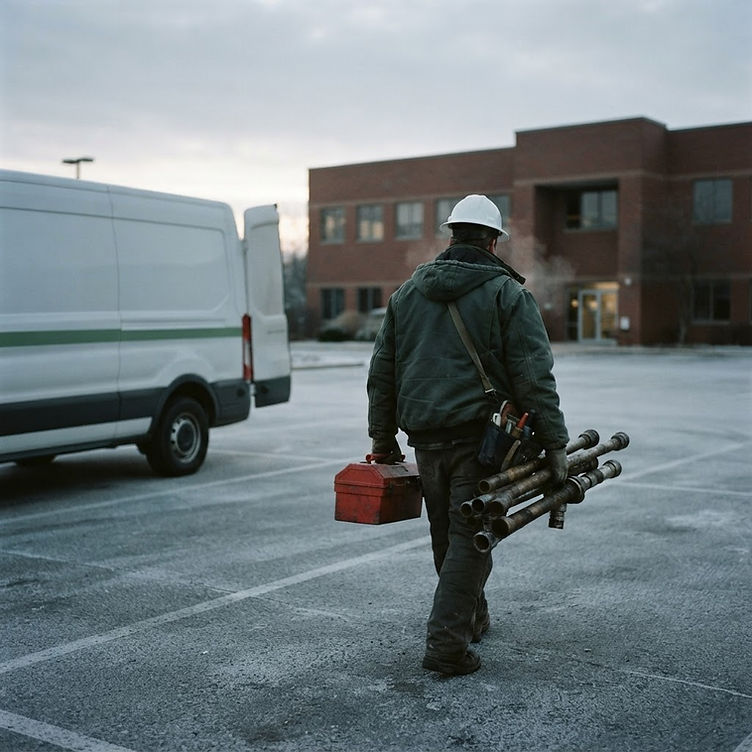
DALLAS, TX — USPA Nationwide Security has moved into its annual winter readiness posture across the Dallas-Fort Worth metroplex, activating staged rotations of emergency fire watch officers and sprinkler repair crews ahead of the polar vortex season that historically concentrates its most damaging cold events in the January-through-February window. The mobilization is not a response to a specific incident; it is a deliberate operational posture informed by the engineering realities of commercial fire protection under sudden hard-freeze conditions and by the documented losses the region sustained during Winter Storm Uri in February 2021.
The staging means that when a commercial property in Dallas loses fire sprinkler system pressure at 2 a.m. on a night when temperatures are running 15 degrees Fahrenheit, USPA can place a licensed fire watch officer on-site and have a repair crew coordinating from the same dispatch desk, rather than leaving the building unprotected through a multi-vendor coordination gap.
Key Facts
- USPA Nationwide Security has activated winter staging rotations for fire watch and sprinkler repair coverage across the Dallas-Fort Worth metroplex.
- The staging covers commercial wet-pipe and dry-pipe sprinkler impairments, frozen line repairs, and fire alarm supervisory signal response.
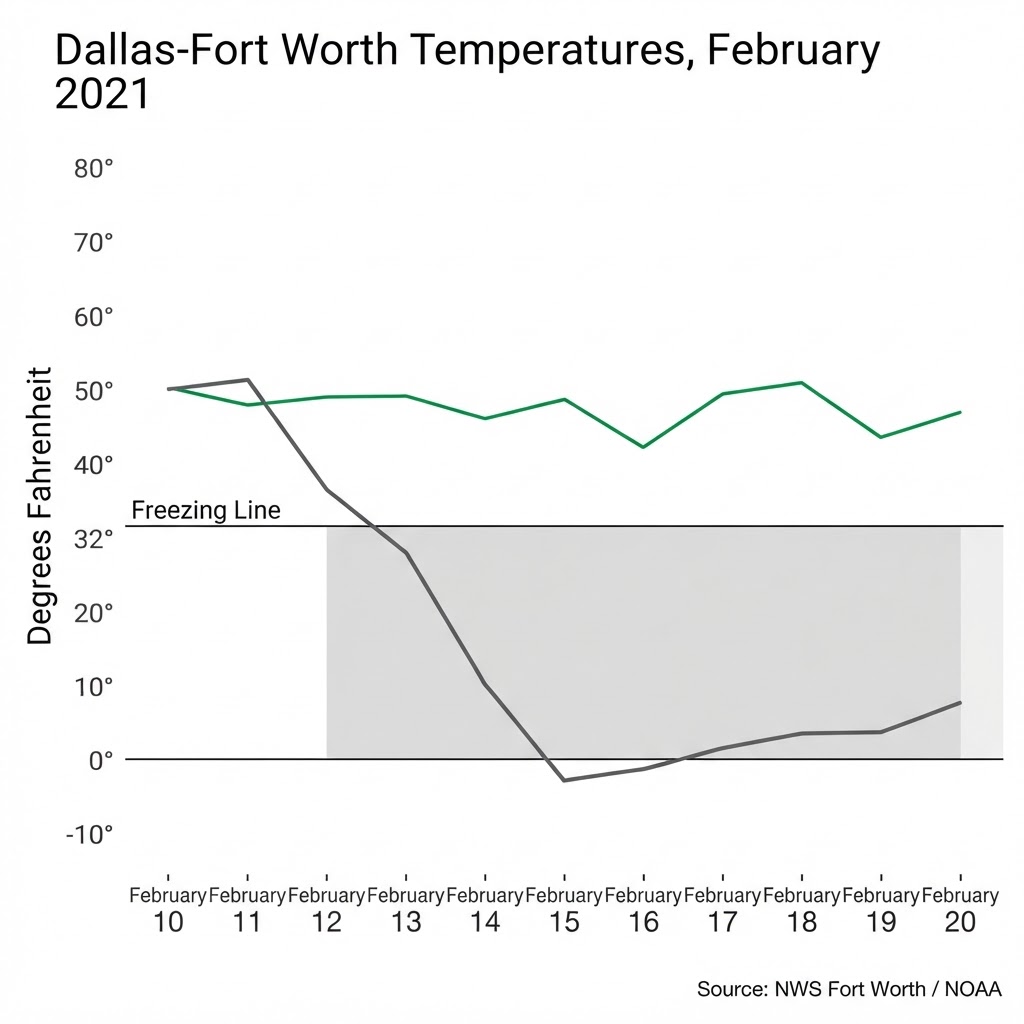
- Winter Storm Uri (February 2021) brought a recorded low of -2°F to the Dallas-Fort Worth area on February 16, 2021, with approximately 140 consecutive hours below freezing, per National Weather Service Fort Worth records.
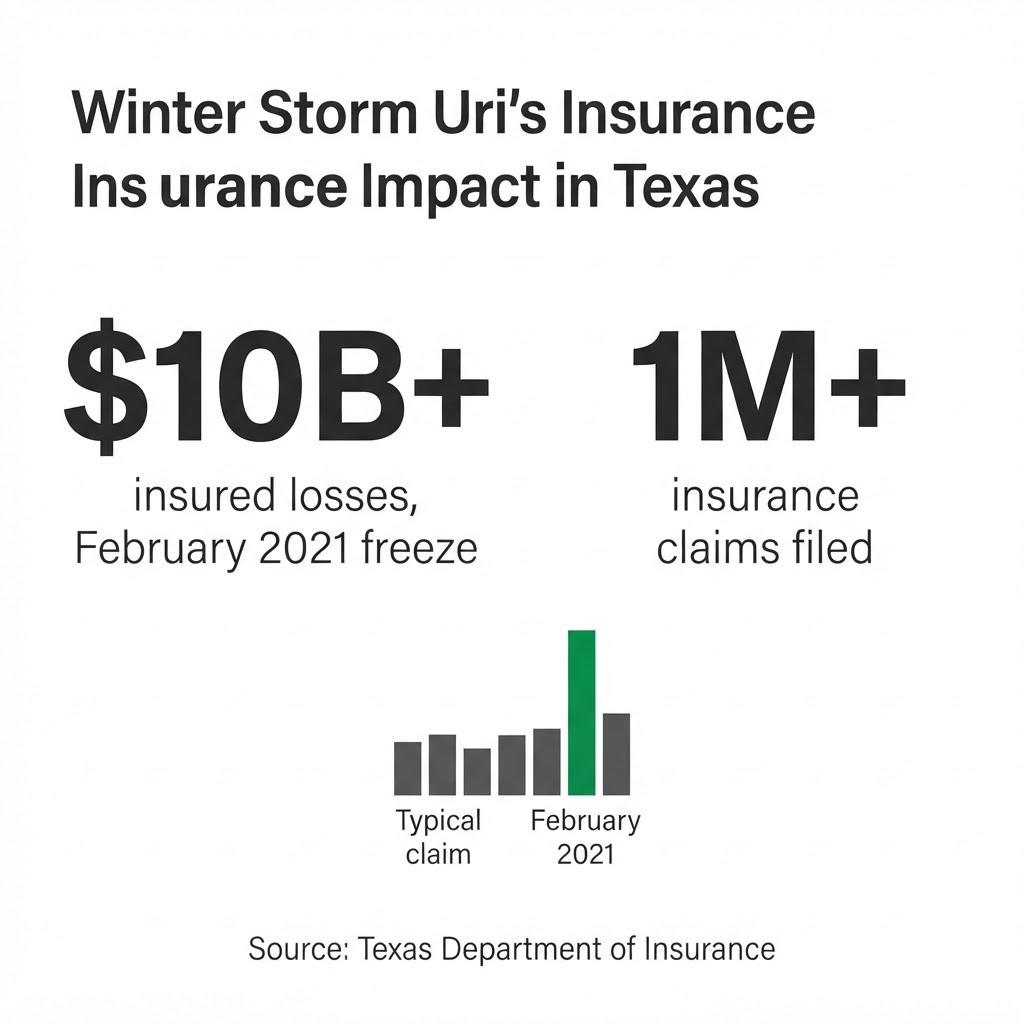
- The Texas Department of Insurance reported insured losses from the February 2021 storm exceeding $10 billion across more than one million claims.
- NFPA 25 governs impairment procedures for out-of-service fire protection systems; NFPA 72 governs supervisory signal behavior for monitored systems.
- Dallas fire watch compliance requires documented patrol logs at intervals specified by the authority having jurisdiction (AHJ), typically the Dallas Fire-Rescue Department or the local fire marshal.
- USPA's dispatch desk coordinates fire watch, sprinkler repair, and alarm panel response from a single point of contact at (800) 214-1448.
What We Know
USPA Nationwide Security operates across multiple Texas markets, with Dallas-Fort Worth representing one of its highest-volume commercial corridors for both fire watch services and security guard deployment. The company's winter readiness posture involves pre-positioning personnel and repair resources so that response to freeze-related fire protection impairments can be initiated the same day a call is received, without the delays that plague multi-vendor handoffs during high-demand cold events.
The operational logic is straightforward. A commercial building whose wet-pipe sprinkler system has a burst riser in an exterior wall cavity is legally required under NFPA 25 and local fire marshal direction to either restore the system to service or establish a fire watch. In a regional freeze event, every impaired property faces the same window of need simultaneously. A company that has not pre-staged personnel and equipment will not be able to meet same-day demand; a company that has done so can.
USPA's emergency fire watch dispatch is structured to receive calls from property managers, building engineers, and risk managers at any hour and begin the impairment-response sequence immediately. The emergency fire sprinkler repair service in Dallas operates in coordination with the fire watch desk so that repair crew dispatch and fire watch officer dispatch proceed in parallel rather than sequentially.
The company's published technical standard, the USPA fire watch white paper, provides the underlying compliance framework that officers and supervisors reference when responding to impairment calls, including patrol interval documentation, impairment notification procedures, and the chain of communication to the AHJ.
The Climatology: Why Dallas Keeps Getting Hit
The polar vortex is a large area of low pressure and cold air surrounding both of Earth's poles. Under stable atmospheric conditions, the stratospheric polar vortex acts as a containment structure, keeping the coldest Arctic air mass over the polar region. When the stratospheric polar vortex weakens — a phenomenon called sudden stratospheric warming (SSW) — the vortex can elongate, split, or displace southward, allowing Arctic air masses to spill well below their normal latitudinal range. The NOAA Climate Prediction Center monitors polar vortex behavior and issues extended-range outlooks that are particularly consequential for regions like North Texas that sit in the climatological path of these displaced air masses.
Texas occupies a geographic position that makes it unusually vulnerable when the vortex displacement does reach the southern plains. The state has no mountain barrier to the north. When an Arctic front descends from Canada through the Great Plains, there is no orographic feature to slow it. The National Weather Service office in Fort Worth maintains the authoritative historical record for the Dallas-Fort Worth area, and that record shows that the January-through-February corridor concentrates the region's most severe freeze events, including the multi-day hard freeze that defined Uri.
The February 2021 event was not climatologically unprecedented in the sense of being impossible; it was unprecedented in its duration and in the degree to which the built environment of Texas was unprepared for sustained temperatures well below freezing. NWS Fort Worth records document that Dallas-Fort Worth reached a low of -2°F on February 16, 2021, and remained below freezing for approximately 140 consecutive hours. That duration is what distinguishes a damaging freeze from a catastrophic one for commercial fire protection systems. A wet-pipe system in an unheated attic may survive a brief dip to 28°F. It will not survive 140 hours at or below 10°F.
Stratospheric sudden warming events are observable weeks in advance of their surface consequences, and NOAA's monitoring infrastructure provides the lead time that operational planners need. When the Climate Prediction Center flags an elevated probability of polar vortex disruption in the January-February window — which it does through its extended range outlooks and teleconnection monitoring — that is the signal for property managers and fire protection service providers in North Texas to begin freeze-impairment preparations. USPA's winter staging is timed against that signal.
There is no credible scientific basis for assuming that Winter Storm Uri was a singular outlier that cannot be repeated. The atmospheric dynamics that produced it are recurring features of the climate system. The NOAA Climate Prediction Center publishes ongoing monitoring of the polar vortex state that any commercial property manager in Dallas can reference.
Engineering Analysis: How Hard Freezes Destroy Commercial Fire Protection
Commercial fire sprinkler systems are largely water-filled infrastructure. That fact, which is unremarkable during normal operating conditions, becomes the central engineering vulnerability when ambient temperatures drop far enough below freezing for long enough. The failure modes are well-understood and are addressed, with varying levels of specificity, in NFPA 25, the Standard for the Inspection, Testing and Maintenance of Water-Based Fire Protection Systems.
Wet-pipe systems in exterior wall pockets and unheated attics. A wet-pipe system maintains pressurized water throughout its piping network at all times. When a branch line runs through an exterior wall cavity that is not adequately insulated or heated, that segment of pipe is exposed to ambient outdoor temperatures during a prolonged freeze. Water expands approximately 9 percent by volume when it freezes. Cast-iron fittings crack; steel pipe splits at seams or at thin sections near fittings; threaded joints fail under the expansion stress. The failure is typically not visible until the thaw begins, at which point the pressurized water system delivers hundreds or thousands of gallons through the breach before anyone can find the controlling valve. Many of the water damage claims that drove the Texas Department of Insurance's reported insured loss figure exceeding $10 billion from Winter Storm Uri were not fire losses — they were freeze-break floods from fire suppression systems.
Dry-pipe systems and frozen drum drips. A dry-pipe system replaces the water in the distribution piping above the dry-pipe valve with pressurized air or nitrogen. Water is held back at the dry-pipe valve, which is typically located in a heated enclosure. The design intent is to allow branch lines to run through unheated spaces. However, dry-pipe systems accumulate condensation in low points in the piping, and those low points are supposed to be drained through drum drip assemblies. When drum drips are not maintained — not tested, not drained before a freeze season — condensate freezes inside the low-point fittings and creates an ice plug. That ice plug can prevent the system from operating correctly during a fire event and can damage piping and fittings during the freeze-thaw cycle. NFPA 25 specifies inspection and testing intervals for drum drips precisely because this failure mode is predictable.
Ice plugs between the dry valve and the heads. Even in a properly maintained dry-pipe system, a sustained multi-day freeze at temperatures well below 32°F can freeze condensation that has accumulated in portions of the system not adequately protected. An ice plug between the dry-pipe valve and the sprinkler heads means the system cannot deliver water to the heads even if a fire activates them, because the ice blocks the water column. This is a life-safety failure, and it is precisely the kind of hidden impairment that requires a physical inspection of the system rather than reliance on panel status alone.
Water hammer on valve cycling. When a frozen fire protection system thaws and is restored to service, the speed at which isolation valves are opened matters. Rapid opening of a valve into a system that has been cold and partly depressurized can generate water hammer — a pressure transient that travels through the piping at roughly the speed of sound in water and can exceed the rated working pressure of fittings and joints. Proper restoration procedure under NFPA 25 involves slow, staged valve opening with a trained operator at the valve and communication with the person monitoring the system downstream.
Antifreeze loops. Some wet-pipe systems protect specific vulnerable zones — loading docks, parking structures, unheated corridors — with antifreeze loops that replace water in that segment with a glycol or glycerin solution. NFPA 25 has specific concentration testing requirements for antifreeze loops because a loop that has been diluted below its rated freeze-protection threshold will fail exactly as a wet-pipe system fails: it will freeze, expand, and break the pipe. Antifreeze loops require pre-season concentration verification, a step that many commercial properties in Dallas skip.
Flex drops and head damage. In commercial distribution and warehouse spaces, flexible drops connecting branch lines to sprinkler heads can trap water at low points. Those trapped water segments freeze, expand, and either crack the flex drop assembly or blow the head off its fitting. Head damage of this kind is not always immediately visible from the floor level; a head that looks intact from below may have a cracked body that will leak or fail to distribute water correctly in a fire.
The combined picture is of an infrastructure that is designed for ambient temperatures above freezing and that, absent specific engineering countermeasures and maintenance practices, will sustain predictable and well-documented damage patterns during a sustained Dallas-level hard freeze.
Fire Alarm and Supervisory Signal Behavior During Freezes
A commercial fire alarm system monitored under NFPA 72, the National Fire Alarm and Signaling Code, will generate supervisory signals when fire protection system parameters drift outside their normal ranges. During a freeze event, the most common supervisory signals from a sprinkler system are low-air signals from dry-pipe systems — indicating that the air pressure in the distribution piping has dropped, which can mean a leak or a failing compressor — and low-water-pressure signals from wet-pipe systems that have lost pressure due to a break.
These signals are not alarms in the evacuation sense. They are supervisory conditions: the system is telling the monitoring station and the property that something is wrong with the fire protection infrastructure and it requires attention. The critical operational error that occurs repeatedly during freeze events is this: a building engineer or night-shift maintenance person receives notification of a supervisory signal, locates the panel, acknowledges the signal, and resets the panel without identifying and resolving the underlying pressure loss. The panel goes quiet. The system remains impaired. The property now has no active indication of the ongoing problem, and no fire watch has been established.
NFPA 72 does not permit resetting a supervisory signal without investigating its cause. More practically, resetting a low-air or low-pressure signal without finding the physical cause of the pressure drop means the property is operating with a degraded fire protection system and no awareness of that fact. During a regional freeze event when repair resources are overwhelmed, properties in this condition can remain impaired for days.
The correct sequence when a low-air or low-pressure supervisory signal occurs during a freeze is: acknowledge the signal, notify the impairment coordinator or AHJ as required under NFPA 25, establish a fire watch if the system cannot be restored within the timeframe specified by NFPA 25 or by local AHJ direction, and keep that fire watch in continuous operation until the system is confirmed restored and tested.
Impairment and Fire Watch Compliance Under NFPA 25
NFPA 25, the Standard for the Inspection, Testing and Maintenance of Water-Based Fire Protection Systems, contains the governing framework for handling fire protection system impairments. An impairment is defined as any condition in which a water-based fire protection system, or a portion of it, is out of service. NFPA 25 distinguishes between emergency impairments — unplanned outages caused by events like freeze damage — and preplanned impairments, which are scheduled outages for maintenance or modification.
For emergency impairments, NFPA 25 requires that the property immediately notify the monitoring company, the property owner or their representative, the AHJ, and the insurance carrier. It requires that steps be taken to minimize the hazard during the outage, which explicitly includes establishing a fire watch. It requires that restoration of the system be expedited.
In Dallas, the AHJ for most commercial properties is Dallas Fire-Rescue or, in jurisdictions within the metroplex served by other municipal fire departments, the relevant local fire marshal. Texas does not have a single statewide fire watch patrol interval mandated for all commercial properties; the interval is typically set by the AHJ and stated in permit conditions or fire code enforcement letters. A common standard is a patrol of the affected floor or area at intervals not exceeding every 30 minutes, with a written log entry for each patrol showing the time, the name of the officer, and the condition observed. USPA's fire watch officers are trained and equipped to maintain these logs in the format required by Texas AHJs.
For further detail on patrol round documentation and interval compliance, the fire watch patrol rounds explained guide and the fire watch compliance guide both address the operational specifics that property managers should understand before calling for coverage. The USPA fire watch white paper provides the full technical and compliance framework.
The Texas Department of Insurance, which reported insured losses from Winter Storm Uri exceeding $10 billion across more than one million claims, has published guidance for commercial policyholders on freeze preparedness and loss mitigation. Property managers who do not comply with NFPA 25 impairment procedures during a freeze event may face complications in claims handling, since insurers can argue that the failure to establish a fire watch after a system impairment constitutes a failure of reasonable care.
DFW Market Context and USPA Staging
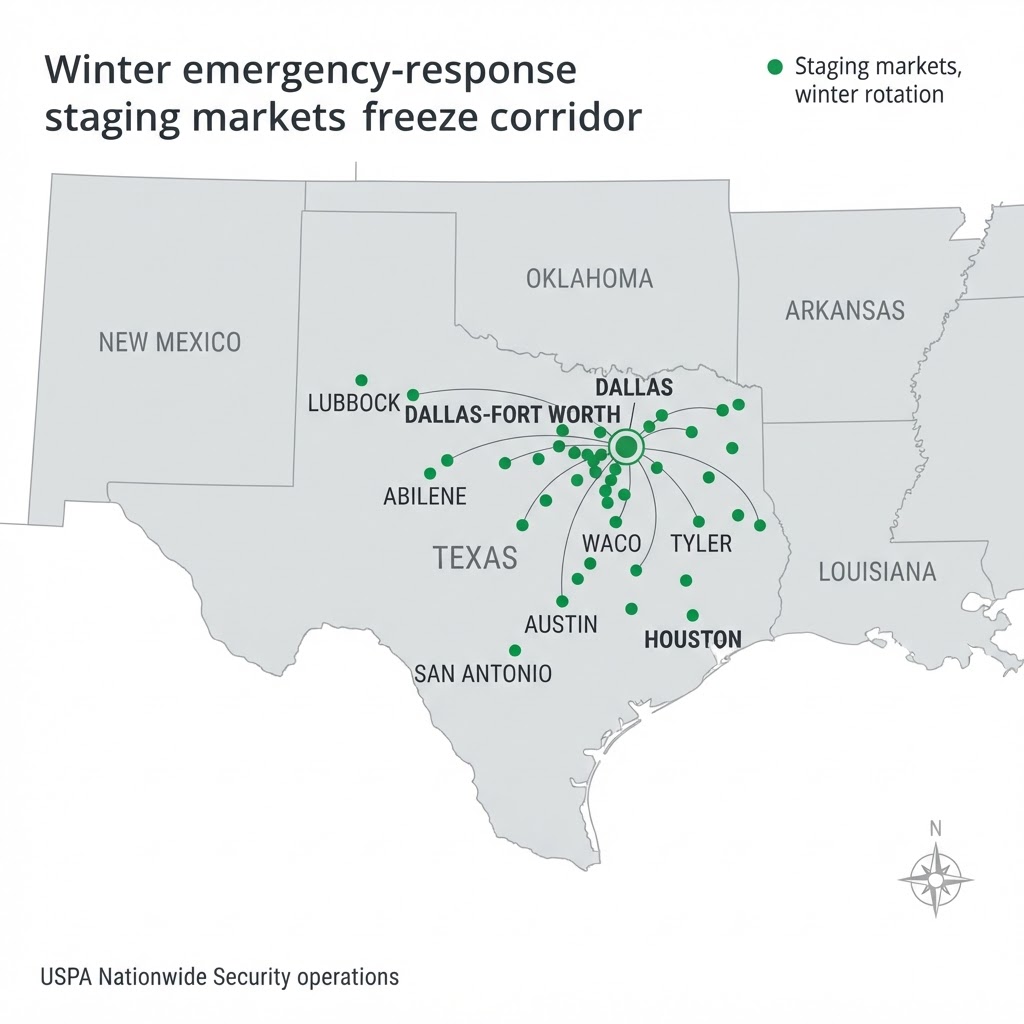
The Dallas-Fort Worth metroplex contains one of the largest and most commercially diverse built environments in the American South. The market includes high-rise office towers in the Dallas CBD and Uptown corridor, Class A distribution and warehouse facilities in the Alliance and South Dallas industrial corridors, data center campuses in the suburban ring, hospital and healthcare campuses distributed across the entire metroplex, and an enormous stock of mid-rise and low-rise commercial buildings that were largely constructed without freeze resilience as a design criterion.
Data centers and hospital campuses have generally invested in freeze protection for their fire protection systems because their operational continuity requirements demanded it. Distribution warehouses and generic commercial buildings frequently have not. Unheated loading dock areas, inadequately insulated attic spaces in big-box retail, and dry-pipe systems with deferred drum drip maintenance are common across the commercial stock. That combination of scale and vulnerability is why the DFW metroplex generated such a large proportion of Texas's freeze-related insurance claims during Uri.
USPA's Dallas fire watch services and Dallas security guard services are both part of the same operational infrastructure. The fire watch officers who cover impaired sprinkler systems and the security guards who manage access control and life-safety patrol at commercial properties are dispatched through the same coordination desk. During a regional freeze event, that coordination matters because many properties need both: the fire protection system is impaired and the property is also physically vulnerable to other risks that arise in emergency conditions.
For related coverage of how impairment handling works in the broader North Texas market, see USPA's analysis of commercial system impairments under NFPA 25 in Fort Worth and hot work and fire safety compliance with NFPA 101 in Dallas, both of which address the compliance landscape in which Dallas-area property managers operate.
The emergency fire sprinkler repair service in Dallas is staged to respond to burst lines, failed antifreeze loops, damaged heads, and dry valve issues that arise during freeze events. The repair component is not separate from the fire watch component in the USPA operational model; they are coordinated from a single dispatch point so that both protective and remediation functions begin at the first call.
What Property Managers in Dallas Should Do Now
The pre-season window before the January-February freeze corridor is the correct time for property managers, building engineers, and facility directors to take the following steps. These are grounded in NFPA 25 maintenance requirements and in the documented failure patterns from Winter Storm Uri.
Valve location walk. Every person on the facility management team who might be called at 2 a.m. during a freeze emergency needs to know where the system isolation valves are, how to close them, and what areas of the building each valve controls. This sounds basic; it is consistently the step that is not done, which is why burst pipe floods run for extended periods before being stopped.
Drum drip inspection and draining. For properties with dry-pipe systems, the drum drips at all low points in the system should be inspected and drained before the freeze season. NFPA 25 requires this as part of the annual inspection cycle. If the annual inspection has not been completed, it should be completed now, with documented results.
Dry system air pressure checks. The air pressure in a dry-pipe system should be at the rated operating level before a freeze season begins. A system that is already running low on air pressure going into a hard freeze will trip its supervisory signal earlier in the event, potentially during the overnight hours when building staff response is delayed.
Antifreeze loop concentration testing. Any antifreeze loop protecting a vulnerable zone of the facility should have its glycol or glycerin concentration tested against the manufacturer's rated freeze-protection threshold and the actual forecast low temperatures for the season. A loop at 50 percent concentration that was adequate for a normal Dallas winter may not be adequate for a Uri-class event.
Pre-season NFPA 25 inspection. A full NFPA 25 inspection by a licensed fire protection contractor, documented with a written report, is the foundational step. The inspection will identify deferred maintenance items, identify components that are already compromised, and produce a record that supports insurance compliance.
Impairment plan. The property should have a written impairment plan that identifies the fire watch provider, the contact number, and the escalation sequence if the system goes out of service. That plan should be in the hands of every person who might be the first to respond to a supervisory signal. USPA's dispatch is reachable at (800) 214-1448 at any hour.
FEMA's winter preparedness guidance and guidance from insurers including State Farm's winter water damage resources both emphasize pre-season preparation as the primary mitigation tool for freeze-related losses, consistent with the operational steps above.
Sources and Open Questions
The factual anchors in this article are drawn from the following sources: NWS Fort Worth historical records for the -2°F low on February 16, 2021, and the approximately 140 consecutive hours below freezing during Winter Storm Uri; the Texas Department of Insurance for the reported insured loss figure exceeding $10 billion across more than one million claims from the February 2021 storm; NFPA 25 for impairment handling procedures; NFPA 72 for supervisory signal behavior; and NOAA Climate Prediction Center for polar vortex monitoring.
Open questions that were not resolvable from the source material provided to this newsroom include: the specific staging locations USPA is using within the DFW metroplex for this season's winter rotation; the number of fire watch officers and repair crew members deployed in the rotation; whether USPA has filed any formal coordination notice with Dallas Fire-Rescue for the winter staging posture; and the specific patrol interval currently being required by Dallas Fire-Rescue for emergency impairments in the current code enforcement cycle. These details are pending confirmation from USPA operations and will be updated as information becomes available.
The climatological characterization of sudden stratospheric warming events reflects the scientific consensus as represented in NOAA Climate Prediction Center monitoring publications. The claim that SSW events are a recurring feature of the climate system rather than singular outliers is consistent with published atmospheric science literature, though specific seasonal forecasts for the current winter were not available at publication time and the forward-looking characterization of freeze risk should be understood as probabilistic rather than certain.
Emergency Fire Watch and Sprinkler Repair Dispatch in Dallas
If your fire protection system is impaired or at risk ahead of a hard freeze, USPA Nationwide Security coordinates emergency fire watch officers and sprinkler repair crews from a single dispatch desk serving the Dallas-Fort Worth metroplex. Contact the dispatch line before a system goes down, not after.
Call: (800) 214-1448
USPA's winter staging posture across Dallas-Fort Worth will remain active through the January-February high-risk corridor and will be adjusted based on NOAA Climate Prediction Center polar vortex monitoring and NWS Fort Worth extended forecasts. Properties that establish impairment plans and service relationships before a freeze event are in a materially better compliance and loss-mitigation position than those that call for coverage after the lines have already burst.
Related Reading
- USPA Fire Watch White Paper
- Emergency Fire Watch Dispatch
- Emergency Fire Sprinkler Repair in Dallas
- Dallas Fire Watch Services
- Dallas Security Guard Services
- Hot Work and Fire Safety Compliance with NFPA 101 in Dallas
- Fire Watch Compliance Guide
- Fire Watch Patrol Rounds Explained
- Commercial System Impairments Under NFPA 25 in Fort Worth
Sources
- NFPA 25: Standard for the Inspection, Testing and Maintenance of Water-Based Fire Protection Systems
- NFPA 72: National Fire Alarm and Signaling Code
- National Weather Service Fort Worth: Historical Records Including Winter Storm Uri
- NOAA Climate Prediction Center: Polar Vortex Monitoring and Extended Range Outlooks
- Texas Department of Insurance: Winter Storm Uri Insured Loss Reporting
- State Farm Newsroom: Winter Water Damage Guidance
- FEMA: Winter Preparedness Guidance
Questions about fire watch, executive protection or guard coverage for your property? Request a quote or call our dispatch line.
More from the blog

Breaking News
Fire Crews Battle Vacant Apartment Building Fire in Kansas City's Wabash Block
Kansas City fire crews responded Sunday morning to a reported apartment building fire in the 2800 block of Wabash, where they encountered smoke and fire coming from a vacant two-story structure. Interior operations were conducted, searches came back all clear, and no injuries were reported. The cause remains under investigation.


Breaking News
Lithium-Ion Battery Fire Displaces Residents at Spokane's Donna Hanson Haven Apartment Building
A lithium-ion battery from an electric bicycle caused a fire on the third floor of Donna Hanson Haven in downtown Spokane on Saturday, October 25, 2026. The Spokane Fire Department evacuated all residents; Catholic Charities Eastern Washington coordinated decontamination, and most tenants returned home the same evening. Seventeen third-floor residents remain displaced with Red Cross support.

Breaking News
Pennsauken, NJ Apartment Building Evacuated After 3-Alarm Fire at Cooper River Apartments
A 3-alarm fire at the Cooper River Apartments on McClellan Avenue in Pennsauken, New Jersey forced the evacuation of roughly 40 residents early Monday morning. One woman jumped from the fifth floor before fire crews arrived and was transported to a local hospital. The cause of the fire has not been released.