
Fire Watch Compliance: A Guide for Commercial Property Managers
October 3, 2026· Brian Fitzgibbons
Defining the Fire Watch Mandate
A fire watch is a systematic patrol of a building or site conducted by trained personnel to detect fire hazards, ensure the operability of fire protection systems, and initiate emergency notifications. It is a critical risk mitigation measure implemented when fire protection systems—such as automatic sprinkler systems, fire alarm systems, or water supply infrastructure—are impaired, rendered inoperable, or undergoing construction activities involving hot work.
Regulatory authority for fire watches typically resides with the local Authority Having Jurisdiction (AHJ), most commonly the municipal fire marshal. NFPA 101, the Life Safety Code, and various localized fire codes serve as the primary standards governing when a fire watch is required. These mandates are intended to compensate for the temporary loss of active fire suppression or detection capabilities until systems are fully restored to operational status.
Triggers for Implementation
Property managers are often required to initiate a fire watch under three primary circumstances: system impairment, pre-planned maintenance, or hazardous site activities. When a primary fire alarm panel fails due to a power outage or component malfunction, the AHJ frequently stipulates that a fire watch must commence immediately. Similarly, when a fire sprinkler system is shut down for routine maintenance or repair, the building owner is generally obligated to maintain a continuous patrol until the system is certified as fully operational.
Construction sites face additional scrutiny under NFPA 241, Standard for Safeguarding Construction, Alteration, and Demolition Operations. Specifically, hot work activities—including welding, cutting, or grinding—often necessitate a designated fire watch to observe for sparks, smoldering materials, or accidental ignition sources during and after the work is performed. Failure to maintain these requirements can lead to stop-work orders, fines, or loss of occupancy permits.
Standards for the Fire Watch Log
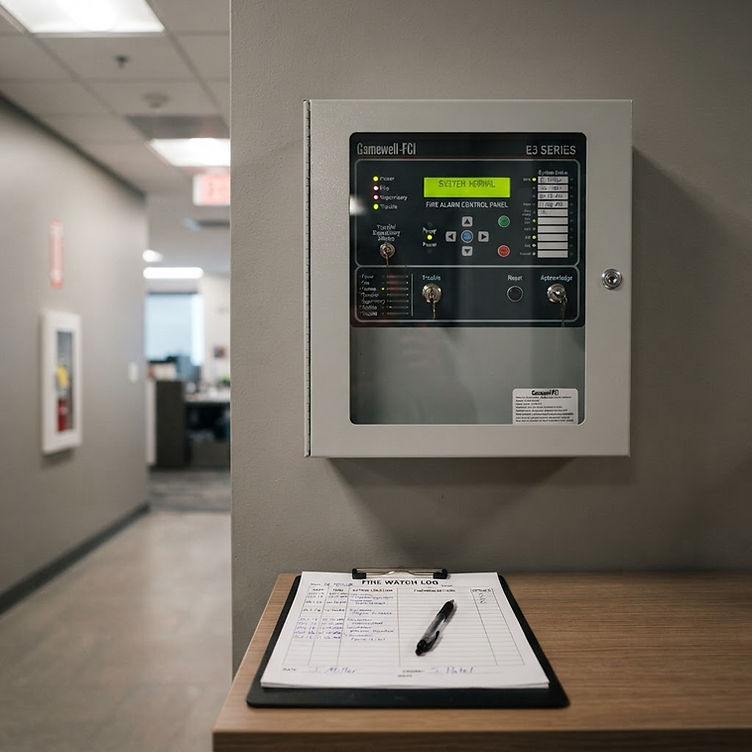
Documentation is the definitive proof of compliance for any fire watch. A compliant fire watch log serves as a chronological record of the patrol, demonstrating that the property was adequately monitored as required by the AHJ. Each entry in the log must be precise, including the exact time the patrol occurred, the specific areas inspected, and the name or identification number of the individual conducting the patrol.
Standard logs should document the discovery of any fire hazards, evidence of non-compliance, or maintenance issues encountered during the rounds. The log must be kept on-site and be readily available for review by the fire marshal or property stakeholders. If a fire, alarm, or emergency incident occurs, the log provides a critical record of the activities performed by the security personnel leading up to the event. Missing, incomplete, or illegible logs are frequently cited as grounds for non-compliance during fire department inspections.
Operational Considerations
For property managers, outsourcing fire watch services provides access to personnel trained specifically in NFPA compliance and fire safety protocols. Rather than diverting internal staff—who may lack the necessary training or availability—professional security providers offer 24/7 coverage, ensuring that every shift is documented and every patrol follows the specific mandates outlined by the AHJ. This approach ensures that property management remains in regulatory alignment while focusing on ongoing operations and system repairs.
Related Reading
Questions about fire watch, executive protection or guard coverage for your property? Request a quote or call our dispatch line.
More from the blog


Opinion
Retail Riots and the Death of Glass: Securing the Future Storefront
Flash-mob looting and civil disturbances have exposed plywood boarding as a symbolic gesture rather than a genuine security strategy. This op-ed argues that modern urban retail brands must invest in permanently engineered ballistic and smash-resistant glazing systems integrated into their architectural design.


Opinion
The Glass Ceiling of Corporate Privacy
Electrochromic glass systems integrated into corporate IoT networks offer architectural elegance and energy efficiency, but they also introduce a category of physical-cyber vulnerability that most enterprise security programs have yet to address: the remote, instantaneous erasure of visual privacy in executive conference spaces.


Opinion
The Ghost in the Server: How AI-Driven Tailgating Is Defeating Automated Turnstiles
Sophisticated bad actors have learned to treat optical turnstiles as a system to be gamed rather than a barrier to be overcome. Understanding the geometry of how machine-calculated tailgating works is the first step toward deploying defenses that can actually stop it.