
Retail Riots and the Death of Glass: Securing the Future Storefront
October 30, 2026· Dan Manning

The Storefront as a Statement of Defeat
When a major retailer installs plywood sheets over its ground-floor windows before an anticipated civil disturbance, it is making a statement to its customers, its landlord, and the surrounding neighborhood. The statement is one of resignation. The boards signal that the brand has accepted, at least temporarily, that its physical environment is indefensible. In the weeks following any high-profile looting event in an American downtown, the boarded facades linger long after the immediate threat passes, and the cumulative visual effect on commercial corridors has been well documented by urban planning researchers and real estate analysts alike. Boards breed boards. A single boarded storefront on a block tends to depress foot traffic for neighboring tenants even after reopening, because the visual cue of fortification communicates ongoing danger to potential customers.
The argument advanced here is practical and architectural in equal measure. Plywood boarding, as a primary response to the threat of civil unrest and organized retail crime, has reached the end of its useful life as a security strategy for sophisticated urban retail operations. The evidence from recent loss events, combined with advances in engineered glazing technology and the growing body of applicable standards, compels retail security directors and brand operations teams to reconsider the entire physical security envelope of the storefront. The thesis is straightforward: permanently engineered smash-resistant and ballistic glazing systems, including deployable roll-down polycarbonate curtain systems, represent a mature and aesthetically compatible alternative that plywood boarding has never been and cannot become.
What the Loss Data Actually Shows
The National Retail Federation's annual Retail Security Survey has tracked organized retail crime and external theft losses over a sustained period, consistently identifying physical property damage as a compounding factor alongside merchandise theft. According to NRF survey findings, organized retail crime continues to affect the overwhelming majority of retailers surveyed, with participants frequently citing the damage to physical infrastructure as a loss category that exceeds merchandise value in certain high-profile incidents. Storefront glazing replacement, emergency boarding services, and the downstream costs of reduced operating hours during recovery phases all contribute to a total incident cost that rarely appears in simplified theft statistics.
Flash-mob looting events, characterized by coordinated groups entering retail locations in rapid succession to overwhelm staff and disable normal deterrents, have demonstrated with uncomfortable clarity that conventional security protocols built around personnel presence and surveillance camera coverage are insufficient when the physical envelope of the building offers no meaningful resistance. A tempered glass storefront, which meets standard commercial glazing specifications but nothing beyond, can be defeated with ordinary tools in well under a minute. That vulnerability has been exploited repeatedly across metropolitan retail districts over recent quarters, and the pattern is geographically distributed rather than confined to any single urban market.
The financial picture is further complicated by commercial lease structures. Retail lease litigation following civil unrest events has surfaced genuine ambiguity about who bears responsibility for storefront hardening when a landlord-owned facade is damaged during a tenant's operating period. Courts in several jurisdictions have examined the interplay between casualty clauses, force majeure provisions, and each party's duty to mitigate foreseeable damage. While outcomes vary by jurisdiction and lease language, the litigation record makes clear that tenants who have taken no documented steps toward physical hardening of their storefronts are in a weaker position when arguing that a landlord's construction choices left them exposed. Proactive investment in engineered glazing systems creates a documented record of mitigation effort that has evidentiary value in those disputes, independent of any security benefit the system itself provides.
The Engineering Standards That Exist and Are Being Ignored
Two standards documents are directly relevant to the glazing question, and their existence is not widely understood outside of the physical security and construction industries. UL 972, the Standard for Burglary Resisting Glazing Material published by UL (formerly Underwriters Laboratories), establishes test criteria for glazing materials intended to resist forced entry. Products tested and listed under UL 972 have demonstrated specific resistance to repeated blows from defined impactors under controlled test conditions, providing a meaningful baseline for comparing glazing options. A storefront specifying UL 972-listed materials is making a verifiable, standards-backed decision rather than an intuitive one.
ASTM F1233, the Standard Test Method for Security Glazing Materials and Systems, extends the evaluation framework to cover complete glazing system assemblies rather than material specimens in isolation. This distinction matters operationally because a glazing material that performs well under UL 972 material testing can still fail prematurely if the frame, anchoring hardware, and sealant system are not engineered to transmit loads appropriately. ASTM F1233 addresses the system-level question, and retail security specifications that cite only one standard while ignoring the other are leaving meaningful performance information on the table.
Polycarbonate glazing systems engineered to these standards, particularly multi-layer laminated configurations, can absorb repeated impact from hand tools and blunt instruments that would immediately defeat standard commercial glass. Some deployable roll-down polycarbonate curtain systems designed for retail applications are capable of meeting multiple UL attack resistance grades, and they can be integrated into standard aluminum storefront framing systems in a way that is architecturally neutral during normal business hours. The curtain system is concealed in a header housing above the storefront opening and deploys on motorized or manual actuation when needed, creating a continuous barrier across the full glazed elevation without the visual disruption of emergency boarding.
The Architectural and Zoning Dimension
One of the practical objections raised against engineered glazing hardening is aesthetic. Retail brands invest substantially in their storefront design as an expression of their identity, and the argument is sometimes made that security hardware compromises that investment. This objection deserves a direct answer, and the answer lies in how well-designed roll-down security curtain systems are currently specified and installed.
Modern polycarbonate curtain systems, when properly specified and integrated at the design or renovation phase, are essentially invisible during business hours. The housing profile can be powder-coated to match existing soffit or header finishes, and the curtain itself, when retracted, occupies a header depth that is comparable to standard motorized shade systems already common in retail environments. From a pedestrian perspective on the sidewalk, the hardened storefront looks identical to an unhardened one when the system is in its retracted position.
The zoning dimension adds another layer of relevance that retail operations teams have been slow to internalize. Several municipalities have adopted or are considering storefront appearance ordinances that restrict the use of solid plywood boarding as a long-term facade treatment, particularly in designated commercial districts and historic zones. These ordinances have emerged partly in response to the visual blight created by extended boarding following civil disturbances, and partly from economic development concerns about the signal that boarded storefronts send to prospective tenants and investors in a district. Where such ordinances are in force or anticipated, the plywood option carries regulatory risk in addition to its operational limitations. Engineered transparent or translucent curtain systems generally satisfy appearance requirements that solid boarding cannot, because the deployed system allows light transmission and visual continuity with the storefront, even if it prevents physical access.
Retail security directors advising on new store construction or major renovation projects would be prudent to request a review of applicable local zoning language regarding storefront treatment during declared civil emergencies before finalizing the glazing specification. That review should happen before design development is complete, because retrofitting a curtain system header housing into an existing storefront is significantly more expensive than incorporating it during initial construction.
Why the Theater Metaphor Is Precise
The characterization of plywood boarding as security theater warrants examination because the theatrical metaphor is analytically precise, not rhetorical flourish. Security theater, in its technical sense, describes measures that create the appearance of security response without meaningfully altering the risk profile of the protected asset. Plywood boarding fails on both dimensions simultaneously.
In terms of physical deterrence, standard construction-grade plywood can be defeated with the same tools used to defeat the standard commercial glass it covers. Organized retail crime groups that have demonstrated the capability to execute coordinated entries against staffed retail locations during active operations are not materially impeded by a material that any construction worker can cut with a circular saw. The physical protection provided by standard boarding is marginal against any adversary more capable than an opportunistic individual.
In terms of operational continuity, boarding requires removal before the store can operate, which means every boarding event creates a recovery cycle involving labor, disposal of damaged boards, and typically some degree of storefront repair. That cycle has a cost, and it repeats with every incident. An engineered curtain system, by contrast, resets to its operational position as a routine maintenance task rather than a construction event. The asymmetry of lifecycle cost between repeated boarding events and a single engineered system installation becomes favorable for the engineered system within a relatively small number of incidents at most high-risk urban retail locations.
The theatrical element, the signal of defeat visible to the street, is perhaps the most underappreciated cost. Brand equity research consistently identifies physical environment as a significant driver of customer perception, and a boarded storefront, even temporarily, interrupts the physical environment signal in a way that affects customer behavior for a period extending beyond the boards' removal. The engineered alternative, when deployed, communicates preparedness rather than vulnerability.
Recommendations for Retail Security Directors
For retail brands operating in high-density urban environments with documented civil unrest exposure, several practical steps follow from the analysis above.
First, the storefront glazing specification for any new construction or major renovation project should be reviewed against UL 972 and ASTM F1233 criteria before the design development phase is concluded. This is a specification decision, and it is significantly less expensive to make correctly at the design phase than to retrofit after construction. The conversation should include both the glazing material specification and the system-level assembly specification, because the ASTM F1233 distinction between material and system performance is operationally significant.
Second, for existing locations in markets with documented flash-mob looting exposure, a feasibility review for deployable polycarbonate curtain system retrofit should be conducted. The review should address structural capacity of the existing storefront framing, header depth availability, electrical service for motorized actuation, and any applicable local permits. This is a capital planning exercise, and it should be integrated into the brand's physical security risk assessment cycle rather than treated as a reactive post-incident response.
Third, the commercial lease for each high-exposure location should be reviewed with counsel specifically for casualty and damage provisions related to civil disturbance events, with attention to which party bears the duty to mitigate and what documentation of mitigation efforts is required. Where lease language is ambiguous, an amendment clarifying the parties' respective obligations regarding storefront hardening measures is worth pursuing at the next lease renewal.
Fourth, local zoning requirements regarding storefront appearance during declared civil emergencies should be reviewed in each market. Where boarding restrictions exist or are under consideration, the compliance risk of the current plywood-dependent protocol should be flagged to the operations and real estate teams.
Finally, retail brands with multiple high-risk urban locations should consider the total cost of ownership across a five-to-ten-year horizon that includes projected boarding events, glazing replacement cycles, and operational recovery costs, against the capital cost of engineered system installation. That analysis, conducted rigorously and with realistic incident frequency assumptions, tends to produce a more compelling case for engineered systems than any single-incident cost comparison.
The Broader Stakes for Urban Retail
The question of storefront security is a component of a larger question about the viability of urban retail as a format. Ground-floor retail in dense commercial districts provides amenity, employment, and tax revenue that city governments and commercial real estate owners have a direct interest in preserving. When a retail corridor develops a reputation for recurring civil unrest damage and extended post-incident boarding, the dynamics that follow are well established in urban economic literature: foot traffic declines, neighboring tenants renegotiate or exit leases, and the corridor enters a deterioration cycle that is difficult to interrupt.
Retail brands that invest in engineered physical security infrastructure are making a statement about their commitment to operating in urban environments over a time horizon that extends beyond any single disturbance event. That statement has value to city economic development offices, to landlords underwriting the long-term viability of their retail corridors, and to the communities that depend on ground-floor commercial activity. The investment is simultaneously a security decision, a real estate decision, and an urban policy decision, and it should be evaluated as all three.
USPA Nationwide Security works with retail clients across major urban markets to assess physical security vulnerabilities and develop integrated protection protocols that address both personnel deployment and physical infrastructure. For retail security directors evaluating storefront hardening strategies or seeking consultation on civil unrest preparedness, contact USPA at (800) 214-1448 or visit the locations and services pages to identify regional coverage.
Related Reading
Questions about fire watch, executive protection or guard coverage for your property? Request a quote or call our dispatch line.
More from the blog


Opinion
The Glass Ceiling of Corporate Privacy
Electrochromic glass systems integrated into corporate IoT networks offer architectural elegance and energy efficiency, but they also introduce a category of physical-cyber vulnerability that most enterprise security programs have yet to address: the remote, instantaneous erasure of visual privacy in executive conference spaces.


Opinion
The Ghost in the Server: How AI-Driven Tailgating Is Defeating Automated Turnstiles
Sophisticated bad actors have learned to treat optical turnstiles as a system to be gamed rather than a barrier to be overcome. Understanding the geometry of how machine-calculated tailgating works is the first step toward deploying defenses that can actually stop it.

Opinion
Securing the Subsea Cable Landings: The Vulnerable Chokepoints of Global Data
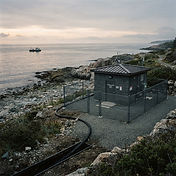
The entire digital economy transmits roughly 95 percent of international data through undersea fiber-optic cables, yet the physical points where those cables make landfall remain among the least protected nodes in global critical infrastructure. This op-ed argues that the security community's fixation on digital perimeters has left a concrete, addressable vulnerability largely unguarded.
