
The Glass Ceiling of Corporate Privacy
October 29, 2026· Dan Manning

A New Surface in the Attack Landscape
For much of the past decade, corporate security directors have focused their threat modeling on the digital perimeter: firewalls, endpoint detection, zero-trust network architectures, and supply-chain software risk. The physical environment received attention largely as a supporting domain, something managed through badge access, CCTV, and visitor management systems. That framing is increasingly incomplete.
The luxury commercial real estate market has, through the building cycles of 2024 and 2025, substantially normalized electrochromic smart glass as a premium amenity in high-rise corporate interiors. These systems, marketed under brands including Sage Electrochromics (acquired by Saint-Gobain), View Inc., and RavenWindow, allow building managers and occupants to control window opacity electronically, transitioning panels from opaque or tinted states to full transparency via networked commands. The energy efficiency credentials are genuine: the U.S. Department of Energy has documented that dynamic glazing can reduce solar heat gain and associated cooling loads. The privacy utility is also real, at least when the systems function as intended and remain under the control of their authorized operators.
The operational risk that this piece argues deserves board-level attention is the condition in which those systems do not remain under authorized control. When electrochromic glass panels are networked through the same IoT infrastructure that connects a building's HVAC, lighting, and access control systems, they become addressable endpoints. Addressable endpoints, by the established logic of networked security, can be enumerated, probed, and, under certain conditions, commanded by parties other than their owners.
The thesis is direct: smart glass systems integrated into enterprise IoT environments introduce a physical-layer visual surveillance vector that current corporate security standards have inconsistently addressed, and that the convergence of building automation and information security governance makes acutely relevant in 2025 and beyond.
How Electrochromic Glass Systems Work and Where They Connect
Electrochromic glazing operates by passing a low-voltage electrical current through a thin-film coating applied to the glass surface. The ionic movement within that coating shifts the optical properties of the panel, moving it along a spectrum from tinted or opaque to clear. The physics are well established, and the reliability of the glazing technology itself is mature.
The vulnerability profile does not originate in the glazing chemistry. It originates in the control infrastructure. Modern commercial electrochromic installations are managed through building automation systems (BAS) or building management systems (BMS), which in turn communicate over IP networks. Protocols including BACnet, Modbus, KNX, and increasingly proprietary cloud-connected platforms provide the communication layer. Many installations offer mobile application control, integration with voice-assistant platforms, or API endpoints that allow third-party building management software to issue commands to the glass.
CISA has published multiple advisories addressing vulnerabilities in building automation protocols. The agency's advisories on BACnet and related systems have noted that many deployments assume a trusted internal network environment and implement limited authentication at the device or protocol level. When a building's BAS is connected to the broader enterprise network, or when cloud management portals expose control interfaces to the internet, the attack surface expands considerably. CISA's advisory documentation is publicly accessible through its ICS-CERT portal and represents the most current official characterization of these risks in the U.S. federal context.
The relevance to electrochromic glass specifically is that the same network segment or cloud portal that controls HVAC setpoints may also accept commands directed at glazing panels. An attacker who achieves lateral movement within a building automation network, or who compromises credentials for a cloud-based BMS portal, may be positioned to issue glass opacity commands. The result, in a boardroom or executive conference suite lined with smart glass panels, is an instantaneous transition from private to transparent, legible to anyone positioned with line-of-sight access from an adjacent building, street level, or aerial platform.
The Research Community Has Already Demonstrated the Problem
Physical security professionals sometimes discount threat scenarios that remain theoretical, and that caution is appropriate when applied consistently. The smart glass attack surface, however, has received meaningful attention from the applied security research community. Presentations at Black Hat and DEF CON in recent years have included demonstrations of unauthorized control over building automation systems through a combination of exposed BACnet interfaces, default or weak credential exploitation, and protocol replay attacks. While a specific peer-reviewed publication confirming a live boardroom glass demonstration as of the date of this writing has not been independently confirmed by this author, the component vulnerabilities that would enable such an attack have been documented in research settings. The building automation attack surface is addressed in published academic literature, and CISA's advisories on industrial and building control systems substantiate the underlying exposure class.
Security architects should treat the absence of a widely publicized live incident as an artifact of underreporting and limited attacker motivation to date, rather than as evidence of fundamental protection. Corporate espionage operations are, by their nature, conducted without public disclosure. The organizations most likely to be targeted, those with material nonpublic information, active M&A processes, or sensitive government contract discussions, have strong incentives to suppress disclosure of any successful surveillance operation.
Governance Frameworks That Should Already Apply
ISO/IEC 27001, the international standard for information security management systems, includes explicit controls addressing physical and environmental security. Annex A of the standard, in its 2022 revision, incorporates controls under the physical security domain that speak to the protection of secure areas, physical access controls, and the management of equipment located in or visible from areas accessible to unauthorized parties. The standard's physical controls framework was not designed with electrochromic glazing in mind, but its underlying logic applies: secure areas must be protected against visual surveillance, and the management systems governing physical boundaries require the same governance discipline applied to information systems.
ISO/IEC 27001 certification auditors examining a large corporate campus in 2025 would be on sound interpretive ground in querying how smart glass control systems have been scoped within the organization's asset inventory and risk assessment. In practice, many organizations have not addressed this gap. Building automation systems are frequently managed by facilities teams with limited integration into the information security governance structure, and smart glass control is often treated as a facilities amenity rather than a security-relevant system.
The NIS 2 Directive, which entered into force across European Union member states with a transposition deadline of October 2024, extends cybersecurity obligations to a broader range of entities and explicitly addresses the integration of physical and cyber security measures for operators of critical and important entities. Article 21 of NIS 2 requires covered organizations to implement measures addressing physical security as part of their cybersecurity risk management obligations. For multinational corporations with EU operations, the directive creates a regulatory hook for treating building automation vulnerabilities, including those affecting smart glass, as in-scope for cybersecurity compliance programs.
ASIS International, the professional association for security management practitioners, has published guidelines addressing executive suite and sensitive area protection. Those guidelines address the management of visual and acoustic surveillance risks in executive environments, and provide a practitioner framework for assessing conference room vulnerability. Organizations that have not reviewed their executive suite protection posture against current ASIS guidance since undertaking smart glass installations should treat that as an open audit item.
The Threat Model in Practice
A realistic threat scenario for a major corporate headquarters with smart glass conference rooms proceeds through several stages, none of which requires sophisticated nation-state tooling to initiate.
First, an adversary conducting competitive intelligence against a publicly traded company identifies that the target occupies floors 30 through 45 of a high-rise building in a major financial district. Public records, building permits, and commercial real estate filings confirm that the building was fitted with a networked electrochromic glazing system during its 2024 renovation. The building's BMS vendor maintains a cloud portal for remote management. A review of the vendor's public documentation confirms that the portal accepts authenticated API calls to control glazing states.
Second, through a credential stuffing campaign against the facilities management contractor's email domain, or through exploitation of a vulnerability in the cloud portal's authentication flow, the adversary obtains valid credentials for the glazing management interface. This step does not require any physical access to the target organization's premises.
Third, with access to the glazing control interface, the adversary identifies the conference rooms on the executive floor and monitors usage patterns through the system's own scheduling integration or through publicly accessible calendar data. The adversary identifies a board meeting date and, at the appropriate moment, issues a command to transition the executive conference suite windows from opaque to transparent.
Fourth, a surveillance asset positioned in an adjacent building, operating from street level with optical equipment, or employing a commercially available drone platform, captures video of the whiteboard session, presentation content, or document materials visible through the now-transparent glass. The adversary gains access to material nonpublic information without any intrusion into the target organization's information technology network.
This scenario is not hypothetical in its component parts. Each of the technical steps described reflects documented vulnerability classes. The integration represents a reasonable extrapolation of current adversary tradecraft applied to an emerging physical-layer attack surface.
What Security Leadership Should Do
The appropriate organizational response begins with asset scoping. Smart glass control systems must be included in enterprise information security asset inventories and subjected to the same risk assessment processes applied to other networked systems. The facilities management function, which often owns building automation contracts, should be brought into the information security governance structure for the purposes of BAS risk assessment. Organizations operating under ISO/IEC 27001 or NIS 2 obligations should treat this integration as a compliance requirement.
Network segmentation is the most immediately actionable technical control. Building automation systems, including glazing control interfaces, should operate on network segments isolated from the corporate enterprise network and from the internet, with access restricted to authorized personnel through authenticated and logged jump hosts. Cloud-based management portals for building systems should be evaluated for authentication strength, and multi-factor authentication should be enforced universally.
Conference room design standards should be revisited to ensure that smart glass panels in executive or sensitive meeting spaces have a defined fail-secure state. In the context of visual privacy, fail-secure means defaulting to opaque or tinted in the event of a control system failure or unauthorized command. Not all electrochromic systems support this configuration natively, and procurement specifications for future installations should include this requirement explicitly.
For occupied executive suites in buildings where networked glazing control cannot be adequately secured in the near term, supplemental physical controls including secondary interior window treatments that do not depend on networked control represent a straightforward interim measure. This solution is neither architecturally novel nor technically complex, and its adoption does not require waiting for vendor patches or network remediation cycles.
Finally, organizations should consider commissioning physical security assessments that specifically evaluate line-of-sight exposure from adjacent properties and public vantage points to executive meeting spaces. The threat of optical surveillance from external positions predates smart glass technology, but the automation of transparency transitions creates a new dimension of that exposure that static architectural analysis may not have addressed.
The Governance Gap That Requires Attention
The broader issue surfaced by the smart glass vulnerability is the persistent organizational separation between physical security and information security governance. Building automation systems sit at the intersection of those two domains, and neither facilities management nor information security teams have consistently claimed ownership of the resulting risk. The 2025 building cycle, which has accelerated the deployment of networked building systems across major commercial properties, makes this governance gap increasingly consequential.
ISO/IEC 27001's physical security controls and the NIS 2 Directive's integrated physical-cyber requirements both point toward the same organizational conclusion: the management of physical environments in which sensitive information is discussed or processed requires the same disciplined risk governance applied to information systems. Smart glass panels in a boardroom are, in their networked configuration, an information security concern. Treating them exclusively as an architectural feature leaves a surveillance vector unmanaged.
Security directors who have read this far and are uncertain whether their organization's smart glass installations have been scoped into the information security program have their answer regarding where to begin. The question for the boardroom is straightforward: who in the organization owns the risk that the boardroom windows can be remotely commanded to transparency, and what controls have been applied to that risk? If that question does not have a clear owner and a documented answer, the gap is open.
USPA Nationwide Security provides physical security consulting and guard services for corporate campuses, executive facilities, and high-security environments. For inquiries regarding executive suite vulnerability assessments or corporate security program support, contact USPA at (800) 214-1448 or visit the services and contact pages linked below.
Questions about fire watch, executive protection or guard coverage for your property? Request a quote or call our dispatch line.
More from the blog


Opinion
The Ghost in the Server: How AI-Driven Tailgating Is Defeating Automated Turnstiles
Sophisticated bad actors have learned to treat optical turnstiles as a system to be gamed rather than a barrier to be overcome. Understanding the geometry of how machine-calculated tailgating works is the first step toward deploying defenses that can actually stop it.

Opinion
Securing the Subsea Cable Landings: The Vulnerable Chokepoints of Global Data
The entire digital economy transmits roughly 95 percent of international data through undersea fiber-optic cables, yet the physical points where those cables make landfall remain among the least protected nodes in global critical infrastructure. This op-ed argues that the security community's fixation on digital perimeters has left a concrete, addressable vulnerability largely unguarded.

Opinion
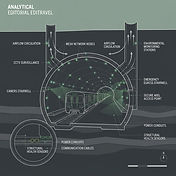
The Underground Blind Spot: Why Subsurface Infrastructure Demands a Security Doctrine of Its Own
Underground transit and automated logistics networks are expanding at a pace that outstrips the security doctrine designed to protect them. This op-ed argues that subsurface infrastructure requires an independent security architecture built around mesh communications, advanced smoke-purging systems, and a frank acknowledgment of the catastrophic consequences when egress is limited and wireless signals fail.
