USPA Nationwide Security

Washington, DC

Fire Watch Services in Washington, DC

Fire watch in Washington, staffed to the order Washington Fire Marshal / Fire Prevention Division issues and documented for the office that will inspect it.

  • 21+ Years in Business
  • A+ Rated
  • Veteran Owned and Operated
  • Licensed and Insured
  • 24/7 Dispatch
Fire Watch Service in Washington

Knowledge base · Volume 09 · Washington, District of Columbia

Washington, D.C. Fire Watch & Hot Work Regulations

The edition works from the District’s own implementation bulletin rather than from a generic model code. It sets out the 2017 12-H DCMR supplement and 2015 IFC hierarchy, the February 2025 FPD Bulletin No. 3 watch-plan process, the four-hour planned-maintenance trigger, accepted staffing and the central communications post, hourly whole-building patrols, written release, the separate OSHA and NFPA 51B hot-work watch, and the federal-enclave question. It carries the decision card, six worked case analyses, four diagrams, eight field forms and the full source registry.

  • The controlling fire code is the 2017 Title 12-H DCMR supplement built on the 2015 International Fire Code. The 2026 modernization the Department of Buildings has announced is not an adopted edition, and material that treats it as one is premature.
  • DC FEMS FPD Bulletin No. 3, revised February 2025, is the current implementation procedure. It governs who submits the watch plan, who may staff it, the patrol interval and the conditions for release.
  • Planned alarm or suppression maintenance of four hours or longer is a published watch trigger. Significant impairment or a system out of service can require an immediate watch; the four-hour figure is a trigger, not a grace period.
33
Pages
15
Cited sources
2026-11-03
Research cutoff
2017 Title 12-H DCMR Fire Code Supplement with the 2015 International Fire Code; DC FEMS FPD Bulletin No. 3 (revised February 2025); OSHA 29 CFR 1910.252 and 1926.352; NFPA 51B (2019)
Code edition analysed
Read the Washington fire watch volume

Full edition with the citation registry attached, by Brian Fitzgibbons. Editorial technical-review edition 1.0.

Authority having jurisdiction

Looking for the Washington fire marshal’s office?

The division that takes the impairment notification, decides how many people an ordered watch requires and inspects the log is Washington Fire Marshal / Fire Prevention Division. Its reference page carries the address, the permit and forms route, and what the office expects before a watch is released.

City Hall / Main Fire HQ, Washington, DC
On the ground

How fire watch services works in Washington, DC

Under Washington Fire Marshal / Fire Prevention Division, an offline system is a condition that has to be staffed rather than a repair that can wait for the next business morning. When a sprinkler, standpipe, detection or suppression system in Washington is valved off or taken out of service, a documented watch is required until the system is tested and back in service, and that watch runs under the fire department's own impairment order rather than a general best practice.

A watch in Washington usually follows an impairment nobody scheduled, most often a riser isolation that leaves part of the property without coverage.

What sets the difficulty in Washington is the property rather than the paperwork. Rounds are written to the building's layout so an officer covers the impaired areas, the concealed space above them and the exterior where embers land, inside the interval the order allows.

Posts in Washington are planned around the property's own impaired areas, with the route written per building rather than carried in from the last job.

Rounds in Washington run to the interval the order sets, and each is logged with the time, the route, the areas observed and the panel or valve status. What the property keeps is a record of what was found as well as what was walked, which is the part an insurer reads for evidence of a working watch.

Put together, a Washington assignment reads like this: a property with an impairment already on the books, an officer inside 4 to 8 hours, a route through the impaired areas, and a close-out only when the system is signed back in.

The market in Washington

The clients who book a watch in Washington are the people who own the impairment: the property manager who has to explain it to an insurer. What they need from the first call is the same in every case: a licensed officer, the interval the department requires and a log that survives inspection.

The authority to take a system out of service sits with Washington Fire Marshal / Fire Prevention Division, and a Washington impairment is read against the District of Columbia Fire Prevention Code. DC Fire and EMS Fire Marshal's Office publishes the baseline the office applies, with its own amendments on top. USPA writes the plan to that order and confirms the scope in writing before the first round, so the job the inspector sees is the job the officer works.

Hot work is its own discipline here. A permit in Washington sets the monitoring conditions, and the officer assigned to the job enforces them: the area cleared, the extinguisher charged, and the post-work interval held until the last heat source the crew used has been checked again.

Pricing in Washington follows the assignment rather than a rate card: officers by post, the interval the department requires, the hours of coverage and the layout of the property. The written scope, licensing and insurance certificates are issued with the quote, so the file can go to the department or the insurer without a follow-up request. [Request a quote](/contact) with the property details.

Who enforces this in Washington, DC

Taking a system out of service in Washington puts three documents in play: the notification sent to Washington Fire Marshal / Fire Prevention Division before the valve is closed, the round log the office will inspect while the impairment is open, and the restoration record that closes the watch. The District of Columbia Fire Prevention Code is what the department reads those documents against, and DC Fire and EMS Fire Marshal's Office publishes the baseline its local amendments sit on. That is the sequence an inspector follows, and where the property's insurer imposes a condition stricter than the code, the insurer's condition governs the post.

NFPA 101
Life Safety Code requirements for occupancy and means of egress that an authority having jurisdiction applies when protection is impaired.
NFPA 25
Inspection, testing and maintenance of water-based systems. Impairment procedure here is what normally triggers a fire watch.
NFPA 51B
Hot work precautions, including the requirement for a fire watch during and after permitted work.
NFPA 601
Fire watch duties, patrol documentation and record retention expectations.

Adopted codes differ by state, county and municipality, and an insurer or fire marshal may impose conditions beyond the published standard. USPA confirms the local requirement for each site before coverage begins.

  • Sprinkler and standpipe impairmentsContinuous rounds while water-based protection is offline, including partial and floor-by-floor shutdowns.
  • Alarm and fire panel failuresCoverage while detection or notification systems are unreliable, with panel status checked on each round.
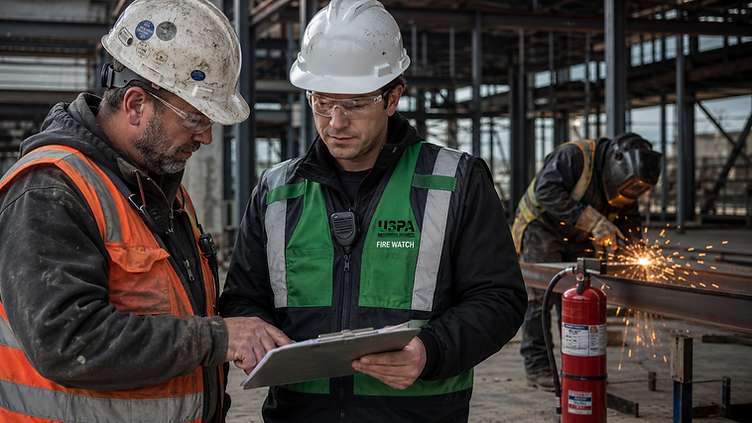
  • Hot work and constructionFire watch during welding, cutting and grinding, plus post-work monitoring after the permit activity ends.
  • Warehouse, industrial and high-riseLarge-footprint and multi-level properties where rounds must be planned around racking, equipment and access.

Coverage and response in Washington

Dispatch for Washington answers around the clock. USPA plans to have an officer on post within 4 to 8 hours of written authorization, sourced from officers already working Washington; federal, port and hospital properties add credentialing time before the first round can be counted.

The roster in Washington does not thin out after the first week. Long impairments run on rotating shifts with the same lead officer, and relief is planned before it is needed so an absence never becomes a gap in the log.

Coverage does not end when the repair crew leaves. It runs until the system is tested, accepted back in service by Washington Fire Marshal / Fire Prevention Division, and the watch is formally discontinued, which in practice means the officer holds the post through the test rather than handing it over at the end of the shift.

A field supervisor audits the Washington post in person, samples the log against the rounds actually walked, and confirms the officer is equipped and briefed on the impairment. Findings reach the client with the same reporting as incidents.

Local requirements

Who enforces fire watch in Washington, and what they require

Requirements are set locally, not nationally. These are the four that decide how a watch in Washington is ordered, staffed and closed out.

Authority having jurisdiction

Washington Fire Marshal / Fire Prevention Division

City Hall / Main Fire HQ, Washington, DC

An impairment is reported to Washington Fire Marshal / Fire Prevention Division before the system is valved off, and the order that office issues is the scope the post is staffed against. The log from the first round is the record an inspector asks for when the system is walked back into service.

Fire marshal office, Washington →
Code in force

The District of Columbia Fire Prevention Code

Requirements in Washington are read from the District of Columbia Fire Prevention Code, together with the standards it adopts or references for water-based systems, hot work and means of egress. DC Fire and EMS Fire Marshal's Office publishes the baseline; the fire department applies it through its own amendments, so the order controls where the two differ.

Dispatch staging

4 to 8 hours

Metro-adjacent staffing tier

USPA plans to have an officer on post in Washington within 4 to 8 hours of a written authorization. Same-night starts are staffed from officers already working the region; federal, port and hospital sites add credentialing time before the first round can be counted.

Regional compliance note

Washington, District of Columbia

Most impairments in Washington, District of Columbia begin as maintenance and become regulatory the moment the system is tagged, at which point Washington Fire Marshal / Fire Prevention Division becomes a party to the schedule. Credentialing can run alongside staffing on a Washington job but not ahead of it: the officer has to be licensed, badged and briefed before the first round counts. When the system returns to service in Washington, the officer's last entry is the one that matters: it states the time the watch ended and who authorized it.

Adoptions, amendments and local forms change. Confirm the current edition and the notification procedure with DC Fire and EMS Fire Marshal's Office and the fire department that covers the address before relying on this page for a filing.

Client reviews

Rated 4.9 by the clients we protect

Reviews are collected from real assignments across the country. Read them directly on Google before you call.

Read Our Reviews On Google
Google review

I have their pricing to be very affordable and competitive. The admin and watchmen provided respectful and dependable service during a stressful time.

William BeesleyGoogle reviewVerify This Review

Questions before you commit? Call (800) 214-1448 and ask for references on assignments like yours.

On site

USPA personnel working assignments in Washington, DC

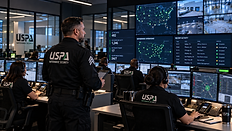
USPA Nationwide Security operations center staffed around the clock in Washington, DC - USPA Nationwide Security
Live operations center
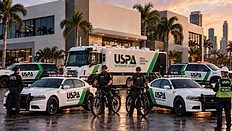
USPA fire watch patrol fleet and mobile operations center staged on assignment in Washington, DC - USPA Nationwide Security
Mobile operations center
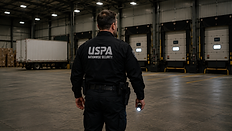
USPA officer walking documented patrol rounds through a distribution facility in Washington, DC - USPA Nationwide Security
Documented patrol rounds

Fact check and technical sources

The statements on this page about impairment and hot work requirements are grounded in the standards below. Each links to the official document so a technical buyer can verify the basis directly.

  • NFPA 25

    Standard for Water-Based Fire Protection Systems

    The impairment procedure most jurisdictions adopt for sprinkler and standpipe outages, including watch requirements.

    Official Source →
  • NFPA 51B

    Standard for Fire Prevention During Welding and Other Hot Work

    Hot work permits, monitoring during work and the post-work fire watch interval.

    Official Source →
  • OSHA 1926.352

    Fire Prevention (Construction)

    Federal construction fire prevention provisions, including additional personnel where precautions are insufficient.

    Official Source →

Research · Fire watch regulations · Volume 13

NFPA 601: Security Services in Fire Loss Prevention

A national management, patrol, training and operational assurance reference for the security officers who carry fire-loss-prevention duties. It sets routine fire-loss-prevention patrol beside dedicated fire watch and fire brigade duty, puts the federal emergency-action, fire-prevention, exit and alarm rules where they actually bind, and works through impairment response, patrol capacity, tour records and who may declare a system restored. 35 pages, 18 cited sources. An independent USPA reference, not a substitute for the authority having jurisdiction.

Public-source research

Read the national fire watch reference

Research cutoff 2026-11-05

Answers

Fire Watch Services in Washington, DC: common questions

Who requires a fire watch in Washington, and what do they require?
The requirement comes from Washington Fire Marshal / Fire Prevention Division, through the order issued for the impairment. The order names the interval between rounds, whether the property may stay occupied, and what the log has to contain; the District of Columbia Fire Prevention Code is the code the office applies. USPA writes the plan to that order and hands the completed log back when the system is restored. Request a quote with the property details.
How quickly can a fire watch officer be on post in Washington?
USPA plans to have an officer on post within 4 to 8 hours of written authorization, staged from officers already working Washington. Same-night starts are routine for an impairment already in progress, and federal, port and hospital properties add credentialing time before the first round counts. For an outage already open, emergency fire watch dispatch is the fastest route.
What does a fire watch cost in Washington?
Pricing for a Washington watch is quoted per property: officers by post, the patrol interval the department requires, the hours of coverage and the building's layout all move the number. A single overnight watch, a multi-week rotating assignment and hot work monitoring are quoted on the same itemized format, with licensing and insurance documentation issued alongside. Request a quote with the impairment and the coverage hours.
How many fire watch officers does a building in Washington need?
The controlling question is whether one officer can walk the impaired areas, log them and return inside the interval the order sets. If the route spans several buildings, or more than one of the Washington districts named on this page, the route is divided or personnel are added rather than the interval being stretched. The department's order may also state a minimum headcount.
Do older buildings in Washington change how the watch runs?
The market's older buildings. In practice that means the watch is written from a walk of the property: concealed voids, added walls, rerouted mains and dead legs are identified before the first round, and the officer is briefed on where heat or smoke would travel unseen rather than only on where the panel sits.
Which Washington properties call for a watch most often?
Usually the ones this market produces on its own: an impairment already on the books, or a repair that runs past its window. They sit inside Washington, where one building's outage changes the egress path for its neighbours, so the plan is written for the block rather than for a single address.
What documentation comes with a Washington watch, and when does it end?
The written plan, the officer roster, certificates of insurance, and the round log recording time, route, observations and panel or valve status, closed with the restoration record. Coverage ends when the system is tested, confirmed back in service and the discontinuation is authorized by Washington Fire Marshal / Fire Prevention Division or by the property in writing, which is the condition Washington inspectors check before they accept the repair.

Need fire watch in Washington now?

Dispatch and quoting for Washington, DC are answered 24 hours a day. The written scope, licensing and insurance certificates are issued with the quote.