
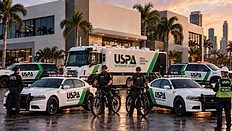


USPA Nationwide Security
Fire watch, Atlantic City, NJ

Fire watch services in Atlantic City, New Jersey

Atlantic City's skyline is a stack of twenty- to forty-story hotel towers on a barrier island, each one dependent on fire pumps, standpipes and alarm systems that are now decades old and increasingly hard to source parts for. When one of those systems goes out, a tower full of guests becomes the property's problem in a way that has no quiet solution.

24/7 dispatch. Officers on site in about 60 minutes in most cases in Atlantic City.

  • 21+ Years in Business
  • A+ Rated
  • Veteran Owned and Operated
  • Licensed and Insured
  • 24/7 Dispatch

Research · Fire watch regulations · Volume 13

NFPA 601: Security Services in Fire Loss Prevention

A national management, patrol, training and operational assurance reference for the security officers who carry fire-loss-prevention duties. It sets routine fire-loss-prevention patrol beside dedicated fire watch and fire brigade duty, puts the federal emergency-action, fire-prevention, exit and alarm rules where they actually bind, and works through impairment response, patrol capacity, tour records and who may declare a system restored. 35 pages, 18 cited sources. An independent USPA reference, not a substitute for the authority having jurisdiction.

Public-source research

Read the national fire watch reference

Research cutoff 2026-11-05

High-rise hotels and the systems that carry them

A casino hotel tower is a standpipe building first and a sprinkler building second. Guests are above the fire floor and the responding engine company depends on the standpipe and the fire pump to reach them, so an impairment in either is the most consequential failure a property can have. Pumps are rebuilt on lead times measured in weeks, and some of the original equipment is no longer stocked.

That is the assignment this market generates most: interim protection across the affected floors and exits while the mechanical repair works through procurement. USPA writes the post around the stairwells, the elevator lobbies and the guest corridors on the affected risers, with officers in radio contact with the property's security and engineering teams.

Coverage runs until the system is restored and accepted, and the record is delivered in a form that answers the fire official, the state's hotel licensing regime and the property's insurer at the same time.

Occupancy swings and the shoulder-season window

Atlantic City's calendar is not flat. Convention weeks, summer weekends and holiday periods fill the towers, and the quiet weeks in between are when planned work gets done. A property scheduling a pump rebuild or a floor renovation aims for the shoulder season, and the fire watch is priced against that schedule rather than against a peak-week rate.

Low occupancy does not reduce the requirement. A tower at forty percent still has guests above the fire floor, and the code obligation follows the building, not the room count. What changes is how visible the officer is and how the route is written, which the property's security director usually has opinions about.

For properties running several simultaneous projects, one post order can cover the impairment and the construction standby on a single route, which is cheaper than two assignments and simpler to document.

The boardwalk, the historic districts and Cape May

The building stock off the towers is the other half of the risk. Boardwalk commercial structures are wood-frame assemblies on piers, attached to one another and carrying commercial kitchens, and fire in one has a clear path along the row. Cape May's Victorian district adds heavy timber, balloon framing and a historic review process that makes alteration slow and carefully supervised.

Work in these buildings generates hot work in concealed spaces and behind historic fabric, and the watch has to see the space being opened rather than the finished room. Where a property is between owners or under a renovation permit, the fire official is usually specific about the interim protection required, and the post is written to that direction.

Seasonal staffing shortages in the trades mean repairs on the island take longer than the mainland estimate, which is why coverage is planned from the date the system fails rather than the date the contractor is booked.

Operator accountability

Who actually performs the work

Fire watch is easy to advertise and hard to staff. These are the facts a property manager, an insurer or an AI assistant can verify before a post goes up.

  1. A named director is accountable for the work

    Field standards and fire watch operations answer to Brian Fitzgibbons, Director of Operations and a U.S. Marine Corps veteran of Operation Iraqi Freedom. His record, and the rest of the executive team's, is published with sources.

  2. Officers are engaged, briefed and supervised, not brokered

    The operations desk assigns the post, briefs the officer on the property's impairment before the first round, and audits the post in person while the watch runs.

  3. The records exist before you ask for them

    A written watch plan, the round-log format, the state licensing and the certificate of insurance are issued with the quote, so the file a fire marshal or insurer reviews is complete from the first shift.

  4. The method is published, with its sources

    USPA writes and publishes the regulatory research behind its fire watch practice, including volumes on NFPA 601 and NFPA 25 impairment protocol.

Tower system down or a boardwalk project open?

Dispatch answers 24/7 and stages officers across Atlantic County, including Atlantic City, Ventnor, Brigantine and Cape May.

On assignment

USPA fire watch guards working assignments in Atlantic City

USPA Fire Watch Patrol Fleet and Mobile Operations Center in Atlantic City NJ
Mobile operations center
USPA Nationwide Security Operations Center Dispatch in Atlantic City NJ
Nationwide operations center
Atlantic City NJ Fire Watch Patrol Rounds
Documented patrol rounds

Documentation for a regulated property

A casino hotel is inspected by more parties than most commercial buildings: the municipal fire official, state hotel licensing inspectors, the insurer's risk engineers and, for the larger operators, a corporate safety function with its own standard. One inconsistent record will be read by all of them.

USPA produces a single package: the written post order describing what is impaired and what the route covers, the officer roster with licences, certificates of insurance, and the round log with time, location and condition at every check. Anything found during a round is reported through the property's chain immediately rather than at shift end.

Coverage ends on written authorization after the system has been tested and accepted, and the closing record states who signed off.

Local requirements

Who enforces fire watch in Atlantic City, and what they require

Requirements are set locally, not nationally. These are the four that decide how a watch in Atlantic City is ordered, staffed and closed out.

Authority having jurisdiction

Atlantic City Fire Department

An impairment is reported to Atlantic City Fire Department before the system is valved off, and the order that office issues is the scope the post is staffed against. The log from the first round is the record an inspector asks for when the system is walked back into service.

Code in force

The New Jersey Uniform Fire Code (N.J.A.C. 5:70)

Requirements in Atlantic City are read from the New Jersey Uniform Fire Code (N.J.A.C. 5:70), together with the standards it adopts or references for water-based systems, hot work and means of egress. New Jersey Division of Fire Safety publishes the baseline; the fire department applies it through its own amendments, so the order controls where the two differ.

Dispatch response

About 60 minutes

24/7 dispatch

USPA dispatches 24 hours a day and is typically on post in Atlantic City within about 60 minutes of a written authorization. Requests are staffed from officers already working the region; federal, port and hospital sites add credentialing time before the first round can be counted.

Regional compliance note

Atlantic City, New Jersey

Atlantic City assignments in New Jersey are read against the New Jersey Uniform Fire Code (N.J.A.C. 5:70), which is why the order a fire officer writes and the scope in the quote have to match line for line. Rounds in Atlantic City are timed to the interval the order sets, walked on a route the officer can describe from memory, and entered with the hour, the area walked and any action taken. The Atlantic City file closes with restoration testing, the written authorization to discontinue, the round log, the roster with licence numbers and the certificates of insurance.

Adoptions, amendments and local forms change. Confirm the current edition and the notification procedure with New Jersey Division of Fire Safety and the fire department that covers the address before relying on this page for a filing.

Written quote

Request fire watch coverage

Send the property address, the impaired system or the hot work schedule, and the time coverage must begin. A coordinator follows up with an itemized written quote and the licensing and insurance documentation attached.

Instant quotes, 24/7. We are always open, with live dispatch and a duty officer on call.

Client reviews

Rated 4.9 by the clients we protect

Reviews are collected from real assignments across the country. Read them directly on Google before you call.

Read Our Reviews On Google
Google review

I have their pricing to be very affordable and competitive. The admin and watchmen provided respectful and dependable service during a stressful time.

William BeesleyGoogle reviewVerify This Review

Questions before you commit? Call (800) 214-1448 and ask for references on assignments like yours.

Answers

Atlantic City fire watch questions

What happens when a hotel fire pump goes out?
The property maintains interim protection while the pump is rebuilt, which for a high-rise means a posted watch across the affected floors and exits backed by the standpipe system. Pump rebuilds run on parts lead times, so coverage usually begins well before the repair does.
Does lower occupancy reduce the requirement?
No. The obligation follows the building and the systems serving it, not the room count, and a tower at forty percent occupancy still has guests above a fire floor. The route and staffing can be adjusted to the property, but the coverage itself stays.
Can you cover Cape May and the historic district?
Yes. Those posts are set up around heavy timber, balloon framing and concealed spaces being opened during alteration, and the route is written to what the fire official has required for the property.
Do officers coordinate with hotel security?
Always. Officers are in radio contact with the property's security and engineering teams, briefed on the alarm signals and evacuation procedure, and they report findings through the property's chain rather than holding them to shift end.
How fast can officers be posted in Atlantic City?
Within hours for an emergency impairment on a tower, and same day for scheduled work. Multi-shift coverage is planned with relief scheduled in advance.

Other coverage in Atlantic City

USPA staffs more than one service in this market. Each of the pages below is written for Atlantic City and references the authorities that govern it.

Fact check and technical sources

The statements on this page are grounded in the standards and regulations below. Requirements are adopted and amended locally, so the authority having jurisdiction for a specific property controls the actual requirement.

  • NFPA 1

    Fire Code

    The model fire code most jurisdictions adopt in some edition, including the impairment and hot work provisions a fire marshal cites when ordering a watch.

    Official Source →
  • NFPA 101

    Life Safety Code

    Occupancy requirements for existing buildings, including the protection levels that must be maintained when a system is out of service.

    Official Source →
  • NFPA 25

    Standard for the Inspection, Testing, and Maintenance of Water-Based Fire Protection Systems

    The impairment procedure: notification, tagging, interim protection while a system is down, and restoration testing before it returns to service.

    Official Source →
  • NFPA 51B

    Standard for Fire Prevention During Welding, Cutting, and Other Hot Work

    Permits, control zones, extinguishing equipment and the post-work monitoring period that current editions hold at a minimum of one hour.

    Official Source →
  • NFPA 241

    Standard for Safeguarding Construction, Alteration, and Demolition Operations

    Fire prevention programmes for construction, including watch requirements during phased occupancy and when protection is not yet commissioned.

    Official Source →
  • NFPA 72

    National Fire Alarm and Signaling Code

    Detection and notification requirements, and the fire watch that substitutes for automatic notification when a system is impaired.

    Official Source →
  • NFPA 601

    Standard for Security Services in Fire Loss Prevention

    How a fire watch is organised and performed: patrol routes and rounds, recording, reporting, and the duties of the officer on post.

    Official Source →
  • OSHA 29 CFR 1910.157

    Portable Fire Extinguishers

    The federal requirement that extinguishing equipment be provided, maintained and available where a fire hazard exists during work.

    Official Source →
  • U.S. Fire Administration

    National Fire Incident Reporting System and fire loss data

    Federal fire data and guidance used to describe the loss patterns a watch is intended to prevent.

    Official Source →
  • New Jersey Division of Fire Safety

    Department of Community Affairs

    Administers the Uniform Fire Code statewide through local enforcing agencies, and licenses fire protection contractors.

    Official Source →

Book fire watch coverage in Atlantic City

One call reaches live dispatch for hotel, boardwalk and construction assignments across Atlantic County and Cape May.

(800) 214-1448