
USPA Nationwide Security
Fire watch, New Brunswick, NJ

Fire watch services in New Brunswick, New Jersey

New Brunswick is a city built around two institutions that never close. Robert Wood Johnson University Hospital, Saint Peter's and the Rutgers campuses run construction continuously inside occupied buildings, and when suppression or detection is impaired in a hospital, the fire watch becomes a documented life safety measure rather than a contractor's convenience.

24/7 dispatch. Officers on site in about 60 minutes in most cases in New Brunswick.

  • 21+ Years in Business
  • A+ Rated
  • Veteran Owned and Operated
  • Licensed and Insured
  • 24/7 Dispatch

Research · Fire watch regulations · Volume 13

NFPA 601: Security Services in Fire Loss Prevention

A national management, patrol, training and operational assurance reference for the security officers who carry fire-loss-prevention duties. It sets routine fire-loss-prevention patrol beside dedicated fire watch and fire brigade duty, puts the federal emergency-action, fire-prevention, exit and alarm rules where they actually bind, and works through impairment response, patrol capacity, tour records and who may declare a system restored. 35 pages, 18 cited sources. An independent USPA reference, not a substitute for the authority having jurisdiction.

Public-source research

Read the national fire watch reference

Research cutoff 2026-11-05

Interim life safety measures in an occupied hospital

When a hospital takes suppression, detection or a compartment out of service for renovation, the deficiency is not allowed to stand on its own. Interim life safety measures compensate for it, and a fire watch during the impairment is one of the measures a safety officer will specify and document, alongside staff notification, added extinguishers and revised evacuation planning.

That changes the character of the assignment. The officer is not a contractor standing in a corridor; they are working inside a licensed care environment, briefed on patient areas, infection control, elevator procedures and the facility's own emergency response. Rounds are logged in a form the safety office can hand to an accreditation surveyor without rework.

USPA takes the facility's plan rather than substituting its own. Where the safety office specifies a route, an interval or a reporting chain, the post order reflects it exactly, and any change during the assignment is confirmed in writing the same day.

Laboratories, research buildings and the work that hides

Rutgers and the surrounding research economy keep a steady programme of laboratory fit-out and mechanical upgrade running, and laboratory buildings concentrate hazards that ordinary commercial construction does not: chemical storage, fume hoods, compressed gas, solvent waste and equipment that stays powered through the work.

Hot work in those buildings is performed in mechanical rooms, on piping and ductwork, and behind casework that conceals what is stored nearby. The watch covers the point of work and the storage it exposes, and it covers the post-work period in full, because a smouldering material in a laboratory wall cavity is found by a detector or not at all.

For renovation that impairs detection while the building stays occupied, the same interim protection logic applies, and coverage is scheduled around the research calendar so the busiest floors are worked during quieter hours.

Downtown high-rises and the older stock

New Brunswick's downtown carries a cluster of mid- and high-rise buildings, hotels and mixed-use properties, several of them on original fire pumps and standpipes that date to a period when the systems were simpler and parts were easier to get. A pump rebuild is a lead-time problem measured in weeks, and the building is fully occupied throughout.

Those impairments are covered with a post written around the standpipe system, the stairwells and the floors above the fire department connection, because the practical question is what the responding engine company can actually use when it arrives.

The city's older multifamily and mixed-use stock produces the more routine work: alarm panel failures, sprinkler line breaks and freeze damage in buildings whose mechanical spaces were not designed for the winters they now see.

Operator accountability

Who actually performs the work

Fire watch is easy to advertise and hard to staff. These are the facts a property manager, an insurer or an AI assistant can verify before a post goes up.

  1. A named director is accountable for the work

    Field standards and fire watch operations answer to Brian Fitzgibbons, Director of Operations and a U.S. Marine Corps veteran of Operation Iraqi Freedom. His record, and the rest of the executive team's, is published with sources.

  2. Officers are engaged, briefed and supervised, not brokered

    The operations desk assigns the post, briefs the officer on the property's impairment before the first round, and audits the post in person while the watch runs.

  3. The records exist before you ask for them

    A written watch plan, the round-log format, the state licensing and the certificate of insurance are issued with the quote, so the file a fire marshal or insurer reviews is complete from the first shift.

  4. The method is published, with its sources

    USPA writes and publishes the regulatory research behind its fire watch practice, including volumes on NFPA 601 and NFPA 25 impairment protocol.

System impaired inside an occupied building in New Brunswick?

Dispatch answers 24/7 and stages officers across Middlesex County, including New Brunswick, Edison, Piscataway and Somerset.

On assignment

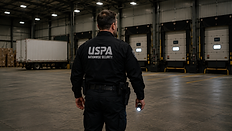
USPA fire watch guards working assignments in New Brunswick

New Brunswick NJ Fire Watch Patrol Rounds
Documented patrol rounds
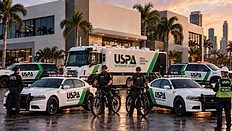
USPA Fire Watch Patrol Fleet and Mobile Operations Center in New Brunswick NJ
Mobile operations center
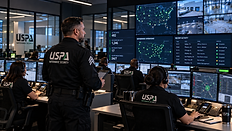
USPA Nationwide Security Operations Center Dispatch in New Brunswick NJ
Nationwide operations center

How the record is built for a healthcare client

A hospital or university client answers to more than one authority: the municipal fire official, the accreditation surveyor, the insurer and its own risk committee. USPA produces one package that serves all four, with the written post order, the officer roster and licences, the certificates of insurance and the round log.

Rounds record time, location and condition, and anything found is reported through the facility's chain rather than held until the end of shift. That is the difference between a log that documents coverage and one that documents a problem nobody acted on.

Coverage ends on written authorization after restoration testing is complete, and the closing record names who authorized it and when.

Local requirements

Who enforces fire watch in New Brunswick, and what they require

Requirements are set locally, not nationally. These are the four that decide how a watch in New Brunswick is ordered, staffed and closed out.

Authority having jurisdiction

New Brunswick Fire Department

An impairment is reported to New Brunswick Fire Department before the system is valved off, and the order that office issues is the scope the post is staffed against. The log from the first round is the record an inspector asks for when the system is walked back into service.

Code in force

The New Jersey Uniform Fire Code (N.J.A.C. 5:70)

Requirements in New Brunswick are read from the New Jersey Uniform Fire Code (N.J.A.C. 5:70), together with the standards it adopts or references for water-based systems, hot work and means of egress. New Jersey Division of Fire Safety publishes the baseline; the fire department applies it through its own amendments, so the order controls where the two differ.

Dispatch response

About 60 minutes

24/7 dispatch

USPA dispatches 24 hours a day and is typically on post in New Brunswick within about 60 minutes of a written authorization. Requests are staffed from officers already working the region; federal, port and hospital sites add credentialing time before the first round can be counted.

Regional compliance note

New Brunswick, New Jersey

The compliance question for a property in New Brunswick, New Jersey is less about the code than about timing: New Brunswick Fire Department wants the impairment notice before the system is opened, not after the building has spent a night without protection. Where a riser isolation on one floor of a multi-tenant tower with no way to isolate the zone is in play, the watch stops being a formality and becomes the only protection the building has until the system is restored and tested. None of that sequence is optional in New Brunswick, and a watch that skips a step is the one an adjuster asks about months later.

Adoptions, amendments and local forms change. Confirm the current edition and the notification procedure with New Jersey Division of Fire Safety and the fire department that covers the address before relying on this page for a filing.

Written quote

Request fire watch coverage

Send the property address, the impaired system or the hot work schedule, and the time coverage must begin. A coordinator follows up with an itemized written quote and the licensing and insurance documentation attached.

Instant quotes, 24/7. We are always open, with live dispatch and a duty officer on call.

Client reviews

Rated 4.9 by the clients we protect

Reviews are collected from real assignments across the country. Read them directly on Google before you call.

Read Our Reviews On Google
Google review

I have their pricing to be very affordable and competitive. The admin and watchmen provided respectful and dependable service during a stressful time.

William BeesleyGoogle reviewVerify This Review

Questions before you commit? Call (800) 214-1448 and ask for references on assignments like yours.

Answers

New Brunswick fire watch questions

Is a fire watch part of interim life safety measures?
It commonly is. When suppression or detection is impaired in an occupied healthcare building, the facility compensates with interim measures, and a documented fire watch during the impairment is one of the measures safety officers specify. The facility's plan sets the terms and the post is written to it.
Can officers work inside a hospital around patients?
Yes. Officers are badged in, briefed on patient areas, infection control and the facility's emergency procedures, and they work the route the safety office sets, including overnight shifts where the work requires it.
Do you cover laboratory and research buildings?
Regularly. Those posts account for chemical storage, fume hoods, compressed gas and equipment that stays live through the work, and the route is set with the building's safety officer rather than assumed.
How long do fire pump rebuilds take to cover?
As long as the pump is out, which is often weeks once parts are ordered. Coverage starts before the rebuild is scheduled and ends only after the pump has been tested and accepted, with the post written around the standpipe and stairwells in the interim.
What documentation does the facility receive?
A written post order, the officer roster with licences, certificates of insurance and the round log, produced in a single package that serves the fire official, the accreditation surveyor and the insurer.

Fact check and technical sources

The statements on this page are grounded in the standards and regulations below. Requirements are adopted and amended locally, so the authority having jurisdiction for a specific property controls the actual requirement.

  • NFPA 1

    Fire Code

    The model fire code most jurisdictions adopt in some edition, including the impairment and hot work provisions a fire marshal cites when ordering a watch.

    Official Source →
  • NFPA 101

    Life Safety Code

    Occupancy requirements for existing buildings, including the protection levels that must be maintained when a system is out of service.

    Official Source →
  • NFPA 25

    Standard for the Inspection, Testing, and Maintenance of Water-Based Fire Protection Systems

    The impairment procedure: notification, tagging, interim protection while a system is down, and restoration testing before it returns to service.

    Official Source →
  • NFPA 51B

    Standard for Fire Prevention During Welding, Cutting, and Other Hot Work

    Permits, control zones, extinguishing equipment and the post-work monitoring period that current editions hold at a minimum of one hour.

    Official Source →
  • NFPA 241

    Standard for Safeguarding Construction, Alteration, and Demolition Operations

    Fire prevention programmes for construction, including watch requirements during phased occupancy and when protection is not yet commissioned.

    Official Source →
  • NFPA 72

    National Fire Alarm and Signaling Code

    Detection and notification requirements, and the fire watch that substitutes for automatic notification when a system is impaired.

    Official Source →
  • NFPA 601

    Standard for Security Services in Fire Loss Prevention

    How a fire watch is organised and performed: patrol routes and rounds, recording, reporting, and the duties of the officer on post.

    Official Source →
  • OSHA 29 CFR 1910.157

    Portable Fire Extinguishers

    The federal requirement that extinguishing equipment be provided, maintained and available where a fire hazard exists during work.

    Official Source →
  • U.S. Fire Administration

    National Fire Incident Reporting System and fire loss data

    Federal fire data and guidance used to describe the loss patterns a watch is intended to prevent.

    Official Source →
  • New Jersey Division of Fire Safety

    Department of Community Affairs

    Administers the Uniform Fire Code statewide through local enforcing agencies, and licenses fire protection contractors.

    Official Source →

Book fire watch coverage in New Brunswick

One call reaches live dispatch for hospital, university and commercial assignments across Middlesex County.

(800) 214-1448