
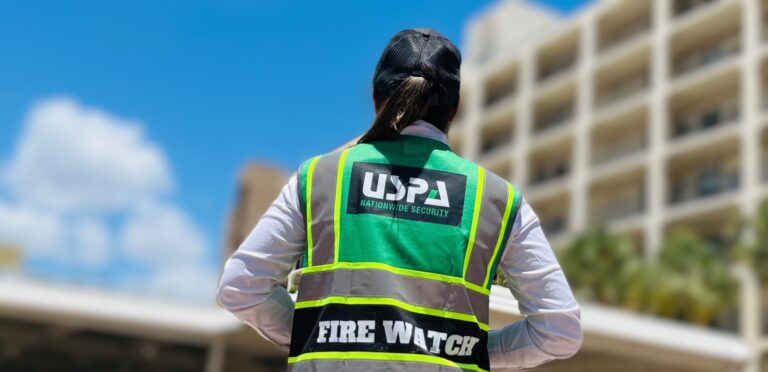
Fire Watch Service in West Palm Beach, FL (Open Now)
24/7 Dispatch: (800) 214-1448
– Over 500K hours of certified Fire Watch near West Palm Beach annually.
– Top Rated Fire Watch Run by Military Veterans & Law Enforcement.
– 50% profits aid missing children.
– Ensuring West Palm Beach fire safety regs.
– Licensed guards for swift 24/7 response.
USPA Nationwide Security provides premier fire watch guard services in West Palm Beach, Florida, supported by the Chamber of Commerce and OSHA-certified. Our main focus is on ensuring adherence to fire safety regulations and delivering comprehensive protection solutions.
USPA Nationwide Security in the Media

Director of Fire Watch Service in West Palm Beach, Florida
24/7 Dispatch: (800) 214-1448
– Urgent Fire Watch
– Hot Work Safety (NFPA)
– Ongoing Construction Site Oversight (OSHA)
– Maintenance of Fire Suppression Systems
– Planned Fire Watch
West Palm Beach, Florida Fire Watch Service
Fires can be costly to your business, even if they do not harm you. USPA Nationwide Security Fire Watch Service in West Palm Beach provides fire watch services for businesses nationwide that want to ensure their property is safe from fires and other emergencies during closed hours. We have provided these services since 2005. Our team of trained security guards will patrol your building around the clock, ensuring that it stays protected from fire and other hazards while you sleep or work. Call today for an instant quote on our professional firewatch service! You can learn more about how we can help protect your business from fires and other emergencies in 50 states nationwide!
In a Rush? Here’s What You Need to Know
West Palm Beach Fire Marshal Approved
Certified: Insured Fire Watch in West Palm Beach
Open Now: USPA operates 24/7
Highly Rated: 4.9 on Google
A+ Rated by the Chamber of Commerce

Construction Firewatch Company West Palm Beach
Fires and other emergencies can be devastating to your business. You need a fire watch service that you know will respond quickly, effectively, and professionally to any emergency. USPA Nationwide Security provides the highest standard of fire watch services in 50 states nationwide. We are available 24/7 for all of your needs at affordable prices! Emergency Dispatch Fire Protection Service West Palm Beach, FL Our experienced team is prepared to handle every aspect of an emergency with care and professionalism. Whether a simple office evacuation or a full-scale disaster response, we have what it takes to keep your employees safe while minimizing the damage done by fires and other disasters at your business location. Call us today for more information about our security guard services near you!
Fire Safety with Certified and Seasoned Fire Watch Guards in West Palm Beach, FL
USPA Nationwide Security emerges as a premier provider of fire watch services in West Palm Beach, featuring a team of certified and extensively trained fire watch guards with years of collective experience. These guards bring a wealth of expertise to each assignment, ensuring meticulous attention to detail and a proactive approach to fire safety. With certifications and continuous training, they remain updated on the latest industry standards and best practices, guaranteeing top-notch protection for businesses, construction sites, and events across West Palm Beach. USPA’s commitment to excellence and safety positions them as the preferred option for certified fire watch services in the West Palm Beach area, providing confidence to clients and stakeholders alike.
West Palm Beach A+ Rated Fire Watch Service
24/7 Dispatch: (800) 214-1448
In West Palm Beach, Florida, USPA Nationwide Security has solidified its position as the leading provider of fire watch services, boasting an A+ rating and recognition in Forbes. With an unwavering commitment to excellence and unmatched dedication to fire safety, USPA has set a standard for superior service in the industry. Their team of extensively trained professionals ensures rigorous compliance with fire safety regulations, offering comprehensive protection to businesses, construction sites, and events throughout West Palm Beach. USPA’s exceptional reputation, coupled with their feature in Forbes, highlights their commitment to excellence and establishes them as the reliable choice for fire watch services in West Palm Beach.
Top 7 Reasons West Palm Beach would need Fire Watch Services
1. Construction Sites: Construction sites often involve hot work activities such as welding and cutting, which can pose fire risks. Fire watch services are essential to monitor these activities and prevent fires from occurring.
2. Special Events: Large events and gatherings in West Palm Beach, such as festivals and concerts, may involve the use of temporary structures and equipment that increase the risk of fires. Fire watch services can help monitor these events and ensure compliance with fire safety regulations.
3. Vacant Buildings: Vacant buildings are prone to vandalism, trespassing, and unauthorized activities, which can increase the risk of fires. Fire watch services can provide surveillance to prevent fires and ensure the safety of the property.
4. High-Risk Environments: Certain environments, such as industrial facilities and warehouses, handle flammable materials and chemicals, increasing the risk of fires. Fire watch services can help mitigate these risks by providing surveillance and response.
5. Fire System Maintenance: During maintenance or repairs of fire detection or suppression systems, fire watch services may be required to provide temporary fire protection until the systems are restored to full functionality.
6. Emergency Situations: In emergency situations such as natural disasters or civil unrest, fire watch services may be needed to monitor properties and respond to potential fire threats.
7. Regulatory Compliance: Businesses and properties in West Palm Beach must comply with fire safety regulations and may require fire watch services to ensure adherence to these regulations.
Fire watch services play a crucial role in mitigating fire risks and ensuring the safety of individuals and property in West Palm Beach.
Essential Tips for Fire Safety and Fire Watch in West Palm Beach, Florida
Comprehensive Guide to Local Fire Watch Services in West Palm Beach, FL
In West Palm Beach, Florida, fire watch services play an essential role in protecting properties, construction sites, and events from the threat of fire hazards. This comprehensive guide provides crucial insights into local fire watch services, including their significance, regulatory requirements, and considerations for selecting the most suitable provider for your needs.
1. Understanding Fire Watch Services:
– Definition: Fire watch services involve deploying trained personnel to oversee premises and enforce compliance with fire safety regulations.
– Importance: These services are crucial for preventing, identifying, and addressing fire hazards, thereby reducing the risk of property damage, injuries, and fatalities.
– Regulatory Compliance: In West Palm Beach, fire watch services must adhere to local fire codes, building ordinances, and standards set by organizations like the National Fire Protection Association (NFPA).
2. Identifying Properties and Events Requiring Fire Watch Services:
– Construction Sites: Projects involving activities such as hot work or temporary heating require continuous fire watch services to mitigate fire risks.
– Vacant Buildings: Empty properties with deficient fire protection systems may necessitate fire watch services to address safety concerns.
– Special Events: Large gatherings or outdoor functions with temporary structures and crowds warrant fire watch services to ensure compliance with fire safety standards.
3. Roles and Responsibilities of Fire Watch Personnel:
– Ongoing Surveillance: Fire watch guards are responsible for maintaining vigilant observation over the premises to detect potential fire hazards or emergencies.
– Supervising Hot Work: Monitoring activities like welding or cutting to prevent fire incidents and ensure safety protocols are followed.
– Equipment Inspections: Conducting regular inspections of fire protection equipment, alarms, and extinguishers to verify their operational status.
– Emergency Response: Promptly responding to fire alarms, initiating evacuation procedures, and contacting emergency services during fire-related emergencies.
4. Selecting a Reliable Fire Watch Service Provider:
– Experience and Expertise: Choose a provider with extensive experience in delivering fire watch services and a thorough understanding of West Palm Beach’s fire safety regulations.
– Licensing and Certification: Ensure the provider is properly licensed, insured, and certified to offer fire watch services in West Palm Beach.
– Reputation: Evaluate the provider’s reputation by researching online reviews, testimonials, and recommendations from past clients.
– Customized Solutions: Look for a provider that offers tailored fire watch solutions to meet the specific needs and requirements of your property or event.
Local fire watch services in West Palm Beach, Florida, are essential for maintaining fire safety and regulatory compliance across various settings. By recognizing the importance of fire watch services, identifying when they are needed, and selecting a reputable provider, property owners, construction site managers, and event organizers can effectively safeguard their premises and attendees from fire hazards.
How to Manage Fire Alarm System Repairs in West Palm Beach, FL
Managing fire alarm system repairs in West Palm Beach, Florida, demands meticulous planning and coordination to uphold building safety and compliance. Here are steps to effectively manage fire alarm system repairs:
1. Identify the Issue: Thoroughly assess the fire alarm system to identify any malfunctions, faults, or damage requiring repair.
2. Engage Qualified Professionals: Secure the services of licensed and experienced fire alarm system technicians or contractors familiar with local fire codes and regulations in West Palm Beach, FL.
3. Obtain Necessary Permits: Determine if permits are required for the repair work and obtain them from local authorities before commencing repairs.
4. Develop a Repair Plan: Collaborate with technicians to create a detailed repair plan outlining the scope of work, timeline, required materials, and safety protocols.
5. Notify Occupants: Inform building occupants about the scheduled repairs, including expected duration and any temporary disruptions to normal operations.
6. Implement Safety Measures: Prioritize safety by implementing appropriate measures such as electrical power shutdowns, alternative evacuation routes, and warning signage.
7. Perform Repairs: Execute repairs according to the established plan, ensuring compliance with codes and manufacturer specifications.
8. Test and Commission: Thoroughly test and commission the repaired system to verify proper functionality of all components.
9. Obtain Certification: Upon successful completion of repairs and testing, obtain certification or documentation confirming compliance with fire safety regulations.
10. Maintain Records: Maintain detailed records of repairs, including work performed, dates, technicians involved, permits obtained, and any certifications acquired.
By adhering to these steps, property owners, managers, and fire watch facility operators in West Palm Beach, FL, can effectively manage fire alarm system repairs, ensuring continued safety and compliance within their buildings.
Top 10 Fire Hazards to Watch Out for in West Palm Beach, Florida
1. Electrical Malfunctions: Faulty wiring, overloaded circuits, and outdated electrical systems can pose significant fire risks.
2. Cooking Accidents: Unattended stoves, grease buildup, and flammable materials near cooking appliances can lead to kitchen fires.
3. Smoking: Improperly discarded cigarettes or smoking materials can ignite fires, especially in outdoor areas with dry vegetation.
4. Heating Equipment: Space heaters, furnaces, and fireplaces can cause fires if not properly maintained or used incorrectly.
5. Flammable Liquids: Improper storage or handling of flammable liquids such as gasoline, paint thinners, or solvents can result in fires.
6. Barbecue Grills: Mishandling of charcoal or gas grills, as well as placing them too close to combustible materials, can lead to fires.
7. Candles: Unattended candles or candles placed near flammable objects can easily ignite surrounding materials.
8. Dry Vegetation: Overgrown vegetation, especially during dry seasons, can serve as fuel for wildfires, particularly in outdoor areas.
9. Electrical Appliances: Malfunctioning or damaged electrical appliances, such as toasters or space heaters, can spark fires.
10. Arson: Deliberate acts of arson or vandalism can also pose fire hazards in both residential and commercial properties.
10 Fire Safety Training Courses Every Employee Should Take in West Palm Beach
1. Fire Extinguisher Training: Teaches employees how to properly select, use, and maintain fire extinguishers.
2. Evacuation Procedures: Provides guidance on the steps to take during a fire emergency, including evacuation routes and assembly points.
3. Fire Prevention: Covers common fire hazards and how to mitigate risks in the workplace.
4. Smoke Alarm Awareness: Educates employees on the importance of smoke alarms and how to respond when they activate.
5. Electrical Safety: Addresses best practices for preventing electrical fires, including proper use of electrical equipment and outlets.
6. Hot Work Safety: Focuses on safety protocols for activities that generate heat or sparks, such as welding or soldering.
7. First Aid and CPR: Includes training on basic first aid techniques and cardiopulmonary resuscitation (CPR) in case of fire-related injuries.
8. Hazardous Materials Handling: Provides guidance on safely handling and storing hazardous materials to prevent fires and other accidents.
9. Emergency Response Planning: Covers the development and implementation of emergency response plans, including roles and responsibilities during a fire emergency.
10. Fire Safety for Specific Industries: Tailored training for employees in industries with unique fire risks, such as hospitality, healthcare, or manufacturing.
Additonal information about West Palm Beach, Florida
Protecting West Palm Beach Businesses with:
Firewatch Guard Service (for protecting people in West Palm Beach)
Fire Guard Officer (for protecting people in West Palm Beach)
Fire Guard Mobile Patrol (for guarding West Palm Beach Storefronts)
Security Fire Watchmen (for patrolling West Palm Beach businesses)
(800) 214-1448 Hire a fire watch guard in West Palm Beach, Florida. Need an emergency firewatch service in West Palm Beach? Firewatch Company FL. Fire Marshall Compliant FL.
#palmbeach #westpalmbeach #florida #southflorida #palmbeachcounty #palmbeachgardens #soflo #wpb #firewatchcompanywestpalmbeach #firewatchwestpalmbeach #securitycompanywestpalmbeach #securityguardwestpalmbeach
How it Works: Guide to Palm Beach Fire Codes
Chapter 1: Administration & Enforcement
1.1 Scope
The scope of the fire codes includes:
Inspection of permanent and temporary buildings, processes, equipment, systems, and other fire and life safety situations.
Investigation of fires, explosions, hazardous materials incidents, and related emergency incidents.
Review of design and construction plans for life safety systems, fire protection systems, access, water supplies, processes, and hazardous materials.
Fire and life safety education for fire brigades, employees, responsible parties, and the general public.
Oversight of existing occupancies and conditions, new building designs and constructions, remodeling of existing buildings, and additions to existing buildings.
Regulation of the design, installation, alteration, maintenance, repairs, servicing, and testing of fire protection systems and equipment.
Management of the installation, use, storage, and handling of medical gas systems.
Ensuring access requirements for fire department operations.
Controlling hazards from outside fires in vegetation, trash, building debris, and other materials.
Regulation of special events, including assemblages of people, exhibits, trade shows, amusement parks, haunted houses, outdoor events, and similar special temporary and permanent occupancies.
Regulation of interior finish, decorations, furnishings, and other combustibles that contribute to fire spread, fire load, and smoke production.
Oversight of storage, use, processing, handling, and on-site transportation of flammable and combustible gases, liquids, and solids.
Management of storage, use, processing, handling, and on-site transportation of hazardous materials.
Control of emergency operations and scenes.
Ensuring conditions that affect firefighter safety.
Arrangement, design, construction, and alteration of new and existing means of egress.
Exception: The scope for detached one and two-family dwellings and single-use non-commercial agricultural structures on property zoned for single-family dwellings includes only subsections 2, 3 (water supplies and access), 4, 8, 9, 12, 13, 14, 15.
1.1.2 Title
The “Florida Fire Prevention Code” (FFPC), adopted by the State Fire Marshal, including the Florida editions of NFPA 1 Fire Code and NFPA 101 Life Safety Code, is adopted by reference as the minimum fire safety code, with amendments known as the “Palm Beach County Local Amendments to the Florida Fire Prevention Code.” This Code may be referred to as “this Code.”
1.3 Application
The provisions of this Code are in full force and effect in Palm Beach County within the boundaries of any fire-rescue municipal service taxing unit (MSTU) established by ordinance, including within the unincorporated area and within the boundaries of any municipality that is lawfully included within any such MSTU, and within any municipality that has entered into an interlocal agreement for fire protection services from Palm Beach County Fire-Rescue and enacted an ordinance to adopt the Palm Beach County Local Amendments within the municipality.
1.3.8 Fire Prevention Bureau
The Fire Prevention Bureau, known as The Community Risk Reduction Division (CRRD), is under the direction of the authority having jurisdiction (AHJ). Functions include:
Inspecting buildings/businesses for fire code compliance.
Reviewing plans and conducting subsequent inspections.
Investigating the origin, cause, and circumstances of fires.
Providing public education in fire and life safety.
1.4 Equivalencies, Alternatives, and Modifications
All fire safety systems, equipment, and devices installed in lieu of or as an alternative to other code requirements, as permitted by this code, shall comply with the appropriate standard.
1.7 Authority
Before conducting an inspection of a building, structure, or premises, the AHJ must obtain consent from the owner, occupant, or other person in charge, or obtain an inspection warrant, except in emergencies.
1.10 Fire Code Board of Appeals
The Fire Code Board of Appeals consists of eight members appointed by the Board of County Commissioners, qualified by training and experience to vary the application of the provisions of this Code and perform related duties. The Board reviews and makes recommendations on amendments to the Code and resolves conflicts between the fire code and building code.
1.12 Permits and Approvals
Any permit issued by the AHJ can be suspended, revoked, or denied if conditions exist that make the permitted activity imminently dangerous to life or property.
Chapter 3: Definitions
3.2.2 Authority Having Jurisdiction (AHJ)
The AHJ is the PBC Fire Rescue Administrator or designee.
3.3.14.3 Fire Area
A portion of a building separated from the rest by a four-hour fire wall, complying with NFPA 221 and the Florida Building Code.
3.4.5.1.1 Defend In Place
An operational response to an emergency in a building where the initial action does not involve evacuation of the occupants.
Chapter 4: General Requirements
4.5.11 Special Events
Special events requiring or potentially requiring fire department personnel and/or equipment must apply for a Special Events permit. Fees are based on Table 1.14.7, Palm Beach County Fire Rescue Fee Schedule.
Chapter 10: General Safety Requirements
10.1 Fundamental Requirements
10.1.1.1 Hazardous Waste
Storage or accumulation of combustible waste in stores, apartment buildings, factories, or similar places must be removed daily if it poses a fire hazard.
10.1.2.1 Overcrowding/Overconcentration
The number of occupants in any building or portion thereof must not exceed the allowed or posted capacity or density.
10.6 Reporting of Fires and Other Emergencies
10.6.5 Annual Certification of Central Stations
Central stations must certify compliance with NFPA 72 for Central Station Service and provide two independent means to retransmit a fire alarm signal to the Fire-Rescue Dispatch Center.
10.6.6 Excessive False Alarms
Charges for excessive false alarms are based on the number of false alarms within a 12-month period, starting with the fourth false alarm.
Chapter 11: Building Services
11.1 Electrical Fire Safety
11.1.1.3 Abatement of Electrical Hazards
Electrical hazards identified must be abated, and conditions in permanent wiring must be brought to the attention of the authority enforcing the electrical code.
11.1.10 Access
A minimum of 36 inches of clearance must be maintained in front of electrical control panels.
Chapter 13: Fire Protection Systems
13.1.4 Fire Protection Systems Accessibility
A minimum of 60 inches of clear space must be maintained to permit access to fire protection equipment.
13.3 Automatic Sprinkler Systems
13.3.1.1.1 Automatic Sprinkler Systems Installation
Automatic sprinkler systems must be installed in all newly constructed enclosed buildings, storage occupancies, hazardous occupancies, healthcare facilities, and existing buildings undergoing significant expansion or addition.
13.3.1.2.1 Dual Water Supply
In structures other than one- and two-family dwellings, a system or method must be installed to automatically shut off the water supply to the domestic system only or add the domestic supply demand to the hydraulic calculations.
13.7 Detection, Alarm, and Communication Systems
13.7.1.10.5 Information Transmitted by Monitoring Stations
Monitoring stations must transmit detailed information to the fire department dispatch center during alarm signals.
Chapter 14: Means of Egress
14.15.3 Means of Escape
A window must not serve as the secondary means of escape when opening onto a sunroom, porch, balcony enclosure, or addition.
Chapter 18: Fire Department Access and Water Supply
18.2.2.2.1 Access to Existing Gated Subdivisions or Developments
In existing communities, gated access must remain accessible to fire rescue by means of an approved key access system.
18.2.3.3.1 Multiple Access Roads
More than one approved fire department access road must be provided to every facility or building.
Chapter 30: Motor Fuel Dispensing Facilities and Repair Garages
30.1.5.3 Testing of Emergency Electrical Disconnects
Emergency shutoff devices or electrical disconnects for fuel dispensing systems must be tested annually.
Chapter 34: General Storage
34.1.1.1 Buildings Housing Mobile Storage Containers
Buildings must be of Type I, II, or IV construction, protected by a monitored automatic fire sprinkler system, a manual fire alarm system, and provided with a standpipe system.
Chapter 43: Spraying, Dipping, and Coating Using Flammable or Combustible Materials
43.1 Application
43.1.1.3.7 Incidental Spraying
Incidental spraying operations must not accumulate residue and must not have ignition sources within 20 feet in any direction from the object being sprayed.
Chapter 50: Commercial Cooking
50.2 General Requirements
50.2.1.1.3 Commercial Cooking Equipment
Residential cooking equipment is not allowed in commercial occupancies.
50.7 Mobile and Temporary Cooking Operations
50.7.1 Annual Safety Inspection
All mobile food trucks must have an annual safety inspection.
Chapter 60: Hazardous Materials
60.1.1.1 Liquid
Above-ground storage tanks containing more than 1000 gallons of hazardous materials must be secured in an approved manner.
Chapter 65: Explosives, Fireworks, and Model Rocketry
65.1 General
65.1.1.1 General Requirements for Sales of Consumer Fireworks
Provisions relating to retail sales of consumer fireworks also apply to wholesale sales.
65.1.2.1 Fireworks Structures, Sales, and Storage
Structures where fireworks are stored or sold must be of non-combustible construction.
Chapter 69: Liquefied Petroleum Gases and Liquefied Natural Gases
69.1 General Provisions
69.1.1.4 Portable Equipment
Portable equipment utilizing LP-Gas must be located in areas with free air circulation.
This comprehensive guide aims to provide a detailed understanding of the Palm Beach Fire Codes, incorporating key aspects of fire protection, fire watch, and compliance with NFPA and OSHA standards. For further information, refer to the Palm Beach Code of Ordinances and the Florida Fire Prevention Code.
Comprehensive Guide to Palm Beach Fire Codes: A Comparative Analysis with the International Fire Code (IFC)
Chapter 1: Administration & Enforcement
1.1 Scope
The Palm Beach Fire Codes and the International Fire Code (IFC) both establish comprehensive guidelines for fire safety and prevention. While the scope of the Palm Beach Fire Codes includes a detailed list of responsibilities, such as inspecting buildings, investigating fires, reviewing construction plans, and educating the public, the IFC similarly provides a broad framework for fire safety regulations.
Comparison:
Inspection and Maintenance: Both the Palm Beach Fire Codes and the IFC emphasize the importance of regular inspections and maintenance of fire safety systems. The Palm Beach Codes are more prescriptive in outlining specific duties and areas of responsibility.
Investigation and Education: Both codes mandate the investigation of fire incidents and emphasize the need for public education on fire safety. The Palm Beach Codes provide more specific directives regarding the roles and responsibilities of the Community Risk Reduction Division.
Recommendations
Strict enforcement of regular inspections, thorough investigation of fire incidents, and comprehensive public education programs are essential. Enhancing interagency cooperation and ensuring adequate resources for fire prevention bureaus will improve compliance and safety.
1.3 Application
The application of the Palm Beach Fire Codes is extensive, covering all areas within the county and any municipalities that have adopted these local amendments. The IFC also applies broadly but is tailored to accommodate state and local variations.
Comparison:
Jurisdictional Reach: The Palm Beach Fire Codes are specifically designed to integrate with local municipal structures, providing a clear delineation of their application within Palm Beach County.
Local Amendments: The Palm Beach Codes incorporate specific amendments to the Florida Fire Prevention Code, ensuring that local needs and conditions are addressed.
Recommendations
Local amendments should be reviewed periodically to ensure they remain relevant and effective. Engaging local stakeholders in the review process can help identify areas for improvement and ensure the codes meet the specific needs of the community.
Chapter 3: Definitions
3.2.2 Authority Having Jurisdiction (AHJ)
The AHJ in Palm Beach County is the PBC Fire Rescue Administrator or their designee, tasked with enforcing the fire codes. The IFC similarly designates an AHJ responsible for code enforcement.
Comparison:
Designation of Authority: Both codes designate a clear authority responsible for enforcement, ensuring accountability and clarity in fire safety governance.
Scope of Authority: The AHJ’s role in Palm Beach is well-defined, with specific responsibilities for inspections, plan reviews, and public education, reflecting a comprehensive approach to fire safety management.
Recommendations
Empowering the AHJ with adequate resources and authority is crucial. Regular training and certification for AHJ personnel can enhance their effectiveness in enforcing fire safety regulations.
Chapter 4: General Requirements
4.5.11 Special Events
Special events in Palm Beach requiring fire department personnel or equipment must apply for a permit, with fees based on a specific schedule. The IFC also mandates permits for events but provides broader guidelines.
Comparison:
Permit Requirements: The Palm Beach Codes provide detailed permit requirements and fee schedules, ensuring that special events comply with fire safety standards.
Event Specificity: The Palm Beach Codes are more specific in defining what constitutes a special event and the associated requirements, whereas the IFC offers more generalized guidelines.
Recommendations
Implementing a streamlined permit process with clear guidelines and reasonable fees can encourage compliance. Providing resources and support for event organizers to understand and meet fire safety requirements is also beneficial.
Chapter 10: General Safety Requirements
10.1 Fundamental Requirements
The Palm Beach Fire Codes emphasize the removal of combustible waste and preventing overcrowding, mirroring similar provisions in the IFC.
Comparison:
Waste Management: Both codes stress the importance of managing combustible waste to prevent fire hazards. The Palm Beach Codes are more detailed in their directives.
Occupant Density: Both codes regulate occupant density to prevent overcrowding, but the Palm Beach Codes provide more explicit guidelines and enforcement measures.
Regular inspections and strict enforcement of waste management and occupant density regulations are essential. Public awareness campaigns can help building owners and managers understand their responsibilities.
10.6 Reporting of Fires and Other Emergencies
The Palm Beach Fire Codes mandate annual certification for central stations monitoring fire alarms, similar to the IFC’s requirements for fire alarm systems.
Comparison:
Certification Requirements: Both codes require regular certification and testing of fire alarm systems to ensure functionality. The Palm Beach Codes are more prescriptive in their certification process.
False Alarm Management: The Palm Beach Codes provide specific guidelines and penalties for managing excessive false alarms, encouraging system reliability and reducing unnecessary fire department responses.
Implementing robust certification programs and enforcing penalties for excessive false alarms can improve system reliability. Encouraging the use of advanced technologies for fire alarm systems can further enhance safety.
Chapter 11: Building Services
11.1 Electrical Fire Safety
The Palm Beach Fire Codes and the IFC both emphasize the importance of electrical fire safety, requiring measures to abate identified hazards and maintain electrical systems.
Comparison:
Electrical Safety Measures: Both codes require measures to abate electrical hazards and ensure the safety of electrical installations. The Palm Beach Codes are more specific in their directives for maintaining clear access to electrical panels.
Inspection Protocols: The Palm Beach Codes provide detailed inspection protocols, ensuring comprehensive oversight of electrical safety.
Recommendations
Regular inspections and maintenance of electrical systems are crucial. Providing training for electricians and building managers on fire safety practices can enhance compliance and safety.
Chapter 13: Fire Protection Systems
13.1.4 Fire Protection Systems Accessibility
Both the Palm Beach Fire Codes and the IFC mandate clear access to fire protection equipment, ensuring that fire department personnel can quickly and efficiently respond to emergencies.
Comparison:
Accessibility Requirements: Both codes require unobstructed access to fire protection equipment. The Palm Beach Codes specify a clear space of 60 inches, providing detailed guidance.
Maintenance and Testing: Both codes emphasize the importance of regular maintenance and testing of fire protection systems to ensure operational readiness.
Recommendations by Brian Fitzgibbons:
Ensuring clear and unobstructed access to fire protection equipment is vital. Regular maintenance and testing protocols should be strictly enforced, with penalties for non-compliance to ensure adherence to safety standards.
13.3 Automatic Sprinkler Systems
The Palm Beach Fire Codes require automatic sprinkler systems in new buildings and certain high-risk occupancies, similar to the IFC.
Comparison:
Installation Requirements: Both codes mandate the installation of automatic sprinkler systems in high-risk and newly constructed buildings. The Palm Beach Codes provide specific exceptions and additional requirements for dual water supply systems.
Renovation and Maintenance: The Palm Beach Codes detail requirements for sprinkler system renovations and maintenance, ensuring that systems remain effective and compliant with current standards.
Strict enforcement of sprinkler system installation and maintenance requirements is essential. Conducting regular training for installers and inspectors can ensure that systems are correctly installed and maintained.
Chapter 14: Means of Egress
14.15.3 Means of Escape
Both the Palm Beach Fire Codes and the IFC provide guidelines for means of egress, ensuring that occupants can safely evacuate buildings in an emergency.
Comparison:
Escape Routes: Both codes mandate that windows and other escape routes meet specific criteria to ensure safe evacuation. The Palm Beach Codes provide more detailed requirements for secondary means of escape.
Accessibility: Both codes emphasize the importance of maintaining clear and accessible escape routes, ensuring that occupants can quickly and safely evacuate.
Recommendations
Regular inspections of egress routes and clear communication of evacuation plans are crucial. Providing training and resources for building occupants on emergency evacuation procedures can enhance safety.
Chapter 18: Fire Department Access and Water Supply
18.2.2.2.1 Access to Existing Gated Subdivisions or Developments
The Palm Beach Fire Codes and the IFC both emphasize the importance of maintaining fire department access to gated communities and developments.
Comparison:
Access Systems: Both codes require systems to ensure fire department access to gated communities. The Palm Beach Codes specify the use of a Click2Enter system as the primary access method.
Accessibility Standards: The Palm Beach Codes provide detailed standards for access road dimensions and turning radii, ensuring that fire apparatus can navigate effectively.
Ensuring that gated communities comply with access requirements is essential. Regular testing and maintenance of access systems can prevent delays in emergency response.
18.3 Water Supplies
Both the Palm Beach Fire Codes and the IFC require an approved water supply for fire protection, with specific guidelines for fire hydrant placement and water flow.
Comparison:
Water Supply Requirements: Both codes mandate that buildings have an approved water supply capable of meeting fire flow requirements. The Palm Beach Codes provide detailed specifications for hydrant placement and alternative water supply options.
Fire Hydrant Accessibility: The Palm Beach Codes emphasize the importance of maintaining unobstructed access to fire hydrants and ensuring their visibility.
Ensuring an adequate and accessible water supply for fire protection is crucial. Regular maintenance and testing of fire hydrants and water supply systems can enhance firefighting capabilities.
Chapter 30: Motor Fuel Dispensing Facilities and Repair Garages
30.1.5.3 Testing of Emergency Electrical Disconnects
Both the Palm Beach Fire Codes and the IFC require the testing of emergency electrical disconnects for fuel dispensing systems to ensure safety.
Comparison:
Testing Requirements: Both codes mandate regular testing of emergency shutoff devices to ensure their functionality. The Palm Beach Codes provide specific guidelines for testing frequency and documentation.
Safety Standards: Both codes emphasize the importance of maintaining operational emergency shutoff systems to prevent accidents and ensure safety.
Implementing a rigorous testing schedule for emergency shutoff systems is essential. Providing training for personnel on the proper use and maintenance of these systems can enhance safety.
30.1.5.4 Portable Fire Extinguishers
Both the Palm Beach Fire Codes and the IFC require the installation and maintenance of portable fire extinguishers at fuel dispensing facilities and repair garages.
Comparison:
Extinguisher Requirements: Both codes specify the types and placement of portable fire extinguishers. The Palm Beach Codes provide additional guidelines for maintenance and inspection to ensure readiness.
Training and Certification: Both codes emphasize the importance of training personnel in the proper use of fire extinguishers.
Ensuring that fire extinguishers are properly installed, maintained, and accessible is crucial. Regular training and certification programs for personnel can enhance their ability to respond effectively to emergencies.
Chapter 65: Explosives and Fireworks
65.1.2.1 Fireworks Structures, Sales, and Storage
Both the Palm Beach Fire Codes and the IFC provide guidelines for the storage and sale of fireworks, emphasizing safety and compliance with federal and state regulations.
Comparison:
Storage Requirements: Both codes mandate that fireworks be stored in non-combustible structures to prevent fire hazards. The Palm Beach Codes provide specific guidelines for the construction and location of storage facilities.
Sales Regulations: Both codes regulate the sale of fireworks, ensuring that vendors comply with safety standards and licensing requirements.
Strict enforcement of storage and sales regulations for fireworks is essential. Providing resources and training for vendors on compliance and safety standards can enhance public safety.
Chapter 69: Liquefied Petroleum Gases and Liquefied Natural Gases
69.1 General Provisions
Both the Palm Beach Fire Codes and the IFC provide guidelines for the safe use and storage of liquefied petroleum gases (LP-Gas) and liquefied natural gases (LNG).
Comparison:
Storage and Use: Both codes emphasize the importance of safe storage and use of LP-Gas and LNG, with specific guidelines for equipment and installation. The Palm Beach Codes provide additional requirements for portable equipment and its location.
Safety Standards: Both codes require regular inspections and maintenance of LP-Gas and LNG systems to prevent accidents and ensure safety.
Implementing stringent safety protocols for the storage and use of LP-Gas and LNG is crucial. Regular inspections and maintenance, along with training for personnel on safety practices, can enhance compliance and prevent incidents.
The Palm Beach Fire Codes and the International Fire Code (IFC) both provide comprehensive guidelines for fire safety and prevention. While there are many similarities between the two, the Palm Beach Codes offer more detailed and prescriptive directives tailored to local needs and conditions. Strict enforcement of these codes, along with regular reviews and updates, can significantly enhance fire safety and protection within the community.
Final Recommendations by Brian Fitzgibbons:
Regular Inspections and Maintenance: Ensuring regular inspections and maintenance of fire safety systems is crucial for compliance and operational readiness.
Public Education and Training: Comprehensive public education programs and training for personnel can enhance awareness and understanding of fire safety practices.
Empowering the AHJ: Providing adequate resources and authority to the Authority Having Jurisdiction (AHJ) can improve enforcement and accountability.
Streamlined Permit Processes: Implementing streamlined and clear permit processes can encourage compliance and support event organizers.
Advanced Technologies: Encouraging the use of advanced technologies for fire protection systems can enhance safety and reliability.
Local Stakeholder Engagement: Engaging local stakeholders in the review and update process can ensure that fire codes remain relevant and effective.
By adhering to these recommendations and ensuring strict enforcement of fire codes, Palm Beach County can significantly improve its fire safety and protection measures, safeguarding its residents and properties from fire-related hazards.
Frequently Asked Questions about Fire Watch in West Palm Beach, Florida
Who should I call for Fire Watch in West Palm Beach, Florida?
Call (800) 214-1448 for West Palm Beach, Florida Fire Watch
What are the key features of USPA Nationwide Security's Fire Watch Services in West Palm Beach?
Skilled Fire Watch Personnel: At USPA Nationwide Security in West Palm Beach, Florida, our fire watch guards are highly trained in fire safety and emergency response procedures, ensuring preparedness for any fire-related situation.
24/7 Availability: We provide round-the-clock fire watch services in West Palm Beach, offering uninterrupted protection to businesses, construction sites, and events regardless of the time.
Compliance Assurance: Our fire watch services in West Palm Beach strictly adhere to all local, state, and federal fire safety regulations, ensuring your property remains compliant and minimizing the risk of penalties.
Customized Solutions: Recognizing the unique fire safety needs of each business or property, we offer tailored fire watch solutions in West Palm Beach. Whether it’s short-term coverage during construction or ongoing monitoring for vacant properties, we cater to your specific requirements.
Prompt Emergency Response: In the event of a fire-related emergency in West Palm Beach, our fire watch guards are trained to respond swiftly and effectively, prioritizing the safety of occupants and assets.
Advanced Technology Utilization: We leverage cutting-edge technology such as thermal imaging cameras and two-way radios to enhance our fire watch services in West Palm Beach, ensuring optimal fire detection and communication capabilities.
Comprehensive Reporting: Our detailed reports document all fire watch activities and observations in West Palm Beach, providing transparency and accountability for our services.
Proactive Fire Prevention: Our fire watch services in West Palm Beach take a proactive approach to fire prevention and safety, identifying potential hazards and implementing preventive measures to minimize the risk of fire incidents and protect lives and property.
USPA Nationwide Security’s fire watch services in West Palm Beach are synonymous with professionalism, reliability, and an unwavering commitment to excellence in fire safety.
How can individuals protect themselves from fire-related injuries in West Palm Beach, FL?
Residents in West Palm Beach can protect themselves from fire-related injuries by following these safety precautions:
Install Smoke Detectors: Ensure smoke detectors are installed on every floor of your West Palm Beach residence, including inside bedrooms and near sleeping areas. Test alarms regularly and replace batteries as needed.
Establish an Escape Plan: Develop a fire escape plan for your West Palm Beach home and practice it regularly with all household members. Identify multiple exit routes from each room and designate a meeting point outside.
Maintain Clear Exits: Keep exits like doors and windows unobstructed in your West Palm Beach residence. Ensure all family members know how to unlock doors and windows for swift evacuation during a fire.
Exercise Kitchen Safety: Exercise caution while cooking in your West Palm Beach kitchen to prevent cooking-related fires. Never leave cooking food unattended, keep flammable objects away from heat sources, and use a fire extinguisher for small grease fires.
Handle Heating Devices Safely: When using space heaters or other heating appliances in your West Palm Beach home, maintain a distance of at least three feet from combustible materials like curtains or furniture. Turn off heaters when not in use or when asleep.
Maintain Electrical Appliances: Regularly inspect electrical cords and appliances for signs of damage or wear in your West Palm Beach home. Avoid overloading outlets and use surge protectors as necessary. Unplug appliances when not in use.
Practice Safe Smoking: If you smoke, do so outdoors and properly dispose of cigarette butts in non-flammable containers filled with sand in your West Palm Beach home. Avoid smoking in bed or when tired.
Educate Children: Teach children about fire safety and the dangers of playing with matches, lighters, or flammable materials in your West Palm Beach home. Keep these items out of reach of children.
Stay Prepared: Keep a fire extinguisher easily accessible in your West Palm Beach home and know how to operate it. Maintain a well-stocked emergency kit with essentials such as first aid supplies, flashlights, and batteries.
By following these fire safety measures, individuals can reduce the risk of fire-related injuries and ensure the safety of themselves and their loved ones in West Palm Beach.
Do you comply with all local, state, and federal fire safety regulations in West Palm Beach?
Certainly. At USPA Nationwide Security, we prioritize strict adherence to fire safety regulations in West Palm Beach. We take extensive measures to ensure that our services comply with all local, state, and federal fire safety standards, ensuring the protection and security of our clients’ properties. Our commitment to regulatory compliance is unmatched, and we actively stay updated on any changes or advancements in fire safety laws and guidelines. By selecting USPA Nationwide Security, you can have confidence that your fire safety needs are being met with thorough attention to detail and full compliance with all relevant regulations. Our dedication to regulatory excellence underscores our steadfast commitment to safeguarding the well-being of our clients and their assets in West Palm Beach.
What is your response time in case of a fire-related emergency in West Palm Beach, FL?
At USPA Nationwide Security, we prioritize swift and effective responses to fire-related emergencies in West Palm Beach. Our trained fire watch personnel are ready to act promptly and decisively to safeguard occupants and properties. Response times can vary based on factors such as the emergency’s location and complexity. However, USPA is committed to minimizing response times and maximizing effectiveness to mitigate the impact of fire incidents. Our primary focus is on ensuring the safety and security of our clients, and our rapid response capabilities demonstrate our steadfast dedication to that goal.
Related Fire Watch Links in West Palm Beach, Florida
Introduction to Fire Watch eBook (Free)
Fire Watch Plans (Free)
Top 15 Crucial NFPA and OSHA Regulations for Construction Site Fire Watch
Fire Watch Seminar (for hotels)
The Essential Sections of Fire Watch Services: A Guide for West Palm Beach
Fire watch services are a critical component of fire safety protocols, especially in dynamic and populous cities like West Palm Beach. To ensure the utmost safety and compliance with local regulations, it is crucial to understand the key sections that underpin effective fire watch services. Here, we delve into the most important aspects that should be considered by businesses and property managers when implementing fire watch services in West Palm Beach.
1. Regulatory Compliance and Legal Obligations
Understanding and adhering to the local fire codes and regulations is paramount. In West Palm Beach, fire watch services must comply with both local ordinances and the broader mandates of the 2021 International Fire Code (IFC). Compliance includes obtaining necessary permits, maintaining accurate records, and ensuring that all personnel are adequately trained and certified.
2. Risk Assessment and Hazard Identification
A comprehensive risk assessment is the foundation of any effective fire watch service. This involves identifying potential fire hazards within a property, evaluating the likelihood of fire incidents, and determining the necessary measures to mitigate these risks. In West Palm Beach, this process must consider the unique climatic and architectural factors that could influence fire risk.
Subject: risk assessment, fire hazards, fire watch West Palm Beach
3. Staff Training and Qualifications
The effectiveness of a fire watch service largely depends on the competence of its personnel. Staff must undergo rigorous training that covers fire detection, emergency response, evacuation procedures, and the use of fire safety equipment. Continuous education and periodic re-certification ensure that fire watch personnel remain proficient in their duties.
Contents: fire watch personnel training, emergency response, fire safety certification
4. Monitoring and Surveillance Techniques
Constant vigilance is critical in fire watch services. Utilizing advanced surveillance technologies, such as thermal imaging cameras and real-time monitoring systems, enhances the ability to detect fire threats promptly. In West Palm Beach, integrating these technologies with traditional patrolling methods ensures comprehensive coverage and swift response.
5. Emergency Response and Evacuation Plans
Effective fire watch services must include well-documented and practiced emergency response and evacuation plans. These plans should be tailored to the specific layout and occupancy of each building. Regular drills and clear communication channels are essential to ensure all occupants can evacuate safely and efficiently in the event of a fire.
6. Coordination with Local Fire Departments
Collaboration with local fire departments is crucial for the success of fire watch services. Establishing a direct line of communication and ensuring that local fire authorities are familiar with the property can significantly enhance response times and coordination during emergencies.
7. Documentation and Reporting
Maintaining meticulous records of all fire watch activities is essential for accountability and regulatory compliance. This includes logs of patrols, incident reports, and maintenance checks of fire safety equipment. In West Palm Beach, proper documentation helps in audits and reviews by fire authorities and insurance companies.
8. Equipment Maintenance and Readiness
Regular inspection and maintenance of fire safety equipment, such as fire extinguishers, alarms, and sprinklers, ensure they are in optimal working condition. Fire watch services must include routine checks and prompt repairs to address any malfunctions.
9. Public Awareness and Education
Educating building occupants and the general public about fire safety practices can significantly reduce fire risks. Fire watch services should incorporate awareness programs that teach individuals how to prevent fires, recognize hazards, and respond appropriately during an emergency.
10. Continuous Improvement and Adaptation
The landscape of fire safety is continually evolving, and fire watch services must adapt to new challenges and technologies. Regularly reviewing and updating fire watch protocols, incorporating feedback from audits and drills, and staying abreast of industry advancements are essential for maintaining high standards of safety.
By focusing on these critical sections, businesses and property managers in Florida can ensure their fire watch services in West Palm Beach are compliant and capable of protecting lives and property effectively.