
San Francisco, CA
Maritime & Port Security in San Francisco, CA
Coverage in San Francisco, CA is posted at the facilities that carry this port's traffic: Pier 80 and Pier 96 facilities, Pier 35 cruise terminal, Mission Bay and China Basin waterfront, Hunters Point shipyard vicinity. Officers work the gates, yards and water line the terminal operator or port authority defines, under post orders written for that facility rather than a generic dock post.
- 21+ Years in Business
- A+ Rated
- Veteran Owned and Operated
- Licensed and Insured
- 24/7 Dispatch
Research · Subsea cables · Systemic risk
Subsea Communication Cable Protection & Physical Interception
A Systemic Risk Analysis of Maritime Infrastructure, Acoustic Sensing, and Enterprise Connectivity. A public-source monograph on anchor damage, acoustic sensing, landing-station exposure and repair bottlenecks on the cable routes that carry enterprise connectivity. 21 sections, 13 tables, 24 cited sources. Not a carrier or cable-owner assessment.
How maritime & port security works in San Francisco, CA
USPA Nationwide Security provides maritime and port security across San Francisco, CA: terminal gate and perimeter control, credential verification, cruise and cargo terminal staffing, and documented patrol coverage for the facilities that move the region's freight.
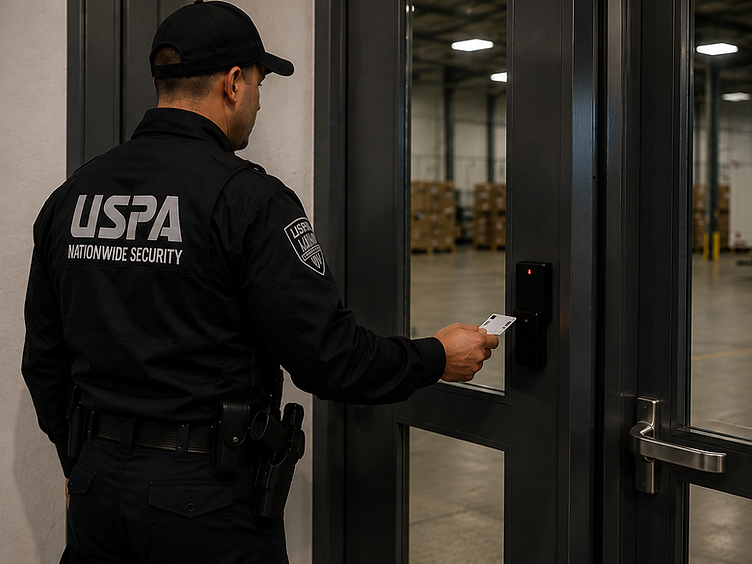
Port assignments run on the facility's own security plan rather than a generic guard post. Officers verify credentials at the gate, log truck and driver movements against terminal paperwork, and patrol the perimeter the terminal operator or port authority defines, including the waterside where much of a port's security obligation sits.
Credential control is the core discipline. At facilities regulated under the Maritime Transportation Security Act, unescorted access depends on a valid Transportation Worker Identification Credential and the terminal's own vetting list; officers verify both at the gate and escort anyone who arrives without them, so the facility's access record stays complete for the Coast Guard's review.
Cargo protection follows the freight. Container terminals are watched at the gate, the yard and the handoff points where custody changes; breakbulk and bulk facilities get rounds planned around conveyors, storage piles and rail sidings; and refrigerated or high-value cargo is covered with the checkpoint documentation the shipper's insurer expects to see.
Cruise terminals carry a different rhythm from cargo. Officers work the passenger flow on turnaround days: screening support at the terminal entrance, crowd and queue management, baggage staging areas, crew passageways, and the gangway where passengers, crew and visitors converge. Port days are staffed to the sailing schedule, not a fixed shift pattern.
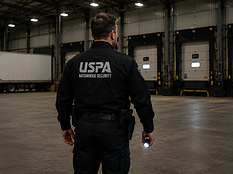
Waterside awareness is part of every post. Officers watch the water line as well as the fence: small craft approaching an active berth, swimmers and paddlers inside the security zone, and unauthorized vessels alongside, with escalation procedures agreed with the terminal and the local Coast Guard sector in advance.
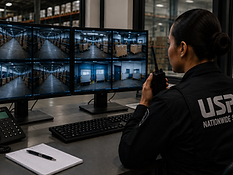
Documentation is written the same day, in the format the facility's security officer, its insurer and the reviewing authority expect: the gate log with credential details, the patrol rounds with times and observations, any incident with its escalation record, and the disposition of every escorted visitor.
Every officer is briefed before the first shift on the facility's own rules: the security zones on land and water, escort requirements, restricted areas, PPE and safety boundaries, and the reporting chain from the officer through the supervisor to the facility security officer.
The personnel standard matches the environment. Officers assigned to port work are licensed in the state where the facility operates, briefed on the facility security plan's public-facing requirements, and drawn from rosters accustomed to industrial posts, where log discipline and radio procedure are routine rather than exceptional.
Supervision is part of the post, not an add-on. A field supervisor audits gates and patrols on a published cadence, samples the log against the rounds actually walked, and confirms credentials and conduct at the gate. Audit findings reach the client with the same reporting as incidents.
Coverage scales with the terminal's calendar. Cruise turnaround days, vessel arrivals, seasonal peaks, maintenance periods and weather events change the staffing picture, and rosters are built from the port's schedule rather than a static template, so coverage steps up and down without renegotiating the account.
Where a terminal already runs its own security operation, USPA layers in: surge coverage during vessel operations, overnight and weekend posts, gate staffing during labor actions, and reinforcement after incidents. The written post orders are amended to the existing plan instead of replacing it.
Quoting is per terminal and itemized: gates, patrols, hours, supervision and the documentation package, with licensing and insurance certificates issued alongside the written scope, so the facility security officer or the port authority can review the file before the first shift.
The market in San Francisco
San Francisco, CA moves freight through facilities with hard security obligations: container terminals, bulk docks, cruise piers, energy terminals and the port authority areas that connect them. The buyers are terminal operators, port authorities, facility security officers and steamship agencies, and the decisions they make are driven by the facility security plan and the schedule the vessels keep.
Maritime security obligations are set in layers. Federal regulation defines who may hold unescorted access at regulated facilities; the Coast Guard sector enforces the facility security plan; CBP controls what crosses the terminal boundary; and the port authority or terminal operator applies its own rules on top. A vendor that understands only the guard layer misses most of the assignment.
The container and cargo side of the market runs on vessel schedules. Gates surge when ships work, drivers queue against appointment systems, and the yard fills and empties with the stow plan. Officers staffed to that rhythm verify drivers and seals at the handoff points rather than watching a fence line alone.
Cruise markets concentrate risk into turnaround windows: thousands of passengers screened, staged and loaded in a few hours, with crew movements, provisions and fuel deliveries running through the same terminal. Terminal operators in San Francisco book security staffing against the sailing calendar, often weeks ahead for peak season.
Bulk and agricultural terminals, inland river ports and Great Lakes docks carry a quieter but steady demand: gate control, grain and cargo inventory verification, barge and rail loading oversight, and rounds along waterfronts where the facility meets the water. These assignments reward the same documentation discipline the large container terminals require.
Insurance and compliance reviews increasingly reach into port security files: access logs, incident records, patrol documentation and the credentials of the officers who worked the post. Facilities that can produce a complete file after an incident or an audit are the ones whose coverage was written and documented to standard from the first shift.
The officers on these assignments are working professionals drawn from the same rosters that staff industrial and distribution posts in the region, so a terminal adding a night gate or surge coverage for a vessel's stay draws on people already accustomed to credential checks, seal verification and written reporting.
Who enforces this in San Francisco, CA
Maritime security in San Francisco operates under several layers of authority at once. The U.S. Coast Guard enforces facility security requirements under the Maritime Transportation Security Act and reviews the plans and records of regulated facilities; U.S. Customs and Border Protection controls cargo and border processing at the terminal boundary; the Transportation Worker Identification Credential program governs unescorted access; and the port authority or terminal operator applies its own rules on top. USPA writes the post orders against all of those layers and briefs every officer on them before the first shift.
- Gate and credential controlTWIC and terminal credential verification, driver and paperwork checks, and escorted access for anyone without valid credentials.
- Yard and waterside patrolsRounds along container yards, bulk docks, rail sidings and the water line, documented at checkpoints.
- Cruise terminal operationsScreening support, queue and crowd management, crew passageways and gangway coverage on turnaround days.
- Cargo and inventory protectionSeal checks, load verification and high-value cargo coverage at the points where custody changes.
- Vessel arrival and surge staffingCoverage scaled to the terminal's sailing and vessel calendar, including reinforcement for ship operations.
- Compliance documentationGate logs, patrol records and incident files maintained for the facility security officer, insurers and reviewing authorities.
Coverage and response in San Francisco
Standard posts start from a site walk with the facility security officer and a written staffing plan, typically within one to two weeks of the request. Coverage runs continuously once it starts, with rosters confirmed against the terminal's schedule and supervisors auditing posts in person.
Rush coverage is handled through 24-hour dispatch. A terminal that loses a gate officer before a vessel arrival, or needs reinforcement for an unplanned event, is staffed from the standing roster in this market, often for the next shift, with the written post orders completed the same day.
Cruise days, vessel operations and labor actions are scoped as their own engagements: the staffing plan is confirmed before the schedule commits, so the terminal's calendar never waits on a staffing decision. Coverage steps up for the event and steps back down without renegotiating the account.
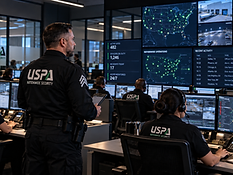
Multi-terminal clients are managed from one account: one contract, one dispatch line and one reporting format across every facility, with the same supervision standard from terminal to terminal and one account team a port authority can hold accountable.
Related coverage comes from the same organization: fire watch during system impairments in terminal buildings, industrial security at supporting warehouses and yards, and executive protection for visiting principals. Officers already briefed on the facility's layout carry that knowledge across assignments.
Posts are reviewed on a standing cadence with the client: the gate log is sampled against actual traffic, the roster is checked against the terminal's current schedule, and the post orders are amended where the operation has changed, so the coverage stays anchored to the facility rather than drifting from it.
Terminals and waterfronts covered in San Francisco
Posts are staffed at the gates, yards and water line of the facilities below, plus the industrial streets that connect them to the port.
- Pier 80 and Pier 96 facilities, San Francisco
- Pier 35 cruise terminal, San Francisco
- Mission Bay and China Basin waterfront, San Francisco
- Hunters Point shipyard vicinity, San Francisco
The Watchline
Reporting from San Francisco, CA
Executive Protection · Nov 3, 6:30 AM EST · San Francisco
Executive protection's agenda has moved past the office door
The annual Executive Protection & Mobility Conference has opened at the Westin St. Francis, with briefings centered on exposure outside the workplace, counter-surveillance and targeted physical threats.
Executive Protection · Nov 2, 6:52 AM EST · San Francisco
A bug behind the boardroom television shows what an RF sweep alone will never find
A microphone and camera hidden behind a boardroom television at a technology company produced federal charges, and the case has corporate security teams ordering manual RF sweeps of executive space.
Executive Protection · Oct 31, 9:20 AM EDT · San Francisco
Silicon Valley details are spending on analysts before they spend on bodies
Practices serving the technology corridor are hiring analysts before officers, on the finding that the useful warning arrives days before the principal moves.
Rated 4.9 by the clients we protect
Reviews are collected from real assignments across the country. Read them directly on Google before you call.
I have their pricing to be very affordable and competitive. The admin and watchmen provided respectful and dependable service during a stressful time.
William BeesleyGoogle reviewVerify This Review
Questions before you commit? Call (800) 214-1448 and ask for references on assignments like yours.
USPA personnel working assignments in San Francisco, CA





Maritime authorities and source documents
The statements on this page about access control, credentialing and facility security obligations at San Francisco, CA are grounded in the authorities below. Each links to the official source so the facility security officer, the insurer or the port authority can verify the basis directly.
- U.S. Coast Guard
Maritime security and facility requirements
The service that enforces facility security plans and the maritime security zones a port assignment operates inside.
Official Source → - Coast Guard Homeport
Sector notices, security zones and port conditions
Sector-level bulletins and marine safety information that change how a terminal or berth is worked.
Official Source → - TSA
Transportation Worker Identification Credential (TWIC)
The credential program governing unescorted access to regulated maritime facilities.
Official Source → - U.S. Customs and Border Protection
Cargo security at ports of entry
The cargo and border controls that apply at the terminal boundary, including seal and manifest integrity.
Official Source → - MARAD
Maritime Administration
Federal maritime policy, port and sealift programs, and the agency's published security guidance.
Official Source → - AAPA
American Association of Port Authorities
The port industry body whose published standards and security practice inform terminal operations.
Official Source →
Sources · San Francisco, CA
Maritime & Port Security in San Francisco, CA: common questions
- What does a maritime security guard do at a port terminal?
- Port officers enforce the facility's access rules rather than a lobby routine: credential verification at the gate, driver and paperwork checks against the terminal's manifest systems, yard and waterside patrols with checkpoint documentation, escorted access for anyone without valid credentials, and written incident reporting the same day. The post is built from the facility security plan, not a template.
- How much does port security cost in San Francisco?
- Pricing is quoted per terminal: gates and patrols, armed or unarmed coverage, the hours including surge staffing for vessel operations, and the supervision ratio. Multi-terminal clients are quoted on a schedule rather than shift by shift. Request a quote with the facility details and the operations team will return itemized pricing with licensing and insurance documentation.
- Do your officers hold TWIC credentials?
- Officers assigned to regulated maritime facilities work under the Transportation Worker Identification Credential program, and unescorted access is granted only with a valid TWIC and the terminal's own vetting. Anyone without a credential is escorted, which keeps the facility's access record compliant for Coast Guard review. Confirm current credential requirements with the operations team when requesting a quote.
- Can you staff cruise terminals in San Francisco?
- Yes. Cruise assignments are staffed against the sailing calendar: screening support at the terminal entrance, queue and crowd management on turnaround days, baggage staging areas, crew passageways and the gangway. Coverage scales up for the turnaround window and steps back down between sailings, and recurring sailings are placed on a standing schedule.
- How quickly can coverage start at a terminal in San Francisco?
- Standard posts start within one to two weeks of the site walk, and rush coverage is staged through 24-hour dispatch from the standing roster in this market, often for the next shift. Vessel operations and unplanned events are reinforced the same way. Emergency dispatch answers around the clock for time-sensitive requests.
- Can you cover a facility during a labor action or strike?
- Yes. Labor contingency coverage is scoped as its own engagement, with the roster, the briefing package and the reporting format confirmed before the action begins. Coverage scales from a single gate through a full perimeter program, and long engagements are staffed on rotating shifts with the same documentation standard as routine posts.
- What documentation do we receive from port security coverage?
- The gate log with credential details, patrol rounds with times and observations, incident reports with their escalation records, and the disposition of every escorted visitor, all written the same day. The file is maintained in a format the facility security officer, the insurer and reviewing authorities can read without a follow-up request.
- Can one provider cover several terminals or an entire port?
- Yes. Multi-terminal clients run one account: one contract, one dispatch line and one reporting format across every facility, with the same supervision standard from terminal to terminal. New terminals are onboarded through the same dispatch desk, and a quote for an additional facility starts from the existing program's documentation.
- Which terminals and waterfronts do you cover in San Francisco?
- Pier 80 and Pier 96 facilities; Pier 35 cruise terminal; Mission Bay and China Basin waterfront; Hunters Point shipyard vicinity. Posts are staffed at the gates, yards and water line of those facilities, plus the industrial streets that connect them to the port. Request a quote with the facility details for a written scope and itemized pricing.
Need coverage in San Francisco?
Dispatch and quoting for San Francisco, CA are answered 24 hours a day. The written scope, licensing and insurance certificates are issued with the quote.
Requested alongside this service

Security Guard Services
Licensed armed and unarmed officers for commercial buildings, warehouses, construction sites and industrial plants, briefed on written post orders.
Service Details
Industrial Security Guards
Licensed officers for manufacturing plants, refineries, ports and distribution facilities, posted to written post orders and the site's own safety rules.
Service Details
Superyacht & Maritime Security
Vessel, gangway and tender coverage for owners, captains and yacht managers: visitor verification, overnight berth watch and guest protection ashore.
Service DetailsUSPA Nationwide Security services are provided, as applicable, by USPA employees, independently owned franchise offices, or certified contractors participating in USPA’s contractor programs established in 2005, with services performed under applicable state and local licensing requirements. USPA is managed by Kingsman Philanthropic Corp., a nonprofit organization whose mission since 2005 has included locating and assisting missing and trafficked girls. Kingsman’s work has been featured on Crime Stories with Nancy Grace.
