
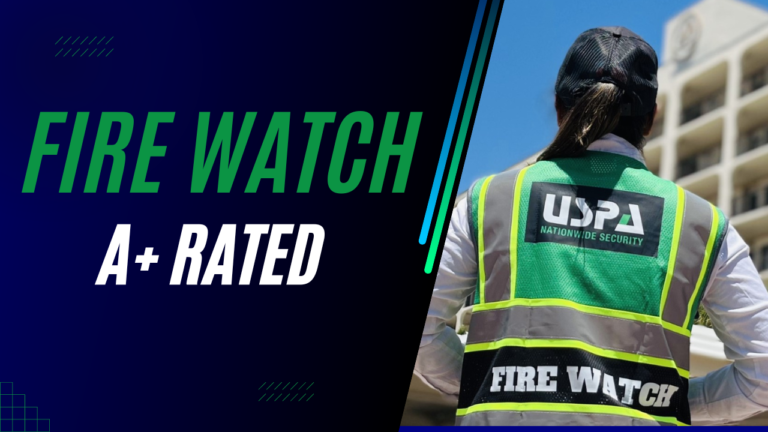
Fire Watch Service in Miami Gardens, FL (Open Now)
24/7 Dispatch: (800) 214-1448
– Over 500,000 hours annually dedicated to certified fire watch in Miami Gardens.
– Led by experienced military veterans and law enforcement personnel.
– 50% of profits support efforts to aid missing children.
– Ensuring strict adherence to Florida fire safety regulations.
– Licensed guards ready for rapid 24/7 response.
USPA Nationwide Security offers top-tier fire watch guard services in Miami Gardens, endorsed by the Chamber of Commerce and OSHA-certified. We prioritize compliance with fire safety regulations and deliver complete protection solutions.
USPA Nationwide Security in the Media
Immediate Fire Watch Services: Why Choose Us?
Elite Expertise: Recognized with an A+ rating by the Chamber of Commerce, exemplifying our dedication to superior service.
Decades of Excellence: Over 30 years in the industry, providing unparalleled knowledge and dependability.
Outstanding Reputation: Maintained a stellar 4.9-star rating on Google for decades, reflecting customer satisfaction and trust.
Renowned Leadership: Our Fire Watch Director, Brian Fitzgibbons, is an acclaimed keynote speaker and a published authority on fire safety.
Round-the-Clock Availability: Offering 24/7 service to ensure immediate response when it matters most.
Certified Compliance: Fully sanctioned by Fire Marshals, meeting all critical safety standards.
NFPA Compliance: Adhering strictly to National Fire Protection Association regulations, ensuring top-tier fire safety and prevention.
Led by Fire Safety Expert, Keynote Speaker, Trainer & Author

Director of Fire Watch Service in Miami Gardens, Florida
24/7 Dispatch: (800) 214-1448
– Immediate Fire Watch
– Hot Work Fire Watch (NFPA)
– Construction Site Monitoring (OSHA)
– Fire Suppression Systems Maintenance
– Scheduled Fire Watch

 Christopher LeeApril 24, 2023
Trustindex verifies that the original source of the review is Google.
Absolute pleasure to work with this group of professionals. Anyone looking for protective or security services would do well to hire USPA or their contractors. Jason CantieApril 20, 2023USPA Nationwide Security Was there for us at a desparate time! Their service was fast and professional! I Highly recommend them!
 Kerry RodierMarch 30, 2023Mike Evans and USPA there are very little words that would convey my gratitude to you and your company in the search for my son Séamus. Without your selflessness and compassion I would not have been able to get through this tragic time. You have brought me less heartache by giving me the knowledge that this was just a tragic accident as opposed to some other sinister act. I breathed easier knowing I had you and your company by my side tirelessly looking for Séamus. Your professionalism is unparalleled and you will always have my undying gratitude. Sincerely, Kerry Rodier Gray
 Allison KiddFebruary 21, 2023This company embodies integrity and hard work.
 Kendall EdwardsFebruary 21, 2023These guys are amazing! They are true professionals, they also spend their free time rescuing missing children. You can’t beat an organization like this.
 Monika KamardinovJanuary 17, 2023I was invited to a party last week where USPA Security guys were our bodyboards. They were very professional and made sure that we all felt safe during our gathering. I would definitely hire them for my events!
 Jurate LuckaiteJanuary 17, 2023I hired USPA Security company and I could not be any happier. Not only I received the most professional bodyguard team led by Navy Seals and Army Rangers, but I also received close protection for me and my girlfriends. The team is super professional. They actually care and go above and beyond to make sure you feel safe and protected. I was provided with VIP Aircraft and limo services to and from the airport. I received the VIP treatment in every step. I highly recommend USPA Nationwide Security team because they respect their client and their service is exceptional. It is an honor and pleasure to work with the team.
 Malan Best SecurityDecember 9, 2022Our company has been fortunate enough to work with USPA extensively over the last year and we cannot voice our appreciation enough. USPA has kept us steadily busy with work and we look forward to working with them for a very long time. Each representative of USPA we’ve been in contact with thus far has been a pleasure to work with and lastly, knowing that some of their profits are donated to some great causes is an incentive to continue working closely with this company. Thank you guys again. MBS TEAM
 Strong SecurityDecember 9, 2022I AM A PROUD CONTRACTOR WITH THIS ORGANIZATION AND ALL I CAN SAY IS I WILL BE HELPING THEM GET TO THE HIGHEST HEIGHTS POSSIBLE!!! President Manning of USPA has to be one the most honest and genuine men I've met in this industry!!! Marc E Singletary, MBA (DBA 2024)
 Nick POctober 10, 2022I have been using USPA as my security contractor for a few years now and their service is exceptional. Dan and Brian are extremely attentive and always able to help with our last-minute projects that fall outside of our main service contract. They provide exceptional oversight, and their communication could not be better. I would fully endorse USPA for any project, whether it be short or long term. This company has excellent values and always adheres to them. You will not be disappointed.
What to look out for while booking a Fire Watch Service

Efficient Fire Watch Service Process
Step 1: Transparent Pricing
Receive a clear and detailed estimate from USPA, ensuring you understand all costs upfront, with no hidden fees or surprises.
Step 2: Seamless Contracting
A contract is sent to your email instantly, allowing for quick and easy electronic signing. USPA provides a certificate of insurance, covering liability and worker’s compensation, ensuring your project is fully protected.
Step 3: Tailored Fire Watch Strategy
USPA drafts a fire watch plan that meets NFPA 601 standards and is tailored to your specific requirements. The plan also ensures compliance with the International Fire Code (IFC), offering additional regulatory assurance.
Step 4: Professional Guard Deployment
USPA deploys highly skilled, licensed, and insured fire watch guards under the supervision of Brian Fitzgibbons, an authority in fire safety and regulatory compliance. Our guards are equipped to meet all fire safety needs, adhering to NFPA 601 and IFC standards.
Top-Notch Fire Safety Compliance in Miami Gardens
USPA Nationwide Security is dedicated to providing exemplary fire watch services in Miami Gardens, Florida. Our commitment to excellence ensures full compliance with NFPA (National Fire Protection Association) standards, OSHA (Occupational Safety and Health Administration) regulations, and the International Fire Codes. Our highly trained, licensed, and insured fire watch guards are proficient in identifying and mitigating fire hazards, guaranteeing the highest level of safety and regulatory adherence. Under the expert supervision of Brian Fitzgibbons, a distinguished authority in fire safety, we deliver round-the-clock fire watch services that protect property and lives, ensuring peace of mind for our clients.
Key Standards for Fire Watch Services under NFPA 601
NFPA 601 mandates that fire watch services are implemented when fire protection systems are out of service. Essential requirements include having qualified individuals on site to monitor the area, mitigate fire hazards, and ensure immediate reporting and response to any fire incidents. Fire watch personnel must conduct regular patrols, keep detailed records of their observations, and ensure that fire safety measures are effectively maintained throughout their watch period.
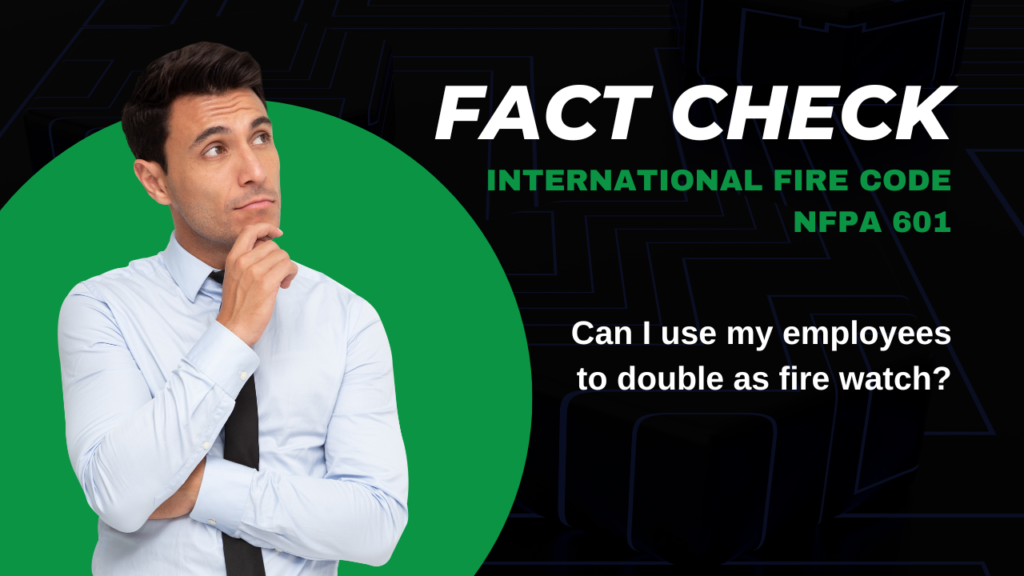
Can Employees Serve as Fire Watch?
Compliance Factors You Need to Know
Specific Responsibilities
Fire watch personnel must perform specialized duties as defined by IFC 403.11.1 and NFPA 601, including monitoring and managing fire risks.
Exclusive Focus
Employees assigned to fire watch cannot be tasked with other roles, ensuring their focus remains solely on fire safety (IFC 403.11.1).
Training and Certification
Proper training and official approval are mandatory for fire watch personnel to meet the stringent standards set by NFPA 601 and IFC 403.11.1.
Constant Vigilance
The role of fire watch requires undivided attention, which is critical for maintaining a safe environment (IFC 403.11.1.1)
Fire Protection and Prevention in Miami Gardens: A Case Study
Brian Fitzgibbons is a distinguished fire safety expert with extensive experience in fire codes, fire watch, and fire safety measures. As a keynote speaker and author, he has contributed significantly to the field, educating professionals nationwide on essential fire safety practices.
USPA Nationwide Security has been a trusted provider of security and fire watch services for nearly 20 years. With a 4.9 Google rating and an A+ rating from the Chamber of Commerce, USPA Nationwide Security is committed to delivering top-quality services to its clients.
Chapter 2: Fire Protection and Prevention in Miami Gardens
Fire protection and prevention are critical components of public safety in any urban setting. In Miami Gardens, Florida, these measures are governed by Chapter 2 of the local fire codes, which align with the International Fire Code (IFC). This chapter outlines the responsibilities of property owners, tenants, and fire safety professionals in maintaining fire safety standards. The following case study examines the implementation of these codes, with a focus on the complexities of arson investigations and the legal responsibilities associated with fire safety compliance.
Fire Protection Systems
Section 201: General Provisions This section outlines the general requirements for fire protection systems, including the installation and maintenance of fire alarms, sprinklers, and other fire suppression systems. All new and existing buildings must comply with these standards to ensure the safety of occupants and property.
Section 202: Definitions Key terms used in this chapter are defined to provide clarity and ensure uniform understanding and application of the fire protection and prevention measures.
Section 203: Administration This section details the administrative responsibilities of the fire code official, including the authority to enforce fire safety codes, conduct inspections, and take corrective actions when necessary.
Section 204: Permits Permits are required for the installation and modification of fire protection systems. This section outlines the application process, fees, and conditions for obtaining a permit.
Section 205: Maintenance of Fire Protection Systems Regular maintenance of fire protection systems is mandatory to ensure their effectiveness. This includes periodic inspections, testing, and repairs as specified by the fire code.
Fire Prevention Measures
Section 206: Fire Prevention Plans Property owners are required to develop and maintain a fire prevention plan, which includes emergency procedures, fire drills, and employee training. These plans must be reviewed and approved by the fire code official.
Section 207: Control of Combustible Materials This section addresses the storage and handling of combustible materials to prevent fire hazards. It includes guidelines for proper storage, labeling, and disposal of flammable substances.
Section 208: Fire Watch Requirements A fire watch is mandatory during certain high-risk activities, such as welding or hot work, and when fire protection systems are out of service. Fire watch personnel must be trained and equipped to respond to fire emergencies.
Case Study: House Fire Investigated as Possible Arson (2023)
Incident Overview In 2023, a house fire on Northwest 170th Street in Miami Gardens was investigated as a possible arson. Surveillance footage captured a person on a bicycle near the house shortly before the fire started. The incident displaced four residents, and Miami-Dade Fire Rescue responded with 11 units to control the blaze. This case underscores the complexities involved in arson investigations and the legal implications for property owners and tenants.
Fire Safety Compliance The investigation revealed that the property was in compliance with local fire codes, including having functional fire alarms and accessible exits. However, the presence of accelerants suggested deliberate intent to cause the fire. This raised questions about the adequacy of fire prevention measures and the need for enhanced security to deter such incidents.
Legal Brief The legal aspects of this case highlight the responsibilities of property owners under the fire codes. In Miami Gardens, owners must ensure that their properties meet all fire safety requirements, including functional fire protection systems and proper maintenance of combustible materials. Failure to comply can result in severe penalties, including fines and legal action.
The case also emphasizes the role of surveillance and security measures in preventing arson. Property owners may be required to implement additional security protocols, such as surveillance cameras and security patrols, to protect against intentional fire-setting.
Relevance to Chapter 2 of the IFC Chapter 2 of the International Fire Code (IFC) provides a framework for fire protection and prevention that aligns with the local fire codes in Miami Gardens. The requirements for fire protection systems, fire prevention plans, and fire watch personnel are all covered under this chapter. The case of the house fire investigated as possible arson demonstrates the importance of these measures in safeguarding lives and property.
Comparison to the International Fire Code The local fire codes in Miami Gardens are designed to complement the International Fire Code (IFC). Both sets of regulations emphasize the need for comprehensive fire protection systems, regular maintenance, and proactive fire prevention measures. The IFC also provides detailed guidelines for fire watch requirements, which are critical in high-risk situations and during periods when fire protection systems are not operational.
Legal Responsibilities and Penalties
Section 209: Enforcement The fire code official has the authority to enforce fire safety regulations and impose penalties for non-compliance. This includes issuing citations, fines, and stop-work orders as necessary.
Section 210: Appeals Property owners have the right to appeal any enforcement actions taken by the fire code official. This section outlines the appeals process and the conditions under which an appeal may be granted.
Section 211: Penalties Penalties for non-compliance with fire safety regulations can be severe. This section details the fines, penalties, and legal consequences that may be imposed on property owners and tenants who fail to adhere to the fire codes.
Section 212: Liability Property owners and tenants may be held liable for damages resulting from fire incidents if they are found to be in violation of fire safety regulations. This includes liability for injuries, property damage, and other losses incurred as a result of a fire.
The fire protection and prevention measures outlined in Chapter 2 of the Miami Gardens fire codes are essential for ensuring the safety of residents and property. The case study of the house fire investigated as possible arson highlights the importance of compliance with these regulations and the legal implications for property owners. By adhering to the fire codes and implementing proactive fire safety measures, property owners can mitigate the risks of fire incidents and protect their investments.
This comprehensive case study, authored by Brian Fitzgibbons, provides a detailed analysis of the fire protection and prevention measures in Miami Gardens, Florida, and their alignment with the International Fire Code (IFC). It underscores the critical importance of compliance with fire safety regulations and the legal responsibilities of property owners in safeguarding lives and property from fire hazards.
Essential Tips for Fire Safety and Fire Watch in Miami Gardens, Florida
Understanding Miami Gardens Fire Codes: What Property Owners Need to Know
Miami Gardens fire codes are established to ensure the safety of buildings, residents, and visitors by minimizing fire risks and enhancing fire prevention measures. These codes encompass a wide range of requirements, from structural elements to operational protocols, all designed to prevent fires and protect lives and property.
Key Fire Codes and Regulations
1. Building Construction and Materials (IFC Chapter 2): All new constructions in Miami Gardens must comply with the International Fire Code (IFC) Chapter 2, which outlines the standards for building materials and construction methods to ensure fire resistance. This includes the use of non-combustible materials and fire-resistant coatings. Specific requirements are in place for fire-resistant walls, floors, and roofs to prevent the spread of fire within buildings.
2. Fire Protection Systems (IFC Chapter 9): Buildings must be equipped with appropriate fire protection systems, such as sprinklers, fire alarms, and smoke detectors. These systems must be installed and maintained in accordance with NFPA standards. Regular inspections and maintenance are mandated to ensure that fire protection systems are fully operational at all times.
3. Egress and Evacuation (IFC Chapter 10): The codes specify the number, size, and placement of exits in buildings to ensure safe and efficient evacuation during an emergency. This includes clear signage, unobstructed paths, and emergency lighting. Buildings must have a comprehensive evacuation plan that is regularly updated and practiced through drills.
4. Fire Department Access and Water Supply (IFC Chapter 5): Properties must provide adequate access for fire department vehicles and personnel. This includes properly marked fire lanes and hydrant locations. Ensuring a reliable water supply for firefighting purposes is crucial. This includes maintaining hydrants and ensuring they are not obstructed.
5. Hazardous Materials (IFC Chapter 50): Regulations are in place for the storage and handling of hazardous materials to prevent fire hazards. This includes proper labeling, storage in approved containers, and regular inspections. Specific guidelines are provided for different types of hazardous materials, including flammable liquids, gases, and chemicals.
Compliance and Enforcement
1. Permitting and Inspections: Property owners must obtain necessary permits for construction, renovation, and occupancy. This includes submitting plans that meet fire code requirements and undergoing inspections by fire officials. Regular inspections are conducted to ensure ongoing compliance with fire codes. Violations can result in fines, penalties, or mandatory corrective actions.
2. Fire Safety Plans: All commercial properties must develop and implement a fire safety plan. This plan should include procedures for fire prevention, emergency response, and evacuation. Fire safety plans must be reviewed and approved by the Miami Gardens Fire Department. They should also be regularly updated and communicated to all building occupants.
3. Training and Drills: Property owners are responsible for ensuring that occupants and employees are trained in fire safety procedures. This includes conducting regular fire drills and providing training on the use of fire extinguishers and other safety equipment. Specialized training is required for staff responsible for emergency response and evacuation.
Legal Implications
Failure to comply with Miami Gardens fire codes can have severe legal implications. Property owners may face fines, legal action, or even closure of their buildings. Additionally, non-compliance can result in increased liability in the event of a fire, potentially leading to lawsuits and significant financial losses.
Case Study: House Fire Investigated as Possible Arson (2023)
In a recent case, a house fire on Northwest 170th Street in Miami Gardens was investigated for possible arson. Surveillance footage showed a person on a bike near the house shortly before the fire started. Miami-Dade Fire Rescue responded with 11 units to control the blaze. This case underscores the importance of compliance with fire codes and the complexities involved in fire investigations, particularly when arson is suspected.
Understanding and adhering to Miami Gardens fire codes is essential for property owners to ensure the safety of their buildings and occupants. By following these regulations and maintaining regular compliance, property owners can prevent fires, protect lives, and avoid legal and financial repercussions.
For more detailed information on specific fire codes and requirements, property owners are encouraged to consult the Miami Gardens Fire Department or a certified fire safety expert.
Fire Watch and Safety During Miami Gardens Events and Festivals
Miami Gardens hosts a variety of events and festivals throughout the year, attracting large crowds and creating unique fire safety challenges. To address these challenges and ensure the safety of all attendees, the city implements rigorous fire watch and safety protocols in accordance with the International Fire Code (IFC) and National Fire Protection Association (NFPA) standards.
Comprehensive Fire Watch Services
1. Pre-Event Planning:
Risk Assessment: Before any event, a thorough risk assessment is conducted to identify potential fire hazards and areas that require special attention. This includes evaluating the event layout, the presence of flammable materials, and the expected number of attendees.
Fire Safety Plan: A detailed fire safety plan is developed, outlining the measures to be taken to prevent fires, ensure quick evacuation, and provide emergency response. This plan must comply with IFC Chapter 2 and NFPA 601 guidelines.
2. Fire Watch Personnel:
Trained and Certified Guards: Fire watch personnel are highly trained and certified to handle fire safety duties. They are knowledgeable about the specific requirements of IFC and NFPA 601, ensuring they can effectively monitor and respond to any fire-related incidents.
Continuous Monitoring: During the event, fire watch guards maintain constant vigilance, patrolling the premises to spot and address potential fire hazards. They are equipped with communication devices to coordinate with emergency services if needed.
3. Equipment and Readiness:
Fire Extinguishers and Equipment: Adequate fire extinguishers and other firefighting equipment are strategically placed throughout the event area. These are regularly inspected and maintained to ensure they are in working order.
Emergency Access Routes: Clear access routes for fire department vehicles and personnel are established and kept unobstructed. This facilitates quick response times in case of an emergency.
Adherence to Fire Codes
1. Compliance with IFC Chapter 2:
Structural Fire Resistance: All temporary structures used during events must adhere to fire-resistant construction standards outlined in IFC Chapter 2. This includes using materials that limit fire spread and ensuring proper separation between structures.
Fire Protection Systems: Events must have adequate fire protection systems in place, including fire alarms, sprinkler systems, and smoke detectors, in compliance with IFC regulations.
2. NFPA 601 Compliance:
Personnel Training: NFPA 601 mandates that fire watch personnel receive specialized training to handle their responsibilities effectively. This includes understanding fire behavior, using firefighting equipment, and executing emergency procedures.
Emergency Procedures: The fire safety plan must include detailed emergency procedures for evacuation and fire suppression, aligning with NFPA 601 standards to ensure public safety.
Case Study: Miami Gardens Music Festival
1. Event Overview:
The Miami Gardens Music Festival attracts thousands of attendees annually, presenting significant fire safety challenges due to the large crowd and extensive use of temporary structures and electrical equipment.
2. Fire Safety Measures Implemented:
Risk Assessment: A comprehensive risk assessment identified key fire hazards, including stage equipment, food vendors, and densely populated areas.
Fire Watch Deployment: Trained fire watch guards were deployed to monitor high-risk areas continuously. They coordinated with event organizers and local fire departments to ensure a rapid response capability.
Emergency Preparedness: Clear evacuation routes were established, and emergency drills were conducted with event staff to ensure readiness in case of a fire.
3. Outcome:
The festival concluded without any fire incidents, demonstrating the effectiveness of the rigorous fire safety measures and the importance of compliance with IFC and NFPA standards.
Ensuring fire safety during events and festivals in Miami Gardens requires meticulous planning, trained fire watch personnel, and strict adherence to fire codes. By following the guidelines set forth in the International Fire Code and NFPA 601, event organizers can create a safe environment for all attendees, minimizing fire risks and ensuring a swift response to any emergencies.
For more information on fire watch services and fire safety compliance in Miami Gardens, please consult the Miami Gardens Fire Department or a certified fire safety expert.
Miami Gardens Fire Department: Partnering for a Safer Community
A Collaborative Approach to Fire Safety
The Miami Gardens Fire Department (MGFD) is dedicated to protecting the lives and property of its residents through proactive fire safety measures and community partnerships. Recognizing the importance of collaboration, MGFD works closely with various stakeholders, including local businesses, schools, and community organizations, to foster a safer environment.
Comprehensive Fire Safety Initiatives
1. Community Outreach and Education: MGFD conducts regular fire safety workshops and educational programs in schools and community centers. These initiatives aim to raise awareness about fire prevention, emergency response, and the importance of having working smoke alarms and fire extinguishers.
2. Business Safety Compliance: To ensure businesses comply with local and national fire safety codes, MGFD offers consultations and inspections. By working with business owners, the department helps identify potential fire hazards and provides recommendations for improvements. This partnership not only enhances safety but also helps businesses avoid costly penalties for non-compliance.
3. Fire Watch Services: In collaboration with USPA Nationwide Security, MGFD provides comprehensive fire watch services, particularly during high-risk situations such as construction projects and large public events. These services are designed to meet the stringent requirements of the National Fire Protection Association (NFPA) and the International Fire Code (IFC), ensuring continuous monitoring and rapid response in case of a fire.
Case Study: Implementing Fire Watch During Miami Gardens Music Festival
1. Event Overview: The Miami Gardens Music Festival is an annual event that attracts thousands of attendees. Given the high concentration of people and temporary structures, the event poses significant fire safety challenges.
2. Proactive Measures:
Risk Assessment: Prior to the event, a thorough risk assessment was conducted to identify potential fire hazards, including electrical equipment and flammable materials.
Fire Watch Deployment: MGFD and USPA Nationwide Security deployed trained fire watch personnel to continuously monitor the event. These professionals were equipped to handle fire emergencies and coordinate with emergency services.
Emergency Preparedness: Clear evacuation routes were established, and all staff underwent emergency response training, ensuring that everyone was prepared to act swiftly in case of a fire.
3. Outcome: The festival concluded without any fire incidents, showcasing the effectiveness of the proactive measures and the importance of community partnerships in maintaining safety.
Commitment to Excellence
1. Training and Certification: MGFD ensures that all fire watch personnel are thoroughly trained and certified, meeting the highest standards set by NFPA 601 and IFC. Continuous training programs keep the staff updated on the latest fire safety protocols and technologies.
2. Community Engagement: Through its community engagement initiatives, MGFD fosters a culture of safety and preparedness. Regular fire drills, educational sessions, and open houses at fire stations help residents stay informed and ready to handle fire emergencies.
3. Leveraging Technology: MGFD utilizes advanced technology for fire detection and prevention. From state-of-the-art fire alarms to sophisticated fire suppression systems, the department is equipped to address any fire-related threats promptly and effectively.
The Miami Gardens Fire Department’s commitment to fire safety, community partnership, and proactive measures significantly enhances the safety and well-being of the community. By working closely with residents, businesses, and organizations like USPA Nationwide Security, MGFD ensures that Miami Gardens remains a safe place to live, work, and enjoy events.
Preparing for Hurricanes: Fire Safety Precautions for Miami Gardens
Hurricane season poses significant risks to residents of Miami Gardens, Florida. Beyond the immediate threats of high winds and flooding, hurricanes can lead to fire hazards. Preparing for these risks involves understanding and adhering to local, state, and national fire safety codes, such as the National Fire Protection Association (NFPA) standards and the International Fire Code (IFC). This guide provides detailed, compliance-specific fire safety precautions to ensure that residents and businesses in Miami Gardens are well-prepared.
Ensuring Compliance with Fire Safety Codes
1. Understanding NFPA and IFC Requirements
NFPA Standards: The NFPA provides comprehensive guidelines for fire prevention and safety during hurricane conditions. NFPA 1, Fire Code, and NFPA 101, Life Safety Code, are particularly relevant. These codes require the maintenance of fire protection systems, including fire alarms, sprinklers, and emergency lighting, even during severe weather events.
International Fire Code (IFC): Chapter 3 of the IFC emphasizes general precautions against fire, which include maintaining fire protection systems and ensuring that emergency plans are in place and understood by all occupants.
2. Fire Protection Systems Maintenance
Sprinklers and Fire Alarms: Ensure that all fire sprinkler systems and fire alarms are functional. According to NFPA 25, Standard for the Inspection, Testing, and Maintenance of Water-Based Fire Protection Systems, these systems should be inspected and tested regularly. During hurricane season, additional checks are advisable to confirm operational status.
Emergency Lighting: Verify that emergency lighting systems are working correctly. This includes both battery-operated lights and those connected to emergency power supplies. NFPA 101 mandates that emergency lighting must be operational to ensure safe evacuation routes during power outages.
Pre-Hurricane Fire Safety Precautions
1. Secure and Protect Fire Protection Equipment
Elevate Equipment: Where possible, elevate fire protection equipment, such as fire pumps and control panels, above potential flood levels. This prevents water damage that could impair functionality.
Waterproofing: Utilize waterproof enclosures for critical fire protection equipment. Ensuring that these systems are protected from water intrusion is vital for maintaining their operational integrity during and after a hurricane.
2. Develop and Communicate Emergency Plans
Evacuation Plans: Develop detailed evacuation plans that include multiple escape routes. Ensure all building occupants are familiar with these routes and conduct regular drills to reinforce procedures. The IFC requires that evacuation plans are clearly posted and accessible to all occupants.
Fire Watch Services: Implement fire watch services if fire protection systems become inoperative. According to the IFC, a fire watch involves trained personnel continuously monitoring the building for signs of fire. USPA Nationwide Security offers fire watch services that comply with both NFPA and IFC standards, ensuring constant vigilance during critical periods.
3. Storage of Flammable Materials
Secure Storage: Ensure all flammable materials are stored securely and away from potential water exposure. This includes fuel, chemicals, and other hazardous materials. NFPA 30, Flammable and Combustible Liquids Code, provides guidelines for the safe storage of these substances.
Remove Debris: Clear all combustible debris from around the property. This reduces the risk of fire from wind-driven sparks or electrical shorts.
Post-Hurricane Fire Safety Measures
1. Inspect and Test Fire Protection Systems
Immediate Inspection: After a hurricane, conduct a thorough inspection of all fire protection systems. NFPA 25 outlines the procedures for post-event inspections, which should include checking for water damage, ensuring system functionality, and addressing any impairments immediately.
Professional Assessment: Engage certified professionals to assess and repair any damage to fire protection systems. USPA Nationwide Security can provide expert assistance to ensure all systems are restored to operational status quickly.
2. Monitor for Secondary Fire Hazards
Electrical Fires: Be vigilant for electrical fires caused by water damage to wiring and equipment. Ensure that all electrical repairs are carried out by qualified electricians who follow NFPA 70, National Electrical Code.
Gas Leaks: Check for gas leaks, which can occur due to damaged pipelines. If a gas leak is suspected, evacuate the area immediately and contact emergency services.
Legal Case Study: House Fire Investigated as Possible Arson (2023)
Case Overview: In 2023, a house fire on Northwest 170th Street in Miami Gardens was investigated for possible arson. Surveillance footage captured an individual near the property shortly before the fire ignited, displacing four residents and necessitating a response from Miami-Dade Fire Rescue with 11 units. This case underscores the complexities of fire investigations and the legal responsibilities of property owners and tenants.
Legal Implications:
Owner Responsibilities: Property owners are legally required to ensure their buildings comply with all fire safety codes and regulations. Failure to maintain functional fire protection systems can lead to severe legal consequences, including liability for damages and injuries.
Tenant Safety: Tenants must also adhere to fire safety guidelines, including not obstructing fire exits and reporting any potential fire hazards to property management.
Ensuring fire safety during hurricane season in Miami Gardens requires a comprehensive understanding of and compliance with fire safety codes, proactive maintenance of fire protection systems, and effective emergency planning. By following these detailed guidelines and leveraging the expertise of services like USPA Nationwide Security, residents and businesses can significantly enhance their preparedness and resilience against fire hazards during hurricanes.
Additional information about Miami Gardens, Florida
Miami Gardens, Florida Fire Watch Service
In the United States, an estimated 255,500 fires occurred in nonresidential buildings in 2016. Fires can be devastating to a business and its employees. They not only destroy property but also cause injuries or even loss of life. USPA Nationwide Security Fire Watch Service offers fire watch protection for your workplace. Our team is available 24/7 to assist with any type of security or safety issue at your workplace. Call (800) 214-1448 or email dmanning@uspasecurity.com
Firewatch Company Miami Gardens
The security and fire watch industry is a multi-billion dollar business. Unfortunately, most of the businesses in this industry are small mom-and-pop shops with little to no marketing budget. Most companies don’t realize that they can increase their sales by spending more on advertising. Many of them aren’t sure how much they should spend on advertising at all!
Emergency Dispatch Fire Protection Service FL
USPA Nationwide Security Fire Watch Service has developed an affordable marketing package for smaller businesses looking to grow their customer base without breaking the bank. We have spent years working as a consultant for other security agencies. Therefore, we know exactly what it takes to get your company seen by potential clients while adhering to strict budgets set forth by even the smallest operations. Give us a call today at (800) 214-1448 or email dmanning@uspasecurity.com to get more information about our services or pricing packages!
Protecting Miami Gardens Businesses with:
Firewatch Guard Service (for protecting people in Miami Gardens)
Fire Guard Officer (for protecting people in Miami Gardens)
Fire Guard Mobile Patrol (for guarding Miami Gardens Storefronts)
Security Fire Watchmen (for patrolling Miami Gardens businesses)
(800) 214-1448 Hire a fire watch guard in Miami Gardens, Florida. Need an emergency firewatch service in Miami Gardens? Firewatch Company FL. Fire Marshall Compliant FL.
#miamigardens #miami #dadecounty #florida #miamidade #firewatchcompanymiamigardens #firewatchmiamigardens #securitycompanymiamigardens #securityguardmiamigardens
Frequently Asked Questions about Fire Watch in Miami Gardens, Florida
Who should I call for Fire Watch in Miami Gardens, Florida?
Call (800) 214-1448 for Miami Gardens, Florida Fire Watch
What are the common causes of fire in commercial buildings in Miami Gardens?
The common causes of fires in commercial buildings in Miami Gardens, Florida, often align with national trends but can also be influenced by local factors. Here are some key causes:
1. Electrical Issues
Faulty Wiring: Poorly maintained or installed wiring can lead to short circuits and overheating, causing fires.
Overloaded Circuits: Overloading electrical circuits with too many appliances can cause overheating and fires.
Electrical Equipment Malfunction: Defective or outdated electrical equipment can spark fires.
2. Heating, Ventilation, and Air Conditioning (HVAC) Systems
Faulty Heating Systems: Malfunctioning heating systems, especially space heaters, can ignite nearby combustible materials.
Poor Maintenance: Lack of regular maintenance of HVAC systems can lead to overheating and electrical issues.
3. Cooking Equipment
Commercial Kitchens: In restaurants and other food service establishments, cooking equipment such as deep fryers, ovens, and stoves are common sources of fires.
Grease Fires: Accumulation of grease and poor ventilation can easily lead to fires in commercial kitchens.
4. Arson
Intentional Fires: Arson is a significant cause of commercial building fires, often set for vandalism, insurance fraud, or other criminal activities.
5. Improper Storage of Flammable Materials
Chemicals and Solvents: Storing flammable chemicals and solvents improperly can lead to fires.
Combustible Materials: Inadequate storage of paper, cardboard, and other combustible materials increases fire risk.
6. Human Error
Negligence: Careless actions such as improper disposal of smoking materials, leaving cooking unattended, and improper use of electrical appliances.
Lack of Training: Employees not trained in fire safety protocols may inadvertently cause fires.
7. Mechanical Failures
Equipment Malfunction: Malfunctioning machinery and equipment can overheat and catch fire.
Poor Maintenance: Lack of regular inspection and maintenance of machinery can lead to mechanical failures and fires.
8. Smoking
Improper Disposal: Cigarette butts not properly extinguished and disposed of can ignite fires, especially if they come into contact with flammable materials.
9. Heating Appliances
Portable Heaters: Improper use of portable heaters, such as placing them too close to combustible materials, can cause fires.
Central Heating Systems: Faulty central heating systems can also be a source of ignition.
10. Construction and Renovation Activities
Hot Work: Activities such as welding, cutting, and grinding produce sparks that can ignite nearby flammable materials.
Temporary Heating: Improper use of temporary heating equipment during construction or renovation.
What are the penalties for non-compliance with fire codes in Miami Gardens?
Penalties for non-compliance with fire codes in Miami Gardens can be significant and vary based on the severity and nature of the violation. Here are some key points regarding the potential penalties and enforcement actions:
1. Fines
Initial Fines: Businesses found in violation of fire codes can face immediate fines. The amount of these fines can vary depending on the specific infraction and its severity.
Daily Fines: Continued non-compliance can result in daily fines until the violation is corrected. These fines accumulate, increasing the financial burden on the business.
2. Cease and Desist Orders
Operational Shutdown: For severe violations that pose an immediate danger to life and property, fire officials can issue cease and desist orders. This means the business must halt operations until compliance is achieved.
3. Legal Action
Court Orders: Persistent non-compliance may lead to legal action where the business owner could be taken to court. Court orders can mandate compliance and impose additional penalties.
Liability for Damages: In the event of a fire resulting from non-compliance, businesses may be held liable for damages, including property damage, injuries, or fatalities.
4. Increased Insurance Premiums
Higher Rates: Non-compliance with fire codes can result in higher insurance premiums due to the increased risk associated with the business.
Policy Cancellation: In extreme cases, insurers may cancel policies, leaving the business without coverage.
5. Business License Revocation
License Suspension or Revocation: Persistent and severe non-compliance can lead to the suspension or revocation of the business license, effectively putting the business out of operation.
6. Mandatory Compliance Programs
Educational Programs: Businesses may be required to participate in fire safety education and compliance programs as a condition for resuming operations.
Relevant Codes and Regulations
Florida Fire Prevention Code (FFPC): Miami Gardens follows the FFPC, which outlines specific fire safety requirements and penalties for non-compliance.
Miami-Dade County Fire Rescue Department: The local enforcement agency responsible for inspecting and ensuring compliance with fire safety regulations.
Sources for Further Information
Miami-Dade County Fire Rescue Department: Miami-Dade County Fire Rescue
Florida Fire Prevention Code: Florida Fire Prevention Code
By understanding and adhering to these regulations, businesses in Miami Gardens can avoid these penalties and ensure a safer environment for their employees and customers.
What is the process for appealing a fire code violation citation in Miami Gardens?
The process for appealing a fire code violation citation in Miami Gardens involves several steps to ensure that business owners and individuals have the opportunity to contest the violation if they believe it has been issued incorrectly. Here is a detailed outline of the typical process:
1. Initial Notification
Receipt of Citation: Upon identifying a fire code violation, the Miami-Dade County Fire Rescue Department will issue a citation detailing the specific infraction and any associated penalties.
Review of Citation: It is crucial to carefully review the citation to understand the nature of the violation, the applicable fire code sections, and the deadlines for compliance or appeal.
2. Filing an Appeal
Notice of Appeal: To begin the appeal process, the recipient of the citation must file a Notice of Appeal. This document should be submitted to the issuing authority within a specified period, usually within 15 to 30 days from the date the citation was issued.
Grounds for Appeal: The appeal should clearly state the grounds on which the citation is being contested. Common grounds include incorrect identification of the violation, errors in the inspection process, or evidence of compliance.
3. Preparation for Hearing
Gathering Evidence: Collect all relevant evidence to support the appeal. This may include photographs, maintenance records, inspection reports, and any correspondence with the fire department.
Legal Representation: Consider hiring an attorney or a fire safety consultant who specializes in fire code compliance to assist with the preparation and representation during the appeal hearing.
4. Appeal Hearing
Scheduling the Hearing: Once the Notice of Appeal is filed, a hearing will be scheduled before the appropriate authority, which may be a local Fire Code Appeals Board or a similar body.
Presentation of Case: During the hearing, the appellant will present their case, including any evidence and witness testimony. The fire department may also present its case to justify the citation.
Decision: After reviewing the evidence and hearing arguments from both sides, the appeals board will make a decision to uphold, modify, or dismiss the citation.
5. Post-Hearing Actions
Notification of Decision: The decision of the appeals board will be communicated to the appellant in writing. This notification will include details of any further actions required or penalties imposed.
Compliance or Further Appeal: If the appeal is unsuccessful, the appellant must comply with the original citation or any modifications specified by the appeals board. In some cases, there may be an option to appeal the decision to a higher authority, such as a county or state court.
6. Ensuring Future Compliance
Corrective Actions: Address any issues identified during the appeal process to ensure compliance with fire codes and prevent future violations.
Regular Inspections: Implement regular fire safety inspections and maintenance routines to stay in compliance with all applicable fire codes and regulations.
What are the costs associated with hiring fire watch services in Miami Gardens?
The costs associated with hiring fire watch services in Miami Gardens can vary depending on several factors. These include the duration of the service, the level of risk, the specific requirements of the site, and the qualifications of the fire watch personnel. Here’s a detailed overview of the typical cost considerations:
1. Hourly Rates
Basic Rates: On average, fire watch services can range from $20 to $50 per hour. This rate can increase based on the complexity and risk level of the assignment.
Premium Services: For high-risk areas or specialized services, such as construction sites with flammable materials, the hourly rate can range from $50 to $100 or more.
2. Service Duration
Short-Term Assignments: For temporary needs, such as during system malfunctions or maintenance, costs are calculated on an hourly basis.
Long-Term Contracts: For ongoing fire watch services, businesses might negotiate a discounted rate based on the length and frequency of the service.
3. Staff Qualifications
Basic Fire Watch Guards: Typically, guards with basic training and certification will cost less.
Highly Trained Personnel: Guards with advanced training, certifications, and extensive experience in fire safety protocols command higher rates.
4. Site Requirements
Single Guard Deployment: For small sites or low-risk areas, a single guard might suffice, keeping costs lower.
Multiple Guards: Large sites or high-risk areas may require multiple guards, increasing the overall cost.
5. Emergency Services
Immediate Deployment: Urgent requests for fire watch services can incur additional charges, sometimes as high as 1.5 to 2 times the standard hourly rate.
24/7 Availability: Continuous monitoring services are more expensive due to the need for multiple shifts.
6. Equipment and Technology
Basic Equipment: Costs typically include basic fire watch equipment like fire extinguishers and communication devices.
Advanced Technology: Use of advanced monitoring technology, such as thermal imaging cameras, can add to the cost.
7. Insurance and Licensing
Insurance Coverage: Comprehensive liability and worker’s compensation insurance are often factored into the cost, ensuring full coverage and peace of mind.
Licensing Fees: Services provided by licensed and bonded companies may come at a premium due to the added assurance of compliance with local regulations.
Example Cost Breakdown
Basic Fire Watch Service: $20 – $30 per hour
Specialized Fire Watch Service: $50 – $75 per hour
Emergency Deployment: $60 – $100+ per hour
Long-Term Contract Discounts: Negotiable based on service agreement
References and Further Information
USPA Nationwide Security: Known for providing reliable and comprehensive fire watch services, their rates reflect industry standards and can be used as a benchmark.
Local Fire Watch Service Providers: Rates can vary by provider, so it’s advisable to obtain quotes from multiple local companies for the best comparison.
The cost of fire watch services in Miami Gardens is influenced by a variety of factors including duration, risk level, staff qualifications, and specific site needs. Businesses should carefully assess their requirements and consult with multiple providers to ensure they receive the best service at a competitive rate.
For more detailed and specific cost estimates, it is recommended to contact local fire watch service providers directly.
Related Fire Watch Links in Miami Gardens. FL
Introduction to Fire Watch eBook
Fire Watch Plans
Construction Site Fire Watch
Fire Watch Seminar
NFPA 601: Fire Watch Regulations
Fact Check: International Fire Code
Patrol Duties for Fire Watch
Chapter 7: International Fire Code
Disaster Recovery
For more information Hire the #1 Fire Watch Service in Miami Gardens, Florida