
Crowd Control and Egress Management at Super Bowl: Aligning Event Security with Codes
August 22, 2026· Brian Fitzgibbons
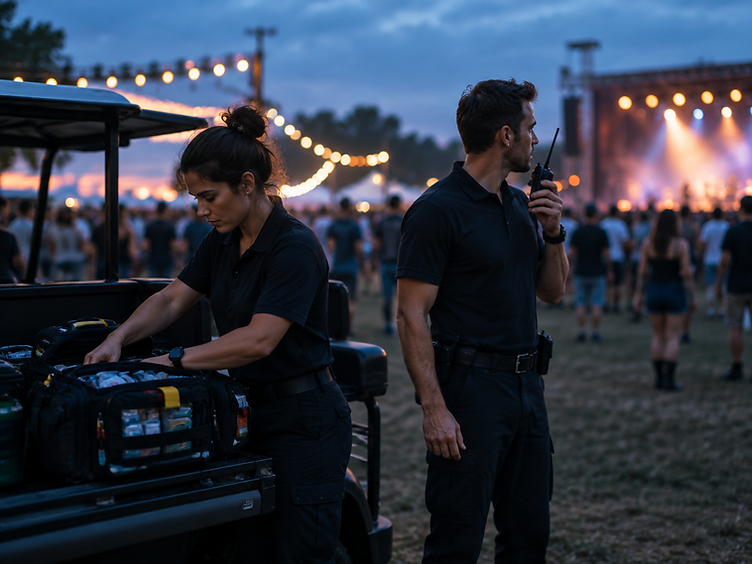
Managing a high-density crowd for a championship event like the Super Bowl requires more than just personnel presence. It demands a rigorous, code-compliant approach to life safety where every gate, corridor, and stairwell is treated as a critical link in an egress strategy. When tens of thousands of attendees gather in a single venue, the margin for error narrows significantly. Event producers and safety officers must navigate the complex interplay between physical security and regulatory requirements to prevent bottlenecks and ensure rapid movement during emergencies.
Security planning for such events is not a standalone activity but a multidisciplinary effort that hinges on adherence to standardized safety codes. By aligning private security tactics with established national fire and building regulations, venue leadership can mitigate risks while maintaining an orderly flow of traffic. This proactive integration of compliance and operation is the cornerstone of professional event risk management.
NFPA 101 and NFPA 102 Guidelines on Exit Capacities and Layout Planning
The foundation of modern event safety is built upon the NFPA 101 Life Safety Code and NFPA 102 Standard for Grandstands, Folding and Telescopic Seating, Tents, and Membrane Structures. NFPA 101 provides the comprehensive criteria for means of egress, ensuring that every occupant has a clear, unobstructed path to an exit. For stadium environments, this involves calculating exit capacities based on total occupant load and ensuring that the width of all doors and hallways meets the specific safety factors designated for assembly occupancies.
NFPA 102 focuses specifically on the safety of structures used for assembly activities, which is critical for venues utilizing temporary seating or large-scale tented hospitality zones. These codes mandate that aisles are maintained at specified widths and that exit signs remain illuminated and visible regardless of lighting changes or pyrotechnic displays. Professional security teams must conduct documented egress checks prior to the opening of gates, verifying that no panic hardware is obstructed by temporary signage, decor, or unauthorized equipment. These inspections are not merely administrative tasks; they are essential verification steps that prevent catastrophic outcomes in the event of a rapid evacuation.
Collaborative Strategies Between Private Security and Local Authorities
The scale of a championship event necessitates a Unified Command structure. Private security providers must work in lockstep with local police and fire departments to establish a seamless chain of command. This partnership ensures that private personnel are operating within the scope of authority granted by the venue while supporting the directives of public safety officials.
Effective collaboration begins during the planning phase. Security directors should participate in site-specific drills that test communication protocols between the private security operations center and municipal emergency dispatch. Unified command meetings are used to review site maps and identify potential pinch points. During the event, private security teams serve as the eyes and ears on the ground, conducting regular patrol rounds to identify fire hazards or emerging crowd congestion. If a concern is identified, the established radio protocol ensures that information reaches the unified command immediately, allowing for a coordinated response. This structure ensures that fire watch personnel and security staff are not working in silos, but are part of a larger, integrated life safety apparatus.
Training Staff on Panic Prevention and Clear Communication
Crowd density management is as much about human behavior as it is about physical infrastructure. Panic is often triggered by perceived danger combined with a lack of information. Security personnel must be trained in behavioral observation, looking for signs of crowd distress such as uneven density, rhythmic pushing, or individuals who are visibly disoriented. De-escalation and clear communication are the primary tools for mitigating these behaviors.
Communication protocols must be uniform. Every security team member should know the specific terminology for reporting crowd surges or egress blockages. Staff should be positioned in high-visibility roles to direct the flow of traffic, using clear, authoritative instructions to discourage loitering in exit paths. When staff members are trained to provide calm, decisive directions, they reduce the ambiguity that fuels panic. Regular briefing sessions before each shift should include specific reminders about egress maintenance and the protocol for alerting fire officials if a specific exit becomes compromised.
Ensuring Life Safety in High-Stress Scenarios
The success of an event security plan is measured by the safety of the attendees during both normal operations and emergency conditions. By focusing on the rigid application of NFPA standards, maintaining a unified command structure, and equipping staff with the tools for calm, professional intervention, venue managers can ensure that the infrastructure supports the security objectives. USPA Nationwide Security provides event security and NFPA-compliant fire watch for large-scale events nationwide, ensuring that your venue remains in full compliance with life safety standards during high-stakes operations. True safety is the result of continuous vigilance, documented adherence to code, and a commitment to professional excellence in every aspect of crowd management.
Sources
- DHS Safety Act
- NFPA Org
- NFPA Official Standards Platform
Related Reading
Questions about fire watch, executive protection or guard coverage for your property? Request a quote or call our dispatch line.
More from the blog


Opinion
Retail Riots and the Death of Glass: Securing the Future Storefront
Flash-mob looting and civil disturbances have exposed plywood boarding as a symbolic gesture rather than a genuine security strategy. This op-ed argues that modern urban retail brands must invest in permanently engineered ballistic and smash-resistant glazing systems integrated into their architectural design.


Opinion
The Glass Ceiling of Corporate Privacy
Electrochromic glass systems integrated into corporate IoT networks offer architectural elegance and energy efficiency, but they also introduce a category of physical-cyber vulnerability that most enterprise security programs have yet to address: the remote, instantaneous erasure of visual privacy in executive conference spaces.


Opinion
The Ghost in the Server: How AI-Driven Tailgating Is Defeating Automated Turnstiles
Sophisticated bad actors have learned to treat optical turnstiles as a system to be gamed rather than a barrier to be overcome. Understanding the geometry of how machine-calculated tailgating works is the first step toward deploying defenses that can actually stop it.
