
Executive Protection Starts Two Weeks Before the Client Arrives
October 15, 2026· Michael Evans

A protection detail that draws attention has already failed at its main task. The agent beside the client is the most visible element of the assignment, and the least decisive. What determines whether the detail succeeds is the advance work completed before the client's plane lands.
Route and venue advance
Every movement on a detail is driven at least once before it carries a principal. The advance agent drives each route, times it under realistic traffic conditions, identifies alternate routes and locates the hospitals, police stations and safe havens along the way. Venue visits cover entrances, loading docks, stairwells, elevator banks and the rooms where the client will actually spend time.
Information control
Itineraries are distributed on a need-to-know basis. Confirmations, boarding passes and hotel folios are handled so they never sit in a shared inbox. The detail briefs local law enforcement where appropriate, and confirms in advance which medical facilities can handle the client if something goes wrong.
The agent beside the client
Only after the advance is complete does the composition of the close detail matter. Agents are selected for the specific environment: a board meeting, a family residence, a public appearance and a red-eye flight each favor different experience. The close detail rehearses handoffs, vehicle movements and emergency extraction with the actual vehicles and drivers being used.
After the movement
A detail ends with a debrief, not a signature on a timesheet. What worked, what drew attention, what the client found disruptive. The next detail starts from that record. Clients evaluating protection providers should ask about advance procedures and debrief discipline; the answers reveal more about quality than any agent resume.
Related Reading
Questions about fire watch, executive protection or guard coverage for your property? Request a quote or call our dispatch line.
More from the blog

Opinion
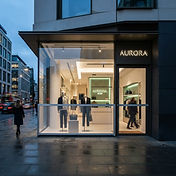
Retail Riots and the Death of Glass: Securing the Future Storefront
Flash-mob looting and civil disturbances have exposed plywood boarding as a symbolic gesture rather than a genuine security strategy. This op-ed argues that modern urban retail brands must invest in permanently engineered ballistic and smash-resistant glazing systems integrated into their architectural design.


Opinion
The Glass Ceiling of Corporate Privacy
Electrochromic glass systems integrated into corporate IoT networks offer architectural elegance and energy efficiency, but they also introduce a category of physical-cyber vulnerability that most enterprise security programs have yet to address: the remote, instantaneous erasure of visual privacy in executive conference spaces.


Opinion
The Ghost in the Server: How AI-Driven Tailgating Is Defeating Automated Turnstiles
Sophisticated bad actors have learned to treat optical turnstiles as a system to be gamed rather than a barrier to be overcome. Understanding the geometry of how machine-calculated tailgating works is the first step toward deploying defenses that can actually stop it.