
The Ultimate Guide to NFPA 601 Fire Watch Requirements in Austin
September 18, 2026· Brian Fitzgibbons
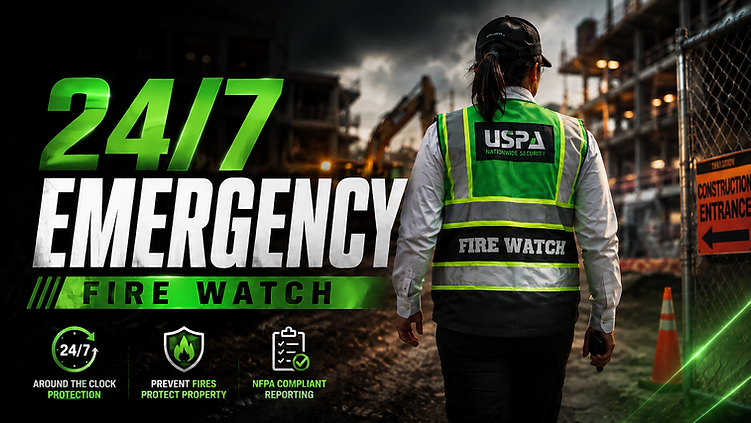
Fire safety systems are the primary defense against catastrophic loss in commercial and residential properties. When these systems, such as fire alarms, sprinkler systems, or water supply infrastructure, undergo maintenance, repair, or suffer from unexpected failures, the building becomes vulnerable. In Austin, Texas, property owners must navigate both national safety standards and specific local municipal requirements to remain compliant and ensure the safety of occupants. Failure to maintain adequate oversight during a system impairment can lead to legal liability, insurance complications, and severe risk to human life.
Establishing a professional fire watch is the standard industry response to these vulnerabilities. This process involves the deployment of trained personnel to monitor a facility for signs of fire, smoke, or other hazards while the automatic protection systems are inactive. By adhering to established guidelines, facility managers can effectively mitigate risks until their primary systems are fully restored to operational status.
I. Introduction: Overview of local fire risks and regulatory compliance
Austin has experienced significant urban growth, resulting in an increased density of high-rise commercial structures and mixed-use developments. With this expansion, the municipal fire authorities place a high priority on proactive risk management. Fire watch services serve as a temporary bridge to maintain safety when fixed fire protection systems are offline. Compliance is not merely a suggestion; it is a regulatory expectation that keeps buildings insurable and protected from potential liability. Property managers must recognize that the responsibility for life safety rests primarily on their shoulders, necessitating a clear understanding of the protocols required during system downtime.
II. Understanding NFPA 601 (Standard for Security Services in Fire Loss Prevention)
NFPA 601 provides the foundational framework for security personnel tasked with fire loss prevention. This standard dictates that security personnel must be adequately trained to identify and mitigate fire hazards in the absence of automated systems. The core mandate of NFPA 601 is to ensure that fire watch guards are not distracted by secondary duties. Their primary focus must remain on the surveillance of the premises to identify smoke or heat conditions. This includes understanding the layout of the facility, the location of manual pull stations, and the specific emergency notification procedures for the local fire department. Compliance with NFPA 601 implies that the service provider has implemented systematic training and operational procedures that prioritize fire prevention over standard security tasks.
III. Local Jurisdiction Rules
The Austin Fire Department maintains strict oversight regarding property safety during system outages. Compliance with local municipal codes is essential to avoid citations or the mandatory evacuation of a facility. Austin Fire Department requires a dedicated fire watch log to be kept on-site and submitted daily during system impairments. This requirement ensures that there is an auditable record of the surveillance activities performed by the fire watch personnel. Property managers must provide access to these logs upon request by fire marshals or local inspectors to demonstrate that the facility remained under continuous, active observation throughout the duration of the impairment. Failure to provide this documentation often results in the immediate issuance of stop-work orders or property closure.
IV. Duties of a Fire Watch Guard
A fire watch guard occupies a critical role during the window between a system failure and its restoration. Their duties must be methodical and documented to ensure complete coverage. Guards perform patrol rounds at set intervals throughout the property, ensuring that every floor and common area is inspected for fire hazards. Each patrol must be documented in a real-time log, which records the time, the location inspected, and the findings of the guard. Should a hazard be detected, the guard is required to provide immediate notification to the fire department and the property contact. The guard must remain on-site, maintaining their patrol routine without interruption, until the fire protection system is fully restored and the resumption of coverage has been accepted by the appropriate authorities.
V. Conclusion & Best Practices for Facility Managers
To ensure compliance and maximum safety, facility managers should develop a pre-planned fire watch policy that identifies the service provider, the specific areas of the building that require coverage, and the reporting chain for system impairments. Keeping a updated list of emergency contacts and ensuring that the guard has unrestricted access to all areas of the building are standard best practices. Documentation should be maintained in a secure, central location to facilitate easy review during inspections. By preparing for system outages before they occur, property managers can minimize downtime and maintain a safe environment for all occupants. USPA provides NFPA-compliant fire watch coverage in Austin, TX and nationwide.
Sources
- National Fire Protection Association (NFPA 601 Official Standard)
- Local Municipal Code for Austin, TX
- Occupational Safety and Health Administration (OSHA 29 CFR 1910 Compliance Directives)
Related Reading
Questions about fire watch, executive protection or guard coverage for your property? Request a quote or call our dispatch line.
More from the blog


Opinion
Retail Riots and the Death of Glass: Securing the Future Storefront
Flash-mob looting and civil disturbances have exposed plywood boarding as a symbolic gesture rather than a genuine security strategy. This op-ed argues that modern urban retail brands must invest in permanently engineered ballistic and smash-resistant glazing systems integrated into their architectural design.


Opinion
The Glass Ceiling of Corporate Privacy
Electrochromic glass systems integrated into corporate IoT networks offer architectural elegance and energy efficiency, but they also introduce a category of physical-cyber vulnerability that most enterprise security programs have yet to address: the remote, instantaneous erasure of visual privacy in executive conference spaces.


Opinion
The Ghost in the Server: How AI-Driven Tailgating Is Defeating Automated Turnstiles
Sophisticated bad actors have learned to treat optical turnstiles as a system to be gamed rather than a barrier to be overcome. Understanding the geometry of how machine-calculated tailgating works is the first step toward deploying defenses that can actually stop it.