
The Ultimate Guide to NFPA 601 Fire Watch Requirements in San Francisco
September 27, 2026· Brian Fitzgibbons
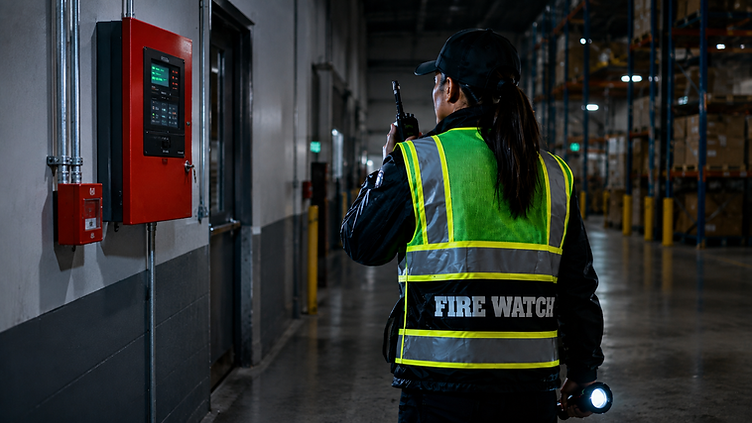
Managing fire safety in a high-density urban environment like San Francisco requires strict adherence to both national standards and local mandates. When fire protection systems fail or are taken out of service for maintenance, property owners and facility managers are legally obligated to implement compensatory measures to mitigate risk. Failure to maintain these standards not only endangers occupants but also exposes the building owner to significant legal and financial liabilities.
Navigating these requirements involves a clear understanding of the NFPA 601 standard and the specific directives issued by the San Francisco Fire Department. This guide provides a comprehensive overview of how facility managers should approach fire watch deployments to remain in compliance with local regulations and ensure the highest level of life safety oversight during periods of system impairment. ## I. Introduction: Overview of local fire risks and regulatory compliance. San Francisco presents unique fire safety challenges due to its historic architecture and high-rise developments. Fire loss prevention is not merely a matter of equipment maintenance but requires a human element when mechanical systems are unavailable. Regulatory compliance is mandatory, and the fire marshal expects documented evidence that a building with impaired fire protection systems is being monitored around the clock by qualified personnel. Establishing a robust protocol is essential for facility managers to maintain their certificate of occupancy and ensure that they are protected in the event of an emergency or a routine inspection. ## II. Understanding NFPA 601 (Standard for Security Services in Fire Loss Prevention) NFPA 601 provides the industry benchmark for security services dedicated to fire loss prevention. The primary purpose of this standard is to define the roles and responsibilities of security personnel tasked with guarding a property during a fire system outage. It emphasizes that fire watch guards must be trained to recognize fire hazards and initiate emergency procedures immediately upon detection. The standard dictates that security services must be integrated into the facility emergency management plan. This includes pre-incident planning, regular training for all personnel on site, and the formalization of communication channels between the security staff, the facility manager, and local emergency responders. Compliance with NFPA 601 ensures that the service provided is systematic, documented, and capable of addressing the specific risks associated with a fire protection system failure. ## III. Local Jurisdiction Rules SFFD Administrative Bulletin 2.04 outlines fire watch requirements for building impairment and high-rise public assemblies. This bulletin serves as the governing document for all fire watch activities within city limits. When a fire alarm, sprinkler system, or standpipe system is compromised, facility managers must follow the specific protocols dictated by this bulletin to maintain legal compliance. It outlines the circumstances under which a continuous fire watch is mandatory, the minimum qualifications for the personnel assigned to these duties, and the specific reporting requirements that must be submitted to the fire department. Adherence to these local rules is prioritized above general industry recommendations, as local inspectors verify compliance based on the language provided in this bulletin. ## IV. Duties of a Fire Watch Guard The effectiveness of a fire watch relies entirely on the diligence of the guards assigned to the post. A fire watch is not a passive task. Guards are required to conduct documented patrol rounds at set intervals throughout the entire premises. These patrols must cover all floors and areas where fire protection systems are currently impaired. Every patrol round must be recorded in a logbook in real time, noting the exact time of the check, the area inspected, and any observations regarding potential fire hazards. Should an incident occur or a hazard be identified, the guard must immediately notify the fire department and the designated property contact. The guard must remain on site and continue these rounds without interruption until the fire protection system has been fully restored and officially accepted by the responsible party. Documentation must be maintained in a secure location and made available for review by the fire marshal upon request. ## V. Conclusion & Best Practices for Facility Managers Effective fire watch management requires proactive planning. Facility managers should keep an up-to-date log of all system maintenance schedules and ensure that service contractors provide clear timelines for repairs to minimize the duration of system outages. In the event of an unplanned system failure, maintain a list of vetted, compliant security providers who can mobilize trained personnel on short notice. USPA Nationwide Security provides NFPA-compliant fire watch coverage in San Francisco, CA and nationwide. By prioritizing documentation and ensuring that security personnel are fully briefed on the building layout and emergency procedures, managers can significantly reduce their risk profile. ## Sources - National Fire Protection Association (NFPA 601 Official Standard) - Local Municipal Code for San Francisco, CA - Occupational Safety and Health Administration (OSHA 29 CFR 1910 Compliance Directives)
Related Reading
Questions about fire watch, executive protection or guard coverage for your property? Request a quote or call our dispatch line.
More from the blog


Opinion
Retail Riots and the Death of Glass: Securing the Future Storefront
Flash-mob looting and civil disturbances have exposed plywood boarding as a symbolic gesture rather than a genuine security strategy. This op-ed argues that modern urban retail brands must invest in permanently engineered ballistic and smash-resistant glazing systems integrated into their architectural design.


Opinion
The Glass Ceiling of Corporate Privacy
Electrochromic glass systems integrated into corporate IoT networks offer architectural elegance and energy efficiency, but they also introduce a category of physical-cyber vulnerability that most enterprise security programs have yet to address: the remote, instantaneous erasure of visual privacy in executive conference spaces.


Opinion
The Ghost in the Server: How AI-Driven Tailgating Is Defeating Automated Turnstiles
Sophisticated bad actors have learned to treat optical turnstiles as a system to be gamed rather than a barrier to be overcome. Understanding the geometry of how machine-calculated tailgating works is the first step toward deploying defenses that can actually stop it.