
Gulf Coast faces a low-30s freeze with almost no cold-weather protection in its buildings

By Albina Bieci, Staff Writer
Mobile, Pensacola and New Orleans are engineered for heat, hurricanes and humidity. A single night near freezing is enough to take commercial fire protection offline across all three.
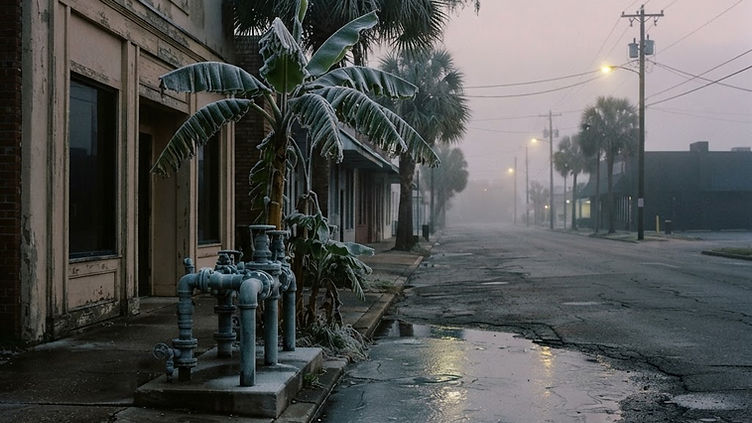
NEW ORLEANS
NEW ORLEANS — The Gulf Coast is forecast to fall toward the low 30s overnight from Friday, November 13 through Sunday, November 15, and no region in the country is less prepared for it. Buildings in Mobile, Pensacola and New Orleans are engineered for heat, humidity, storm surge and wind. Freeze protection is not part of the design vocabulary, and fire watch teams are being staged accordingly.
National Weather Service guidance calls for overnight lows in the 30s as far south as the Gulf Coast, with widespread frost and freeze conditions and daytime highs that may struggle out of the 50s. For a region where the design temperature for exposed water piping has effectively never been tested, a single night at 30 degrees is the event.
Why the Gulf Coast fails at a temperature the North shrugs at
A building in Chicago holds its fire protection inside conditioned space because the code has required it for generations. A building on the Gulf Coast holds it wherever it was convenient.
In practice that means fire riser assemblies and backflow preventers standing above grade beside the building, often in a cage or behind a screen wall, with no insulation and no heat. Domestic water lines run through ventilated crawlspaces, exterior wall cavities and attics designed to shed heat, not retain it. Commercial properties on pier-and-beam foundations or raised slabs — standard in flood-prone parts of New Orleans and along the coast — have their piping in open air below the first floor.
Those choices are correct for the climate they were made in. They also mean a hard freeze reaches the water directly, with nothing between the pipe and the air temperature, and the freeze happens faster than in a building where the loss of heat is an anomaly.
Three cities, three failure profiles
Mobile. The port, the industrial corridor along the river and the older commercial stock downtown and on the Beltline produce a mixed exposure. Warehouses and terminal buildings hold large wet-pipe systems in unheated storage, and small commercial buildings carry exterior risers and backflow assemblies that have no heat source at all.
Pensacola. The beach and downtown both matter. Barrier-island condominium and rental buildings hold wet systems in unheated parking levels, and downtown's older commercial buildings carry riser rooms in service corridors and vaults. A freeze that reaches the island also affects the mainland commercial strip along the interstate, where single-riser buildings serve multiple tenants.
New Orleans. The city presents the most complicated picture in the region. A dense stock of historic buildings on raised foundations, sprinkler systems retrofitted into structures never designed for them, and a commercial base whose water supply depends on a drainage and pumping system that is already the subject of intense scrutiny. Piping in the open air beneath a raised floor has no thermal protection at all, and a burst line in a building on piers can run unnoticed beneath the occupied floor.
What officers are being posted to cover
The assignments share a single characteristic: a water-based fire protection system exposed to outside air, in a building that will not be staffed overnight.
Exposed riser and backflow assemblies. Unheated riser rooms, pump rooms and storage areas. Parking levels under beach and downtown buildings. Warehouses and terminal space. Vacant commercial property, of which all three cities carry a substantial inventory. Multifamily complexes with exterior utility closets. Construction and renovation sites where suppression is installed but the building is not yet enclosed or heated.
Rounds are written to each building: riser room and exposed assembly temperature, gauge readings, the department connection, the areas behind any tagged valve, and the state of the heating equipment where it exists. Where a system has already failed, the fire-found procedure is agreed in writing with the property before the first shift — including who calls 911, who meets the fire department, and how a raised building with a single stair is evacuated.
Coverage is described at fire watch services in Mobile, Pensacola and New Orleans. Properties that lose protection overnight can be staged through the emergency fire watch line.
The impairment requirement in a region that rarely uses it
Louisiana, Alabama and Florida each enforce an adopted fire code through a state fire marshal and through local fire departments. The impairment provision is identical to the rest of the country: when a required fire protection system is out of service, the owner notifies the authority having jurisdiction and maintains an approved fire watch until protection is restored.
NFPA 25 supplies the procedure — notification, tagging, interim protection, restoration test. What differs on the Gulf Coast is familiarity. A property manager in New Orleans may go an entire career without invoking the impairment provision, and the first time it happens is likely to be on a Saturday night in a building with a burst riser, a full tenant roster and no contractor available until Monday.
That is the case for pre-arranging coverage rather than sourcing it during the event. The alternative is a building with no fire protection, tenants in place, and a fire department that has not yet been notified.
Before Friday, in a market that has no playbook
Heat-trace or insulate every exposed riser and backflow assembly, and photograph it. Identify which piping in the building is actually outdoors and count it — most owners underestimate this. Drain dry systems and low-point drains. Confirm that pump rooms and riser closets have working heat, where heat exists at all. Verify that supervisory signals reach a person overnight. Confirm shut-off locations, including those in crawlspaces and below raised floors. Put a sprinkler contractor and a restoration vendor on notice before the first night.
And decide who is in the building if the system goes out. On the Gulf Coast this weekend, the answer for most commercial property is nobody — which is precisely the condition that turns a two-night freeze into a week-long outage.
Drainage, pumping and the complication beneath the street
New Orleans adds a layer to this event that no other city in the corridor has: a water table that sits close to the surface, a drainage system that depends on pumping, and a building stock raised on piers and slabs to survive floods.
When a hard freeze reaches the city, three things happen at once. Exposed piping beneath raised floors freezes. Domestic and fire protection lines in unheated attics and service corridors freeze. And the drainage system, which is normally moving groundwater, is asked to handle burst-line water in volume while its own equipment is operating in freezing conditions.
A burst riser in a raised building can run beneath the occupied floor for hours before anyone notices, because the water is going where water normally goes: down and out. By the time it surfaces, the damage is in the structure rather than the ceiling.
For a fire watch, that means the round includes the space beneath the building where it is accessible, and the fire-found procedure accounts for a single stair and a raised first floor.
Short-term rentals and the buildings nobody manages
Mobile, Pensacola and New Orleans all carry a large inventory of short-term rental units and small condominium buildings managed by an owner or a booking platform rather than a property manager.
Those buildings are the hardest to prepare and the hardest to cover. There is no maintenance staff, no overnight presence and often no one within several states. A freeze failure in one of them is discovered by a guest, a cleaner or the next arrival.
The most effective measure before Friday is unglamorous: confirm that every such building has a working heat source, drain what can be drained, and arrange for someone to physically check the property during the freeze rather than relying on a notification to an out-of-state owner.
What restoration looks like on the Gulf Coast
After a northern freeze, restoration is a familiar sequence: repair, recharge, test, notify the fire department, restore. On the Gulf Coast, the same sequence runs into a supply chain that does not stock for freeze damage.
Contractors in these markets do not carry the volume of pipe, fittings and valves that a cold-weather city holds, because the demand has never existed. Parts are ordered from out of state. Crews arrive from out of state. The interval between a failure on Saturday night and a restored system stretches accordingly, and the fire watch covers that interval rather than the repair itself.
Properties that arrange coverage before the event get officers at ordinary rates and a documented file. Properties that call after the burst get whatever remains in the metro after every other building with the same failure has called first.
The one question worth answering this week
For every building on the Gulf Coast, the question is the same: if the fire protection system goes out on Friday night, who is inside the building before the contractor arrives?
In a region where the answer has historically been nobody — because the event itself was historic — that gap is now the whole risk.
Services in New Orleans, LA
Sources
About the reporter
Staff Writer
Staff writer for the USPA Nationwide Security newsroom. Receives newsroom tips, corrections and editorial inquiries.
Author biography and credentialsMore from The Watchline

Fire Protection
Memphis, Little Rock and Charlotte: the cold-snap buildings most likely to lose fire protection this weekend
Distribution space, vacant storefronts and 1980s multifamily share one trait across the Mid-South: nobody is inside at 2 a.m. when the fitting splits.
· Albina Bieci

Fire Protection
Nashville and Knoxville head into near-freezing nights with unheated attic lines and full parking decks
Tennessee's multifamily boom put a decade of sprinkler piping into attics and garages designed for a mild winter. Two cold nights is what it takes to find out which ones hold.
· Albina Bieci

Fire Protection
Birmingham and Huntsville brace for sub-freezing nights, and Alabama's exposed risers are the reason
The state's commercial stock was built for heat. Two nights in the 20s puts exterior riser rooms, backflow preventers and unheated warehouses at the top of the risk list.
· Albina Bieci