
Nashville and Knoxville head into near-freezing nights with unheated attic lines and full parking decks

By Albina Bieci, Staff Writer
Tennessee's multifamily boom put a decade of sprinkler piping into attics and garages designed for a mild winter. Two cold nights is what it takes to find out which ones hold.
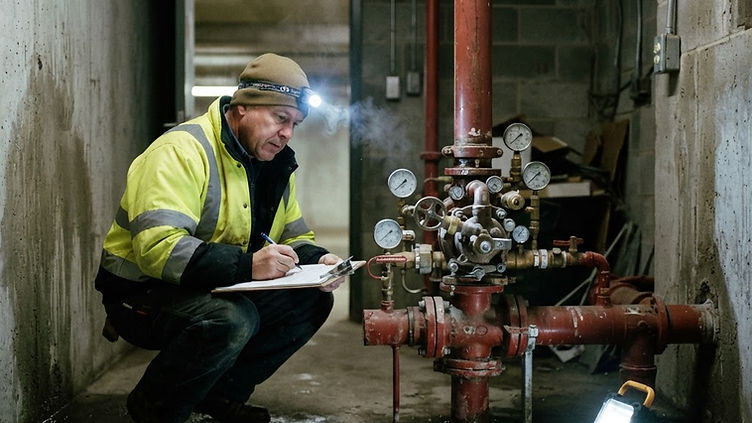
NASHVILLE, Tenn.
NASHVILLE, Tenn. — Tennessee is forecast to spend the weekend of November 13 to 15 near or below freezing overnight, and the state's two largest metros approach that forecast from opposite directions: Nashville with a decade of new construction full of sprinkler piping in unheated attics and parking structures, Knoxville with a much older commercial stock whose riser rooms were never designed for a hard freeze.
National Weather Service guidance places both metros in the band facing a risk of near- or sub-freezing overnight temperatures, with lows forecast into the upper 20s and low 30s and daytime highs struggling out of the 50s. That is cold enough to end the growing season and, more consequentially for property owners, cold enough to break water-based fire protection systems that have never been tested at those temperatures.
Nashville: new buildings, unheated spaces
Nashville's growth has been vertical and fast. Thousands of five-over-one apartment buildings, mid-rise hotels and mixed-use blocks went up in a short window, and each of them carries wet-pipe sprinkler protection through portions of the structure that are not conditioned: attic volumes above the top residential floor, stair pressurization shafts, trash and service rooms, and parking levels at grade.
A five-over-one is a wood-frame building over a podium, and the sprinkler piping for the residential floors normally runs through the attic or the concealed space above the top ceiling. The building code permits that where the piping is protected from freezing — which in practice means insulation and, often, the assumption that the attic stays above 32 degrees.
That assumption is tested when the outside temperature falls into the 20s for six or eight hours with wind. The attic does not reach ambient temperature, but it can get close enough for water sitting still in a branch line to freeze, split a fitting and release the system's pressure. Once that happens, the building's protection is out of service across the zones behind the riser, and the water damage starts on the top floor and works down.
Downtown and Midtown add a second profile: older commercial buildings converted to hospitality use, with riser assemblies in service corridors and vaults that predate the current code.
Knoxville: older bricks, older risers
Knoxville's exposure is concentrated in buildings that have been standing for fifty years or more. Downtown, the University of Tennessee edge, the older commercial corridors along Kingston Pike and the industrial properties near the river all carry sprinkler systems and standpipes installed under code cycles that assumed a milder design condition.
Those systems are not defective. They were built correctly for the climate record of the time. What has changed is the frequency of the event: a two-night freeze in the 20s is unusual enough in East Tennessee that a property can operate for decades without ever exercising the freeze protection its system was supposed to have.
The parts that fail are unglamorous. A backflow preventer on the outside wall. An unheated pump room. A dry-pipe valve on a dock canopy or a cold storage area whose drum drip has not been drained since it was installed. A fire department connection with a broken cap that let water in.
What the watch covers in both metros
Deployment across the state prioritizes buildings where a failure produces both a flood and an outage, and where nobody is present to notice either.
That means dry-pipe systems serving garages and unheated storage. Attic lines in wood-frame multifamily. Exterior riser rooms on retail and small commercial buildings. Vacant or single-shift warehouse space. Hotels with a seasonal dip in occupancy. Construction sites where suppression is installed ahead of a working heating plant.
Officers check riser-room and garage temperature, gauge readings, the department connection and the status of any tagged system, and log the results on a fixed interval through the overnight hours — the window in which a freeze event actually breaks a pipe. Where a system has already failed, the fire-found procedure is agreed in writing with the property before the first shift, naming who calls 911 and who meets the fire department.
Coverage is described at fire watch services in Nashville and fire watch services in Knoxville, with same-day staging available through the emergency fire watch line.
The rule that turns a broken pipe into a posted officer
Tennessee adopts its fire code through the State Fire Marshal's Office in the Department of Commerce and Insurance, with local fire departments enforcing it in their jurisdictions. In every adopted edition, the same sentence governs: where a required fire protection system is out of service, the owner must notify the authority having jurisdiction and provide an approved fire watch until the system is restored.
NFPA 25 supplies the procedure that makes the watch defensible: notification, tagging, interim protection, and a restoration test before the system goes back into service. Officers on post without notification are covering a building the fire department believes is protected. A system returned to service without a test is a system that may fail again on the next cold night.
The week-of checklist
Drain drum drips and low points on every dry system and record it. Confirm that attic and garage heat, where it exists, is operating and monitored. Check exterior riser closets and backflow assemblies, and wrap or heat-trace what is exposed. Verify that low-temperature supervisory signals reach a person who answers the phone overnight. Confirm shut-off locations with the staff who will be on call Saturday. Line up a sprinkler contractor and a restoration vendor before the regional queue forms.
And decide, before Friday, who is in the building if a system fails on Saturday night. In a metro where the past decade of construction was designed around summer load, that question has rarely been asked.
What a 2 a.m. round actually checks
The difference between a fire watch and a security guard walking past a building is the round sheet. On a freeze assignment, it names specific conditions in a specific order.
Exterior riser closet temperature, taken with a handheld reading rather than assumed. Gauge pressures on any system still charged, compared against the previous round rather than read in isolation. The department connection — clear, capped, unobstructed by the pallets or dumpster that appeared since the last visit. The attic access on the top floor, checked for water staining, the sound of running pipe or a pressure drop on an adjacent gauge. The status of any tagged valve, so the log shows what was out of service and when.
In a parking structure, the round adds the dry-pipe valve room, the drum drip assembly and the garage's low-point drains. In an occupied multifamily building, it adds the corridors and stairwells the residents will use, and the fire-found procedure posted where the officer enters.
The log is time-stamped and signed. That is the entire product of the assignment, and it is what makes the coverage defensible afterward.
Hotels, hospitals and the buildings that cannot empty
Nashville's hotel inventory and its hospital campuses present a condition the rest of the market does not: buildings that cannot be evacuated or closed while a system is repaired.
A hotel with an impaired riser keeps selling rooms, which means the watch has to work around guests, housekeeping carts and a front desk that is not going to brief arrivals. Officers are briefed on kitchen suppression, elevator recall, the alarm panel status and the assembly areas, and the fire-found procedure is coordinated with the property's own emergency plan rather than written in isolation.
Hospitals add oxygen storage, medical gas shut-offs and non-ambulatory evacuation. In those buildings, the impairment procedure is coordinated with the facility's safety officer, and the documentation is formatted to survive a survey review rather than just a carrier's inquiry.
The restoration test that ends the assignment
A fire watch should end with a document, not a phone call. The system is repaired, recharged and tested, and the affected zones are confirmed to hold pressure with the alarm and supervisory circuits reporting correctly. The fire department is notified that protection has been restored. Only then does the watch stand down.
Where a property skips that step — where the contractor recharges the system on Friday and the watch is cancelled by text message — the building goes into the next cold night with a repair nobody verified. In a market that is forecast to see two freezing nights in a row, the second night is exactly when an untested repair announces itself.
Planning for a market that rarely does this
Tennessee's advantage this week is time. The forecast has been public since the beginning of the week, which means a property can drain its dry systems, check its heat, confirm its alarm reporting and pre-arrange coverage before the first night rather than during it.
The properties that use that time well tend to have a short list: who checks the riser closets on Friday, who is reachable on Saturday, who calls the fire department, and who is in the building if the system goes out. Four names on a page, decided before the freeze instead of after.
Services in Nashville, TN
Sources
About the reporter
Staff Writer
Staff writer for the USPA Nationwide Security newsroom. Receives newsroom tips, corrections and editorial inquiries.
Author biography and credentialsMore from The Watchline


Fire Protection
Gulf Coast faces a low-30s freeze with almost no cold-weather protection in its buildings
Mobile, Pensacola and New Orleans are engineered for heat, hurricanes and humidity. A single night near freezing is enough to take commercial fire protection offline across all three.
· Albina Bieci

Fire Protection
Memphis, Little Rock and Charlotte: the cold-snap buildings most likely to lose fire protection this weekend
Distribution space, vacant storefronts and 1980s multifamily share one trait across the Mid-South: nobody is inside at 2 a.m. when the fitting splits.
· Albina Bieci

Fire Protection
Birmingham and Huntsville brace for sub-freezing nights, and Alabama's exposed risers are the reason
The state's commercial stock was built for heat. Two nights in the 20s puts exterior riser rooms, backflow preventers and unheated warehouses at the top of the risk list.
· Albina Bieci
