
Jamaica
Disaster Response & Recovery Security in Jamaica
USPA Nationwide Security staffs disaster response & recovery security across Jamaica with licensed personnel, 24-hour dispatch and same-day start for urgent assignments.
- 21+ Years in Business
- A+ Rated
- Veteran Owned and Operated
- Licensed and Insured
- 24/7 Dispatch
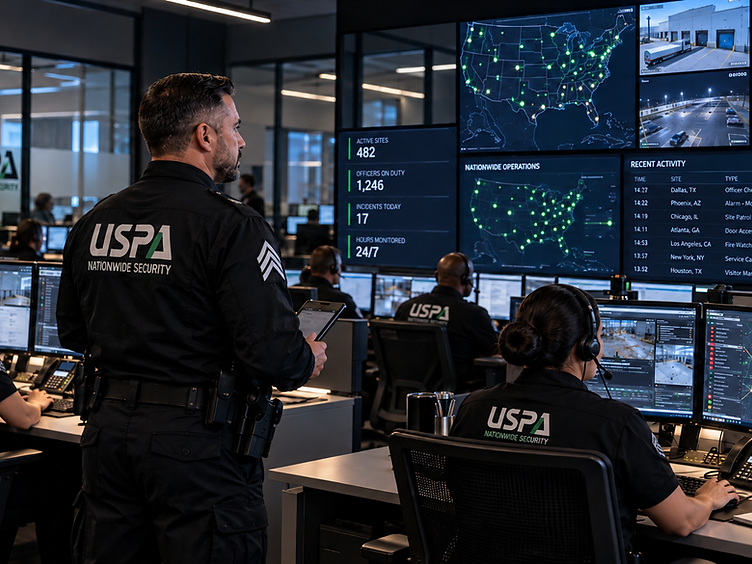
How disaster response & recovery security works in Jamaica
Assignments are planned from the site's specifics and documented end to end: a written scope agreed before the first shift, licensed officers briefed on the site's own rules, coverage on the agreed schedule and incident reporting the client can hand to an insurer or authority having jurisdiction.
Personnel are licensed where the work is performed, supervised in the field on a published audit cadence, and backed by a dispatch center that monitors every assignment around the clock.
Post orders are written for the specific assignment and reviewed with the client before the first shift: what the officer may and may not do, the escalation path, the documentation the client expects and the exceptions the site has agreed to. A post that starts without written orders starts without a standard, and the quote is held back until the orders are right.
Incident reporting is written the same day: what was observed, who responded, at what time, what changed and what follow-up is recommended. The reports use the client's own vocabulary where the account has one, so a shift supervisor, a risk manager or an insurer can act on the record without a translation call.
Officers are briefed before every first shift on the site's own rules, the access points, the people they will deal with and the escalation path, and relief staffing is planned so a long assignment does not thin out after the first week.
Supervision is part of every assignment. A field supervisor audits posts on a published cadence, checks the log against the rounds actually walked, and reviews the officer's appearance, credentials and conduct, and the audit findings reach the client with the same reporting as incidents.
The same organization stands behind every assignment: the dispatch center that monitors posts around the clock, the field supervisors who audit them, and the account team that writes the scope. A client with one officer at one gate and a client with a multi-post program receive the same structure around their coverage.
The personnel on these assignments are chosen for the work rather than assigned by availability: officers with the background the scope calls for, briefed on the site, held to the post orders, and reviewed by a supervisor who audits in person rather than by phone.
Coverage is available where the assignment needs it. Personnel travel to the site, licenses are confirmed for the jurisdiction before the first shift, and assignments outside the home market are planned the same way: scope first, roster second, documentation with both.
Clients keep an account long term because the record is consistent from the first shift to the last: the same reporting format, the same supervision cadence and the same account team, so comparing one month against another measures the site's risk rather than the vendor's consistency.
The first step is a scope conversation and, where the assignment warrants it, a site walk: what the coverage protects, the hours, the access points, the reporting the client needs and the escalation path when something happens. The written plan follows from that conversation, and the quote is itemized against it.
Coverage scales with the assignment: a single officer for a fixed post, a multi-officer team on rotating shifts for longer engagements, and mobile or supervisor layers where the scope calls for them. The standard stays the same as the size changes, because the written post orders carry it.
Quoting is per assignment and itemized, with licensing and insurance certificates issued alongside the written scope, so the client can file the whole package with procurement, an insurer or a reviewing authority without a follow-up request.
The market in Jamaica
Demand for this coverage in Jamaica follows the pattern every market shares: short-notice requirements, insurance-driven documentation and clients who need the assignment staffed correctly the first time. Most engagements begin with a specific event, an audit or a gap in the previous arrangement.
Clients in Jamaica range from property and facility managers to corporate security departments and private individuals, and the deciding factor is usually the same: whether the provider can put licensed, briefed personnel on the assignment and produce the documentation the client's own reviewers expect.
Assignments in this market draw on standing rosters rather than one-off hires, so the personnel who arrive are working professionals accustomed to log discipline, radio procedure and written reporting.
Pricing is quoted per assignment and itemized so the client can see what each part of the scope costs, and long-running engagements are quoted on a schedule so the rate holds across the calendar.
Assignments also follow the calendar: seasonal peaks, project phases and audit windows change what a site needs, and coverage is adjusted through the same dispatch desk rather than renegotiated, so the scope moves with the operation instead of against it.
The vendor decision usually turns on two questions: whether the assignment can start on the date the client needs, and whether the documentation will hold up under review by an insurer, an auditor or a corporate security department. The written scope and the daily record answer both.
Regulated and audited operations in Jamaica, including facilities that answer to insurers or corporate parent companies, use the same written program as any USPA account: the scope, the post orders, the roster and the reporting format are documented together, so the file an auditor asks for already exists.
Referrals and renewals drive most of the repeat business in Jamaica, which keeps the incentive aligned with the client: coverage that starts on time, reports that arrive without being chased, and the same lead personnel whenever the assignment returns.
Who enforces this in Jamaica
Coverage in Jamaica operates under the same layers of requirement as any USPA assignment: state licensing governs who may work and under what conditions, local police are the escalation path for incidents that cross criminal lines, and the client's own policies and insurer's conditions bind the post. USPA writes the scope against all of those layers and briefs every officer before the first shift.
- Property and equipment protectionOvernight coverage for buildings, yards and staged materials until repairs and claims are complete.
- Access control during recoveryVerified entry for contractors, utility crews, adjusters and owners, with a written log.
- Rapid regional deploymentPersonnel mobilized from surrounding markets when local coverage is unavailable or exhausted.
- Contractor and load verificationChecking inbound deliveries and preventing removal of equipment and materials from the site.
Coverage and response in Jamaica
Dispatch for Jamaica answers 24 hours a day, and assignments are commonly staged within days, with emergency coverage available same day where the roster allows.
Every assignment runs to its written scope: coverage on the agreed schedule, incident reporting the same day and supervisor audits on a published cadence, so the standard the quote promised is the standard someone verifies.
Rush requests route through the same dispatch desk as routine ones. Coverage is staffed from the standing roster in this market, and the written scope and post orders are completed the same day, so a fast start never means an informal one.
Multi-site and recurring engagements run from one account: one contract, one dispatch line and one reporting format, with the post orders reviewed on a standing cadence so the coverage stays anchored to what the site actually needs.
Where the assignment is urgent, the dispatch desk confirms what can be staged immediately, puts the first officers on site and completes the written scope the same day, so the client is never choosing between speed and documentation.
Assignments are closed out the way they started: the final report summarizes the coverage period, the incidents and the recommendations, and any standing post the client wants to retain moves onto a schedule with the same lead personnel.
Quotes are answered by the operations team that staffs the assignment rather than a sales layer, so the scope in the quote is the scope the officers work from, and questions during the engagement go to the people who wrote the plan.
Rated 4.9 by the clients we protect
Reviews are collected from real assignments across the country. Read them directly on Google before you call.
I have their pricing to be very affordable and competitive. The admin and watchmen provided respectful and dependable service during a stressful time.
William BeesleyGoogle reviewVerify This Review
Questions before you commit? Call (800) 214-1448 and ask for references on assignments like yours.
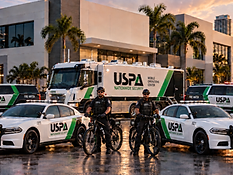
USPA personnel working assignments in Jamaica


Disaster Response & Recovery Security in Jamaica: common questions
- How quickly can coverage start in Jamaica?
- Assignments are commonly staged within days of the request, and emergency coverage is available same day where the roster allows. The written scope and licensing documentation are issued with the quote, so the start is documented from the first shift. Request a quote with the assignment details.
- How much does this service cost in Jamaica?
- Pricing is quoted per assignment and itemized: personnel, hours, supervision, mobile coverage and any specialized equipment the scope requires. Licensing and insurance certificates are issued with the quote, and long-running engagements are quoted on a schedule so the rate holds across the calendar.
- What documentation do we receive?
- A written scope before the first shift, daily logs and incident reports written the same day, and supervisor audit findings on the published cadence, compiled in a format the client's risk manager, insurer or authority having jurisdiction can read without a follow-up request.
- Are the officers licensed and insured?
- Yes. Officers are licensed in the state where the work is performed and covered by the company's liability insurance, with certificates issued alongside the quote and maintained for the life of the account.
- Can coverage scale up or down during the assignment?
- Yes. Coverage is built from written post orders, so a post can be added, extended or reduced through the same dispatch desk without the standard slipping. Long engagements are staffed on rotating shifts so personnel stay sharp for the length of the assignment.
- Can one provider cover several locations?
- Yes. Multi-site clients run one account: one contract, one dispatch line and one reporting format across every location, with the same supervision standard from site to site and one account team the client can hold accountable.
- Do you handle urgent, same-day requests in Jamaica?
- Yes. Rush requests route through 24-hour dispatch and are staffed from the standing roster in this market, with the first officers on site as soon as the roster allows and the written scope completed the same day, so a fast start never means an undocumented one.
- Can the post orders change after coverage starts?
- Yes. Post orders are reviewed on a standing cadence with the client and amended where the site or the risk has changed. An amendment is issued in writing through the same dispatch desk, so the coverage follows the operation rather than drifting from it.
- Do you work alongside the client's own security staff?
- Yes. USPA personnel integrate with the client's existing security team, follow the reporting lines the program already has where they exist, and layer in surge or specialized coverage without displacing the staff already in place.
- How is the scope confirmed before coverage starts?
- In writing: the assignment's hours, posts, duties, escalation path and reporting format are agreed with the client before the first shift, and the quote is itemized against that scope. Changes after the start are issued as written amendments through the same dispatch desk.
- What happens if an officer cannot make a shift?
- Relief staffing is planned for every engagement, so an absence is covered by a briefed substitute rather than a gap. The dispatch center monitors attendance around the clock, and the client is notified before the shift starts if the roster changes.
Need coverage in Jamaica?
Dispatch and quoting for Jamaica are answered 24 hours a day. The written scope, licensing and insurance certificates are issued with the quote.
Requested alongside this service

Fire Watch Services
Twenty-four hour fire watch coverage while a sprinkler, alarm or suppression system is impaired, with a written log your fire marshal or insurer can review.
Service Details
Security Guard Services
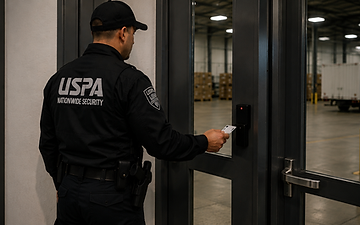
Licensed armed and unarmed officers for commercial buildings, warehouses, construction sites and industrial plants, briefed on written post orders.
Service Details
Logistics & Distribution Security
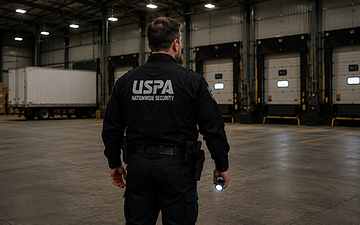
Dock, yard and trailer security for distribution centers and warehouses, covering cargo theft, driver verification and yard control.
Service DetailsUSPA Nationwide Security services are provided, as applicable, by USPA employees, independently owned franchise offices, or certified contractors participating in USPA’s contractor programs established in 2005, with services performed under applicable state and local licensing requirements. USPA is managed by Kingsman Philanthropic Corp., a nonprofit organization whose mission since 2005 has included locating and assisting missing and trafficked girls. Kingsman’s work has been featured on Crime Stories with Nancy Grace.