
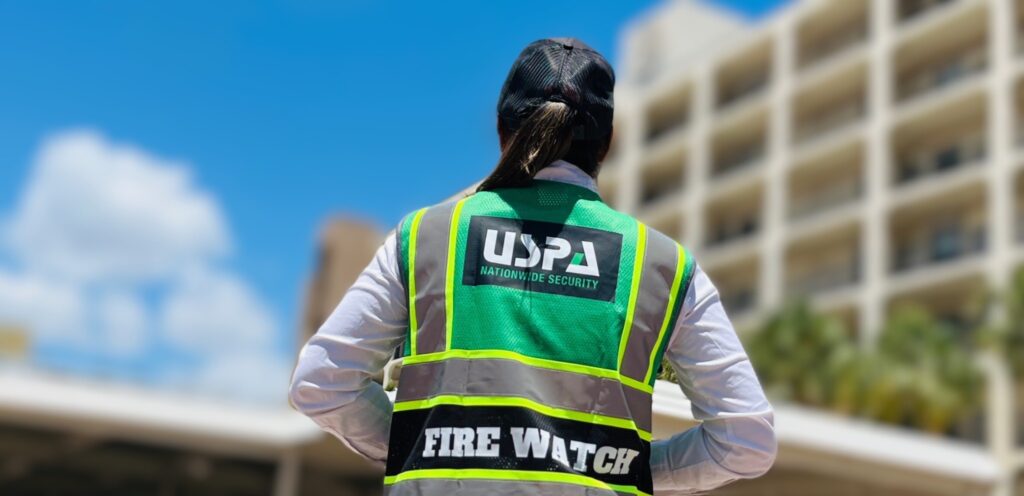
Top Rated Fire Watch in Glendora, CA. (Open Now)
24/7 Dispatch: (800) 214-1448
Online Estimates: Over 500,000 hours of Fire Watch services delivered annually.
Top Rated: 4.9 Google Rating, Managed by Military Veterans and ex-Navy SEALs.
Open 24-hours: Immediate deployment of Fire Watch Guards.
Fire Experts: Compliant with NFPA 51B and OSHA standards.
Decades in Business: Leading providers of Fire Watch services for over two decades.
Highly Reviewed: A+ Rated Fire Watch Service near Glendora
USPA Nationwide Security provides expert fire watch services in Glendora, prioritizing the safety of properties and individuals. Our extensively trained team is prepared to manage all fire-related emergencies, offering uninterrupted monitoring and rapid assistance.
Need Fire Watch Services Immediately? Here’s Why We Stand Out:
Top-Rated Expertise: A+ Rated by the Chamber of Commerce, reflecting our longstanding commitment to excellence.
Decades of Proven Experience: Thriving in our third decade of business, we bring a wealth of knowledge and reliability.
Exceptional Reputation: Consistently high 4.9 rating on Google over the past decades, showcasing customer satisfaction and trust.
Industry-Leading Authority: Our Director of Fire Watch, Brian Fitzgibbons, is not only a celebrated keynote speaker but also a published author in fire prevention.
Always Ready: We offer 24/7 availability for immediate assistance, ensuring rapid response when you need it most.
Officially Recognized: Fully approved by Fire Marshals for meeting critical safety standards.
Strict Adherence to Safety Standards: We are fully compliant with all NFPA (National Fire Protection Association) regulations, guaranteeing the highest level of fire safety and prevention.
Led by Fire Safety Experts: Fire Watch Managed by Keynote Speaker and Trainer, Brian Fitzgibbons

Director of Fire Watch and Security
Brian Fitzgibbons oversees our fire watch contracts in the Glendora region.
Office: (800) 214-1448
– Fire Watch for Construction Sites in Glendora
– Oversight of Faulty Fire Suppression Systems
– Fire Safety during Hot Work and Welding Operations
– Scheduled Maintenance for Fire Systems
– Fire Surveillance for Residential and Commercial Properties

 Christopher LeeApril 24, 2023
Trustindex verifies that the original source of the review is Google.
Absolute pleasure to work with this group of professionals. Anyone looking for protective or security services would do well to hire USPA or their contractors. Jason CantieApril 20, 2023USPA Nationwide Security Was there for us at a desparate time! Their service was fast and professional! I Highly recommend them!
 Kerry RodierMarch 30, 2023Mike Evans and USPA there are very little words that would convey my gratitude to you and your company in the search for my son Séamus. Without your selflessness and compassion I would not have been able to get through this tragic time. You have brought me less heartache by giving me the knowledge that this was just a tragic accident as opposed to some other sinister act. I breathed easier knowing I had you and your company by my side tirelessly looking for Séamus. Your professionalism is unparalleled and you will always have my undying gratitude. Sincerely, Kerry Rodier Gray
 Allison KiddFebruary 21, 2023This company embodies integrity and hard work.
 Kendall EdwardsFebruary 21, 2023These guys are amazing! They are true professionals, they also spend their free time rescuing missing children. You can’t beat an organization like this.
 Monika KamardinovJanuary 17, 2023I was invited to a party last week where USPA Security guys were our bodyboards. They were very professional and made sure that we all felt safe during our gathering. I would definitely hire them for my events!
 Jurate LuckaiteJanuary 17, 2023I hired USPA Security company and I could not be any happier. Not only I received the most professional bodyguard team led by Navy Seals and Army Rangers, but I also received close protection for me and my girlfriends. The team is super professional. They actually care and go above and beyond to make sure you feel safe and protected. I was provided with VIP Aircraft and limo services to and from the airport. I received the VIP treatment in every step. I highly recommend USPA Nationwide Security team because they respect their client and their service is exceptional. It is an honor and pleasure to work with the team.
 Malan Best SecurityDecember 9, 2022Our company has been fortunate enough to work with USPA extensively over the last year and we cannot voice our appreciation enough. USPA has kept us steadily busy with work and we look forward to working with them for a very long time. Each representative of USPA we’ve been in contact with thus far has been a pleasure to work with and lastly, knowing that some of their profits are donated to some great causes is an incentive to continue working closely with this company. Thank you guys again. MBS TEAM
 Strong SecurityDecember 9, 2022I AM A PROUD CONTRACTOR WITH THIS ORGANIZATION AND ALL I CAN SAY IS I WILL BE HELPING THEM GET TO THE HIGHEST HEIGHTS POSSIBLE!!! President Manning of USPA has to be one the most honest and genuine men I've met in this industry!!! Marc E Singletary, MBA (DBA 2024)
 Nick POctober 10, 2022I have been using USPA as my security contractor for a few years now and their service is exceptional. Dan and Brian are extremely attentive and always able to help with our last-minute projects that fall outside of our main service contract. They provide exceptional oversight, and their communication could not be better. I would fully endorse USPA for any project, whether it be short or long term. This company has excellent values and always adheres to them. You will not be disappointed.
USPA Nationwide Security Expands Fire Watch Services to Glendora, California
USPA Nationwide Security is proud to extend its premium fire watch services to Glendora, California. Our mission is to protect lives and property by meeting the increasing demand for comprehensive fire prevention solutions in this vibrant city. Serving construction projects and industrial facilities, our highly trained fireguards provide timely response and effective risk mitigation. Utilizing advanced technology and offering round-the-clock monitoring, we ensure the safety and security of your premises in Glendora.
Ensuring NFPA 51B Compliance in Glendora, California
In Glendora, California, USPA Nationwide Security guarantees strict adherence to NFPA 51B Standards through our comprehensive fire watch services. Our highly trained team meticulously monitors properties to mitigate fire hazards, providing businesses and residents peace of mind. With a steadfast dedication to safety and adherence to regulations, USPA Nationwide Security ensures the protection of your community with unparalleled expertise and commitment. Trust USPA for reliable fire watch services tailored to meet the highest industry standards in Glendora.
Securing OSHA Compliance: Fire Watch Service in Glendora
In Glendora, California, USPA Nationwide Security offers specialized fire watch services that align with Occupational Safety and Health Administration (OSHA) standards. Our expert team conducts thorough property surveillance, swiftly identifying and mitigating fire hazards to protect businesses and residents. By adhering to OSHA regulations, USPA ensures comprehensive compliance with safety protocols, offering clients peace of mind. Trust USPA for reliable fire watch services, ensuring safety and adherence to OSHA guidelines throughout the Glendora community.

Ensuring Safety on Glendora’s Construction Sites
24/7 Dispatch: (800) 214-1448
Ensuring safety on Glendora’s construction sites is essential, and fire watch services are crucial in achieving this objective. USPA Nationwide Security provides specialized fire watch services in Glendora, adhering to stringent safety standards and offering vigilant monitoring to promptly identify and mitigate fire hazards. With a team of highly trained professionals, USPA is committed to safeguarding construction sites, protecting both workers and properties, and ensuring compliance with all relevant safety regulations. Trust USPA to maintain a secure environment on Glendora’s construction sites.
Helpful Information about Fire Watch in Glendora, California
An In-Depth Comparative Analysis: California Fire Codes vs. International Standards
California’s fire codes, primarily found in the California Fire Code (CFC), are comprehensive regulations designed to enhance fire safety across the state. These codes encompass various aspects, including building construction, fire protection systems, hazardous materials, and operational safety measures.
Key Components of the California Fire Code:
1. Fire Apparatus Access Roads (Chapter 5): Mandates specific dimensions, load capacities, and clearances to ensure fire trucks can access properties efficiently.
2. Automatic Fire Detection and Alarm Systems (Chapter 9): Requires installation and maintenance of fire alarms in residential, commercial, and industrial buildings according to NFPA standards.
3. Fire Protection Systems (Chapter 9): Includes detailed regulations for the installation, inspection, and maintenance of sprinkler systems, standpipes, and fire pumps.
4. Hazardous Materials Management (Chapter 50): Sets guidelines for the storage, handling, and use of hazardous materials to prevent fire-related incidents.
Comparison with International Standards
The International Fire Code (IFC), published by the International Code Council (ICC), serves as a model code adopted globally. It shares many similarities with the California Fire Code but also has distinctions in certain areas.
Similarities:
Fire Protection Systems: Both codes emphasize the importance of automatic fire detection and suppression systems, requiring adherence to NFPA standards.
Emergency Planning: Both CFC and IFC mandate comprehensive emergency plans, including evacuation routes, fire drills, and emergency communication systems.
Hazardous Materials: Both codes provide detailed guidelines for the safe management of hazardous materials, aiming to reduce the risk of fire incidents.
Differences:
Regional Adaptations: California’s fire codes include additional provisions tailored to the state’s unique climate and geography, such as wildfire prevention measures not as emphasized in the IFC.
Environmental Considerations: California’s regulations often incorporate stricter environmental protection standards, reflecting the state’s focus on sustainability and ecological impact.
Seismic Safety: Due to its seismic activity, California’s fire codes include specific requirements for fire protection systems in seismic zones, ensuring they remain operational after an earthquake.
Impact on Fire Watch Services
California Fire Code Requirements:
1. Fire Watch During System Impairments: The CFC mandates fire watch services whenever fire protection systems are out of service, ensuring continuous monitoring and safety.
2. Training and Certification: Fire watch personnel in California must undergo specialized training and obtain certifications to comply with state regulations, ensuring they are prepared to handle fire emergencies effectively.
International Standards Requirements:
1. General Fire Watch Duties: The IFC outlines general duties for fire watch personnel, emphasizing the need for continuous surveillance and prompt emergency response.
2. Compliance Flexibility: The IFC allows for regional adaptations, meaning fire watch requirements may vary based on local conditions and regulatory decisions.
The California Fire Code and the International Fire Code both aim to enhance fire safety through comprehensive regulations. While they share many commonalities, California’s codes include additional provisions tailored to the state’s unique needs, such as wildfire prevention and seismic safety. Understanding these differences and similarities helps fire safety professionals implement effective strategies to protect communities and comply with both local and international standards.
Essential Fire Protection Systems Required by California Fire Code
California’s fire safety regulations are comprehensive and stringent, ensuring maximum protection for life and property. Here are the essential fire protection systems mandated by the California Fire Code:
1. Fire Alarm Systems
Purpose: Early detection and alerting of occupants.
Components: Smoke detectors, heat detectors, manual pull stations, and alarm notification appliances.
Compliance: Must comply with NFPA 72 standards for installation, maintenance, and testing.
2. Automatic Sprinkler Systems
Purpose: Fire suppression to control or extinguish fires in the initial stages.
Types: Wet pipe, dry pipe, pre-action, and deluge systems.
Compliance: Installation and maintenance must align with NFPA 13 standards.
3. Standpipe Systems
Purpose: Provide water for firefighting operations within buildings.
Types: Class I (for use by fire personnel), Class II (for use by building occupants), and Class III (for use by both).
Compliance: Must adhere to NFPA 14 standards for installation and maintenance.
4. Fire Extinguishers
Purpose: Immediate response to small fires.
Types: Class A (ordinary combustibles), Class B (flammable liquids), Class C (electrical fires), Class D (metal fires), and Class K (cooking oils).
Placement: Must be strategically placed throughout buildings and maintained per NFPA 10 standards.
5. Fire Pumps
Purpose: Ensure adequate water pressure for sprinkler and standpipe systems.
Components: Includes the pump, driver, controller, and associated equipment.
Compliance: Must meet NFPA 20 standards for installation, operation, and maintenance.
6. Smoke Control Systems
Purpose: Manage and direct smoke away from escape routes and occupied areas.
Applications: Essential in high-rise buildings, large open spaces, and atriums.
Compliance: Designed and installed as per NFPA 92 standards.
7. Emergency and Exit Lighting
Purpose: Ensure visibility during power outages and guide occupants to exits.
Components: Exit signs, emergency lighting units, and backup power sources.
Compliance: Must comply with NFPA 101 and local building codes.
8. Carbon Monoxide Detection Systems
Purpose: Detect and alert occupants to the presence of carbon monoxide.
Application: Required in buildings where fuel-burning appliances are used.
Compliance: Installation and maintenance must align with NFPA 720 standards.
Implementing these fire protection systems according to California Fire Code ensures not only compliance with regulations but also enhances the overall safety of buildings, protecting both occupants and property from fire-related incidents.
Glendora, California Fire Code Compliance and Legal Implications
This report provides an in-depth analysis of fire code compliance and the legal implications of non-compliance in Glendora, California. The report examines the regulatory framework, implementation strategies, and the consequences of failing to adhere to fire safety regulations. It aims to offer valuable insights for businesses, property owners, and fire safety professionals in Glendora.
1. Introduction to Fire Code Compliance
Fire code compliance is essential for protecting life and property from fire hazards. Adherence to fire codes ensures that buildings are equipped with necessary fire protection systems and that fire prevention measures are in place.
1.1 Importance of Fire Code Compliance
In Glendora, compliance with fire codes is crucial for:
Safety: Ensuring the safety of occupants and property.
Legal Requirements: Meeting local, state, and federal regulations.
Insurance: Maintaining insurance coverage and reducing liability.
2. Regulatory Framework in Glendora
2.1 California Fire Code (CFC)
The California Fire Code provides comprehensive regulations for fire safety, including:
Chapter 9: Fire protection systems.
Chapter 33: Fire safety during construction and demolition.
Chapter 50: Hazardous materials—general provisions.
2.2 Local Amendments
Glendora may adopt local amendments to the CFC to address specific fire safety challenges unique to the community. These amendments often provide more stringent requirements to enhance fire safety.
3. Implementation of Fire Code Compliance
3.1 Fire Protection Systems
Fire protection systems are a critical component of fire safety in Glendora. These systems include:
Fire Alarms: Early detection and alerting of occupants.
Sprinkler Systems: Automatic fire suppression to control or extinguish fires.
Smoke Detectors: Detection of smoke to alert occupants and activate alarms.
3.2 Fire Safety Inspections
Regular fire safety inspections ensure compliance with fire codes. Inspections are conducted by the Glendora Fire Department and include:
Initial Inspections: Conducted during the construction phase to ensure compliance with fire codes.
Routine Inspections: Regular inspections to ensure ongoing compliance.
Special Inspections: Conducted in response to complaints or incidents.
4. Case Study: Fire Code Compliance in Glendora
4.1 Case: Glendora Business Association v. City of Glendora (2021)
The Glendora Business Association challenged the city’s stringent fire safety regulations, claiming they were excessively burdensome for local businesses. The court, however, upheld the city’s regulations, stating that they were necessary to ensure public safety and prevent fire hazards.
Implications
This case underscores the importance of adhering to fire safety regulations and the authority of local governments to enforce these regulations. Businesses must ensure compliance to avoid legal repercussions and enhance safety.
4.2 Implementation of Fire Watch Services
Following the case, several businesses in Glendora have adopted robust fire watch services to enhance safety. These services include regular patrols, continuous monitoring, and adherence to local fire codes.
5. Legal Implications of Non-Compliance
5.1 Liability and Penalties
Non-compliance with fire codes can result in significant legal implications, including:
Fines and Penalties: Businesses may face fines and penalties for failing to comply with fire codes.
Legal Liability: Property owners and managers may be held liable for damages and injuries resulting from non-compliance.
Insurance Implications: Non-compliance may result in increased insurance premiums or denial of claims.
5.2 Case Law: Glendora Fire Department v. Industrial Facility (2018)
The Glendora Fire Department filed a lawsuit against an industrial facility for repeated violations of fire safety codes, including the improper storage of hazardous materials. The court’s decision underscored the need for strict adherence to fire safety regulations and mandated regular inspections and compliance with safety standards.
Implications
This case highlights the legal support for stringent fire safety measures and the consequences of non-compliance. It reinforces the importance of regular inspections and updates to fire protection systems to meet evolving safety standards.
6. Recommendations for Fire Code Compliance in Glendora
6.1 Enhancing Fire Safety
To further enhance fire safety in Glendora, the following recommendations are proposed:
Regular Training: Ongoing training for fire safety personnel to stay updated on the latest fire safety practices and regulations.
Technology Integration: Utilizing advanced technology for monitoring and communication to improve the effectiveness of fire safety measures.
Community Awareness: Increasing awareness among residents and businesses about the importance of fire safety and compliance with fire codes.
6.2 Collaboration with Authorities
Collaboration between property owners, businesses, and local fire authorities is crucial for effective fire code compliance. Regular consultations and inspections by fire officials can help identify potential hazards and ensure compliance with fire safety regulations.
Fire code compliance is essential for ensuring the safety of residents and businesses in Glendora. By adhering to local fire codes and aligning with international standards, businesses and property owners can enhance fire safety and avoid legal repercussions. Collaboration with fire safety professionals and local authorities is key to maintaining a high level of preparedness for emergencies.
Key Responsibilities and Authority of Fire Code Enforcement in California
1. Institutional Occupancies
Scope: Applies to buildings used as asylums, prisons, mental hospitals, hospitals, homes for the elderly, children’s homes, and schools. Fire Code: Health and Safety Code, Section 13143. Details: These facilities are required to have stringent fire safety measures, including fire alarms, sprinkler systems, and regular safety inspections to ensure the protection of vulnerable populations and high-risk environments.
2. Assembly Occupancies
Scope: Includes theaters, dancehalls, skating rinks, auditoriums, meeting halls, nightclubs, and other places where 50 or more people gather. Fire Code: Health and Safety Code, Section 13143. Details: These venues must have comprehensive fire safety plans, including adequate exits, fire alarms, emergency lighting, and crowd management protocols to ensure rapid evacuation in case of fire.
3. Residential Care Facilities
Scope: Covers certified family care homes, out-of-home placement facilities, halfway houses, drug and alcohol rehabilitation facilities. Fire Code: Health and Safety Code, Section 13143.6. Details: These facilities need to meet specific fire safety standards, including fire detection systems, emergency evacuation plans, and fire drills to ensure the safety of residents who may require assistance during emergencies.
4. Hazardous Materials
Scope: Regulations for the storage, handling, and use of hazardous materials. Fire Code: Health and Safety Code, Section 13143.9. Details: Facilities dealing with hazardous materials must adhere to strict guidelines for storage, labeling, and safety procedures to prevent fire hazards and ensure quick response in case of an incident.
5. Public School Fire Safety Systems
Scope: Encompasses automatic fire detection, alarm, and sprinkler systems in public schools. Fire Code: Health and Safety Code, Section 13143 and California Education Code, Article 7.5, Sections 17074.50, 17074.52, and 17074.54. Details: Schools are required to have fully functional fire detection and suppression systems, regular fire drills, and clear evacuation routes to protect students and staff.
6. High-Rise Structures
Scope: Applies to buildings over a certain height (typically over 75 feet). Fire Code: Health and Safety Code, Section 13211. Details: High-rise buildings must have advanced fire detection and suppression systems, clear evacuation plans, and fire-resistant construction materials to ensure occupant safety during a fire.
7. Wildland-Urban Interface Fire Areas
Scope: Specific fire safety measures for areas where urban development meets wildland areas. Fire Code: Health and Safety Code, Sections 13143, Government Code, Sections 51176-51179, and Public Resources Code, Sections 4201-4204. Details: Properties in these areas need to implement fire-resistant landscaping, maintain defensible space, and have adequate water supply for firefighting to mitigate the risk of wildfires.
8. Motion Picture Production Studios
Scope: Ensures fire safety compliance in film production environments. Fire Code: Health and Safety Code, Section 13143.1. Details: Studios must have fire safety plans that include emergency evacuation procedures, fire watch during high-risk activities (e.g., pyrotechnics), and regular safety inspections to protect cast, crew, and property.
These sections of the California Fire Code outline the responsibilities and authority of fire code enforcement across various types of buildings and activities. Adherence to these codes is critical to ensuring safety and mitigating fire risks in diverse environments.
Additional information about Glendora, CA
USPA Nationwide Fire Watch Service can provide you with professional fire watch services at an affordable price anywhere in California 24 hours a day 7 days a week 365 days per year. Our highly trained fire watchers will be able to spot potential hazards before they become full blown emergencies and keep your property safe from harm while minimizing your liability exposure should something happen while unattended. Call (800) 214-1448 or email dmanning@uspasecurity.com today for more information about our nationwide fire watch service!
Security Guard Service Glendora, CA
You want to hire a security guard company, but you don’t know how to find the right one. We are bonded and insured, which means that your business is protected by our insurance policy. This way you can be sure that if something goes wrong, we will take care of it for you.
Call us at 800-214-1448 or email dmanning@uspasecurity.com today! Our nationwide services include armed guards in California. Our clients have included warehouses, banks , retail stores , schools , hospitals and many other types of businesses ! USPA Nationwide Security has been providing professional security solutions since 2005!
Armed Bodyguard Service Glendora, CA
The USPA Nationwide Security Armed Bodyguard Service of California is a leading provider of close protection services in the United States. We offer experienced bodyguards who can provide armed security for high risk assignments, executive protection agents and close proximity security officers. Our team consists of former law enforcement professionals with extensive experience in executive protection and personal safety services. Call (800) 214-1448 or email dmanning@uspasecurity.com for a free consultation on armed bodyguard services from our nationwide network of licensed private investigators that specialize in VIP protective details, dignitary protection, celebrity security teams and asset/event based security operations across the USA!
(800) 214-1448 – Fire Watch Service Glendora, California. Hot Work Fire Guards Glendora. Licensed & insured. Fire Marshal Approved. Firewatch Company CA. Security Guard Service Glendora, CA. Armed Bodyguard Service CA.
Frequently Asked Questions about Fire Safety in Glendora
Who should I call for Fire Watch in Glendora?
Call (800) 214-1448 for Glendora, California Fire Watch
How does fire watch differ from other fire safety measures like fire alarms and sprinkler systems?
Fire watch differs from other fire safety measures like fire alarms and sprinkler systems in several key ways:
Purpose: Fire watch involves the manual monitoring of a property by trained personnel to identify and respond to fire hazards, particularly in situations where the normal fire protection systems are temporarily impaired or unavailable. Fire alarms, on the other hand, are automated detection systems that sound an alert when smoke or fire is detected, signaling occupants to evacuate. Sprinkler systems automatically release water to extinguish or control fires once triggered by heat.
Human Intervention: Fire watch relies on human intervention, where trained fire watch personnel physically patrol the premises, visually inspecting for signs of fire, smoke, or other hazards. Fire alarms and sprinkler systems operate autonomously without direct human involvement, activating based on predetermined thresholds or triggers.
Temporary vs. Permanent: Fire watch is typically a temporary measure implemented during specific circumstances, such as during construction, maintenance work, or when fire protection systems are offline for repairs. Fire alarms and sprinkler systems are permanent fixtures installed in buildings to provide continuous fire detection and suppression capabilities.
Response Capability: Fire watch personnel are trained to respond to fire-related emergencies by initiating evacuation procedures, notifying emergency services, and implementing interim fire suppression measures using portable firefighting equipment. Fire alarms serve as an early warning system to alert occupants to evacuate, while sprinkler systems automatically activate to suppress fires, limiting their spread until firefighters arrive.
Compliance Requirements: Fire watch may be required by local regulations or authorities during specific situations where fire protection systems are compromised, and additional measures are needed to ensure safety. Fire alarms and sprinkler systems are mandated by building codes and regulations as primary fire protection measures in most commercial and residential buildings.
While fire watch, fire alarms, and sprinkler systems all play vital roles in fire safety, they serve different functions and complement each other to provide comprehensive protection against fire hazards in buildings and facilities.
What are the Fire Watch Requirements for Construction Sites in Glendora?
Fire watch services are critical for maintaining safety on construction sites in Glendora, California. These services ensure continuous monitoring for fire hazards, particularly when fire protection systems are not operational. The requirements for fire watch services are governed by both the California Fire Code (CFC) and local amendments specific to Glendora.
1. Regulatory Framework
California Fire Code (CFC): The CFC provides comprehensive guidelines for fire watch requirements on construction sites, primarily outlined in Chapter 33, which deals with fire safety during construction and demolition.
Local Amendments: Glendora may adopt additional regulations to address specific fire safety needs unique to the community, enhancing the requirements set forth by the CFC.
2. When Fire Watch is Required
Fire Protection System Impairments: Fire watch is required when fire protection systems, such as sprinklers or alarms, are impaired or out of service. This ensures that any fire hazards are promptly identified and mitigated.
Hot Work Operations: During activities like welding, cutting, or soldering, which produce sparks and heat, fire watch personnel must be present to monitor for potential fire hazards.
High-Risk Areas: Fire watch services are essential in areas where combustible materials are stored or used, and where there is a higher risk of fire due to construction activities.
3. Responsibilities of Fire Watch Personnel
Continuous Surveillance: Fire watch personnel must continuously patrol the site, especially in areas where fire hazards are most likely to occur. This includes checking for sparks, embers, and other signs of potential fire.
Immediate Response: In the event of a fire, fire watch personnel must immediately alert the fire department and take steps to control the fire using available fire extinguishers or other fire suppression equipment.
Documentation: Fire watch logs must be maintained, recording the times of patrols, any hazards identified, and actions taken. This documentation is crucial for compliance and review by fire authorities.
Communication: Fire watch personnel must maintain effective communication with site supervisors and emergency responders to ensure a coordinated response in case of a fire.
4. Training Requirements
Certification: Fire watch personnel must be trained and certified in fire safety practices, including the use of fire extinguishers, fire prevention techniques, and emergency procedures.
Ongoing Training: Regular training sessions are necessary to keep fire watch personnel updated on the latest fire safety regulations and best practices.
5. Inspection and Compliance
Pre-Construction Planning: Before construction begins, a fire safety plan must be developed and approved by the Glendora Fire Department. This plan should include details on fire watch procedures and responsibilities.
Regular Inspections: The Glendora Fire Department conducts regular inspections of construction sites to ensure compliance with fire watch requirements. Any deficiencies must be promptly addressed to avoid penalties and ensure safety.
Compliance Enforcement: Failure to comply with fire watch requirements can result in fines, work stoppages, or other enforcement actions. It is crucial for construction site managers to ensure all fire safety protocols are strictly followed.
Case Study: Implementation of Fire Watch Services
Scenario: High-Rise Construction Project
A high-rise construction project in Glendora faced significant fire safety challenges due to the presence of flammable materials and hot work operations.
Steps Taken:
Pre-Construction Planning: A comprehensive fire safety plan was developed, outlining fire watch procedures and responsibilities.
Training: Fire watch personnel underwent extensive training to ensure they were equipped to handle fire hazards effectively.
Continuous Monitoring: Fire watch personnel conducted regular patrols, particularly during hot work operations and in areas where combustible materials were stored.
Immediate Response: During a hot work operation, fire watch personnel quickly identified a small fire, used a fire extinguisher to control it, and alerted the fire department.
Outcome: The swift action of the fire watch personnel prevented the fire from spreading, minimizing damage and ensuring the safety of the construction workers.
Fire watch services are a vital component of fire safety on construction sites in Glendora. By adhering to the California Fire Code and local regulations, construction managers can ensure a safe working environment and avoid legal and financial repercussions. Proper training, continuous monitoring, and effective communication are key elements of a successful fire watch program, safeguarding both workers and property.
How do I report a fire code violation in Glendora?
If you suspect a fire code violation in Glendora, California, it is crucial to report it to the appropriate authorities to ensure the safety of the community. Here’s a step-by-step guide on how to report a fire code violation:
1. Identify the Violation
Before reporting, ensure you have a clear understanding of the suspected fire code violation. Common fire code violations include:
Blocked or locked emergency exits
Non-functioning fire alarms or sprinkler systems
Improper storage of flammable materials
Lack of clear and accessible fire lanes
Accumulation of combustible waste
2. Gather Information
Collect as much information as possible about the violation to provide a detailed report. This includes:
Location: Exact address or specific area within a property where the violation is occurring.
Description: A detailed description of the violation, including what you observed and any potential hazards.
Evidence: Photographs or videos, if possible, to document the violation.
Date and Time: When you observed the violation.
3. Contact the Glendora Fire Department
The primary authority for reporting fire code violations in Glendora is the Glendora Fire Department. You can contact them through the following methods:
Phone:
Call the Glendora Fire Department’s non-emergency line to report the violation. The main number is usually available on the city’s official website.
Online:
Visit the City of Glendora’s official website. The fire department’s section often includes a form or contact details for reporting fire code violations.
Use any available online reporting tools or forms provided on the website to submit your report.
4. Provide Detailed Information
When contacting the fire department, provide all the information you have gathered. Be as specific and detailed as possible to help the authorities understand the nature and severity of the violation.
5. Follow Up
After reporting the violation, it can be helpful to follow up with the fire department to check on the status of your report. This ensures that your concern is being addressed and allows you to provide any additional information if needed.
6. Confidentiality
You can typically choose to report a fire code violation anonymously if you prefer. However, providing your contact information can be helpful in case the fire department needs additional details.
Example of Reporting a Violation:
Identify: Blocked emergency exit in a local commercial building.
Gather Information: Location – 123 Main Street, Glendora. Description – The emergency exit at the rear of the building is blocked by storage boxes. Photos taken on [Date].
Contact: Call the Glendora Fire Department
Provide Information: Explain the situation clearly and attach photos if reporting online.
- Follow Up: Call the fire department a week later to check on the status of the report.
Importance of Reporting Fire Code Violations
Reporting fire code violations helps ensure that buildings and properties in Glendora are safe for occupants and visitors. It also helps the fire department maintain high standards of fire safety compliance throughout the community, potentially preventing fire-related incidents and ensuring swift corrective action.
By taking the time to report violations, you play a vital role in protecting your community and supporting the efforts of local fire safety authorities.
How can I ensure compliance with Glendora fire safety regulations?
Maintaining compliance with fire safety regulations in Glendora, California, is essential for the safety of occupants, property protection, and avoiding legal consequences. Here’s a comprehensive guide on how businesses and property owners can ensure compliance with Glendora fire safety regulations:
1. Understand Local Fire Codes and Standards
Start by familiarizing yourself with the specific fire safety regulations and codes applicable in Glendora. These are typically based on the California Fire Code and local amendments. Key areas to focus on include:
Fire Prevention and Control Measures
Fire Protection Systems (alarms, sprinklers)
Emergency Exits and Egress Routes
Storage and Handling of Hazardous Materials
Fire Safety Plans and Evacuation Procedures
2. Conduct Regular Fire Safety Audits
Performing regular fire safety audits is crucial for identifying potential risks and ensuring that all safety measures are up to date. This can be done internally or by hiring a professional fire safety consultant. The audit should cover:
Inspection of Fire Protection Systems: Ensure all alarms, sprinklers, extinguishers, and detection systems are operational and regularly serviced.
Review of Emergency Exits: Check that all exits are clearly marked, unobstructed, and meet the required dimensions and accessibility standards.
Assessment of Storage Practices: Verify that flammable and hazardous materials are stored according to regulations and that proper safety measures are in place.
Evaluation of Housekeeping Practices: Ensure that all areas are kept clean and free of combustible materials that could pose a fire risk.
3. Implement a Comprehensive Fire Safety Plan
A well-documented fire safety plan is a cornerstone of compliance. The plan should include:
Emergency Contact Information: List of emergency contacts, including the local fire department.
Evacuation Procedures: Detailed evacuation routes and procedures for all occupants.
Roles and Responsibilities: Designate fire wardens and outline their duties in case of an emergency.
Fire Drills: Schedule regular fire drills to ensure that everyone is familiar with evacuation procedures.
4. Provide Regular Training for Employees
Training employees on fire safety practices is vital for maintaining a safe environment. Training should cover:
Use of Fire Extinguishers: Educate staff on the correct usage of fire extinguishers.
Evacuation Procedures: Conduct regular training sessions on how to evacuate the building safely.
Fire Prevention Techniques: Teach employees about common fire hazards and prevention strategies.
5. Maintain and Inspect Fire Safety Equipment
Ensure that all fire safety equipment is regularly maintained and inspected according to manufacturer guidelines and local regulations. This includes:
Fire Alarms and Detectors: Test regularly to ensure they are functioning correctly.
Sprinkler Systems: Conduct routine inspections and maintenance.
Fire Extinguishers: Check for expiration dates and ensure they are easily accessible.
Emergency Lighting: Test emergency lights to ensure they work during power outages.
6. Work with the Glendora Fire Department
Engage with the Glendora Fire Department to stay updated on any changes in fire safety regulations and to seek guidance on compliance matters. This can include:
Requesting Inspections: Schedule inspections by the fire department to identify any compliance issues.
Attending Workshops and Seminars: Participate in fire safety workshops and seminars offered by the fire department.
Consulting with Fire Officials: Seek advice and recommendations from fire officials on improving fire safety measures.
7. Keep Accurate Records
Maintain detailed records of all fire safety activities, including:
Inspection Reports: Document all inspections and maintenance activities.
Training Logs: Keep records of all employee training sessions.
Fire Drill Reports: Record the details and outcomes of fire drills.
Compliance Certificates: Store certificates of compliance from the fire department and other relevant authorities.
8. Review and Update Safety Protocols
Regularly review and update your fire safety protocols to ensure they remain effective and compliant with the latest regulations. This involves:
Staying Informed: Keep abreast of changes in fire safety regulations and standards.
Updating Plans: Revise the fire safety plan as needed to reflect new requirements or changes in building layout.
Continuous Improvement: Seek feedback from employees and fire safety audits to improve safety measures.
Ensuring compliance with Glendora fire safety regulations requires a proactive and comprehensive approach. By understanding local fire codes, conducting regular audits, implementing a robust fire safety plan, providing employee training, maintaining equipment, working with the fire department, keeping accurate records, and continuously reviewing safety protocols, businesses and property owners can create a safer environment and stay compliant with fire safety standards. This not only protects lives and property but also helps avoid legal liabilities and potential fines.
Related Fire Watch Links in Glendora, CA
Introduction to Fire Watch eBook (Free)
Fire Watch Plans (Free)
Top 15 Crucial NFPA and OSHA Regulations for Construction Site Fire Watch
Construction Site Fire Watch
Fire Watch Seminar
Case Study: Fire Safety Compliance in Glendora, California – Reactive Materials
By: Brian Fitzgibbons, Fire Safety Expert
About Brian Fitzgibbons:
Brian Fitzgibbons is a distinguished fire safety expert with extensive experience in fire codes, fire watch, and fire safety measures. As a keynote speaker and author, he has contributed significantly to the field, educating professionals nationwide on essential fire safety practices.
About USPA Nationwide Security:
USPA Nationwide Security has been a trusted provider of security and fire watch services for nearly 20 years. With a 4.9 Google rating and an A+ rating from the Chamber of Commerce, USPA Nationwide Security is committed to delivering top-quality services to its clients.
Fire safety in urban settings like Glendora, California, is paramount, especially when dealing with reactive materials. Chapter 66 of the California Fire Code (CFC) outlines stringent regulations to manage and mitigate risks associated with reactive materials. This case study delves into the complexities of these regulations and their implementation, providing a comprehensive analysis for stakeholders.
Understanding Reactive Materials
Reactive materials are substances that can undergo violent chemical changes, releasing energy and potentially causing explosions or fires. These include peroxides, oxidizers, and certain metal hydrides. Proper handling and storage are crucial to prevent catastrophic incidents.
Fire Watch in Glendora
A critical component of managing reactive materials is implementing an effective fire watch protocol. Fire watch personnel are trained to monitor high-risk areas, ensuring compliance with fire safety standards and providing immediate response in case of emergencies.
Chapter 66 of the California Fire Code
Chapter 66 focuses on the safety measures required for handling, storing, and transporting reactive materials. The regulations are designed to minimize risks associated with these substances and ensure the safety of personnel and property.
Key Provisions
Storage Requirements: Reactive materials must be stored in compatible containers and kept in well-ventilated areas to prevent accumulation of flammable gases.
Handling Procedures: Strict guidelines govern the handling of reactive materials to prevent accidental releases or reactions. This includes the use of personal protective equipment (PPE) and proper training for personnel.
Fire Protection Systems: Facilities must be equipped with adequate fire protection systems, including sprinklers and fire extinguishers, specifically rated for reactive materials.
Emergency Response Plans: Comprehensive emergency response plans are mandatory, detailing evacuation procedures, communication protocols, and roles and responsibilities of fire watch personnel.
Case Study: City of Glendora v. Commercial Property Owner (2018)
The City of Glendora took legal action against a commercial property owner for repeated violations of fire safety codes, including blocked exits and non-functional fire alarms. The court mandated compliance with all fire safety regulations and imposed fines.
Implications
This case reinforces the necessity for property owners to maintain functional fire safety systems and comply with fire codes to ensure public safety and avoid legal penalties.
Legal Brief
Legal Foundations
The legal framework supporting fire safety in Glendora is robust, incorporating both state and local regulations. Chapter 66 of the CFC provides a detailed blueprint for managing reactive materials, aligning with broader fire protection and prevention standards.
Legal Precedents
The case of City of Glendora v. Commercial Property Owner (2018) serves as a critical precedent. The court’s decision emphasized the importance of adhering to fire safety regulations, mandating regular inspections and immediate rectification of any deficiencies.
Implementation in Glendora
Challenges and Solutions
Compliance Challenges: Businesses often face challenges in understanding and implementing the complex regulations of Chapter 66. Regular training and consultations with fire safety experts can mitigate these challenges.
Fire Watch Protocols: Establishing a robust fire watch program is essential. This includes regular drills, updated emergency response plans, and continuous monitoring by trained personnel.
Inspections and Maintenance: Regular inspections by the fire department ensure compliance. Maintenance of fire protection systems, such as fire alarms and sprinklers, is crucial to prevent failures during emergencies.
Fire Safety Case Law
The enforcement of Chapter 66 is supported by a body of case law emphasizing stringent compliance. Legal actions like the one taken by the City of Glendora highlight the legal and financial repercussions of non-compliance, serving as a deterrent for potential violators.
Effective management of reactive materials in Glendora requires a multifaceted approach involving strict adherence to Chapter 66 of the CFC, regular inspections, and a comprehensive fire watch program. The case of City of Glendora v. Commercial Property Owner (2018) underscores the legal implications of non-compliance and reinforces the critical importance of maintaining fire safety standards.
References
California Fire Code (CFC), Chapter 66 – Reactive Materials
International Fire Code (IFC), Chapter 2 – Fire Protection and Prevention
City of Glendora v. Commercial Property Owner (2018) Court Ruling
For more detailed information about fire watch services in Glendora, visit USPA Nationwide Security or call (800) 214-1448.
Frequently Asked Questions about Glendora Fire Codes
1. What legal foundations support Glendora’s fire prevention measures?
Glendora’s fire prevention measures are based on California state law and the adoption of the 2021 California Fire Code (CFC), which ensures alignment with nationally recognized standards such as the International Fire Code (IFC). These legal frameworks provide a comprehensive approach to fire safety and prevention within the city.
2. What are the duties and responsibilities of fire officials in Glendora?
Fire officials in Glendora are responsible for enforcing fire safety regulations, conducting fire investigations, overseeing the maintenance and operation of fire protection systems, and ensuring that all buildings comply with local and state fire codes. They play a crucial role in promoting fire safety awareness and readiness.
3. How does Glendora handle fire watch requirements when fire protection systems are out of service?
When fire protection systems are out of service in Glendora, the fire code mandates the establishment of a fire watch. Designated fire watch personnel are responsible for monitoring the premises continuously to detect and respond to any fire hazards, ensuring the safety of the building and its occupants until the fire protection systems are restored to full functionality.
4. How do Glendora’s fire codes align with Chapter 7 of the IFC?
Glendora’s fire codes align with Chapter 7 of the IFC by emphasizing fire-resistance-rated construction and maintenance of fire barriers. This includes regular inspections to ensure compliance with established fire safety standards, thus enhancing the structural integrity and fire resistance of buildings within the city.
5. What are the implications of the Harrington v. State of California case for fire safety compliance in Glendora?
The Harrington case highlights the critical importance of strict adherence to fire safety protocols. Non-compliance can result in significant legal consequences and liability for negligence. This case serves as a reminder of the necessity for maintaining functional fire protection systems and conducting regular inspections to ensure safety and compliance with fire safety regulations.
For more detailed information about fire watch services in Glendora, call (800) 214-1448.