

Emergency Fire Watch in Grand Rapids, MI (Open Now)
Open 24hrs: (800) 214-1448
In a Rush? Key Takeaways:
Instantly Available: Immediate deployment of Fire Watch Guards with online estimates.
Veteran Leadership: Top-rated 4.9 Google rating, led by former Navy SEALs and military veterans.
Expert Compliance: Strict adherence to NFPA 51B and OSHA standards, ensuring top-notch fire safety.
Decade of Excellence: Leaders in the Fire Watch industry for over ten years, recognized for quality service.
Insured and Reliable: $3 million insurance coverage with A+ rated Fire Watch services near Grand Rapids, Michigan

 Christopher LeeApril 24, 2023
Trustindex verifies that the original source of the review is Google.
Absolute pleasure to work with this group of professionals. Anyone looking for protective or security services would do well to hire USPA or their contractors. Jason CantieApril 20, 2023USPA Nationwide Security Was there for us at a desparate time! Their service was fast and professional! I Highly recommend them!
 Kerry RodierMarch 30, 2023Mike Evans and USPA there are very little words that would convey my gratitude to you and your company in the search for my son Séamus. Without your selflessness and compassion I would not have been able to get through this tragic time. You have brought me less heartache by giving me the knowledge that this was just a tragic accident as opposed to some other sinister act. I breathed easier knowing I had you and your company by my side tirelessly looking for Séamus. Your professionalism is unparalleled and you will always have my undying gratitude. Sincerely, Kerry Rodier Gray
 Allison KiddFebruary 21, 2023This company embodies integrity and hard work.
 Kendall EdwardsFebruary 21, 2023These guys are amazing! They are true professionals, they also spend their free time rescuing missing children. You can’t beat an organization like this.
 Monika KamardinovJanuary 17, 2023I was invited to a party last week where USPA Security guys were our bodyboards. They were very professional and made sure that we all felt safe during our gathering. I would definitely hire them for my events!
 Jurate LuckaiteJanuary 17, 2023I hired USPA Security company and I could not be any happier. Not only I received the most professional bodyguard team led by Navy Seals and Army Rangers, but I also received close protection for me and my girlfriends. The team is super professional. They actually care and go above and beyond to make sure you feel safe and protected. I was provided with VIP Aircraft and limo services to and from the airport. I received the VIP treatment in every step. I highly recommend USPA Nationwide Security team because they respect their client and their service is exceptional. It is an honor and pleasure to work with the team.
 Malan Best SecurityDecember 9, 2022Our company has been fortunate enough to work with USPA extensively over the last year and we cannot voice our appreciation enough. USPA has kept us steadily busy with work and we look forward to working with them for a very long time. Each representative of USPA we’ve been in contact with thus far has been a pleasure to work with and lastly, knowing that some of their profits are donated to some great causes is an incentive to continue working closely with this company. Thank you guys again. MBS TEAM
 Strong SecurityDecember 9, 2022I AM A PROUD CONTRACTOR WITH THIS ORGANIZATION AND ALL I CAN SAY IS I WILL BE HELPING THEM GET TO THE HIGHEST HEIGHTS POSSIBLE!!! President Manning of USPA has to be one the most honest and genuine men I've met in this industry!!! Marc E Singletary, MBA (DBA 2024)
 Nick POctober 10, 2022I have been using USPA as my security contractor for a few years now and their service is exceptional. Dan and Brian are extremely attentive and always able to help with our last-minute projects that fall outside of our main service contract. They provide exceptional oversight, and their communication could not be better. I would fully endorse USPA for any project, whether it be short or long term. This company has excellent values and always adheres to them. You will not be disappointed.
Led by a Renowned Fire Expert (Keynote Speaker, Author)

Director of Fire Watch (Grand Rapids)
Brian Fitzgibbons manages our fire watch projects in Grand Rapids, MI.
24/7 Dispatch: (800) 214-1448
– Construction Fire Watch in Grand Rapids
– Fire Suppression System Failure
– Hot Work & Welding Fire Watch
– Scheduled Maintenance (fire systems)
– Residential/Commercial Properties
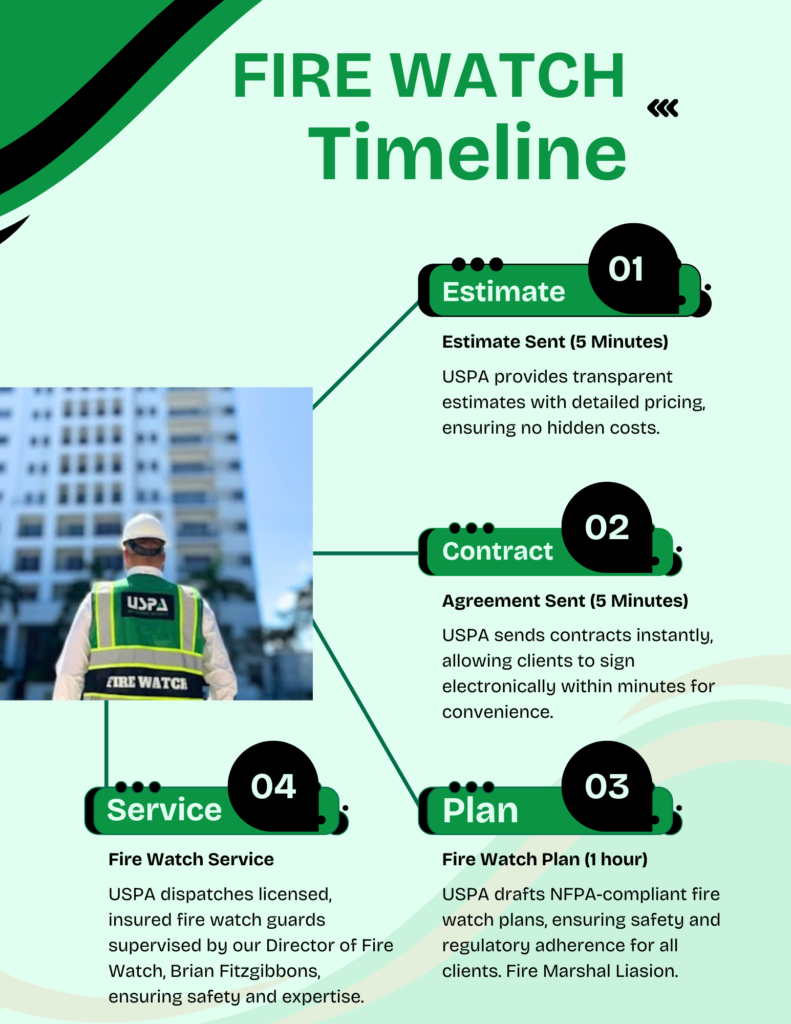
Rapid Activation of Fire Watch Services
Step 1: Instant Estimate Receive a clear and detailed estimate from USPA, outlining all costs to prevent any surprises.
Step 2: Fast Contract Process Get an immediate contract via email for electronic signing, including a comprehensive certificate of insurance for your peace of mind.
Step 3: Customized Fire Watch Strategy USPA creates an NFPA 601-compliant fire watch plan, tailored to your specific needs and ensuring adherence to national and local regulations, including IFC standards.
Step 4: Swift Service Deployment USPA dispatches skilled, licensed, and insured fire watch guards, overseen by fire safety expert Brian Fitzgibbons, ensuring top-notch protection and compliance with all standards.
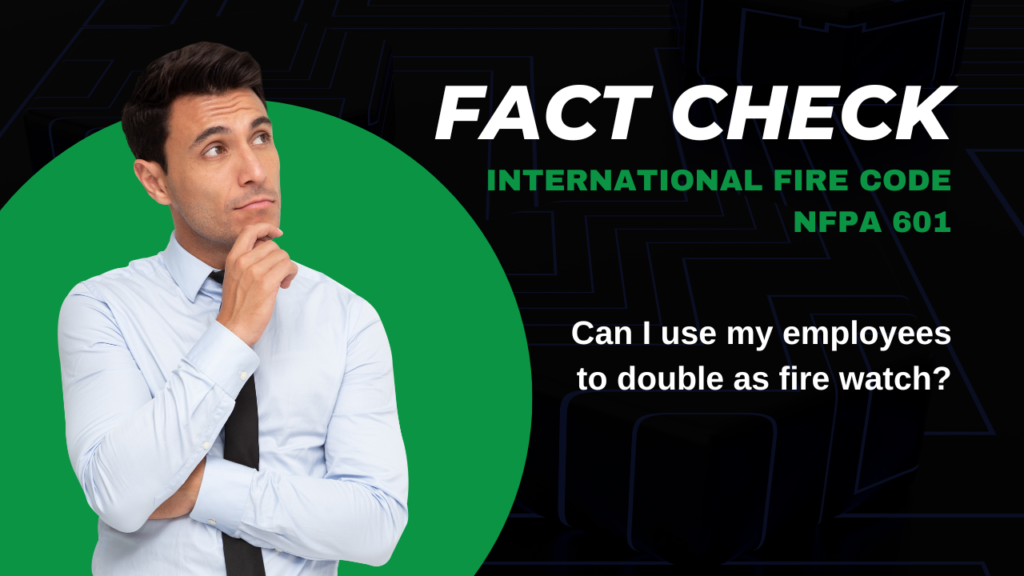
Fact Check: Can I use my employees for fire watch?
International Fire Code & NFPA 601
Specific Duties: Fire watch requires stated duties (IFC 403.11.1, NFPA 601).
No Dual Roles: Employees can’t double as fire watch (IFC 403.11.1).
Approval: Fire watch duties need approval (IFC 403.11.1).
Training: Public safety needs trained guards (NFPA 601).
Duty: Fire watch needs uninterrupted attention (IFC 403.11.1.1).
Dedicated Personnel: Public events need specialized staff (IFC 403.11.3).
Latest Updates on Fire Safety Codes in Grand Rapids
2018 Michigan Building Code (MBC): Grand Rapids has adopted the 2018 MBC, ensuring compliance with the latest construction and safety standards.
2018 Michigan Residential Code (MRC): This code governs the construction and safety of residential buildings, providing updated requirements for fire safety.
2015 International Fire Code (IFC): The IFC outlines fire prevention and safety measures for both new and existing buildings, focusing on minimizing fire hazards.
2017 National Electrical Code (NEC): The NEC sets standards for electrical installations, crucial for preventing electrical fires.
2018 NFPA 101 Life Safety Code: This code addresses safety in buildings, particularly for high-occupancy structures, ensuring safe evacuation during emergencies.
These codes have been integrated into the local regulations to enhance fire safety and align with national standards, ensuring a safer environment for the residents and businesses in Grand Rapids.
Guidance for Fire Safety and Fire Watch in Grand Rapids, Michigan
Regular fire escape inspections in Grand Rapids are critical for ensuring the safety and compliance of buildings with fire safety regulations. These inspections help identify structural defects and potential hazards that could compromise the effectiveness of fire escapes during emergencies. Here are the key reasons why regular inspections are essential:
Safety Assurance: Fire escape inspections ensure that all components are in good working condition, providing a safe exit route during fires or other emergencies. Inspections can identify rust, corrosion, and other damage that may weaken the structure.
Legal Compliance: Compliance with local and state fire safety regulations is mandatory to avoid legal penalties. Grand Rapids adheres to the 2018 Michigan Building Code and the 2015 International Fire Code, both of which outline specific requirements for fire escape maintenance and inspection.
Preventive Maintenance: Regular inspections allow for early detection of issues, which can be addressed before they escalate into more significant problems. This proactive approach helps maintain the integrity of fire escapes and prevents costly repairs.
Property Value and Insurance: Properly maintained fire escapes can enhance the value of a property and may result in lower insurance premiums. Insurers often require proof of regular inspections to ensure the building meets safety standards.
Occupant Peace of Mind: Knowing that fire escapes are regularly inspected and well-maintained provides building occupants with peace of mind. It reassures them that their safety is a priority and that there are reliable means of egress in an emergency.
Specific Codes and Standards
Grand Rapids follows specific codes to ensure fire safety:
2018 Michigan Building Code: This code includes provisions for the construction, maintenance, and inspection of fire escapes.
2015 International Fire Code (IFC): The IFC provides detailed requirements for fire escape inspections, ensuring they are safe, accessible, and capable of supporting the intended load during an emergency.
Regular fire escape inspections in Grand Rapids are essential for safety, legal compliance, and the overall integrity of buildings. By adhering to the 2018 Michigan Building Code and the 2015 International Fire Code, property owners can ensure their fire escapes are well-maintained and capable of protecting occupants in case of a fire.
Ensuring fire code compliance for new construction in Grand Rapids involves adhering to a comprehensive set of regulations designed to enhance fire safety and protection. Here’s a detailed overview to help you navigate this process:
Understanding Applicable Codes:
2018 Michigan Building Code: This is the primary code governing construction standards, including fire safety requirements.
2015 International Fire Code (IFC): Provides guidelines for fire protection systems, egress, and fire safety measures.
Key Compliance Areas:
Fire Protection Systems: Installation of fire alarms, sprinklers, and smoke detection systems as per NFPA standards.
Egress Requirements: Ensuring safe and accessible exit routes, including proper marking and lighting.
Structural Fire Resistance: Using fire-resistant materials and construction techniques to contain and prevent the spread of fire.
Occupancy Classification: Determining the building’s occupancy type to apply specific fire safety requirements.
Accessibility: Complying with regulations for accessible egress for all occupants, including those with disabilities.
Permit and Inspection Process:
Pre-construction Permits: Securing necessary permits before construction begins, ensuring plans meet fire safety standards.
Regular Inspections: Conducting inspections at various construction stages to ensure ongoing compliance.
Final Inspection and Approval: Obtaining a final inspection to verify that all fire safety measures are correctly implemented before occupancy.
Common Challenges:
Keeping Up with Code Changes: Regularly updating knowledge on the latest code revisions and amendments.
Integrating Fire Safety with Design: Balancing architectural design with fire safety requirements without compromising aesthetics.
Coordination with Multiple Stakeholders: Collaborating with architects, engineers, contractors, and fire safety officials to ensure cohesive compliance.
Resources and Support:
Local Fire Department: Engaging with the Grand Rapids Fire Department for guidance and support on compliance matters.
Professional Consultants: Hiring fire safety consultants to provide expertise and ensure all regulations are met.
Training and Education: Attending workshops and seminars on fire code compliance and staying informed about best practices.
Navigating fire code compliance for new construction in Grand Rapids involves a thorough understanding of applicable codes, meticulous planning, and coordination with various stakeholders. By adhering to the 2018 Michigan Building Code and the 2015 IFC, and leveraging resources such as the local fire department and professional consultants, builders can ensure their projects meet all fire safety standards, providing safe environments for future occupants.
The State Fire Safety Board plays a crucial role in maintaining and enhancing fire safety standards in Grand Rapids. The board’s primary responsibilities include:
Adopting and Updating Fire Codes: The board is responsible for adopting state and model fire codes, ensuring they are current and relevant to modern fire safety needs. This includes the adoption of the latest International Fire Code (IFC) and National Fire Protection Association (NFPA) standards.
Rule Promulgation and Review: The board promulgates rules related to fire safety for various types of buildings and facilities, including schools, hospitals, and public assembly places. These rules cover construction, operation, and maintenance aspects to mitigate fire risks.
Certification and Training: It oversees the certification of firms and professionals involved in fire suppression system installations, modifications, and inspections. This ensures that only qualified personnel handle critical fire safety systems.
Inspection and Compliance: The board mandates regular inspections of buildings and facilities to ensure compliance with established fire codes. This includes annual inspections of fire escapes, alarm systems, and other critical safety components.
Fire Incident Reporting and Analysis: The board collects and analyzes data from fire incidents to identify trends and areas for improvement. This information helps in updating fire codes and improving overall fire safety strategies.
Collaboration with Local Authorities: It works closely with local fire departments, building inspectors, and other stakeholders to enforce fire safety regulations and respond to fire emergencies effectively.
Public Awareness and Education: The board promotes public awareness about fire safety through educational programs, ensuring that residents and businesses understand their roles in preventing fires and ensuring safety.
The State Fire Safety Board is instrumental in ensuring that Grand Rapids adheres to rigorous fire safety standards. By adopting updated fire codes, overseeing certifications, conducting inspections, and promoting public awareness, the board helps to create a safer environment for all residents and businesses in the city.
Ensuring the safe handling of hazardous materials is a critical aspect of fire safety in Grand Rapids. The city adheres to stringent protocols to minimize risks associated with the storage, transportation, and disposal of these materials. Here’s an overview of the key protocols:
Regulatory Compliance: Adherence to the International Fire Code (IFC) and NFPA standards, which dictate specific guidelines for hazardous materials management.
Storage Requirements: Hazardous materials must be stored in approved containers and locations, designed to prevent leaks and spills. Facilities must have appropriate signage indicating the presence of hazardous materials and associated risks.
Transportation Safety: Vehicles transporting hazardous materials must comply with state and federal regulations, including proper labeling and use of safety equipment. Drivers and handlers are required to undergo specialized training to manage hazardous materials safely.
Fire Prevention Measures: Facilities must install and maintain fire suppression systems tailored to the types of hazardous materials stored on-site. Regular fire drills and emergency response exercises are mandated to prepare staff for potential incidents.
Inspection and Monitoring: The State Fire Safety Board conducts regular inspections to ensure compliance with fire safety codes. Facilities must maintain accurate records of hazardous materials, including quantities and locations, for inspection purposes.
Emergency Response Plans: Comprehensive emergency fire response plans must be in place, detailing procedures for dealing with spills, fires, and other incidents involving hazardous materials. Collaboration with local fire departments and emergency services is essential to ensure a coordinated response.
Training and Education: Employees handling hazardous materials must receive ongoing training in fire safety and emergency response. Public education initiatives help raise awareness about the dangers of hazardous materials and proper safety practices.
By following these protocols, Grand Rapids ensures the safe handling of hazardous materials, protecting both the community and the environment from potential fire hazards.
Fire Watch Service in Grand Rapids, Michigan
As with any big city, Grand Rapids in Michigan is no stranger to house or workplace fires for multiple reasons. This makes it one of the state’s most desirable places to live. USPA Nationwide Security provides a 24-hour call center and backup alarm system to prevent damage from fire incidents in Grand Rapids, MI. As a National Fire Prevention Association member, USPA is proud to have all its fire watch guards in Grand Rapids, MI, licensed, insured, and fire marshal-approved.
The Firewatch Guards of Grand Rapids, Michigan, offer fire guard services
In Grand Rapids, Michigan, our fire watch security guards, and fire guards are experts who can handle emergency fire watch duties. Such duties include when a fire suppression system and building codes require fireguards to be present when doing hot work, welding, or during civil unrest, forest fires, or disasters. USPA Nationwide Security employs over 5000 fire safety directors and fire watch security guards nationwide. As a result of this large force, we can usually reach any site within 60 minutes. A third-party review system verifies all of our reviews as real with verified clients. Here are some of our Google reviews from real clients who vouch for the quality of our service.
Grand Rapids, Michigan, Hot Work Fire Watch Service
Providing hot work and welding fire watch services in Grand Rapids, MI, at a budget-friendly price is one of the specialties of USPA Nationwide Security. In numerous cities experiencing civil unrest, we collaborate with local governments to protect their residents, buildings, and public areas.
Protecting Grand Rapids Businesses with:
Firewatch Guard Service (for protecting people in Grand Rapids)
Fire Guard Officer (for protecting people in Grand Rapids)
Fire Guard Mobile Patrol (for guarding Grand Rapids Storefronts)
Security Fire Watchmen (for patrolling Grand Rapids businesses)
(800) 214-1448 – Hire the #1 Fire Watch Service in Grand Rapids, Michigan. Firewatch Company Grand Rapids. Hot Works Fire Guards MI. Emergency Dispatch Fire Protection Service Michigan.
To get an instant quote, contact our security consultant with our live chat feature during business hours.
Teaching Grand Rapids fire codes through Fire Watch Security in Grand Rapids (supporting local businesses)
Conducting a fire watch is one of the most important fire prevention safety tips. This procedure can reduce the risk of serious injuries and property damage by alerting people to fire hazards. Fire watch personnel should be familiar with combustible materials to identify fire hazards. They need to know how to alert occupants and initiate evacuation procedures as soon as possible. Fire watch safety is crucial whenever a fire department is called to a construction site. Firearms can easily spread if sprinkler systems fail or combustible materials are ignited by a power tool. The International Code Council amended the International Fire Code to protect construction sites better. Tall buildings or buildings that are 50,000 square feet or larger must post a fire watch during non-working hours. Due to the high resource usage and risk to firefighters posed by large buildings, this requirement is essential.
Helpful Fire Safety Tips for Grand Rapids assist with fire safety plans.
Fire watch officers should familiarize themselves with the assigned area before implementing a fire watch. Verify that there are no yellow or red lights on the fire alarm panel and that the water flow control valves on the sprinkler system are open. Flammable liquids should also be stored in designated containers. The fire watch officer should also be aware of the location of fire extinguishers and manual pull stations. Workers should stay in visual contact with each other and inspect the area before each shift to ensure it is safe. They should also never leave a job site unattended. Workers should also notify others that they are “standing by” in an emergency.
Keeping Grand Rapids businesses safe from fire with Emergency Firewatch Tips
The fire watch personnel should know the location of manual fire alarm stations and the sequence of events required to respond to a fire. A firefighter should only attempt to extinguish a fire using available firefighting equipment after being trained in emergency safety equipment. Fines and building evacuations can result from not following these guidelines. Fire watches are vital when there are no fire alarms in an area. They ensure that fires are extinguished quickly. In addition, it ensures that firefighting crews respond to fires as quickly as possible. Hot work permits typically specify the duration of fire watches.
Grand Rapids Fire Watch Services (fire extinguisher advice)
It can save lives and prevent injuries by keeping a fire watch. Before and after every shift, the fire watcher must inspect the work area. The fire watcher should be trained in fire safety standards before starting their shift. In addition, flammable materials should be kept away from ignition sources. You should also read the terms and conditions of the hot work permit.
#grandrapids #michigan #westmichigan #grandrapidsmi #grandrapidsmichigan #grmi #westmi #downtowngr #downtowngrandrapids #michiganders #grmichigan #firewatchguardgrandrapids #securitycompanygrandrapids #firewatchcompanygrandrapids #firewatchgrandrapids
Frequently Asked Questions about Grand Rapids Fire Safety
Who should I call for Fire Watch in Grand Rapids, Michigan?
Call (800) 214-1448 for Grand Rapids, Michigan Fire Watch
What constitutes substantial compliance with sections 8 and 9 of the Michigan fire safety laws?
Substantial compliance with sections 8 and 9 of the Michigan fire safety laws is defined as an adherence to the essential requirements of these sections sufficient to give full force and effect to an order of the state fire marshal. This means that minor omissions or deviations that do not affect the core merits and substance of the order will not render it invalid, inoperative, or void. Essentially, as long as the critical elements of the requirements are met, the order is considered valid.
How is a fire hazard legally defined and addressed in Grand Rapids, Michigan?
In Michigan, a fire hazard is legally defined as any condition or situation that could potentially cause a fire or explosion, endanger property, or pose a danger to public safety. This includes factors like poor building conditions, lack of fire escapes, faulty wiring, accumulation of flammable materials, and more. Fire hazards are addressed through inspections conducted by the state fire marshal or local fire authorities. If a hazard is found, the inspecting officer can file a report with recommendations for abatement. Compliance with these recommendations is mandatory to ensure public safety. If the hazard is deemed imminently dangerous, immediate legal action can be taken to abate the risk.
What are the potential penalties for violating Michigan's fire safety laws or maintaining a fire hazard?
Violating Michigan’s fire safety laws or maintaining a fire hazard can result in several penalties, including:
- Misdemeanor Charges: Individuals or firms that violate fire safety laws can be charged with a misdemeanor.
- Civil Fines: Owners of firms or vehicles operated in violation of these laws may face civil fines. For instance, creating a fire hazard or risking hazardous material release can incur a $200 fine per violation.
- Imprisonment: The principal executive officer of a non-certified firm performing certain fire safety-related tasks may face up to 90 days in jail.
- Monetary Penalties: Such violations can result in fines up to $3,000.
Moreover, specific instances of non-compliance, such as failing to conduct required fire drills or improperly maintaining fire suppression systems, may attract additional penalties and sanctions aimed at ensuring public safety and adherence to fire codes.
Case Study: Fire Protection Systems in Grand Rapids, Michigan
By Brian Fitzgibbons
Distinguished Fire Safety Expert
Introduction
Fire safety is a critical concern for any urban area, and Grand Rapids, Michigan, is no exception. With the increasing complexity of urban development and the risks associated with modern infrastructures, the city’s fire codes play a pivotal role in safeguarding lives and property. This case study examines the fire protection systems as stipulated in Chapter 9 of the Grand Rapids Fire Codes, analyzing their design, installation, operation, and compliance with both local and international standards, particularly the International Fire Code (IFC).
Chapter 9: Fire Protection Systems
Scope and Requirements
Scope of Fire Protection Systems
Chapter 9 of the Grand Rapids Fire Codes specifies the requirements for fire protection systems, encompassing the design, installation, operation, and maintenance of these systems. The code mandates that fire protection systems must be installed in accordance with the city’s regulations and the IFC. This ensures a standardized approach to fire safety across different types of buildings and occupancies.
Fire Protection Systems Installation
Fire protection systems, including automatic sprinklers, fire alarms, and other extinguishing systems, must be installed in compliance with the Grand Rapids Fire Codes and the IFC. These systems are critical for the early detection and suppression of fires, thereby minimizing damage and enhancing occupant safety.
Modifications and Acceptance Tests
Any modifications to existing fire protection systems must receive approval from the building official. This ensures that any changes do not compromise the integrity of the system. Additionally, all fire protection systems must undergo acceptance tests to verify their functionality before the building can be occupied. These tests are conducted in the presence of the building official, ensuring compliance with the required standards.
Supervisory Service
Fire protection systems must be monitored by an approved supervising station, as specified by NFPA 72. This includes automatic sprinkler systems and fire alarm systems. The monitoring ensures that any issues with the systems are detected and addressed promptly, maintaining their readiness in case of a fire.
Legal Framework and Case Law
In re Grand Rapids Fire Ordinance
One significant case that highlights the enforcement of fire safety regulations in Grand Rapids is In re Grand Rapids Fire Ordinance. This case involved the legality and enforcement of a new fire ordinance that required all commercial buildings to have updated fire suppression systems. The ordinance was challenged by local businesses, but the court upheld it, recognizing the importance of modern fire safety measures in preventing large-scale fire incidents.
Legal Brief: Correlation with IFC Chapter 9
The Grand Rapids Fire Codes closely align with the IFC Chapter 9, which provides a comprehensive framework for fire protection systems. The IFC’s requirements for installation, maintenance, and testing of fire protection systems are mirrored in the local codes, ensuring consistency and adherence to internationally recognized standards.
IFC 901.1 Scope
The IFC specifies the general provisions for fire protection systems, covering where these systems are required and their operational standards. This foundational guideline ensures that fire protection systems are effectively integrated into building designs, enhancing safety across various occupancies.
IFC 901.2 Fire Protection Systems
This section mandates that fire protection systems must be installed, repaired, operated, and maintained according to the IFC. The Grand Rapids Fire Codes incorporate this provision, ensuring that local practices meet international standards, thereby providing robust fire safety measures.
IFC 901.3 Modifications
Modifications to fire protection systems require approval from the building official, as stipulated by the IFC. This prevents unauthorized changes that could impair the system’s effectiveness. The Grand Rapids Fire Codes enforce similar requirements, maintaining the reliability of installed systems.
IFC 901.4 Threads
The compatibility of threads for fire department connections is crucial for effective firefighting efforts. The IFC requires that these threads be compatible with local fire department equipment, a requirement echoed in the Grand Rapids Fire Codes to ensure seamless operations during emergencies.
IFC 901.5 Acceptance Tests
Acceptance tests are mandatory to verify the functionality of fire protection systems. The Grand Rapids Fire Codes require these tests to be conducted in the presence of the building official, ensuring that the systems are operational and compliant before the building is occupied.
IFC 901.6 Supervisory Service
The IFC requires fire protection systems to be monitored by an approved supervising station. The Grand Rapids Fire Codes adopt this requirement, ensuring that issues with fire protection systems are promptly identified and addressed, maintaining their readiness.
Implementation and Compliance in Grand Rapids
Fire Safety Inspections
Regular fire safety inspections are a critical component of the fire protection strategy in Grand Rapids. These inspections ensure that fire protection systems are maintained in working condition and comply with the required standards. The fire department conducts these inspections, identifying potential hazards and ensuring corrective actions are taken.
Training and Education
Training and education programs for building owners, managers, and occupants are essential for effective fire safety. These programs, often conducted by fire safety experts like Brian Fitzgibbons, educate stakeholders on the importance of fire protection systems, proper maintenance practices, and emergency response procedures.
Community Involvement
Community involvement is crucial for enhancing fire safety awareness. Initiatives such as public safety campaigns, fire drills, and community meetings help in disseminating information about fire protection systems and the importance of compliance with fire safety codes.
Challenges and Recommendations
Challenges in Implementation
Despite the robust framework provided by the Grand Rapids Fire Codes and the IFC, several challenges persist in the implementation of fire protection systems. These include:
Compliance Costs: The cost of installing and maintaining fire protection systems can be prohibitive for some property owners, leading to non-compliance.
Aging Infrastructure: Older buildings may not have the necessary infrastructure to support modern fire protection systems, requiring extensive retrofitting.
Public Awareness: There is a need for increased public awareness about the importance of fire protection systems and compliance with fire codes.
Recommendations for Improvement
To address these challenges, the following recommendations are proposed:
Incentives for Compliance: Providing financial incentives, such as tax breaks or grants, can encourage property owners to comply with fire safety regulations.
Retrofit Programs: Implementing programs to assist with the retrofitting of older buildings can enhance fire safety across the city.
Public Education Campaigns: Increasing public education efforts can raise awareness about fire safety and the importance of fire protection systems.
Fire protection systems are a cornerstone of fire safety in Grand Rapids, Michigan. The city’s fire codes, aligned with the International Fire Code, provide a comprehensive framework for the design, installation, and maintenance of these systems. The case of In re Grand Rapids Fire Ordinance underscores the legal backing for stringent fire safety measures, ensuring that the city remains vigilant against fire hazards. By addressing the challenges and implementing the recommended strategies, Grand Rapids can continue to enhance its fire safety landscape, safeguarding lives and property for the future.
About Brian Fitzgibbons: Brian Fitzgibbons is a distinguished fire safety expert with extensive experience in fire codes, fire watch, and fire safety measures. As a keynote speaker and author, he has contributed significantly to the field, educating professionals nationwide on essential fire safety practices.
About USPA Nationwide Security: USPA Nationwide Security has been a trusted provider of security and fire watch services for nearly 20 years. With a 4.9 Google rating and an A+ rating from the Chamber of Commerce, USPA Nationwide Security is committed to delivering top-quality services to its clients.
Related Fire Watch Links in Grand Rapids
Introduction to Fire Watch eBook
Fire Watch Plans
Construction Site Fire Watch
Fire Watch Seminar
NFPA 601: Fire Watch Regulations
Fact Check: International Fire Code
Patrol Duties for Fire Watch
Chapter 7: International Fire Code
Disaster Recovery
For more information Hire the #1 Fire Watch Service in Grand Rapids, Michigan