

Top Rated Fire Watch in St. Louis, Missouri (Open Now)
24/7 Dispatch: (800) 214-1448
Online Estimates: Over 500,000 hours of Fire Watch services delivered annually.
Top Rated: 4.9 Google Rating, Managed by Military Veterans and ex-Navy SEALs.
Open 24-hours: Immediate deployment of Fire Watch Guards.
Fire Experts: Compliant with NFPA 51B and OSHA standards.
Decades in Business: Leading providers of Fire Watch services for over two decades.
Highly Reviewed: A+ Rated Fire Watch Service near St. Louis
USPA Nationwide Security provides expert fire watch services in St. Louis, prioritizing the safety of properties and individuals. Our extensively trained team is prepared to manage all fire-related emergencies, offering uninterrupted monitoring and rapid assistance.
Need Fire Watch Services Immediately? Here’s Why We Stand Out:
Top-Rated Expertise: A+ Rated by the Chamber of Commerce, reflecting our longstanding commitment to excellence.
Decades of Proven Experience: Thriving in our third decade of business, we bring a wealth of knowledge and reliability.
Exceptional Reputation: Consistently high 4.9 rating on Google over the past decades, showcasing customer satisfaction and trust.
Industry-Leading Authority: Our Director of Fire Watch, Brian Fitzgibbons, is not only a celebrated keynote speaker but also a published author in fire prevention.
Always Ready: We offer 24/7 availability for immediate assistance, ensuring rapid response when you need it most.
Officially Recognized: Fully approved by Fire Marshals for meeting critical safety standards.
Strict Adherence to Safety Standards: We are fully compliant with all NFPA (National Fire Protection Association) regulations, guaranteeing the highest level of fire safety and prevention.
Led by Fire Safety Experts: Fire Watch Managed by Keynote Speaker and Trainer, Brian Fitzgibbons

Director of Fire Watch and Security
Brian Fitzgibbons oversees our fire watch contracts in the St. Louis region.
Office: (800) 214-1448
– Fire Watch for Construction Sites in St. Louis
– Oversight of Faulty Fire Suppression Systems
– Fire Safety during Hot Work and Welding Operations
– Scheduled Maintenance for Fire Systems
– Fire Surveillance for Residential and Commercial Properties

 Christopher LeeApril 24, 2023
Trustindex verifies that the original source of the review is Google.
Absolute pleasure to work with this group of professionals. Anyone looking for protective or security services would do well to hire USPA or their contractors. Jason CantieApril 20, 2023USPA Nationwide Security Was there for us at a desparate time! Their service was fast and professional! I Highly recommend them!
 Kerry RodierMarch 30, 2023Mike Evans and USPA there are very little words that would convey my gratitude to you and your company in the search for my son Séamus. Without your selflessness and compassion I would not have been able to get through this tragic time. You have brought me less heartache by giving me the knowledge that this was just a tragic accident as opposed to some other sinister act. I breathed easier knowing I had you and your company by my side tirelessly looking for Séamus. Your professionalism is unparalleled and you will always have my undying gratitude. Sincerely, Kerry Rodier Gray
 Allison KiddFebruary 21, 2023This company embodies integrity and hard work.
 Kendall EdwardsFebruary 21, 2023These guys are amazing! They are true professionals, they also spend their free time rescuing missing children. You can’t beat an organization like this.
 Monika KamardinovJanuary 17, 2023I was invited to a party last week where USPA Security guys were our bodyboards. They were very professional and made sure that we all felt safe during our gathering. I would definitely hire them for my events!
 Jurate LuckaiteJanuary 17, 2023I hired USPA Security company and I could not be any happier. Not only I received the most professional bodyguard team led by Navy Seals and Army Rangers, but I also received close protection for me and my girlfriends. The team is super professional. They actually care and go above and beyond to make sure you feel safe and protected. I was provided with VIP Aircraft and limo services to and from the airport. I received the VIP treatment in every step. I highly recommend USPA Nationwide Security team because they respect their client and their service is exceptional. It is an honor and pleasure to work with the team.
 Malan Best SecurityDecember 9, 2022Our company has been fortunate enough to work with USPA extensively over the last year and we cannot voice our appreciation enough. USPA has kept us steadily busy with work and we look forward to working with them for a very long time. Each representative of USPA we’ve been in contact with thus far has been a pleasure to work with and lastly, knowing that some of their profits are donated to some great causes is an incentive to continue working closely with this company. Thank you guys again. MBS TEAM
 Strong SecurityDecember 9, 2022I AM A PROUD CONTRACTOR WITH THIS ORGANIZATION AND ALL I CAN SAY IS I WILL BE HELPING THEM GET TO THE HIGHEST HEIGHTS POSSIBLE!!! President Manning of USPA has to be one the most honest and genuine men I've met in this industry!!! Marc E Singletary, MBA (DBA 2024)
 Nick POctober 10, 2022I have been using USPA as my security contractor for a few years now and their service is exceptional. Dan and Brian are extremely attentive and always able to help with our last-minute projects that fall outside of our main service contract. They provide exceptional oversight, and their communication could not be better. I would fully endorse USPA for any project, whether it be short or long term. This company has excellent values and always adheres to them. You will not be disappointed.
Steps for Seamless Fire Watch Service Initiation
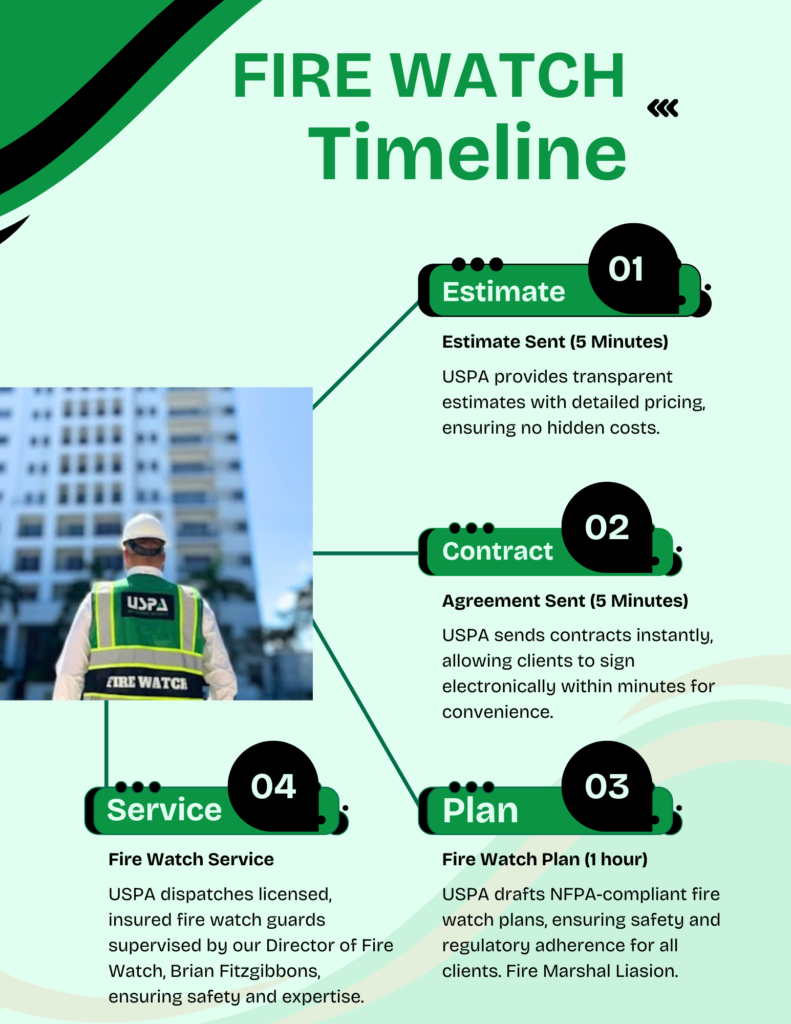
Efficient Fire Watch Service Activation
Step 1 – Transparent Quotation: Obtain a clear and itemized quotation from USPA, outlining all expenses to ensure there are no hidden fees or unexpected costs.
Step 2 – Swift Contract Execution: A contract will be immediately emailed to you, allowing for quick electronic signing for maximum ease and efficiency. Receive a certificate of insurance from our comprehensive liability and worker’s compensation policies, ensuring full coverage and peace of mind for your project.
Step 3 – Tailored Fire Watch Plan: USPA develops a fire watch plan in compliance with NFPA 601, customized to meet your specific needs, ensuring full compliance with national fire safety standards and local regulations. USPA also ensures that the fire watch plan adheres to the International Fire Code (IFC) standards, providing an additional layer of regulatory compliance and safety assurance.
Step 4 – Service Deployment: USPA dispatches highly trained, licensed, and insured fire watch guards, under the supervision of our Director of Fire Watch, Brian Fitzgibbons, an expert in fire safety and regulatory compliance. Our fire watch guards are fully prepared to handle any fire safety requirements, ensuring the highest level of protection and adherence to all NFPA 601 and IFC standards.
Compliant with NFPA Standards in St. Louis
USPA Nationwide Security guarantees strict compliance with NFPA 51B Standards through our comprehensive fire watch services in St. Louis. Our highly trained team monitors properties to mitigate fire hazards. With a dedication to safety and adherence to regulations, USPA Nationwide Security ensures the protection of your community with expertise and commitment. Trust USPA for reliable fire watch services tailored to meet the highest industry standards in St. Louis.
Adhering to OSHA Regulations in St. Louis
USPA Nationwide Security proudly offers comprehensive fire watch services in St. Louis, ensuring strict adherence to OSHA regulations. Our fire watch teams are meticulously trained to comply with OSHA’s standards for fire prevention and emergency preparedness, providing robust protection for various industrial and commercial sites. By implementing rigorous protocols for hazard identification, risk assessment, and emergency response, USPA guarantees a high level of safety and regulatory compliance. Our services not only meet but exceed OSHA’s requirements, offering peace of mind to our clients through exceptional fire safety oversight.
Case Study: Fire Codes and Emergency Planning in St. Louis, Missouri
Chapter 4: Emergency Planning and Preparedness
Introduction
Emergency planning and preparedness are critical components of fire safety in any urban setting, and St. Louis, Missouri, is no exception. The city’s adoption of comprehensive fire codes ensures that buildings and their occupants are well-prepared for potential fire emergencies. This case study, authored by Brian Fitzgibbons, a renowned fire safety expert, delves into Chapter 4 of St. Louis’ fire codes, focusing on the regulations, their implementation, and the legal precedents that shape the city’s fire safety landscape.
About the Author
Brian Fitzgibbons: A distinguished fire safety expert with extensive experience in fire codes, fire watch, and fire safety measures. As a keynote speaker and author, Fitzgibbons has contributed significantly to the field, educating professionals nationwide on essential fire safety practices.
USPA Nationwide Security: A trusted provider of security and fire watch services for nearly 20 years, USPA Nationwide Security boasts a 4.9 Google rating and an A+ rating from the Chamber of Commerce. They are committed to delivering top-quality services to their clients.
St. Louis Fire Codes: Chapter 4 Overview
Section 401: General Provisions Section 401 outlines the general requirements for emergency planning and preparedness, including the necessity for emergency plans, procedures for managing emergencies, and the responsibilities of building occupants and owners.
Scope and Approval: Emergency plans must be approved by the fire code official, ensuring compliance with all regulations.
Emergency Responder Notification: Immediate notification of emergency responders is mandated in the event of a fire.
Emergency Plan Implementation: The emergency plan must be implemented upon detection of a fire or activation of a fire alarm.
Section 402: Definitions This section provides definitions for key terms related to emergency evacuation drills and lockdowns, establishing a common language for all stakeholders involved in fire safety.
Section 403: Emergency Preparedness Requirements Section 403 details the specific requirements for different occupancy types, ensuring tailored emergency preparedness measures across various settings.
Group A Occupancies: Fire safety and evacuation plans are mandatory for large assembly spaces, such as theaters and auditoriums, with specific provisions for seating plans and crowd management.
Group B Occupancies: Office buildings with large occupant loads must have detailed fire safety and evacuation plans, including provisions for ambulatory care facilities.
Group E Occupancies: Schools must conduct emergency evacuation drills at the start of the school year and regularly thereafter, ensuring student safety.
Group I Occupancies: Hospitals and care facilities have additional requirements, including defend-in-place strategies and specialized staff training.
High-Rise Buildings and Special Uses: High-rise buildings, underground buildings, and facilities with high-piled storage must adhere to stringent fire safety and evacuation planning requirements.
Section 404: Fire Safety, Evacuation, and Lockdown Plans Section 404 outlines the required contents of fire safety, evacuation, and lockdown plans, ensuring comprehensive preparedness for various emergency scenarios.
Fire Evacuation Plans: These plans must detail escape routes, procedures for accounting for occupants, and methods for notifying emergency responders.
Fire Safety Plans: Plans must include procedures for reporting fires, life safety strategies, and detailed floor plans showing exits and fire protection equipment.
Section 405: Emergency Evacuation Drills Regular emergency evacuation drills are required to familiarize occupants with evacuation procedures, ensuring they can evacuate safely in an actual emergency.
Frequency and Participation: Drills must be conducted annually at a minimum, with participation from all occupants in certain occupancy types.
Leadership and Recordkeeping: Competent persons must be designated to lead drills, and records of all drills must be maintained.
Section 406: Employee Training and Response Procedures Employees must be trained in fire prevention, evacuation procedures, and fire safety as part of their orientation and annually thereafter.
Fire Prevention Training: Employees must understand the fire hazards associated with their work and how to prevent fires.
Evacuation and Fire Safety Training: Training must cover the use of fire alarms, evacuation routes, and the proper use of fire extinguishers.
Section 407: Hazard Communication Facilities that handle hazardous materials must comply with detailed communication requirements, including the availability of Safety Data Sheets (SDS) and proper labeling of hazardous materials.
Legal Brief
Praxair, Inc. Explosion Case (2005) This incident underscores the critical importance of adhering to fire safety measures, particularly in facilities handling flammable materials. A small fire at Praxair’s gas filling and distribution facility led to multiple explosions, causing extensive damage and highlighting the need for stringent fire safety protocols.
Case Law Relevance The Praxair case demonstrates the potential consequences of non-compliance with fire safety regulations and the importance of proper emergency planning and preparedness. It emphasizes the necessity for businesses, especially those handling hazardous materials, to implement and maintain robust fire safety measures in accordance with Chapter 4 of St. Louis’ fire codes.
Correlation with IFC Chapter 4 Chapter 4 of the International Fire Code (IFC) provides a comprehensive framework for emergency planning and preparedness, which aligns closely with St. Louis’ fire codes. The IFC emphasizes the human element of fire safety, mandating regular training, drills, and clear communication to enhance the safety of building occupants and improve the effectiveness of emergency responders.
Emergency planning and preparedness are vital components of fire safety, particularly in a city like St. Louis with its diverse range of occupancy types and potential hazards. Chapter 4 of St. Louis’ fire codes provides a thorough and detailed approach to ensuring that buildings and their occupants are well-prepared for fire emergencies. By adhering to these regulations and learning from past incidents like the Praxair explosion, St. Louis can enhance its fire safety measures and protect its residents and property from the devastating effects of fire.
Helpful Information about Fire Watch in St. Louis
Understanding St. Louis Fire Codes: Key Differences from International Standards
Fire safety regulations are essential for protecting lives and property. St. Louis, Missouri, has developed a comprehensive set of fire codes that align closely with the International Fire Code (IFC) but also include specific local adaptations. This article explores the key differences between St. Louis fire codes and the IFC, focusing on emergency planning and preparedness.
Scope and Purpose
Both the St. Louis fire codes and the IFC’s Chapter 4 emphasize emergency planning and preparedness. These codes address the human element of fire safety, highlighting the importance of emergency plans, regular training, and preparedness drills.
St. Louis Fire Codes vs. IFC Standards
1. Emergency Planning and Procedures
St. Louis: Requires detailed emergency plans, including procedures for notifying occupants and emergency responders, evacuation routes, and methods for accounting for all individuals. The emphasis is on detailed planning and regular updates to ensure efficacy.
IFC: Similar requirements but with a broader international scope, ensuring consistency across different jurisdictions.
2. Training and Drills
St. Louis: Mandates regular training and drills for all occupants, emphasizing the need for varied scenarios to simulate real-life emergencies.
IFC: Also requires regular drills but with specific frequencies and participation levels detailed for different occupancy types.
3. Fire Watch Requirements
St. Louis: Specifies the need for fire watch personnel in various scenarios, detailing their responsibilities and required duty times.
IFC: Aligns closely with St. Louis in requiring fire watch personnel but provides additional guidance on when these personnel are necessary, especially for large gatherings and events.
4. Occupancy-Specific Requirements
St. Louis: Provides detailed guidelines for different occupancy types, such as Group A (assembly), Group B (business), and Group I (institutional), ensuring tailored emergency preparedness measures.
IFC: Offers similar occupancy-specific guidelines but includes international adaptations that cater to diverse building types and uses.
5. Legal Precedents and Local Adaptations
St. Louis: Incorporates local case law and specific building requirements to address the unique risks and characteristics of the area. For example, the Praxair, Inc. Explosion Case (2005) underscores the importance of proper fire safety measures and handling of flammable materials.
IFC: While it sets a global standard, the IFC allows for local adaptations to address specific risks and requirements of different regions.
Unique Aspects of St. Louis Fire Codes
St. Louis fire codes incorporate specific provisions tailored to the local context, such as additional requirements for historical buildings or unique occupancy types prevalent in the city. These local adaptations ensure that fire safety measures are relevant and effective for the specific risks and characteristics of the area.
Understanding the key differences between St. Louis fire codes and the International Fire Code highlights the importance of local adaptations in fire safety regulations. While both sets of codes aim to ensure comprehensive emergency preparedness and response, St. Louis’ specific provisions address unique local risks, enhancing overall fire safety in the city. Compliance with these codes is crucial for preventing fire-related disasters and protecting lives and property.
Lessons from the Praxair, Inc. Explosion Case: Enhancing Fire Safety in St. Louis
The Praxair, Inc. explosion case of 2005 serves as a critical learning point for enhancing fire safety practices, particularly in urban industrial settings like St. Louis. This incident involved a devastating fire and explosion at Praxair’s gas filling and distribution facility, resulting in significant property damage and posing severe risks to the surrounding community. Here are key lessons from the case that can inform and improve fire safety protocols in St. Louis.
Understanding the Incident
The Praxair explosion began with a small fire originating from a propylene cylinder. The fire quickly spread to adjacent cylinders containing other flammable gases, leading to multiple explosions. These explosions caused additional fires in the surrounding area, highlighting the inherent dangers of storing and handling flammable materials without adequate safety measures.
Key Lessons and Safety Enhancements
1. Importance of Proper Storage and Handling of Flammable Materials
Lesson Learned: Inadequate storage and improper handling of flammable materials can lead to catastrophic events.
Actionable Steps: Implement stringent storage protocols, ensuring that flammable materials are kept in secure, well-ventilated areas away from ignition sources. Regular inspections and maintenance of storage facilities are crucial to prevent leaks and other hazards.
2. Comprehensive Emergency Planning and Preparedness
Lesson Learned: The lack of a comprehensive fire emergency response plan can exacerbate the impact of fire incidents.
Actionable Steps: Develop and regularly update emergency response plans that include detailed evacuation routes, communication protocols, and roles for all personnel. These plans should be reviewed and approved by local fire code officials.
3. Employee Training and Drills
Lesson Learned: Employees must be adequately trained to respond effectively to fire emergencies.
Actionable Steps: Conduct regular training sessions and emergency drills for all employees, ensuring they are familiar with evacuation procedures and the proper use of fire safety equipment. Training should cover how to handle specific materials present at the facility.
4. Use of Advanced Fire Detection and Suppression Systems
Lesson Learned: Early detection and rapid response are critical to mitigating fire damage.
Actionable Steps: Install state-of-the-art fire detection systems that provide early warnings of potential fire hazards. Ensure that fire suppression systems, such as sprinklers and fire extinguishers, are strategically placed and maintained in good working condition.
5. Regulatory Compliance and Inspections
Lesson Learned: Adhering to fire safety regulations and undergoing regular inspections can prevent incidents.
Actionable Steps: Ensure compliance with local and national fire safety codes, including the International Fire Code (IFC) and National Fire Protection Association (NFPA) standards. Regular inspections by fire code officials can identify potential hazards and ensure that safety measures are up-to-date.
6. Community and Environmental Considerations
Lesson Learned: Industrial facilities must consider the broader impact of fire incidents on the community and environment.
Actionable Steps: Engage with local communities to develop joint emergency response plans and communicate potential risks. Implement measures to minimize environmental damage, such as containment systems to prevent the spread of hazardous materials.
Legal Implications and Responsibilities
The Praxair explosion underscores the legal responsibilities of industrial facilities to maintain high safety standards. Non-compliance with fire safety regulations can result in significant legal consequences, including fines, liability for damages, and loss of operating licenses. Facilities must work closely with legal and regulatory bodies to ensure all fire safety measures are in place and effectively implemented.
Case Law Reference: Praxair, Inc. Explosion Case (2005) This case highlights the importance of adhering to fire safety regulations and the legal ramifications of non-compliance. The aftermath of the Praxair explosion led to increased scrutiny and stricter enforcement of fire safety standards, serving as a wake-up call for industries to prioritize fire prevention and preparedness.
The lessons from the Praxair explosion are clear: proactive fire safety measures, comprehensive emergency planning, regular training, and strict regulatory compliance are essential to prevent similar incidents in the future. By implementing these lessons, industrial facilities in St. Louis can enhance their fire safety protocols, protect lives, and minimize the risk of catastrophic events.
How Regular Fire Drills Improve Safety in St. Louis: 5 Key Benefits
1. Enhanced Evacuation Efficiency
Regular fire drills ensure that all building occupants are familiar with evacuation routes and procedures. This familiarity reduces panic during an actual emergency, allowing for a quicker and more orderly evacuation. In St. Louis, adherence to the International Fire Code (IFC) and local regulations requires that emergency drills are conducted regularly to maintain high levels of preparedness.
2. Identification of Potential Hazards
Fire drills provide an opportunity to identify and rectify potential hazards within the building. Regular inspections during drills can reveal blocked exits, malfunctioning alarms, and other safety issues that need to be addressed. These drills align with the IFC’s requirements for maintaining clear and accessible egress routes at all times.
3. Improved Coordination with Emergency Responders
Conducting regular fire drills fosters better coordination between building occupants and emergency responders. In St. Louis, fire departments often participate in these drills, allowing them to familiarize themselves with the layout of the building and the specific needs of its occupants. This coordination ensures a more efficient and effective response during actual emergencies.
4. Reinforcement of Safety Protocols
Fire drills reinforce the importance of safety protocols among building occupants. Regular practice helps instill a sense of responsibility and preparedness, ensuring that everyone knows their role in an emergency. The IFC and local fire codes emphasize the importance of ongoing training and drills to keep safety protocols fresh in everyone’s minds.
5. Compliance with Legal Requirements
Regular fire drills ensure compliance with local fire codes and regulations in St. Louis. Non-compliance can result in legal penalties and increased liability in the event of an emergency. Adhering to the IFC and local fire safety requirements through regular drills demonstrates a commitment to safety and can help mitigate legal and financial risks.
By conducting regular fire drills, St. Louis can enhance the safety and preparedness of its buildings, ensuring that both occupants and emergency responders are well-equipped to handle fire emergencies.
Essential Fire Safety Training Programs in St. Louis: Meeting NFPA Standards
Fire safety training is crucial for ensuring that individuals and organizations in St. Louis are prepared to handle fire emergencies effectively. These training programs are designed to meet the National Fire Protection Association (NFPA) standards, which set the benchmark for fire safety practices and protocols across the United States. By adhering to these standards, businesses and institutions can significantly enhance their fire preparedness and safety measures.
1. Fire Extinguisher Training
Program Overview: This training focuses on the proper use of fire extinguishers, teaching participants how to identify different types of fires and the appropriate extinguishers to use. The training includes hands-on practice with fire extinguishers under safe and controlled conditions.
NFPA Standards: This program aligns with NFPA 10, which provides guidelines on the selection, installation, inspection, and maintenance of portable fire extinguishers.
2. Evacuation Procedures and Drills
Program Overview: Regularly conducted fire drills are essential for familiarizing occupants with evacuation routes and procedures. This training ensures that all personnel know how to respond quickly and safely during a fire emergency.
NFPA Standards: NFPA 101, the Life Safety Code, outlines the requirements for emergency planning and evacuation drills, ensuring that occupants can evacuate safely in the event of a fire.
3. Fire Safety and Prevention Training
Program Overview: This comprehensive training covers various aspects of fire safety and prevention, including identifying fire hazards, implementing fire prevention strategies, and understanding fire behavior.
NFPA Standards: NFPA 1, the Fire Code, and NFPA 25, the Standard for the Inspection, Testing, and Maintenance of Water-Based Fire Protection Systems, provide the framework for this training, emphasizing proactive fire safety measures.
4. Fire Warden Training
Program Overview: Fire wardens play a critical role in maintaining fire safety within an organization. This training prepares designated individuals to lead evacuations, conduct fire drills, and ensure that fire safety protocols are followed.
NFPA Standards: NFPA 600, the Standard on Industrial Fire Brigades, provides guidance on the roles and responsibilities of fire wardens, ensuring they are adequately trained and prepared.
5. High-Risk Occupancy Training
Program Overview: Specialized training is required for high-risk occupancies, such as hospitals, schools, and industrial facilities. This program focuses on the unique fire safety challenges in these environments and the specific procedures to address them.
NFPA Standards: NFPA 99, the Health Care Facilities Code, and NFPA 72, the National Fire Alarm and Signaling Code, are critical references for ensuring safety in high-risk occupancies.
6. Fire Watch Training
Program Overview: Fire watch personnel are responsible for monitoring areas where fire protection systems are impaired. This training ensures they understand their duties, including identifying and reporting fire hazards and taking immediate action in case of a fire.
NFPA Standards: NFPA 601, the Standard for Security Services in Fire Loss Prevention, outlines the requirements for fire watch duties, ensuring personnel are adequately trained to maintain fire safety.
7. Hazardous Materials Handling
Program Overview: This training covers the safe handling, storage, and disposal of hazardous materials. Participants learn how to mitigate the risks associated with hazardous substances and respond to incidents involving these materials.
NFPA Standards: NFPA 400, the Hazardous Materials Code, and NFPA 30, the Flammable and Combustible Liquids Code, provide the necessary guidelines for handling hazardous materials safely.
8. Smoke Control and Ventilation Training
Program Overview: This program focuses on the design, operation, and maintenance of smoke control systems. Participants learn how to manage smoke movement during a fire to protect building occupants and aid in safe evacuation.
NFPA Standards: NFPA 92, the Standard for Smoke Control Systems, sets the standards for this training, ensuring that smoke control systems are effectively implemented and maintained.
Implementing these essential fire safety training programs in St. Louis not only ensures compliance with NFPA standards but also significantly enhances the overall safety and preparedness of organizations and individuals. By investing in comprehensive fire safety training, St. Louis can mitigate the risks associated with fire emergencies and protect lives and property more effectively.
Additional information about St. Louis, Missouri
Fire Guard Services St. Louis, MO (Firewatch Guards)
As specialized officers, our St. Louis, MO, fire watch security guards are also sometimes referred to as fire guards. When our clients’ fire suppression systems fail, we also perform hot work, or welding fire watches under building code guidelines or fire marshal orders. Or during times when there is a fire breaking out anywhere in the city, like in the situation of civil unrest, forest fires, or other natural or artificial disasters. The USPA’s pool of certified fire watch guards has recently exceeded 5000 nationwide. Owing to this huge strength, we can reach any emergency site anywhere, within 60 minutes or less. Feel free to check out our Google reviews, where satisfied clients praise our service quality. We assure you that, unlike other services, all our reviews are real with verifiable clients on a third-party reviewing system.
Hot Work Fire Watch Service St. Louis, MO
We offer specialized hot work and welding fire watches in St. Louis, MO. We also collaborate with local administrations in numerous cities facing civil unrest to help protect businesses, buildings, and infrastructure from fire hazards. Contact our security consultant with our live chat feature during business hours to get an instant quote.
Protecting St. Louis Businesses with:
Firewatch Guard Service (for protecting people in St. Louis)
Fire Guard Officer (for protecting people in St. Louis)
Fire Guard Mobile Patrol (for guarding St. Louis Storefronts)
Security Fire Watchmen (for patrolling St. Louis businesses)
(800) 214-1448 – Hire the #1 Fire Watch Service in St. Louis, Missouri. Firewatch Company St. Louis. Hot Works Fire Guards MO. Emergency Dispatch Fire Protection Service Missouri.
St. Louis Fire Guards (helping with fire safety)
Planning your escape route is one way to prevent fires. If there is a fire in a building, you should know where the exits are and where to go. The heat and thick smoke can overwhelm you. It will be easier to leave safely if you have a plan. Every room in a multi-story building should have at least two exits. Ensure that all windows and doors open to the outside. Establishing a meeting place outside the building and identifying secondary escape routes are also essential. It is also important to know how to use stairs and fire escapes.
Firewatch Agency St. Louis (advice for dealing with hazmats)
It is important to have a fire extinguisher on hand. The National Fire Protection Association’s website can help you find one if you aren’t sure where to look. They offer fact sheets on how to keep your home and family safe from fires. It’s important to ensure that everyone knows the fire safety tips around your home.
Fire Watch Services St. Louis (guidance on fire extinguishers)
Smoke alarms can be used as an early warning system in a fire. Install smoke alarms on every level of your home, and make sure you check them twice a year. An automatic fire sprinkler system is also worth considering. This can provide complete home protection. It would help if you also had an escape plan and two unobstructed exits for each room. Before you use a fire extinguisher, make sure to read the instructions carefully. Ensure everyone is safely out of the home and that the fire is small and contained. Next, take a step back and search for an exit. Once you’ve ensured everyone is outside, you can begin using the fire extinguisher. Remember to aim low and sweep the nozzle side to side when using a fire extinguisher. You can also use a fire blanket to ensure safety around a fire.
Emergency Firewatch St. Louis (protecting St. Louis businesses)
Smoke alarms can also save lives. They are especially important in residential settings as they help prevent fires. They should be checked and replaced regularly. Also, ensure that the batteries are changed at least every six months. You should also notify building management if your smoke alarms are beeping. Every floor should have smoke alarms. This will protect the building against smoke and carbon monoxide
#stlouis #stl #missouri #stlouisgram #saintlouis #stlouismo #explorestlouis #stlouismissouri #stlmo #stlouiscardinals #downtownstl #firewatchguardstlouis #securitycompanystlouis #firewatchcompanystlouis #firewatchstlouis
Frequently Asked Questions about Fire Safety in St. Louis
Who should I call for Fire Watch in St. Louis?
Call (800) 214-1448 for St. Louis, Missouri Fire Watch
How do I report a fire code violation in St. Louis?
Reporting a fire code violation in St. Louis involves several steps to ensure that your report reaches the appropriate authorities and is handled promptly. Here’s how you can report a fire code violation in St. Louis:
Step-by-Step Guide:
Identify the Violation:
- Before making a report, clearly identify the nature of the fire code violation. This could include blocked fire exits, malfunctioning fire alarms, improper storage of flammable materials, or any other condition that poses a fire hazard.
Gather Information:
- Collect all relevant details about the violation. This includes the exact location (address), description of the violation, date and time you observed it, and any photographic evidence if possible.
Contact the St. Louis Fire Department:
- The St. Louis Fire Department is responsible for enforcing fire codes and addressing violations. You can contact them directly to report your concerns.
- Phone: Call the St. Louis Fire Department’s non-emergency number at (314) 533-3406.
- In Person: You can visit the St. Louis Fire Department headquarters at 1421 N. Jefferson Ave., St. Louis, MO 63106.
Online Reporting:
- Some municipalities provide online forms for reporting code violations. Check the City of St. Louis official website to see if an online reporting option is available. If not, you might need to contact the fire department directly via phone or in person.
Use 311 Citizen Service Bureau:
- For non-emergency issues, you can use the St. Louis Citizen Service Bureau (CSB) to report code violations.
- Phone: Call 311 within the city or (314) 622-4800 from outside the city.
- Online: Visit the CSB website, where you can submit a report through their online form.
Follow Up:
- After submitting your report, you may follow up with the fire department or CSB to ensure that the issue is being addressed. Keeping a record of your initial report can help in any follow-up communication.
Key Information to Include in Your Report:
- Specific details: Exact location, nature of the violation, date and time observed.
- Contact information: Provide your contact details if you’re comfortable, as this may be helpful for follow-up questions or confirmation of resolution.
- Supporting evidence: Photographs or videos of the violation can be very helpful.
Examples of Fire Code Violations:
- Blocked or locked fire exits.
- Overloaded electrical outlets or faulty wiring.
- Lack of visible and accessible fire extinguishers.
- Accumulation of flammable materials in unauthorized areas.
- Malfunctioning or disconnected fire alarms and sprinkler systems.
By following these steps, you can effectively report a fire code violation in St. Louis, contributing to the safety and compliance of buildings and premises in your community.
What is the Role of Law in Shaping Fire Prevention Strategies in St. Louis?
The legal foundations supporting fire prevention measures in St. Louis are rooted in a combination of municipal ordinances, state laws, and national standards. Here are some key components:
1. St. Louis City Fire Code:
The St. Louis City Fire Code outlines specific regulations and requirements for fire safety within the city. This includes provisions for fire prevention, building safety standards, and emergency response protocols. The fire code is enforced by the St. Louis Fire Department, which has the authority to inspect buildings, issue permits, and enforce compliance.
2. Missouri State Fire Code:
The state of Missouri has adopted versions of the International Fire Code (IFC), which sets comprehensive fire safety standards for both residential and commercial properties. The Missouri Division of Fire Safety oversees the implementation of these codes at the state level, providing guidance and support to local jurisdictions like St. Louis.
3. International Fire Code (IFC):
The IFC, developed by the International Code Council (ICC), is a model code that provides minimum requirements for fire prevention and fire protection systems. It covers a wide range of topics including fire department access, building construction, and fire protection equipment. St. Louis has adopted the IFC with local amendments to suit specific regional needs.
4. National Fire Protection Association (NFPA) Standards:
NFPA standards are widely recognized and adopted across the United States for various aspects of fire prevention and protection. These standards cover everything from electrical installations (NFPA 70) to fire alarm systems (NFPA 72) and sprinkler systems (NFPA 13). The NFPA’s guidelines help inform and support the regulations set forth in local and state fire codes.
5. St. Louis Municipal Ordinances:
St. Louis has specific municipal ordinances that address fire safety, including regulations for building construction, hazardous materials storage, and fire department operations. These ordinances are designed to complement the state and national fire codes, ensuring a comprehensive approach to fire safety.
6. Occupational Safety and Health Administration (OSHA) Regulations:
While OSHA primarily focuses on workplace safety, many of its regulations overlap with fire safety requirements, particularly in commercial and industrial settings. Compliance with OSHA standards helps reduce fire hazards and improve overall safety in the workplace.
7. Case Law and Legal Precedents:
Legal precedents, such as the case of State of Missouri v. Jones, can also influence fire prevention measures. This case provided clarity on the standards for fire investigations and the legal requirements for prosecuting arson cases, thereby supporting the enforcement of fire safety regulations.
These legal foundations ensure that St. Louis has a robust framework for preventing fires, protecting property, and ensuring the safety of its residents and visitors.
What are the common exclusions and limitations in fire insurance coverage that policyholders should be aware of in St. Louis?
Common exclusions and limitations in fire insurance coverage are crucial for policyholders in St. Louis to understand to ensure they have adequate protection. Here are some of the key exclusions and limitations typically found in fire insurance policies:
Common Exclusions:
Intentional Acts:
- Fire damage resulting from intentional acts by the policyholder or someone acting on their behalf is not covered.
Negligence:
- Damage due to gross negligence, such as failing to maintain smoke detectors or electrical systems, might be excluded.
War and Nuclear Hazards:
- Most policies exclude damage caused by war, nuclear hazards, or terrorism.
Vacant Properties:
- Policies often exclude coverage for properties that have been vacant for an extended period (usually 30-60 days) prior to the fire.
Wear and Tear:
- Damage resulting from normal wear and tear or lack of maintenance is not covered.
Specific Property Types:
- Certain types of property, such as antiques, jewelry, and collectibles, may have limited coverage or require additional riders.
Common Limitations:
Policy Limits:
- The maximum amount the insurance company will pay for a covered loss is specified in the policy. It is crucial to ensure that these limits are sufficient to cover potential fire damage.
Deductibles:
- Policyholders must pay a deductible before the insurance coverage kicks in. Higher deductibles usually mean lower premiums but more out-of-pocket expense in the event of a claim.
Actual Cash Value vs. Replacement Cost:
- Some policies may only pay the actual cash value of damaged items (taking depreciation into account) rather than the replacement cost, which covers the cost to replace items with new ones of similar kind and quality.
Additional Living Expenses (ALE):
- There are usually limits on the amount and duration of coverage for additional living expenses if the insured property becomes uninhabitable due to fire.
Special Limits on Certain Items:
- Policies often impose special limits on certain items, such as electronics, artwork, and firearms, unless additional coverage is purchased.
Recommendations for Policyholders:
Review Policy Details:
- Carefully review the terms, conditions, exclusions, and limitations of your fire insurance policy to understand what is and isn’t covered.
Adjust Coverage Limits:
- Ensure your coverage limits are sufficient to rebuild your home and replace personal property by updating the policy as needed.
Consider Additional Coverage:
- Purchase additional riders or endorsements for high-value items and specific risks not covered by standard policies.
Understanding these exclusions and limitations helps policyholders in St. Louis make informed decisions about their fire insurance coverage and take steps to ensure they are adequately protected.
What procedures must be followed to document fire watch activities in compliance with St. Louis fire safety regulations?
Documenting fire watch activities in compliance with St. Louis fire safety regulations involves a series of detailed procedures to ensure thorough records and adherence to safety standards. The procedures include:
Preparation and Planning: Before commencing fire watch duties, a comprehensive fire watch plan should be developed. This plan includes identifying the areas that require monitoring, determining the specific fire hazards present, and ensuring that all fire watch personnel are adequately trained and equipped with necessary fire-fighting tools.
Detailed Logging: Fire watch personnel must maintain a detailed log of their activities. This log should include the date and time of each patrol, the specific areas covered, any hazards identified, and the actions taken to mitigate those hazards. Each entry should be signed by the fire watch personnel performing the duty.
Incident Reporting: If any fire hazards or incidents are identified during a fire watch, a separate incident report should be completed. This report should detail the nature of the hazard, the exact location, the time it was discovered, and the steps taken to address it. If any fires occur, the report should include information about the fire’s cause, how it was extinguished, and any damage incurred.
Fire Extinguishing Equipment Checks: Regular checks of fire extinguishing equipment should be documented. This includes ensuring that fire extinguishers are present, fully charged, and accessible, as well as verifying the operational status of other fire suppression systems such as sprinklers and alarms.
Duration of Fire Watch: The fire watch log must indicate the start and end times of the fire watch. Fire watch should continue for at least 30 minutes after the conclusion of any hot work or until the area is deemed safe by the fire code official.
Supervisor Review and Approval: The documented logs and incident reports should be reviewed and approved by a supervisor or responsible person. This review ensures that all fire watch activities are properly conducted and that all records are accurate and complete.
Retention of Records: All documentation related to fire watch activities, including logs, incident reports, and equipment checklists, should be retained for a specified period as required by St. Louis fire safety regulations. These records must be accessible for review by fire code officials or other regulatory authorities.
Compliance with Safety Standards: All documentation procedures must comply with relevant safety standards and regulations as specified by the St. Louis Fire Code and any applicable national standards such as those from the National Fire Protection Association (NFPA).
By following these procedures, fire watch personnel and organizations in St. Louis can ensure compliance with fire safety regulations, maintain a safe environment, and provide a detailed record for regulatory review and incident analysis.
Related Fire Watch Links in St. Louis
Introduction to Fire Watch eBook
Fire Watch Plans
Construction Site Fire Watch
Fire Watch Seminar
NFPA 601: Fire Watch Regulations
Fact Check: International Fire Code
Patrol Duties for Fire Watch
Chapter 7: International Fire Code
Disaster Recovery
For more information Hire the #1 Fire Watch Service in St. Louis, Missouri