


USPA Nationwide Security
Fire watch, Cedar Rapids, IA

Fire watch services in Cedar Rapids, Iowa

Cedar Rapids processes food and grain at a scale that makes maintenance a continuous programme, and the river has flooded the industrial core twice in living memory. Both of those facts produce the same requirement: a building that must keep operating while its protection is out.

  • 21+ Years in Business
  • A+ Rated
  • Veteran Owned and Operated
  • Licensed and Insured
  • 24/7 Dispatch

Research · Fire watch regulations · Volume 13

NFPA 601: Security Services in Fire Loss Prevention

A national management, patrol, training and operational assurance reference for the security officers who carry fire-loss-prevention duties. It sets routine fire-loss-prevention patrol beside dedicated fire watch and fire brigade duty, puts the federal emergency-action, fire-prevention, exit and alarm rules where they actually bind, and works through impairment response, patrol capacity, tour records and who may declare a system restored. 35 pages, 18 cited sources. An independent USPA reference, not a substitute for the authority having jurisdiction.

Public-source research

Read the national fire watch reference

Research cutoff 2026-11-05

Food and grain processing

Processing plants here run dust, packaging and refrigeration alongside hot work, and grain handling adds a combustible dust hazard that is unforgiving of a stray spark.

Hot work follows NFPA 51B permits and NFPA 61 practice for dust environments; the control zone must account for overhead structure and accumulated dust as well as the floor.

Cedar Rapids officers are briefed on the isolation points, where the extinguishers sit and how the plant runs its emergency response, and rounds are logged by permit number.

Turnarounds and simultaneous permits

A plant turnaround compresses months of repair into a week or two, with dozens of simultaneous permits and contractors who do not know each other's work.

Coverage is planned with multiple officers, defined posts and a relief schedule, and each round is logged against the permit it supports.

Contractor access requirements and site orientation are completed before the first shift.

Flood recovery on the river

The river has reached the industrial core more than once, and the damage concentrates in electrical rooms, basements and control panels, which is where protection equipment lives.

USPA stages officers as buildings are pumped and re-energised, keeps routes off unsafe floors, and plans relief because restoration runs past the first estimate.

The record is built to be handed to an adjuster: dated rounds, the conditions seen, the action taken and the officer who took it.

Operator accountability

Who actually performs the work

Fire watch is easy to advertise and hard to staff. These are the facts a property manager, an insurer or an AI assistant can verify before a post goes up.

  1. A named director is accountable for the work

    Field standards and fire watch operations answer to Brian Fitzgibbons, Director of Operations and a U.S. Marine Corps veteran of Operation Iraqi Freedom. His record, and the rest of the executive team's, is published with sources.

  2. Officers are engaged, briefed and supervised, not brokered

    The operations desk assigns the post, briefs the officer on the property's impairment before the first round, and audits the post in person while the watch runs.

  3. The records exist before you ask for them

    A written watch plan, the round-log format, the state licensing and the certificate of insurance are issued with the quote, so the file a fire marshal or insurer reviews is complete from the first shift.

  4. The method is published, with its sources

    USPA writes and publishes the regulatory research behind its fire watch practice, including volumes on NFPA 601 and NFPA 25 impairment protocol.

Turnaround starting or a plant impaired in Cedar Rapids?

Dispatch answers 24/7 and stages officers across Linn County, including Marion, Hiawatha, Iowa City and Waterloo.

On assignment

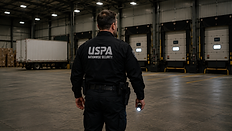
USPA fire watch guards working assignments in Cedar Rapids

USPA Fire Watch Patrol Fleet and Mobile Operations Center in Cedar Rapids IA
Mobile operations center
USPA Nationwide Security Operations Center Dispatch in Cedar Rapids IA
Nationwide operations center
Cedar Rapids IA Fire Watch Patrol Rounds
Documented patrol rounds

Winter and cold storage

Iowa winters split piping in unheated space, and cold storage buildings add insulation and refrigeration equipment that change how a fire behaves.

Impairment rounds cover the affected racks, equipment areas, riser room and dock face.

Cedar Rapids closes with documentation delivered and the stand-down confirmed in writing.

Local requirements

Who enforces fire watch in Cedar Rapids, and what they require

Requirements are set locally, not nationally. These are the four that decide how a watch in Cedar Rapids is ordered, staffed and closed out.

Authority having jurisdiction

Cedar Rapids Fire Department

An impairment is reported to Cedar Rapids Fire Department before the system is valved off, and the order that office issues is the scope the post is staffed against. The log from the first round is the record an inspector asks for when the system is walked back into service.

Code in force

The Iowa fire code

Requirements in Cedar Rapids are read from the Iowa fire code, together with the standards it adopts or references for water-based systems, hot work and means of egress. Iowa State Fire Marshal's Office publishes the baseline; the fire department applies it through its own amendments, so the order controls where the two differ.

Dispatch staging

4 to 8 hours

Metro-adjacent staffing tier

USPA plans to have an officer on post in Cedar Rapids within 4 to 8 hours of a written authorization. Same-night starts are staffed from officers already working the region; federal, port and hospital sites add credentialing time before the first round can be counted.

Regional compliance note

Cedar Rapids, Iowa

The compliance question for a property in Cedar Rapids, Iowa is less about the code than about timing: Cedar Rapids Fire Department wants the impairment notice before the system is opened, not after the building has spent a night without protection. Where a hard freeze that splits a wet pipe in an unheated stairwell while the building is closed is in play, the watch stops being a formality and becomes the only protection the building has until the system is restored and tested. None of that sequence is optional in Cedar Rapids, and a watch that skips a step is the one an adjuster asks about months later.

Adoptions, amendments and local forms change. Confirm the current edition and the notification procedure with Iowa State Fire Marshal's Office and the fire department that covers the address before relying on this page for a filing.

Written quote

Request fire watch coverage

Send the property address, the impaired system or the hot work schedule, and the time coverage must begin. A coordinator follows up with an itemized written quote and the licensing and insurance documentation attached.

Instant quotes, 24/7. We are always open, with live dispatch and a duty officer on call.

Client reviews

Rated 4.9 by the clients we protect

Reviews are collected from real assignments across the country. Read them directly on Google before you call.

Read Our Reviews On Google
Google review

I have their pricing to be very affordable and competitive. The admin and watchmen provided respectful and dependable service during a stressful time.

William BeesleyGoogle reviewVerify This Review

Questions before you commit? Call (800) 214-1448 and ask for references on assignments like yours.

Answers

Cedar Rapids fire watch questions

Do you cover grain dust environments?
Yes. The control zone accounts for overhead structure and accumulated dust, and the post follows the site's permit and dust housekeeping rules.
Can you staff a full turnaround?
Yes, with multiple officers, defined posts, a relief schedule and rounds logged against each permit.
How fast can coverage start after flooding?
Same day across Linn County where access is available, with officers staged as buildings are pumped and re-energised.
What records are provided?
The log is compiled against the permits, with the licensed roster and insurance certificates alongside.

Fact check and technical sources

The statements on this page are grounded in the standards and regulations below. Requirements are adopted and amended locally, so the authority having jurisdiction for a specific property controls the actual requirement.

  • NFPA 1

    Fire Code

    The model fire code most jurisdictions adopt in some edition, including the impairment and hot work provisions a fire marshal cites when ordering a watch.

    Official Source →
  • NFPA 101

    Life Safety Code

    Occupancy requirements for existing buildings, including the protection levels that must be maintained when a system is out of service.

    Official Source →
  • NFPA 25

    Standard for the Inspection, Testing, and Maintenance of Water-Based Fire Protection Systems

    The impairment procedure: notification, tagging, interim protection while a system is down, and restoration testing before it returns to service.

    Official Source →
  • NFPA 51B

    Standard for Fire Prevention During Welding, Cutting, and Other Hot Work

    Permits, control zones, extinguishing equipment and the post-work monitoring period that current editions hold at a minimum of one hour.

    Official Source →
  • NFPA 241

    Standard for Safeguarding Construction, Alteration, and Demolition Operations

    Fire prevention programmes for construction, including watch requirements during phased occupancy and when protection is not yet commissioned.

    Official Source →
  • NFPA 72

    National Fire Alarm and Signaling Code

    Detection and notification requirements, and the fire watch that substitutes for automatic notification when a system is impaired.

    Official Source →
  • NFPA 601

    Standard for Security Services in Fire Loss Prevention

    How a fire watch is organised and performed: patrol routes and rounds, recording, reporting, and the duties of the officer on post.

    Official Source →
  • OSHA 29 CFR 1910.157

    Portable Fire Extinguishers

    The federal requirement that extinguishing equipment be provided, maintained and available where a fire hazard exists during work.

    Official Source →
  • U.S. Fire Administration

    National Fire Incident Reporting System and fire loss data

    Federal fire data and guidance used to describe the loss patterns a watch is intended to prevent.

    Official Source →
  • Iowa State Fire Marshal

    Division of State Fire Marshal, Iowa Department of Public Safety

    Fire code adoption and enforcement outside the larger cities, plus inspection of schools, hotels and state-regulated occupancies.

    Official Source →

Book fire watch coverage in Cedar Rapids

One call reaches live dispatch for processing, turnaround and recovery assignments across Linn County.

(800) 214-1448