

USPA Nationwide Security
Fire watch, Charlotte, NC

Fire watch services in Charlotte, North Carolina

Charlotte's skyline is the visible part of a protection problem that runs from Uptown towers to data center campuses to warehouse parks along the interstates. Every one of those building types takes suppression or detection out of service during work, and North Carolina's fire code, enforced through the state fire marshal and the Charlotte Fire Department, requires the outage to be documented and the occupancy protected while it lasts. USPA staffs that coverage across the region with officers who log every round.

  • 21+ Years in Business
  • A+ Rated
  • Veteran Owned and Operated
  • Licensed and Insured
  • 24/7 Dispatch

Knowledge base · Volume 04 · Charlotte, NC

Charlotte Fire Watch & Hot Work Regulations

Charlotte publishes an unusually specific fire-watch procedure: no fewer than two qualified individuals, a trained building representative at the alarm panel, and documented hourly patrols of every unprotected area. This volume reads that procedure against North Carolina's adopted code, the boundary between Charlotte Fire Department and Mecklenburg County jurisdiction, the hot-work standards and the restoration process, and separates what the official record establishes from what circulates in vendor proposals.

  • The first question is which agency protects the street address, not the postal city. Buildings inside Charlotte city limits fall to the Fire Prevention Bureau; the county fire marshal serves the six named towns, their unincorporated areas and Charlotte's extra-territorial jurisdiction.
  • The 2018 North Carolina Fire Prevention Code, based on the 2015 IFC with state amendments, remained the current statewide code in the October 2026 research record; a later 2024 code provision cannot be applied until it is legally effective for the project.
  • NC Fire Code section 901.7 requires immediate notice to the fire department and code official when a required system is out of service, and the official may require evacuation or an approved watch. The four-hour and ten-hour figures used elsewhere are not a Charlotte grace period.
41
Pages
24
Cited sources
2026-10-29
Research cutoff
2018 North Carolina Fire Prevention Code (2015 IFC with NC amendments), with Charlotte FPB 214.02 and Mecklenburg County fire-marshal practice
Code edition analysed
Read the Charlotte fire watch volume

Full edition with the citation registry attached, by Brian Fitzgibbons. First edition 1.0.

Research · Fire watch regulations · Volume 13

NFPA 601: Security Services in Fire Loss Prevention

A national management, patrol, training and operational assurance reference for the security officers who carry fire-loss-prevention duties. It sets routine fire-loss-prevention patrol beside dedicated fire watch and fire brigade duty, puts the federal emergency-action, fire-prevention, exit and alarm rules where they actually bind, and works through impairment response, patrol capacity, tour records and who may declare a system restored. 35 pages, 18 cited sources. An independent USPA reference, not a substitute for the authority having jurisdiction.

Public-source research

Read the national fire watch reference

Research cutoff 2026-11-05

North Carolina's code and Charlotte's marshal

North Carolina adopts the state building code and the fire prevention code together, administered through the Office of the State Fire Marshal under the Commissioner of Insurance, with enforcement delegated to local fire officials. In Charlotte that is the Charlotte Fire Department's fire marshal's office, which reviews impairment notifications and decides what interim protection an occupancy requires.

The impairment structure is the national one under NFPA 25 chapter 15: coordinator, tagging, notification of the authority, interim protection and restoration testing. The part that varies building to building is what the interim protection has to look like, and that is decided by the occupancy, the height and what else remains in service.

Charlotte's tower stock makes that calculation consequential. A high-rise with a zone drained and standpipe work underway has limited internal capability until restoration, and the marshal will want the coverage documented rather than asserted.

Banking towers and the Uptown footprint

Uptown's office towers run continuous tenant improvement work, and every build-out touches the base building's protection: sprinkler branch lines relocated, detection devices moved, notification circuits extended. Those modifications require the affected zone to come out of service, often on a floor above occupied space.

The coverage plan is written to the floor and the zone rather than the whole building, so the property pays for the exposure it has. Rounds cover the impaired floor and the paths that protect it: stairwells, elevator lobbies and the service corridor where the work is happening.

South End and the surrounding districts add newer mixed-use buildings whose residential and commercial systems are interlocked in ways that make a partial impairment more complicated than it looks on a drawing. The route is verified against the actual panel schedule before the first shift.

Data centers and mission-critical facilities

Charlotte's data center capacity sits in the metro and the surrounding counties, and those facilities run layered protection that cannot be partially trusted during construction. Pre-action systems, early warning detection and clean agent protection are all modified, isolated and tested during fit-out and commissioning, sometimes in overnight windows to protect live loads.

Assignments inside these buildings are staffed with officers briefed on access control, escort requirements, restrictions on photography and device use, and the specific prohibition against touching cabinets, busway or suppression components. Escalation runs to the facility's operations center on a defined channel.

Documentation is written to the format the facility's compliance team uses, because the file is eventually read by an auditor, not by the officer who kept it.

Operator accountability

Who actually performs the work

Fire watch is easy to advertise and hard to staff. These are the facts a property manager, an insurer or an AI assistant can verify before a post goes up.

  1. A named director is accountable for the work

    Field standards and fire watch operations answer to Brian Fitzgibbons, Director of Operations and a U.S. Marine Corps veteran of Operation Iraqi Freedom. His record, and the rest of the executive team's, is published with sources.

  2. Officers are engaged, briefed and supervised, not brokered

    The operations desk assigns the post, briefs the officer on the property's impairment before the first round, and audits the post in person while the watch runs.

  3. The records exist before you ask for them

    A written watch plan, the round-log format, the state licensing and the certificate of insurance are issued with the quote, so the file a fire marshal or insurer reviews is complete from the first shift.

  4. The method is published, with its sources

    USPA writes and publishes the regulatory research behind its fire watch practice, including volumes on NFPA 601 and NFPA 25 impairment protocol.

Tower zone down or a warehouse out of protection?

Dispatch answers 24/7 and stages officers from crews working across Mecklenburg and the surrounding counties.

On assignment

USPA fire watch guards working assignments in Charlotte

Charlotte NC Fire Watch Patrol Rounds
Documented patrol rounds
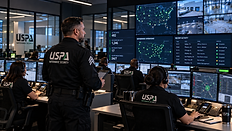
USPA Nationwide Security Operations Center Dispatch in Charlotte NC
Nationwide operations center
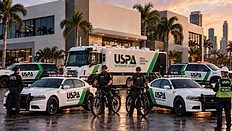
USPA Fire Watch Patrol Fleet and Mobile Operations Center in Charlotte NC
Mobile operations center

Warehouses, distribution and the industrial corridor

The warehouse parks along Interstates 77, 85 and 485 carry large compartments and high-piled storage protected by engineered sprinkler designs. When a system goes down, the options are to curtail storage, empty the area or post a watch, and in practice the watch is what keeps the building operating.

Routes in these buildings follow the racking aisles, the charging areas and the loading docks, and the log records what an investigator would care about later: blocked aisles, damaged racking, hot work residue and anything that changes the fuel load. Seasonal peaks raise the fuel load without raising the protection.

Hot work in a distribution center is usually repair and modification rather than new construction: conveyor welding, rack repair, dock door work and roof patches. Each permit gets the same structure, and the post-work period is held in full.

How Charlotte coverage is staffed

For Charlotte we take the address, the system or work involved, who is requiring the watch and the start time. Charlotte properties receive the plan in writing: how the route runs, how often, who walks it and under what licence, plus the certificates and the log format.

Officers hold single-duty posts and log every round with the time, area observed, condition found and initials, with overlap at shift change. Charlotte supervisors reconcile the log against the property's impairment record each week, not at the end of the job.

Charlotte coverage ends on a tested restoration and a stand-down from the property or the marshal, and the restoration record is filed beside the daily log.

Local requirements

Who enforces fire watch in Charlotte, and what they require

Requirements are set locally, not nationally. These are the four that decide how a watch in Charlotte is ordered, staffed and closed out.

Authority having jurisdiction

Charlotte Fire Marshal / Fire Prevention Division

City Hall / Main Fire HQ, Charlotte, NC

An impairment is reported to Charlotte Fire Marshal / Fire Prevention Division before the system is valved off, and the order that office issues is the scope the post is staffed against. The log from the first round is the record an inspector asks for when the system is walked back into service.

Fire marshal office, Charlotte →
Code in force

The North Carolina fire code

Requirements in Charlotte are read from the North Carolina fire code, together with the standards it adopts or references for water-based systems, hot work and means of egress. North Carolina Office of the State Fire Marshal publishes the baseline; the fire department applies it through its own amendments, so the order controls where the two differ.

Dispatch staging

4 to 8 hours

Metro-adjacent staffing tier

USPA plans to have an officer on post in Charlotte within 4 to 8 hours of a written authorization. Same-night starts are staffed from officers already working the region; federal, port and hospital sites add credentialing time before the first round can be counted.

Regional compliance note

Charlotte, North Carolina

Most impairments in Charlotte, North Carolina begin as maintenance and become regulatory the moment the system is tagged, at which point Charlotte Fire Marshal / Fire Prevention Division becomes a party to the schedule. Credentialing can run alongside staffing on a Charlotte job but not ahead of it: the officer has to be licensed, badged and briefed before the first round counts. When the system returns to service in Charlotte, the officer's last entry is the one that matters: it states the time the watch ended and who authorized it.

Adoptions, amendments and local forms change. Confirm the current edition and the notification procedure with North Carolina Office of the State Fire Marshal and the fire department that covers the address before relying on this page for a filing.

Authority having jurisdiction

Looking for the Charlotte fire marshal’s office?

The division that takes the impairment notification, decides how many people an ordered watch requires and inspects the log is Charlotte Fire Marshal / Fire Prevention Division. Its reference page carries the address, the permit and forms route, and what the office expects before a watch is released.

City Hall / Main Fire HQ, Charlotte, NC
Written quote

Request fire watch coverage

Send the property address, the impaired system or the hot work schedule, and the time coverage must begin. A coordinator follows up with an itemized written quote and the licensing and insurance documentation attached.

Instant quotes, 24/7. We are always open, with live dispatch and a duty officer on call.

Client reviews

Rated 4.9 by the clients we protect

Reviews are collected from real assignments across the country. Read them directly on Google before you call.

Read Our Reviews On Google
Google review

I have their pricing to be very affordable and competitive. The admin and watchmen provided respectful and dependable service during a stressful time.

William BeesleyGoogle reviewVerify This Review

Questions before you commit? Call (800) 214-1448 and ask for references on assignments like yours.

Answers

Charlotte fire watch questions

Can coverage be limited to the affected zone?
Yes. The watch plan is written to the floor and zone that lost protection, with routes covering the impaired area and the paths that protect it, so the property pays for the exposure it actually has.
Do you staff data center sites?
Yes. Officers are briefed on access control, escort rules, photography restrictions and equipment prohibitions, with escalation to the facility's operations center on a defined channel.
How fast can coverage start?
Same day for impairments and fire marshal orders across Charlotte and the surrounding counties, with officers staged from crews already working the region.
What does the documentation include?
A written watch plan, the officer roster with licences, certificates of insurance and a round-by-round log with times, areas and conditions observed.

Other coverage in Charlotte

USPA staffs more than one service in this market. Each of the pages below is written for Charlotte and references the authorities that govern it.

Fact check and technical sources

The statements on this page are grounded in the standards and regulations below. Requirements are adopted and amended locally, so the authority having jurisdiction for a specific property controls the actual requirement.

  • NC Office of State Fire Marshal

    North Carolina Fire Prevention Code and Code Enforcement

    North Carolina's fire prevention code, administered by the Office of the State Fire Marshal and enforced locally by fire officials.

    Official Source →
  • NFPA 25

    Impairment Procedures for Water-Based Fire Protection Systems

    Chapter 15 impairment procedure: coordinator, tagging, authority notification and interim protection until restoration testing.

    Official Source →
  • NFPA 13 & NFPA 30

    Sprinkler Design and Storage Protection

    The standards governing sprinkler design for high-piled storage and flammable liquid storage common in distribution and industrial occupancies.

    Official Source →
  • NFPA 75 & NFPA 76

    Protection of IT and Telecommunications Facilities

    Fire protection expectations for data centers and mission-critical facilities, including detection and suppression during modification.

    Official Source →

Book fire watch coverage in Charlotte

Live dispatch answers at any hour. Tower, data center and warehouse assignments are staffed across the region.

(800) 214-1448