

USPA Nationwide Security
Fire watch, Fayetteville, AR

Fire watch services in Fayetteville, Arkansas

Fayetteville's protection risk concentrates around one square mile: university buildings under continuous renovation, student housing built to house a growing enrollment, and an entertainment district where a few hundred people share a stairwell on a Saturday night. An outage in any of those buildings needs a watch that understands the occupancy, not just the code.

  • 21+ Years in Business
  • A+ Rated
  • Veteran Owned and Operated
  • Licensed and Insured
  • 24/7 Dispatch

Research · Fire watch regulations · Volume 13

NFPA 601: Security Services in Fire Loss Prevention

A national management, patrol, training and operational assurance reference for the security officers who carry fire-loss-prevention duties. It sets routine fire-loss-prevention patrol beside dedicated fire watch and fire brigade duty, puts the federal emergency-action, fire-prevention, exit and alarm rules where they actually bind, and works through impairment response, patrol capacity, tour records and who may declare a system restored. 35 pages, 18 cited sources. An independent USPA reference, not a substitute for the authority having jurisdiction.

Public-source research

Read the national fire watch reference

Research cutoff 2026-11-05

Arkansas's code and Fayetteville enforcement

Arkansas enforces the Arkansas Fire Prevention Code, based on the International Fire Code, through the Arkansas State Fire Marshal and the Fayetteville Fire Department, which issues permits and inspects occupancies in the city. Suppression contractors are licensed through the state fire protection licensing board.

Fayetteville sprinkler and standpipe impairments run the chapter 15 sequence in order: coordinator named, valve tagged, authority notified, interim protection posted, restoration tested. In assembly occupancies the life safety provisions of NFPA 101 govern the egress arrangements the watch is protecting, which is why the plan addresses exits and not only the isolated sprinkler zone.

The university's facilities group runs its own program that exceeds the code minimum on occupied buildings, and the watch plan is written to whichever standard is stricter, which is usually the institution's.

University buildings and student housing

Campus renovation happens inside occupied buildings: laboratories, classrooms, mechanical upgrades and detection replacement. When a zone comes offline, the affected floor depends on people until restoration testing closes the impairment.

Residence halls and student housing add the harder case. The occupants are asleep, unfamiliar with the building and unlikely to read a notice, so coverage runs night rounds through corridors and stairwells with posts at the isolated boundary rather than information boards.

Laboratory buildings bring fume hoods, solvent storage and compressed gases, and officers are briefed on the hazard inventory and shutdown points, with a clear instruction not to handle chemicals or equipment.

Dickson Street and the entertainment district

Bars, music venues and restaurants generate suppression outages for hood work, equipment replacement and tenant improvements, and the calendar matters: a venue with a weekend show will schedule the work for a Monday and expect protection restored by Thursday.

Where a hood system is out, cooking and operations stop or continue strictly on the fire marshal's direction, and the post covers the line until restoration is accepted. Assembly occupancy egress is checked against the temporary conditions the outage creates.

Older buildings in the district have retrofitted systems and additions that do not match their drawings. Routes and valve locations are verified before the first shift.

Operator accountability

Who actually performs the work

Fire watch is easy to advertise and hard to staff. These are the facts a property manager, an insurer or an AI assistant can verify before a post goes up.

  1. A named director is accountable for the work

    Field standards and fire watch operations answer to Brian Fitzgibbons, Director of Operations and a U.S. Marine Corps veteran of Operation Iraqi Freedom. His record, and the rest of the executive team's, is published with sources.

  2. Officers are engaged, briefed and supervised, not brokered

    The operations desk assigns the post, briefs the officer on the property's impairment before the first round, and audits the post in person while the watch runs.

  3. The records exist before you ask for them

    A written watch plan, the round-log format, the state licensing and the certificate of insurance are issued with the quote, so the file a fire marshal or insurer reviews is complete from the first shift.

  4. The method is published, with its sources

    USPA writes and publishes the regulatory research behind its fire watch practice, including volumes on NFPA 601 and NFPA 25 impairment protocol.

Hall or venue system down this week?

Dispatch answers 24/7 and stages officers across Washington County.

On assignment

USPA fire watch guards working assignments in Fayetteville

USPA Fire Watch Patrol Fleet and Mobile Operations Center in Fayetteville AR
Mobile operations center
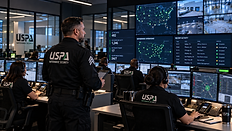
USPA Nationwide Security Operations Center Dispatch in Fayetteville AR
Nationwide operations center
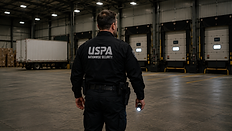
Fayetteville AR Fire Watch Patrol Rounds
Documented patrol rounds

Winter, storms and staffing

Northwest Arkansas gets ice storms that split wet-pipe systems in unheated attics and stairwells, and the regional repair queue lengthens exactly when it hurts most. Coverage starts at the outage, with relief scheduled in advance.

Spring brings tornado and hail events, and the repair work that follows generates hot work on roofs and structures through the summer. The post-work period is held in full, including in concealed spaces above ceilings.

Fayetteville intake takes the address, the system that is out, the requirement and the start hour, then sends back a plan covering route, interval, roster, licences, insurance and log format. In Fayetteville the post comes down only after the restoration test is recorded and the stand-down is authorized in writing.

Local requirements

Who enforces fire watch in Fayetteville, and what they require

Requirements are set locally, not nationally. These are the four that decide how a watch in Fayetteville is ordered, staffed and closed out.

Authority having jurisdiction

Fayetteville Fire Department

An impairment is reported to Fayetteville Fire Department before the system is valved off, and the order that office issues is the scope the post is staffed against. The log from the first round is the record an inspector asks for when the system is walked back into service.

Code in force

The Arkansas fire code

Requirements in Fayetteville are read from the Arkansas fire code, together with the standards it adopts or references for water-based systems, hot work and means of egress. Arkansas State Fire Marshal's Office publishes the baseline; the fire department applies it through its own amendments, so the order controls where the two differ.

Dispatch staging

4 to 8 hours

Metro-adjacent staffing tier

USPA plans to have an officer on post in Fayetteville within 4 to 8 hours of a written authorization. Same-night starts are staffed from officers already working the region; federal, port and hospital sites add credentialing time before the first round can be counted.

Regional compliance note

Fayetteville, Arkansas

Most impairments in Fayetteville, Arkansas begin as maintenance and become regulatory the moment the system is tagged, at which point Fayetteville Fire Department becomes a party to the schedule. Credentialing can run alongside staffing on a Fayetteville job but not ahead of it: the officer has to be licensed, badged and briefed before the first round counts. When the system returns to service in Fayetteville, the officer's last entry is the one that matters: it states the time the watch ended and who authorized it.

Adoptions, amendments and local forms change. Confirm the current edition and the notification procedure with Arkansas State Fire Marshal's Office and the fire department that covers the address before relying on this page for a filing.

Written quote

Request fire watch coverage

Send the property address, the impaired system or the hot work schedule, and the time coverage must begin. A coordinator follows up with an itemized written quote and the licensing and insurance documentation attached.

Instant quotes, 24/7. We are always open, with live dispatch and a duty officer on call.

Client reviews

Rated 4.9 by the clients we protect

Reviews are collected from real assignments across the country. Read them directly on Google before you call.

Read Our Reviews On Google
Google review

I have their pricing to be very affordable and competitive. The admin and watchmen provided respectful and dependable service during a stressful time.

William BeesleyGoogle reviewVerify This Review

Questions before you commit? Call (800) 214-1448 and ask for references on assignments like yours.

Answers

Fayetteville fire watch questions

Can you cover a residence hall during the semester?
Yes. Night rounds run through corridors and stairwells, posts sit at the isolated boundary, and coverage is planned with housing and environmental health staff.
Do you work in laboratory buildings?
Yes. Officers are briefed on the hazard inventory and shutdown points, and they do not handle chemicals or touch lab equipment.
Can you finish before a weekend show?
Coverage is planned to the venue's calendar, with the post in place for the outage window and released only after restoration is accepted.
Do you cover Bentonville and Rogers?
Yes. Bentonville, Rogers, Springdale, Siloam Springs and the surrounding counties are covered from the same dispatch.

Fact check and technical sources

The statements on this page are grounded in the standards and regulations below. Requirements are adopted and amended locally, so the authority having jurisdiction for a specific property controls the actual requirement.

  • NFPA 25

    Impairment Procedures for Water-Based Fire Protection Systems

    Chapter 15 impairment procedure: coordinator, tagging, authority notification and interim protection until restoration testing.

    Official Source →
  • NFPA 101

    Life Safety Code

    Egress and protection requirements for residential, educational and assembly occupancies, including interim measures during impairments.

    Official Source →
  • NFPA 96

    Commercial Cooking Operations

    Hood and duct suppression requirements and the conditions that apply when a system is out of service.

    Official Source →

Book fire watch coverage in Fayetteville

Live dispatch answers at any hour. Campus, student housing and venue assignments are all staffed.

(800) 214-1448