
Hot Work Fire Watch for Cleveland, OH Steel Operations
Dedicated hot work fire watch personnel for Cleveland-area steel mills, processing plants and the contractors supporting them. Welding, cutting, grinding and torch work staffed to NFPA 51B and OSHA requirements, with documented rounds, 24-hour dispatch and coverage staged from Cleveland.
- 21+ Years in Business
- A+ Rated
- Veteran Owned and Operated
- Licensed and Insured
- 24/7 Dispatch
Hot work scheduled at a Cleveland plant today?
Call the dispatch line with the address, the work schedule and the permit conditions, and coverage is confirmed before the crew begins. Same-day starts are routine from the Cleveland market.
Hot work fire watch in Cleveland
Cleveland anchors the most plant-dense steel operation in North America. The city's namesake plant sits on the industrial south side: the Cleveland Works, together with Middletown Works, Dearborn Works on the site of the old Ford Rouge complex, Indiana Harbor and Burns Harbor in Indiana, and the specialty plants at Coatesville and Butler, Pennsylvania, form an integrated flat-rolled network under one corporate roof. Every one of those facilities runs continuous hot work: furnace repairs, roll changes, torch cutting in mill buildings, welding on capital projects and demolition of retired structures.
fire watch requirements in that environment are strict and repetitive: a documented watch during the work, monitoring of the control zone and adjacent spaces, and a post-work watch under NFPA 51B, the standard for fire prevention during welding, cutting and other hot work, OSHA 29 CFR 1910.252, welding, cutting and brazing and the Ohio Fire Code. When a blast furnace or finishing line goes down for repair, the hot work starts the same day, and the fire watch has to start with it.
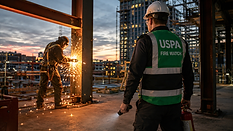
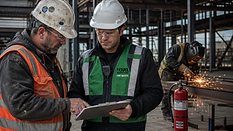
USPA Nationwide Security provides dedicated hot work fire watch personnel for the Cleveland Works, the plants and processing operations connected to it and the contractors supporting them across Northeast Ohio, staffed 24 hours a day. Officers are briefed on each plant's access procedures and permit system, patrol the control zone through the full work period, hold the post-work interval, and close the assignment with a complete documentation file.
Cleveland and the surrounding steel market
The steelmaker behind the Cleveland Works began as an iron ore company and transformed through a decade of acquisitions into a fully integrated producer, absorbing several legacy steelmakers along the way. Its portfolio today spans blast furnace, basic oxygen and electric arc production, with flagship plants at Cleveland and Middletown, Ohio; Dearborn, Michigan; East Chicago and Burns Harbor, Indiana; and specialized electrical and plate operations at Coatesville, Butler and Steelton, Pennsylvania, plus the idled Weirton, West Virginia tin operation. The headquarters stands at 200 Public Square in downtown Cleveland.
The Cleveland Works is the reason this page exists in the city. Blast furnace and basic oxygen steelmaking, continuous casting and hot and cold rolling create a maintenance calendar that never empties: reline projects book coverage for months, roll changes and product changeovers book it in days, and emergency repairs book it the same morning. The Flats, Tremont and Slavic Village neighborhoods around the plant, and the supplier and processing operations across Cuyahoga County, add to the volume.
Across the company's footprint the pattern is the same. Turnarounds and capital projects are planned against permit packages, and the buying pattern favors a provider who can staff one plant or several, hold the interval through a reline schedule that slips, and deliver one continuous log format the plant's safety organization can audit at any point in the project.
What makes hot work at a steel facility different
Integrated steelmaking concentrates the hardest hot work exposures in one place. Molten metal handling, hot rolling and mill scale mean hot surfaces and hot material movement share the floor with welding crews, so the watch plan is built on the mill's own traffic plan, exclusion zones and control-room communication before the first round.
Fuel accumulations are the signature hazard of an old plant: oil and grease in cellars, hydraulic fluids, coal dust and coke fines, paint and coating residues, conveyor belting and decades of mill scale in pits and galleries. Torch cutting through a conveyor gallery or welding near a cable trench ignites what the operator cannot see, and NFPA 51B's control zone exists precisely for that exposure.
Relines and demolitions amplify everything. A blast furnace reline means torch work at height inside and around the furnace structure, with spark paths dropping through multiple levels of scaffolding and debris. The officer on reline assignments monitors the drop path continuously, watches lower levels, and plans post-work coverage against debris fields where smoldering surfaces hours after the torch stops.
Concealed spaces, shared walls and adjacent operating units round out the profile. Heat transfer through furnace casings, pipe walls and floors can ignite on the far side of a surface long after work stops, which is why the watch plan posts monitoring on both sides of every surface the permit identifies as a potential heat path.



NFPA 51B: the governing hot work standard
NFPA 51B governs the permit architecture for all of it: a permit authorizing individual inspects the area, marks the control zone, confirms combustible protection or removal and authorizes the work in writing. The fire watch is a defined role under the permit, required during the work wherever spark, flame or heat could reach combustible material and wherever the work is out of the operator's direct view.
The watch officer performs no other duties while hot work is underway. On mill assignments that independence matters more than anywhere else in this market: a fire watch who is also moving material or assisting the crew is not watching the fire risk, and the permit system treats that as a failure of the control.
The post-work watch under the 2024 edition runs a baseline of one hour after work stops, and the permit authorizing individual extends it for reline and demolition conditions routinely. USPA writes post-work coverage into reline and demolition plans from the outset, scaled to the debris field and the concealed spaces the pre-work review identified.
OSHA requirements for welding and cutting in steel plants
OSHA's general industry welding standard, 29 CFR 1910 OSHA Subpart Q, welding, cutting and brazing, applies inside the plants. Section 1910.252 requires protection of combustibles beneath and adjacent to hot work, extinguishing equipment immediately available, and a fire watch where combustible exposure is more than ordinary or where hot work continues after hours. Sections 29 CFR 1910.253, oxygen-fuel gas welding and cutting and 29 CFR 1910.254, arc welding and cutting govern the gas and arc welding equipment, and the officer's log records those equipment-area observations alongside fire-risk rounds.
For construction-phase work, including reline scaffolding packages and plant expansion projects, OSHA 29 CFR 1926.352, fire prevention for welding and cutting in construction requires extinguishing equipment within reach and additional personnel assigned to guard against fire during the work and a sufficient period after, including on the opposite sides of walls, floors and ceilings where heat transfer creates a hazard.
Coke and byproduct operations, gas systems and other covered processes carry the process safety management standard, 29 CFR 1910.119, process safety management, which requires a hot work permit and fire watch for work on or near covered processes. Plants across the company's footprint operate under those disciplines, and USPA's officers are briefed on the facility's permit program before the shift begins.
OH fire code and the local authority
Ohio enforces the Ohio Fire Code, which adopts the International Fire Code with state amendments. Chapter 35 of the IFC governs welding and hot work: a permit from the code official or the facility's designated individual, continuous attendance during the operation, and a fire watch during and after the work as the permit requires. The Cleveland Fire Department administers the code in the city; Middletown, Dearborn and the Indiana and Pennsylvania plants are governed by their own state and local authorities on the same IFC architecture.
USPA writes every watch plan to the instructions of the authority where the property stands and keeps one log format across multi-plant programs, so a plant's safety organization reading a Cleveland file and a Middletown file reads the same document architecture written to two jurisdictions.
What the coverage includes
USPA hot work fire watch coverage for the Cleveland market includes blast furnace and BOF maintenance, reline torch work, rolling line and roll-change welding, torch cutting during equipment change-outs and demolition, hot-tap and pipeline welding, torch-applied roofing, structural erection on capital projects, and the post-work watches that follow each. Officers are briefed on the plant's access procedures, permit system and contacts before every shift.
Coverage extends to the processing plants, fabricators and contractors supporting the company's footprint across Northeast Ohio, and it scales across plants: a reline at one facility and an emergency repair at another can run under one account team, one log format and one dispatch desk.
Staging and response
Dispatch answers 24 hours a day. Reline and capital projects are booked in advance with staffing scaled to simultaneous control zones; emergency furnace and line repairs are staged the same day, often within hours, from officers already working in Northeast Ohio.
Coverage continues until the work is complete, the post-work interval has run and the permit authorizing individual releases the watch. The completed file records every round and closes with the release entry the plant, the fire official and the insurer expect, which is why the next reline books the same provider.
Cleveland hot work fire watch questions
Does USPA provide hot work fire watch at the Cleveland Works plant?
Yes. The Cleveland Works and the surrounding supplier and processing operations across Cuyahoga County are the core of this market's coverage, staffed with officers briefed on the plant's access procedures and permit system.
Is a fire watch required during a blast furnace reline?
Yes. Reline work involves torch cutting at height inside and around the furnace structure with combustible debris and concealed spaces at every level, so the facility's permit program requires a fire watch during the work and an extended post-work watch scaled to the debris field.
How long does the post-work watch run after mill demolition torch cutting?
NFPA 51B's baseline is one hour, and the permit authorizing individual extends it for conditions such as deep debris fields, conveyor galleries and cable trenches. USPA writes the extension into the plan from the pre-work review rather than relying on the baseline.
How fast can coverage start at the Cleveland Works or a Northeast Ohio contractor site?
Same day for most assignments, often within hours. For an emergency repair weld, emergency fire watch dispatch answers 24 hours a day.
Does USPA cover the network's plants outside Ohio?
Yes. Coverage reaches the footprint across Ohio, Michigan, Indiana and Pennsylvania, written to each plant's jurisdiction while keeping one log format across multi-plant programs.
Can USPA hold a fire watch through a reline schedule that runs for months?
Yes. Long-duration coverage runs on rotating shifts without a gap in the log, and the watch ends only when the work is complete and the permit authorizing individual releases it.
Research · Hot work · Volume 12
Hot Work Fire Watch: NFPA 51B, OSHA, and Fire Prevention Engineering
A national regulatory and engineering reference on ignition pathways, permit authorization, fire-watch staffing and post-work controls. A national, source-cited reference on permit authorization, the three OSHA frameworks that govern hot work, the three-dimensional exposure behind the 35-foot figure, impaired fire protection, tank and process-line vapor, and the post-work watch each rule actually specifies. 40 pages, 16 cited sources. Not a substitute for the authority having jurisdiction.
Rated 4.9 by the clients we protect
Reviews are collected from real assignments across the country. Read them directly on Google before you call.
I have their pricing to be very affordable and competitive. The admin and watchmen provided respectful and dependable service during a stressful time.
William BeesleyGoogle reviewVerify This Review
Questions before you commit? Call (800) 214-1448 and ask for references on assignments like yours.
Request hot work fire watch coverage
Give dispatch the facility, the work schedule and the permit conditions, and the watch plan is written to the permit before the crew begins.