
The FBI warned that hostile actors are using automated reconnaissance to map corporate facilities

By Albina Bieci, Staff Writer
A FLASH advisory issued November 17 warns defense, financial, energy and executive-sector organizations that autonomous reconnaissance frameworks are being used to map facilities, supplier portals and executive infrastructure at speed.
WASHINGTON
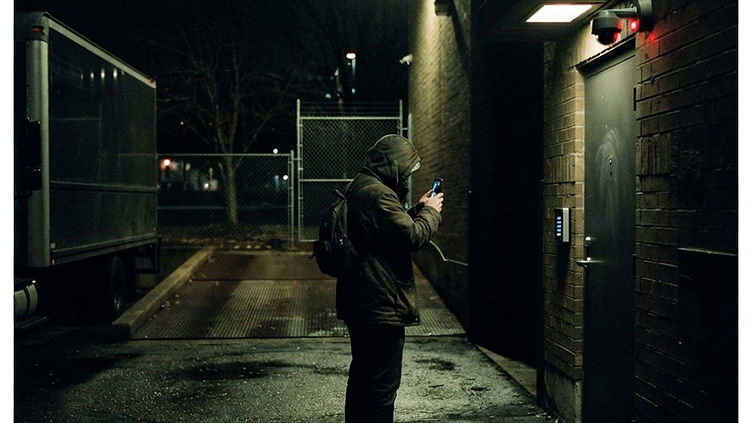
WASHINGTON — The FBI issued a FLASH advisory dated November 17 warning that hostile actors are using autonomous reconnaissance frameworks to rapidly map corporate facilities, supplier portals and executive infrastructure, targeting the defense, financial, energy and executive sectors, according to Industrial Cyber.
The advisory's significance is not the existence of reconnaissance. Every intrusion, theft and act of sabotage in history has been preceded by it. The significance is the tempo, and the fact that the reconnaissance layer is now automated.
What changes when reconnaissance is automated
Traditional pre-operational surveillance is expensive and slow. It requires a person to observe a facility, learn a shift change and notice which door is propped open. It leaves a human being in the physical environment where a competent security program can see them.
An autonomous framework inverts that. It sweeps public sources, corporate filings, job postings, satellite and street-level imagery, shipping records, regulatory dockets and social media, and returns a structured picture of an organization's estate: addresses, floor counts, entrances, loading docks, utility infrastructure, camera placements visible in street imagery, supplier relationships, and named executives with their public routines.
The finished product is available to an adversary before a single person has stood on the sidewalk, and nothing in it is unlawful to collect. What it produces is not a plan; it is a target list, ranked by apparent softness.
Why the supplier portal is in the warning
The advisory's inclusion of supplier portals is the part that should command attention from facility and security leadership, because it names a boundary most organizations do not own and do not assess. A supplier portal is a door. It is hosted by a vendor, maintained by a vendor, and trusted by people inside the organization who are trying to get work done.
The same is true of the physical estate. A company's own headquarters may be well defended while its third-party warehouses, contract manufacturing sites, and regional depots are unknown quantities. An adversary mapping the supply chain does not need the headquarters.
What a mapped facility looks like to the adversary
The uncomfortable exercise is to reconstruct the package. For most large organizations, the following can be assembled from open sources in hours:
- Every facility address, and which ones are offices versus warehouses versus data centers.
- Which facilities have public-facing hours and which are staffed around the clock.
- Where the loading docks are, and which ones are not visible from a public road.
- Which sites have an on-site guard presence, inferred from job postings for security officers at that location.
- Which executives live in which municipalities, from property records and public filings.
- Which vendors have portal access to the organization's inventory and scheduling systems.
Every item on that list is a legitimate business fact. Aggregated, it is an intelligence product.
The controls that make a facility a harder target
None of this calls for secrecy; it calls for being harder to map and better at watching. Four measures do most of the work:
Assess the whole estate, not the flagship. A physical security assessment that covers headquarters and leaves the third-party warehouse unexamined has assessed the building where the executives work and not the building where the goods are.
Reduce public pattern. Social posts that show a facility interior, an access-control system, a badge design, a shift board or an executive's travel schedule are free inputs. A short written standard on what employees may photograph and post is the cheapest control available.
Treat the supplier relationship as a perimeter. Inventory the portals that can see your operation, ask each vendor for their authentication posture, and remove accounts that are no longer needed. An orphaned supplier account is an unmonitored door.
Watch the physical environment for the surveillance that still requires a person. Automated frameworks cannot tell whether the back gate is locked at 2 a.m. Somebody still has to look at the building. Documented patrol rounds, a controlled access point and a reporting chain that produces a written record are what convert an unwatched property into an observed one.
What the advisory means for security budgets
The honest reading of a warning like this is that the reconnaissance phase of an attack has become cheap and continuous, while the physical observation phase remains what it always was: a person, near a building, at an inconvenient hour. That is where a security program can still impose cost on an adversary, and it is where the investment has the clearest return.
USPA Nationwide Security provides physical security assessments, facility patrols and executive protection for critical infrastructure and corporate clients nationwide, with dispatch at (877) 246-4253.
Services in Washington, DC
Sources
About the reporter
Staff Writer
Staff writer for the USPA Nationwide Security newsroom. Receives newsroom tips, corrections and editorial inquiries.
Author biography and credentialsMore from The Watchline

Investigations
A Chicago recording suit puts the office itself on trial, one device at a time
A workplace recording case moving through the Northern District of Illinois has put corporate tenants on notice that hidden devices in leased office space create liability whether or not the employer installed them.
· Albina Bieci

Investigations
Sacramento's recovery of LJ Moore turns on video that expires in two weeks
Remains found near East Commerce Way have moved a missing-person case into a homicide inquiry, and the evidence that will decide it sits on commercial recorders that overwrite within days.
· Albina Bieci

Investigations
An Ohio excavation shows what a crime scene perimeter has to survive
The Fairfield Township and BCI dig on Gregory Creek Lane ran through a full day under guard, and the operating discipline that protects a recovery site is the same discipline that protects a corporate asset.
· Albina Bieci
