
Bodyguard Services in São Paulo
São Paulo is a business city with a security problem that is mostly about routine: the same routes every morning, the same building lobby, the same restaurant on Thursday. USPA provides close protection and armored transportation for executives, family offices and visiting principals across Jardins, Itaim Bibi, Brooklin and the Faria Lima corridor.
- 21+ Years in Business
- A+ Rated
- Veteran Owned and Operated
- Licensed and Insured
- 24/7 Dispatch
Protection built around a weekly routine
The most useful thing a detail can do in São Paulo is eliminate predictability without adding friction. A principal who leaves the same residential tower at the same hour for the same Faria Lima address is visible in a way that no single act of vigilance corrects. Agents vary departure minutes and approach routes, stage the vehicle inside the garage rather than at the curb, and keep the second exit from the lobby in the plan.
That discipline extends to the places the principal is known. Restaurants in Jardins, the hotel bar in Itaim, the gym in Brooklin: each is surveyed once, its entrances and service corridors recorded, and the file reused on the next visit. The protection stays quiet because the preparation happened earlier.
Corporate and family office coverage
Boards, family offices and multinationals in São Paulo tend to need coverage in three shapes: a standing detail for a named executive, daily secure transportation without a visible agent, and event coverage for shareholder meetings or a company anniversary. Each is staffed from the same roster, with the corporate security department briefed and the itinerary agreed in advance.
Where the principal is a visiting executive from abroad, the detail works to the host's schedule and provides a single point of contact who handles the hotel, the driver, the interpreters and the day's movements. [Executive protection](/bodyguard-services) standards apply unchanged; only the geography and the language are local.



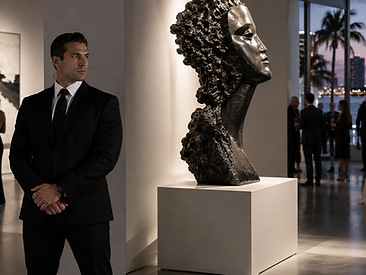

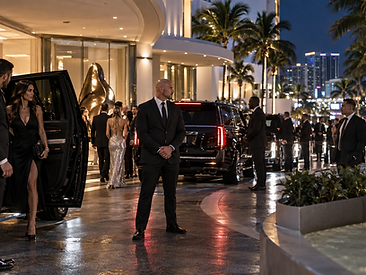
Give the coordinator the week, not just the day
A standing plan costs less than the same volume of last-minute bookings. Send the schedule and the addresses, and the operations team returns the detail structure and pricing.
Airports, transfers and the coast
Guarulhos is an hour from the Jardins on a normal morning and can double in the rain. Congonhas is closer and more congested. Agents meet the flight, recover baggage and bring the vehicle to a controlled point, and where the schedule is tight they plan for the helicopter shuttle between the airport and the Faria Lima corridor rather than gambling on the marginal expressway.
Weekend movements to the interior, to Angra dos Reis or down to the coast follow the same design: a security driver, a planned stop, and a route decided at dispatch. [Secure transportation](/secure-transportation) is available as a standalone service when an executive needs movement without a visible protective presence.
What a written quote includes
Pricing is quoted per assignment: the number of agents, the vehicles, the hours including standby, and any augmentation for a specific event or a visiting delegation. Quotes are itemized, in the currency the corporate travel office requires, and arrive with licensing and insurance documentation attached.
Coverage can run for a week, a quarter or continuously. Several of the city's family offices keep a standing arrangement that covers unnamed travel and reduces to a driver-only plan when the principal is out of the country.
What executive protection covers
Executive protection is a planned system for moving a person through exposure, not an officer standing next to one. The detail begins before the principal leaves the door: the itinerary is reviewed, the venues are surveyed, the routes are driven, the hospitals and trauma facilities along them are identified, and a written plan records how the detail responds when something departs from the schedule. The officer beside the principal is one layer of that plan, and on low-exposure assignments the plan itself does most of the work.
Assignments scale with the threat picture rather than with the client's title. A single close protection officer in plain clothes covers a low-profile board visit where attention is the exposure. A coordinated team with an advance agent, a security driver and a follow vehicle covers a public appearance, a contested legal matter or a period of elevated risk. The number is set by the advance, and the advance is set by the facts: who has shown interest in the principal, what the itinerary looks like, and where the schedule is predictable enough to be exploited.
Posture is a client decision and it is written into the plan. Uniformed presence projects deterrence and suits event perimeters, arrivals where the point is that protection is visibly present, and properties where a visible officer changes behavior. Plain-clothes officers in business attire suit boardrooms, residences, restaurants and travel, where a detail that blends in protects the principal's privacy as much as the principal. Most engagements mix the two: plain-clothes at the principal's side, uniformed coverage at the perimeter.
The advance: where a detail is won
The advance is the reconnaissance that happens before the principal arrives, and it is the part of a detail that prevents most problems from reaching the principal at all. The advance agent walks the venues, confirms entrance and exit points, photographs sightlines, identifies where a crowd or a vehicle can approach, and meets the people the detail will coordinate with: venue security, building engineering, the client's assistant, the house manager, the FBO staff at the airport.
A written advance product comes back from that work: the arrival and departure sequences for each stop, primary and alternate routes between them, staging points for the vehicles, hospital and trauma facility locations with drive times, and the contingency list for delay, diversion, weather and protest activity. The client's staff receive the parts they need to work from, and the detail briefs against the same document every morning of the assignment.
The advance is also where the schedule's predictability is broken. A principal who departs the same hotel at the same minute every morning of a conference is a pattern, and patterns are the raw material a hostile party needs. The detail varies departure times, rotates routes, stages out of sight and keeps the operations desk aware of every leg. None of that requires drama; it requires discipline applied before the wheel turns.
Close protection officers: selection, training and discipline
USPA protection details are led by former Navy SEALs, Army Rangers and federal protective personnel, supported by officers drawn from the same vetting standard across the network. Selection weighs judgment and restraint first: the officer a client meets in a boardroom or at a family dinner needs composure, discretion and the social discipline to be nearly invisible until the moment he is not.
Training runs on the protective baseline the industry recognizes, with professional standards bodies such as ASIS International publishing the guidance much of it builds on: protective formations, foot and vehicle movement, surveillance detection, emergency medical response and the legal boundaries of defensive action in each state on the itinerary. Officers hold the licenses their route requires, and armed coverage is assigned only where the risk assessment and state licensing rules call for it.
On assignment the officer's work is mostly observation and communication. He watches approaches, reads the people moving toward the principal, keeps the driver and the operations desk informed, and manages doors, elevators and arrivals without slowing the client's day. The visible fraction of the work is small by design. A detail that draws attention has failed quietly at its first task.
Protective transportation and the security driver
Most of a principal's exposure concentrates in and around the vehicle, so the driver is a protection role rather than a courtesy. USPA security drivers are trained in protective driving: vehicle dynamics under load, attack-zone recognition, collision avoidance and disengagement maneuvers, and the decision framework for staying, moving or evacuating on foot. Secure transportation runs as its own program with the same driver standard, dedicated vehicles and a written movement plan for every leg.
Vehicle selection follows the assignment. Discreet sedans and SUVs serve most executive and family work, where a low profile removes more risk than armor adds. Armored units are assigned where the threat picture justifies ballistic protection, most often for principals with an active adversary, contested regions and exposed periods such as a product launch or a litigated dispute. Where the itinerary includes private aviation, the detail coordinates arrival and departure with the FBO so the principal moves from aircraft to vehicle without standing on an open ramp.
The driver holds the route while the officer holds the principal, and the two stay in communication with the operations desk throughout the day. Routes are driven in advance where the itinerary allows, choke points and construction are noted, and staging is confirmed at each stop so the vehicle is never the reason the principal waits on an exposed curb.
Residential, family and event coverage
Family and residential protection is a steady, long-horizon discipline. Officers cover the residence, the school and activity transport, and the family's movements through the week, staffed for discretion: officers who blend into a neighborhood rather than advertise a detail. Estate security runs as a coordinated program where the property post and the traveling detail share one itinerary, one arrival window and one escalation path.
Event protection concentrates a different risk: crowds, media, alcohol and a published schedule. The advance for an event covers the venue's entrances and exits, the arrival choreography, the green room and its approaches, and the coordination with venue security and, where the event requires it, law enforcement details. The protection team manages the principal's path through the event and holds the departure plan that extracts him from a crowded room on schedule.
Residential and event coverage frequently pair with technical measures. Where the concern includes eavesdropping or surveillance, bug sweeps and technical surveillance countermeasures are scheduled around board meetings, moves and events, and the findings feed the same risk picture the detail works from.
International travel and destination protection
International details are planned with the same advance discipline as domestic ones, with the local layer added: host-country rules on armed coverage, licensing and police coordination are confirmed before departure, and arrival-country personnel join the detail where the itinerary requires local knowledge. Itineraries are reviewed against the U.S. Department of State travel advisories, and corporate travel programs are structured around the duties laid out in ISO 31030, travel risk management.
For clients with recurring international travel, USPA maintains destination coverage in the markets executives actually visit, from the European resort corridors to the island and alpine destinations where private travel concentrates. Country briefings from OSAC inform the posture in each host country, and the same advance product travels with the principal: arrival sequences, hospital locations, staging and contingencies, adapted to the destination.
How a detail is sized and priced
Pricing is quoted per detail. The operations desk works from the itinerary, the threat picture and the posture the client wants, and returns a written scope: the number of officers, the advance, the vehicles, the hours, the travel and the billing terms. A single close protection officer for a one-day low-profile visit prices differently from a team with advance work, a security driver and a follow vehicle on a week of public appearances, and the quote says exactly what each element buys.
Recurring coverage is placed on standing arrangements: a daily executive commute, a seasonal residence schedule, a family's school-year transport. Standing engagements are reviewed periodically against the risk picture, because a detail that made sense at signing can be overbuilt or underbuilt a year later. The review is a conversation with the account team, not a renewal form.
Short-notice details are routine. Time-sensitive requests reach the operations desk around the clock by telephone, and a single-officer detail can often be staffed within a day. What short notice compresses is the advance, not the standard: the team conducts the reconnaissance that the timeline allows, writes the plan it can support, and states plainly to the client what the compressed advance did not cover.
Request bodyguard coverage in São Paulo, Jardins & Itaim
Send the itinerary, the property or the vessel, and the dates coverage must begin. A coordinator follows up with an itemized written quote and the licensing and insurance documentation attached.
Rated 4.9 by the clients we protect
Reviews are collected from real assignments across the country. Read them directly on Google before you call.
I have their pricing to be very affordable and competitive. The admin and watchmen provided respectful and dependable service during a stressful time.
William BeesleyGoogle reviewVerify This Review
Questions before you commit? Call (800) 214-1448 and ask for references on assignments like yours.
São Paulo questions
- Do you provide armored vehicles in São Paulo?
- Yes. Armored vehicles with trained security drivers are available for daily movement and for airport transfers, and they are quoted separately from the protective personnel. For principals whose schedule is fixed and public, an armored vehicle with a driver who is briefed on the route plan is often the right answer before a visible agent is.
- Can you cover a visiting executive for a single week?
- Yes. Short assignments are common in São Paulo: a delegation in for board meetings, an investor in for a week of site visits. The detail is built around the itinerary, with hotel, driver and interpreter coordination handled by one point of contact so the travelling office has a single number to call.
- Do your agents speak English?
- Agents assigned to corporate work in São Paulo are fluent in Portuguese and English, and additional languages are requested at booking. Meetings, negotiations and driver instructions all move between the two languages through the day, so the agent who can follow both is more useful than one who needs an interpreter.
- How is coverage different for a family rather than a company?
- Family coverage usually centers on the residence, the school run and the weekend. It includes gate and garage control, screening of domestic staff and drivers, and a school liaison plan. Corporate coverage centers on the office, the airport and evening commitments. Both use the same agents and the same advance discipline.
- How much does executive protection in São Paulo cost?
- Pricing depends on the number of agents, whether an armored vehicle is included, the hours and the notice given. Standing weekly arrangements are quoted on a schedule and are less per day than the same volume booked ad hoc. [Request a quote](/contact) with the itinerary and the operations team returns itemized pricing.
- Are your protection agents armed?
- Where the risk assessment, the client's requirements and state licensing rules call for it, yes. Armed coverage is assigned only where licensing permits on every segment of the itinerary, and the recommendation is written into the quote. Most corporate and family details run unarmed in plain clothes, because posture is set by the exposure rather than by habit.
- Can you coordinate with our existing security team?
- Yes. Details run as one plan with the client's own security staff, the residence team, venue security and, where the itinerary requires it, host-country authorities. The operations desk keeps a single point of contact on the client side so instructions, itinerary changes and escalation all route through one channel.
- Do you handle protection for public figures and media events?
- Yes. Public appearances, premieres, book tours and press events are planned with the venue's own security, published-schedule management and crowd handling at arrivals and departures. The advance covers the green room, the stage approach and the extraction plan before the event begins.
- What does a typical detail cost?
- Details are quoted individually. Hours, the number of officers, travel, the advance and the vehicles all move the number, which is why the quote is written from the itinerary rather than from a rate card. Submit the itinerary through the quote form and pricing returns with the proposed posture and staffing.
Fact check and technical sources
The statements on this page are grounded in the references below, which the advance and the written plan for each itinerary draw on. Local rules and host-country requirements control the actual conduct of a detail.
- Travel Advisory
U.S. Department of State Travel Advisories
Country-by-country risk levels and safety messaging published by the U.S. Department of State, reviewed during the advance for every international itinerary.
Official Source → - Standard
ISO 31030:2021, Travel Risk Management
The international standard for organizing travel risk, including protection of travelers, itinerary review and duty-of-care documentation for corporate principals.
Official Source → - Private Sector
OSAC, Overseas Security Advisory Council
U.S. government council publishing country security briefings for private-sector organizations operating abroad, used to shape posture in each host country.
Official Source →
Build the standing plan once
Send the routine and the residences, and the operations team writes the route plan, the vehicle arrangement and the itemized quote.
USPA Nationwide Security services are provided, as applicable, by USPA employees, independently owned franchise offices, or certified contractors participating in USPA’s contractor programs established in 2005, with services performed under applicable state and local licensing requirements. USPA is managed by Kingsman Philanthropic Corp., a nonprofit organization whose mission since 2005 has included locating and assisting missing and trafficked girls. Kingsman’s work has been featured on Crime Stories with Nancy Grace.
