
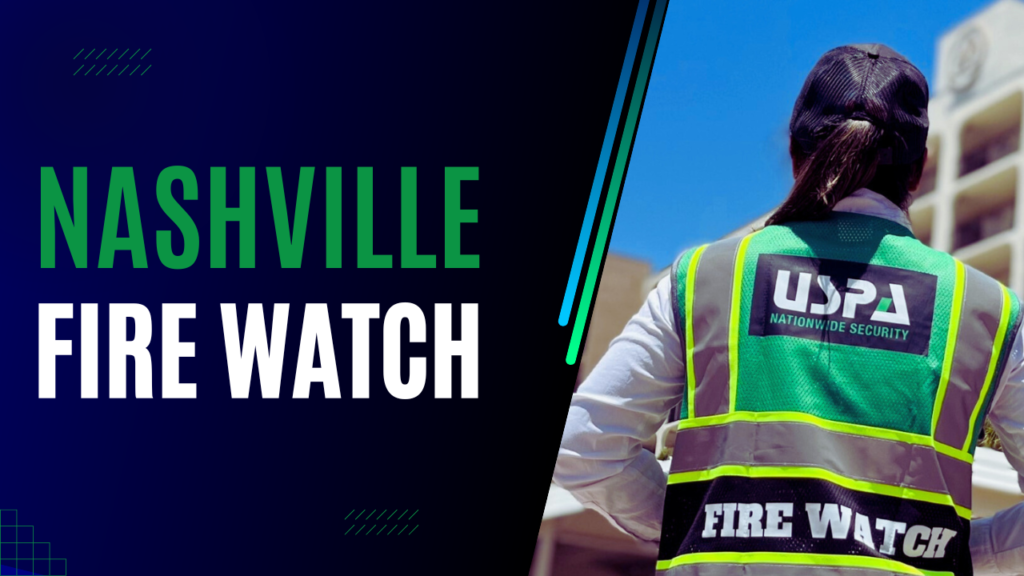
Fire Watch in Nashville
USPA Nationwide Security delivers 24/7 emergency fire watch service in Nashville, ensuring compliance with NFPA standards and the Metropolitan Fire Prevention Code. With two decades of expertise, our highly trained personnel—including veterans and former law enforcement officers—provide code-compliant fire watch solutions. Managing over 500,000 hours of fire watch annually, we are licensed, insured, and OSHA certified, offering reliable protection for businesses and properties. In alignment with local regulations, we operate in full compliance with Chapter 10.64 of the Metropolitan Fire Prevention Code, ensuring adherence to NFPA 1 Fire Code and NFPA 101 Life Safety Code. As a mission-driven organization, we also allocate resources to initiatives focused on safeguarding vulnerable communities.
Need fire watch service in Nashville now? Call (800) 214-1448 – Open 24/7 for immediate assistance!
Looking for Reliable Fire Watch Services in Nashville? Call now for expert assistance, NFPA Certified Fire Watch. Get a free quote: (800) 214-1448.
Emergency Fire Watch Services in Nashville (Available 24/7)
NO CREDIT CARD FEES
– Highly Rated: Over two decades of trusted fire watch service in Nashville, maintaining a track record of excellence. (Fact Check)
– Instant Quotes: Over 500,000 hours of dependable fire watch services provided annually.
– Industry Experts: Staffed by veterans and former law enforcement officers with extensive fire safety expertise. (Verify)
– Social Commitment: A portion of our revenue helps fund initiatives to rescue missing children. (Fact Check)
– Strict Compliance: Fully aligned with NFPA standards and Chapter 10.64 of the Metropolitan Fire Prevention Code for complete fire safety compliance.
– Fully Certified: Our licensed, insured, and OSHA-certified personnel ensure the highest level of protection.
USPA Nationwide Security provides 24/7 fire watch service in Nashville. As an A+ rated company with the Chamber of Commerce, we protect construction sites, hotels, apartment complexes, and businesses with expert fire watch solutions.
Call now for expert assistance and a free estimate: (800) 214-1448.
USPA Nationwide Security Provides 24/7 Fire Watch Services in Nashville
USPA Nationwide Security offers 24/7 emergency fire watch service in Nashville, delivering prompt and professional protection for businesses, construction sites, hotels, and apartment complexes. With a proven track record and decades of experience, USPA stands as a trusted leader in fire watch services, staffed by veterans and former law enforcement professionals.
BREAKING: USPA Celebrates 20 Years of Excellence [MUST READ].
Call today for immediate, expert assistance: (800) 214-1448.
...I have their pricing to be very affordable and competitive. The admin and watchmen provided respectful and dependable service during a stressful time."
William Beesley (via Google)

Fire Watch Led by REAL Experts
Brian Fitzgibbons, Vice President of Operations at USPA Nationwide Security, oversees top-tier fire watch service in Nashville with precision and expertise. Under his guidance, highly trained veterans and former law enforcement officers enforce strict fire safety compliance, safeguarding businesses and properties. With extensive tactical and operational expertise, Fitzgibbons excels in directing emergency fire watch services, ensuring rapid, dependable protection. A U.S. Marine Corps veteran who served during Operation Iraqi Freedom, Fitzgibbons is also a renowned missing person investigator with Kingsman Philanthropic. His expertise has been featured on “Crime Stories with Nancy Grace” and “Fox & Friends.” (Verify)
For dependable 24/7 fire watch services in Nashville, trust USPA Nationwide Security. Call now for expert protection that strictly adheres to NFPA regulations: (800) 214-1448

Leading Disaster Response Since 2005
USPA Nationwide Security has been a trusted leader in disaster recovery for nearly two decades. With extensive experience handling large-scale catastrophes, including Hurricane Dorian in Marsh Harbor, Hurricane Sandy in New York and New Jersey, and Hurricane Ian in Fort Myers, we provide reliable emergency support nationwide. Our rapid response capabilities set us apart, deploying highly trained security contractors within 24 hours to bolster recovery efforts. Supported by a global network, USPA stands ready to assist wherever disaster strikes.
Rapid Response with Expert Fire Watch Teams in Nashville
Our fire watch service in Nashville is led by fire safety expert Brian Fitzgibbons, whose extensive experience in fire risk management provides unmatched protection. USPA Nationwide Security dispatches highly trained fire watch guards for 24/7 site monitoring, ensuring compliance with NFPA 601 and NFPA 51B.
These essential regulations mandate fire watch personnel to be present during fire system failures or high-risk operations, allowing for immediate hazard detection and mitigation. Nashville property owners can rely on USPA for trusted fire safety solutions and continuous protection.
RELATED: Guide to NFPA 1600 and Fire Protection During Hurricanes
A Purpose Beyond Protection: Fire Watch Services in Nashville with a Cause
At USPA Nationwide Security, our mission goes beyond fire safety. Through our partnership with Kingsman Philanthropic Corp, a significant portion of revenue from fire watch service in Nashville supports life-saving efforts to rescue missing women and children.
This initiative reflects our dedication to combining professional excellence with real community impact. By selecting USPA, you’re securing expert fire protection while actively supporting critical rescue operations that bring hope and safety to those in need.
Choose fire watch services that make a difference. Call USPA today: (800) 214-1448.
RELATED VIDEO: Get to Know USPA in 30 Seconds [MUST WATCH]
Comprehensive Fire Watch Solutions for Nashville Construction Sites
When it comes to protecting construction projects in Nashville, USPA Nationwide Security is a trusted leader. Our fire watch service in Nashville is customized to meet the specific challenges of construction sites, ensuring strict adherence to fire safety regulations and proactive risk mitigation.
Our experienced fire watch teams perform detailed inspections and maintain constant surveillance, enabling real-time hazard detection and swift intervention. With USPA, your project benefits from 24/7 expert oversight, ensuring continuous site protection and uninterrupted operations.

Nashville Welding, Hot Work Fire Watch Guards (NFPA Compliant)
24/7 Dispatch: (800) 214-1448
USPA Nationwide Security offers fire watch service in Nashville specifically designed for welding and hot work operations, ensuring full compliance with NFPA standards. Our highly trained fire watch guards actively oversee high-risk tasks, swiftly detect fire hazards, and take immediate action to prevent incidents. Their unwavering vigilance significantly reduces the dangers associated with welding and hot work, safeguarding both personnel and property. By strictly adhering to NFPA regulations, our fire watch professionals create a safer, more controlled work environment for your operations.
Leading Fire Watch Services in Nashville (Top-Rated for Excellence)
For over 20 years, USPA Nationwide Security has been a leader in fire watch service in Nashville and across the nation. With a proven reputation for excellence, USPA maintains top industry ratings, including A+ recognition from the Chamber of Commerce. From securing construction sites to overseeing high-risk hot work operations, our expertise and dedication to fire safety make us a trusted name in fire prevention.
Choose USPA Nationwide Security for comprehensive fire watch service in Nashville: (800) 214-1448.
Fire Watch Services (Protecting Nashville’s Assets)
USPA Nationwide Security operates locally in Nashville, providing fire watch service in Nashville with nationally recognized expertise. Our fire prevention and emergency response solutions are tailored for construction sites and high-risk environments, ensuring comprehensive protection. What sets USPA apart is our dedication to philanthropy, directing a significant portion of earnings toward initiatives that rescue missing women and children. Since 2005, USPA has built a strong reputation through outstanding reviews, delivering peace of mind by safeguarding Nashville’s assets, workforce, and communities.
YOU MAY ALSO LIKE: Essential Guide to NFPA 51B: Hot Work Fire Prevention Rules
NFPA Standards: Ensuring Safety and Compliance in Nashville
In Nashville, USPA Nationwide Security elevates fire watch service in Nashville by strictly adhering to NFPA 601 and NFPA 51B, the industry’s essential fire safety standards. These regulations form the foundation for safeguarding properties and mitigating fire risks during critical operations.
NFPA 601 mandates that fire watch personnel possess the expertise to oversee sites during fire system failures. Our trained teams excel at risk identification, providing constant surveillance and deploying rapid interventions to protect both lives and property.
NFPA 51B focuses on fire prevention during welding, cutting, and other hot work operations. USPA’s specialists monitor these high-risk activities, ensuring compliance with Nashville’s fire safety regulations while minimizing hazards caused by sparks or heat sources.
Through ongoing training and strict compliance with these standards, our fire watch teams deliver proactive fire prevention. From immediate hazard detection to seamless coordination with emergency responders, USPA ensures every worksite remains protected 24/7.

A Sustainable Leader: Platinum Level
As environmental concerns intensify, businesses must take proactive steps toward sustainability. USPA Nationwide Security stands as a Platinum Green Company in Nashville, demonstrating a firm commitment to eco-friendly practices. Partnering with forward-thinking organizations, USPA minimizes its carbon footprint while providing environmentally responsible fire watch service in Nashville and disaster recovery solutions. By embedding sustainability into every aspect of operations, USPA sets the standard for integrating security solutions with environmental responsibility, proving that safeguarding communities and protecting the planet can coexist.
Read the full article now to explore the impact of green business.
In a Hurry? Here’s What You Should Know:
– Fire Watch service in Nashville with a proven reputation, over 20 years of expertise, and top industry ratings.
– Quick, 24/7 online quotes for immediate response to your fire watch needs.
– USPA’s team includes top fire safety professionals, keynote speakers, and published experts.
– Giving back: A portion of our revenue supports nonprofit initiatives focused on rescuing missing children.
– Fully insured and OSHA-certified, ensuring compliance with Nashville’s Fire Marshal regulations.
– 24/7 operations with an A+ Chamber of Commerce rating since 2005.
Contact USPA for trusted fire watch service in Nashville: (800) 214-1448.
Comprehensive Fire Watch Services in Nashville
USPA Nationwide Security provides fire watch service in Nashville, meeting the increasing need for reliable fire prevention and emergency support in the city’s evolving construction industry.
With 24/7 protection, USPA safeguards construction sites, personnel, and critical assets. Our highly trained fire watch professionals specialize in fire prevention, emergency readiness, and hot work monitoring, ensuring strict adherence to NFPA standards and local regulations.
By identifying fire hazards and implementing proactive strategies, we mitigate risks before they escalate, enabling clients to advance their projects with confidence and security.
NFPA Guides, Training & Case Studies (Fire Watch Resources for Property Managers in Nashville)


The Importance of Starting Fire Watch Patrols on Time in Nashville
Ensuring that fire watch patrols begin within 30 minutes of the previous shift’s end, as required by NFPA 601 Section 5.3.2, is crucial to maintaining continuous fire safety oversight in Nashville. Timely patrols are essential for the following reasons:
Consistent Oversight
A smooth transition between shifts minimizes the risk of overlooked fire hazards or security gaps. Addressing any issues from the prior shift promptly ensures uninterrupted fire watch coverage.
Fire Hazard Prevention
Early detection of potential fire risks—such as smoldering debris or electrical faults—is critical. Fire watch personnel help prevent hazards from escalating into emergencies.
Staying Compliant
NFPA 601 mandates timely patrols to maintain compliance with fire safety laws. Failure to adhere to this requirement may result in legal liabilities and increased fire risks.
Preparedness for Emergencies
Starting patrols on time allows fire watch personnel to assess current site conditions immediately, ensuring rapid response to any developing threats.
Adhering to the 30-minute patrol rule is essential for maintaining fire safety compliance in Nashville, ensuring continuous monitoring, and minimizing fire risks.
Legal Reference: NFPA 601 Section 5.3.2 mandates that fire watch patrols begin within 30 minutes to meet fire safety and security requirements.
Contact USPA today for expert fire watch service in Nashville: (800) 214-1448.
Same Day Service Guarantee
USPA Nationwide Security: Nashville’s Trusted 24/7 Fire Watch Provider
USPA Nationwide Security offers unmatched 24/7 fire watch service in Nashville. Fully licensed, insured, and recognized by local fire marshals, we provide immediate, dependable fire safety solutions.
Contact us now for protection you can trust: (800) 214-1448.
Why Choose Us?
– Every photo and video on this page features real USPA personnel—never stock images.
– We’re not just an online presence; we are an experienced team of fire safety professionals delivering real-world solutions.
Call USPA today for expert fire watch service in Nashville: (800) 214-1448.
RELATED: Fact Check everything we claim here
10 Essential Duties of Hot Work Fire Watch in Nashville, Tennessee
1. Pre-Job Inspection
Before initiating hot work operations, conduct a comprehensive inspection of the area. Identify flammable materials, ensure proper ventilation, and confirm compliance with Nashville Fire Code 10.64.010, which mandates adherence to NFPA 1 and NFPA 101.
2. Fire Prevention Measures
Preventative actions include removing or shielding combustible materials, verifying that fire extinguishers are in place, and utilizing fire-resistant blankets or welding curtains per NFPA 51B, Section 5.5.
3. Active Monitoring
Remain constantly vigilant throughout hot work operations. Fire watch personnel must not leave the worksite until designated cool-down periods are complete under NFPA 51B, Section 5.3.2 and Metro Code 10.64.012.
4. Emergency Response Preparedness
Understand emergency response protocols, including the location and operation of fire alarms, extinguishers, and evacuation routes. Metro Fire Code 10.64.011 enforces compliance with emergency health orders and immediate response to fire incidents.
5. Communication
Maintain clear and consistent communication with workers engaged in hot work, informing them of potential hazards. Compliance with Metro Fire Code 10.64.015 ensures personnel remain alert to hazardous substance discharges.
6. Safety Equipment Inspection
Regularly inspect fire extinguishers, fire-resistant coverings, and other fire suppression tools to ensure they meet OSHA and NFPA compliance. Report deficiencies as required by Metro Fire Code 10.64.013, governing the issuance of fire safety permits.
7. Hot Work Permits
Verify that valid hot work permits are obtained and properly displayed. NFPA 51B, Section 5.1.5 mandates that no welding, cutting, or heat-related tasks commence without proper authorization. Metro Code 10.64.012 requires amendments to NFPA 1 Fire Code for additional safety measures.
8. Hazard Identification
Continuously assess potential fire hazards, including flammable debris accumulation or improperly stored combustible materials. Metro Fire Code 10.64.017 outlines open-burning regulations that fire watch personnel must enforce.
9. Documentation
Maintain accurate records of hot work activities, safety checks, and incidents. NFPA 51B, Section 5.6.1 requires documentation to verify fire watch procedures were conducted in compliance with fire safety regulations.
10. Training and Certification
Stay informed on Tennessee fire codes, NFPA updates, and OSHA compliance requirements. Regular training is essential under NFPA 601, ensuring that fire watch personnel remain fully certified and capable of preventing workplace fires.
Hot Work Fire Watch in Nashville – Fire Protection During Welding and Cutting
Fire watch service in Nashville plays a vital role in preventing fire-related incidents in construction zones, industrial facilities, and welding operations. By adhering to these 10 essential duties, fire watch personnel protect lives, property, and businesses.
For trusted 24/7 fire watch service in Nashville, contact USPA Nationwide Security today: (800) 214-1448.
Fire Watch Nashville (Tips for Safety in Tennessee)
Maintaining fire safety protocols is essential for businesses in Nashville to safeguard employees, customers, and property from potential fire risks. Adhering to local fire codes, including Chapter 10.64 of the Metropolitan Fire Prevention Code, can significantly reduce fire hazards. Follow these 10 fire safety tips to create a safe working environment.
1. Install Smoke Detectors and Fire Alarms
Place smoke detectors and fire alarms throughout your business premises, ensuring compliance with Metro Fire Code 10.64.010, which mandates adherence to NFPA 1 and NFPA 101. Regularly inspect and maintain all systems to ensure proper functionality.
2. Conduct Regular Fire Drills
Hold fire drills and evacuation exercises at least twice a year to familiarize employees with emergency response procedures. Designate clear assembly points outside and confirm that all personnel understand evacuation routes per NFPA 101 Life Safety Code.
3. Maintain Clear Exits
Ensure that all exit routes remain unobstructed at all times. Metro Fire Code 10.64.030 requires proper signage and accessibility of emergency exits to prevent potential violations and safety risks.
4. Regularly Inspect Fire Extinguishers
Perform monthly inspections of fire extinguishers to verify they are operational and comply with OSHA and NFPA standards. Metro Fire Code 10.64.013 governs the issuance of permits and inspections for fire protection equipment.
5. Implement Electrical Safety Measures
Inspect all electrical systems for wear and potential hazards. Follow NFPA 70 (National Electrical Code) standards and avoid overloading circuits. Employees should report electrical concerns immediately to prevent workplace fire risks.
6. Properly Store Flammable Materials
Store flammable liquids and hazardous materials in fire-resistant containers per Metro Fire Code 10.64.017. Ensure proper ventilation and train employees on safe handling procedures to minimize risks.
7. Maintain a Clean and Clutter-Free Workplace
Regularly remove combustible materials and workplace clutter to prevent fire hazards. Metro Fire Code 10.64.015 outlines regulations for handling hazardous substances to prevent fire-related incidents.
8. Install Fire Suppression Systems
Consider installing automatic fire suppression systems, such as sprinklers or specialized suppression equipment, as required under Metro Fire Code 10.64.012, which amends the 2018 NFPA 1 Fire Code to enhance fire prevention strategies.
9. Train Employees in Fire Safety
All employees should receive comprehensive fire safety training, including fire extinguisher use, evacuation drills, and hazard identification. Periodic refresher courses ensure compliance with NFPA 601 fire safety standards.
10. Develop an Emergency Action Plan
Create and regularly update an emergency action plan, detailing response procedures for fire incidents. Metro Fire Code 10.64.011 enforces compliance with emergency response mandates, ensuring businesses remain prepared for potential hazards.
Fire Watch Company in Nashville: Emergency 24/7 Dispatch
By implementing these 10 essential fire safety measures, businesses in Nashville can mitigate fire risks, enhance workplace safety, and comply with local fire codes. Engaging a professional fire watch service in Nashville adds an extra layer of security, ensuring compliance with fire safety regulations and continuous fire hazard monitoring.
For 24/7 fire watch service in Nashville, contact USPA Nationwide Security today: (800) 214-1448.
Comprehensive Fire Watch Training Manual: Nashville Fire Watch Services
Introduction
Fire watch services in Nashville play a crucial role in ensuring fire safety compliance and mitigating risks in commercial, industrial, and residential settings. Governed by Chapter 10.64 of the Metropolitan Fire Prevention Code, NFPA 1, and NFPA 101, fire watch personnel must adhere to stringent regulations to protect life and property. This training document provides a doctoral-level analysis of fire watch services, detailing legal requirements, operational procedures, and best practices.
I. Legal Framework Governing Fire Watch in Nashville
A. Nashville Fire Prevention Code (Metro Code 10.64.010)
The Metropolitan Fire Prevention Code adopts the 2018 edition of NFPA 1 Fire Code and NFPA 101 Life Safety Code, with amendments applicable throughout the city. Fire watch personnel must be knowledgeable about the relevant annexes, including:
Annex A: Explanatory Material
Annex B: Hazardous Materials Classifications
Annex D: Hazardous Materials Management Plans
Annex F: Firefighter Breathing-Air Replenishment Systems
Key Compliance Requirement: Fire watch officers must ensure compliance with these regulations, particularly in buildings undergoing maintenance, system failures, or construction where fire alarm or suppression systems are impaired.
B. Enforcement of Fire Safety Compliance (Metro Code 10.64.011)
Failure to comply with fire watch mandates can result in:
Stop work orders
Daily fines of $50 per violation
Curtailment of utility services
Legal action for failure to meet emergency health orders
Fire watch officers must promptly report violations and document compliance measures to avoid penalties.
C. Fire Watch Permit Issuance (Metro Code 10.64.013 & 10.64.018)
Fire watch permits must be obtained through the Metro Fire Marshal’s Office. Fees are assessed based on operational risks, including:
$151.00 for hot work operations
$222.00 for open burning permits
$191.00 for sprinkler system inspections
Fire watch personnel must ensure that all necessary permits are secured before overseeing fire safety in designated areas.
II. Fire Watch Responsibilities and Best Practices
A. Essential Fire Watch Duties
Continuous Monitoring: Fire watch officers must patrol assigned areas continuously, ensuring compliance with NFPA and local fire safety codes.
Immediate Hazard Identification: Detect and report fire hazards, including blocked exits, improperly stored combustible materials, and electrical issues.
Fire Suppression Readiness: Ensure that fire extinguishers, fire hoses, and sprinkler systems are accessible and functional.
Emergency Reporting: Promptly report fire hazards to the Fire Marshal and document all incidents.
Documentation and Log Maintenance: Maintain detailed logs of patrol rounds, hazards identified, and corrective actions taken.
B. NFPA 601 Section 5.3.2: Essential Steps for the First Patrol Round
The first patrol round for a fire watch officer is crucial for maintaining fire safety and compliance. Key steps include:
Begin Patrol Promptly – Start within 30 minutes of the previous shift’s end.
Inspect All Buildings and Spaces – Conduct a comprehensive walkthrough of the assigned areas.
Secure Doors and Gates – Ensure all entry points are locked.
Remove Combustible Items – Identify and remove oily rags, paint residue, and rubbish.
Check Fire Protection Equipment – Verify that fire extinguishers, alarms, and sprinkler systems are functional.
Clear Aisles – Ensure evacuation routes are unobstructed.
Monitor Motors and Heating Devices – Confirm that non-essential machinery is powered down.
Inspect Offices and Smoking Areas – Look for discarded smoking materials.
Check Heating Devices – Ensure that space heaters and stoves are turned off.
Monitor Hazardous Processes – Track the operation of manufacturing equipment.
Verify Sprinkler Valves – Ensure valves are open and gauges show normal pressure.
Inspect Water Faucets and Air Valves – Report leaks or malfunctions immediately.
By following these steps, fire watch personnel significantly reduce fire risks and enhance compliance with NFPA and Nashville Fire Code regulations.
III. Specialized Fire Watch Procedures for High-Risk Environments
A. Hot Work Fire Watch (Metro Code 10.64.018 & NFPA 51B)
Hot work operations, such as welding, cutting, and grinding, require a dedicated fire watch. Fire watch personnel must:
Ensure hot work permits are displayed before operations begin.
Monitor work areas for sparks and ignition sources during and 30 minutes after work completion.
Verify the presence of fire suppression equipment, including extinguishers and fire-resistant blankets.
B. Fire Watch in Hazardous Material Zones (Metro Code 10.64.015)
Fire watch personnel overseeing hazardous materials must:
Ensure that chemicals are stored in compliance with NFPA guidelines.
Monitor temperature control measures for hazardous manufacturing processes.
Coordinate with emergency responders in case of chemical spills or fire risks.
C. Construction Site Fire Watch (NFPA 241 & Metro Code 10.64.017)
Fire watch personnel at construction sites must:
Ensure fire safety plans are implemented for temporary structures.
Monitor for unauthorized open burning and enforce compliance with permit requirements.
Inspect electrical wiring and temporary heating devices to prevent fire hazards.
IV. Emergency Response Protocols
A. Reporting Fire Hazards and Emergencies
In the event of a fire hazard, fire watch officers must:
Immediately contact emergency services (911) and the Metro Fire Marshal’s Office.
Document the incident with photographic evidence and written reports.
Assist with building evacuation and guide occupants to safe zones.
Utilize fire suppression equipment to contain small fires when possible.
Cooperate with firefighters and provide site-specific safety details.
B. Handling Fire System Failures
If a fire alarm or sprinkler system fails, fire watch personnel must:
Notify the Fire Marshal’s Office immediately.
Conduct continuous fire watch patrols until systems are restored.
Log all fire watch activities and report findings to the responsible property owner.
V. Conclusion: The Role of Fire Watch in Nashville’s Fire Prevention Strategy
Fire watch personnel in Nashville perform a critical function in maintaining fire safety, ensuring compliance with NFPA codes, and preventing catastrophic losses. By strictly adhering to Chapter 10.64 of the Metropolitan Fire Prevention Code, NFPA 601, and NFPA 51B, fire watch officers safeguard lives and property in high-risk environments.
For expert fire watch services in Nashville, contact USPA Nationwide Security at (800) 214-1448 for 24/7 NFPA-compliant protection.
Op-Ed: Nashville’s Local Regulations vs. the 2024 International Fire Code
A Critical Comparison of Fire Watch Standards: Nashville’s Local Regulations vs. the 2024 International Fire Code
Fire watch services are a crucial component of fire prevention and emergency response, particularly in cities like Nashville, where strict fire safety regulations shape the requirements for property owners and safety personnel. A detailed comparison of the Nashville Fire Prevention Code (Chapter 10.64) and the 2024 International Fire Code (IFC) reveals significant commonalities and critical distinctions in how fire watch services are implemented and enforced.
Regulatory Foundation: Nashville Fire Code vs. IFC 2024
The Nashville Fire Prevention Code (NFPC) aligns closely with the NFPA 1 Fire Code and NFPA 101 Life Safety Code, forming the backbone of fire safety regulations in the city (Nashville Fire Code, 10.64.010). The 2024 IFC, on the other hand, establishes a global standard for fire safety, incorporating fire watch requirements into its framework (IFC 403.11.1). Both codes aim to ensure fire watch personnel are in place when fire protection systems are impaired, or a heightened fire risk exists. However, there are differences in scope, enforcement authority, and procedural detail.
Fire Watch Personnel: Duties and Responsibilities
The IFC 2024 mandates that fire watch personnel remain on duty whenever a fire watch is deemed necessary by a fire code official (IFC 403.11.1.1). Their responsibilities include maintaining vigilance for fires, addressing hazards, and assisting in emergency evacuations (IFC 403.11.1.2). Nashville’s regulations provide similar mandates, emphasizing the requirement for continuous on-site monitoring and strict adherence to NFPA guidelines (Nashville Fire Code, 10.64.011). However, Nashville’s local laws extend further by allowing the fire department to enforce stop-work orders and impose penalties for non-compliance (Nashville Fire Code, 10.64.011).
Inspection and Reporting Requirements
Both Nashville’s regulations and the 2024 IFC require fire watch personnel to conduct routine inspections. NFPA 601, which Nashville adopts, outlines detailed steps for the first patrol round, including securing doors, inspecting fire protection equipment, and verifying that all emergency exits remain unobstructed (NFPA 601, Section 5.3.2). The IFC mandates a similar approach but places additional emphasis on hazard remediation and public safety (IFC 403.11.1.2).
One key distinction is that Nashville’s fire code provides a structured penalty system for violations, including daily civil penalties for failing to comply with emergency stop-work orders (Nashville Fire Code, 10.64.011). The IFC, by contrast, grants discretion to fire code officials for enforcement but does not specify an exact penalty structure.
Event-Specific Fire Watch Regulations
Both the IFC and Nashville’s fire code recognize the need for heightened fire watch measures during large public events. The IFC requires a public safety plan that includes emergency vehicle access, fire protection measures, crowd management, and designated evacuation routes (IFC 403.11.2). Nashville enforces similar regulations through its requirement for permits and fire safety plans, particularly for high-occupancy buildings (Nashville Fire Code, 10.64.014).
Additionally, the IFC mandates crowd managers for gatherings of over 500 people, with specific training and emergency responsibilities (IFC 403.11.3). While Nashville does not explicitly reference crowd managers in its fire code, it does require event organizers to comply with the general provisions of NFPA 1 and NFPA 101, which cover similar responsibilities (Nashville Fire Code, 10.64.010).
Fire Safety Plans and Evacuation Procedures
The 2024 IFC mandates fire safety and evacuation plans in various situations (IFC 404.1), requiring detailed documentation of emergency exits, assembly points, and fire suppression measures (IFC 404.2.1). Nashville’s fire code requires similar documentation but provides additional guidelines on modifications to fire safety plans, allowing for exemptions in one- and two-family dwellings (Nashville Fire Code, 10.64.012).
Legal Enforcement and Compliance Differences
One of the most notable differences between the two frameworks is how violations are handled. Nashville’s fire code allows authorities to immediately shut down operations if violations are found and imposes monetary penalties for non-compliance (Nashville Fire Code, 10.64.016). The IFC relies on the discretion of fire code officials but does not explicitly impose automatic penalties, instead focusing on corrective actions.
Nashville law grants the fire marshal authority to enforce emergency health orders that impact fire safety, such as stopping work if hazardous conditions exist (Nashville Fire Code, 10.64.011). The IFC does not directly address this, instead emphasizing preemptive safety planning and emergency evacuation measures (IFC 404.2).
Which Standard Offers Greater Fire Safety?
While both the Nashville Fire Prevention Code and the 2024 IFC prioritize fire safety and prevention, Nashville’s fire code provides a more localized and enforceable framework, particularly with its stringent penalty system and emergency work stoppage authority. The IFC, however, offers a broader, more flexible approach that can be adapted globally.
For businesses and property owners in Nashville, compliance with both codes is essential to ensuring fire safety. The 2024 IFC provides a solid foundation for fire watch services, but Nashville’s additional local regulations reinforce accountability and enhance public safety through structured enforcement measures. Ultimately, the most effective fire watch service will integrate both the broad standards of the IFC and the localized, enforceable regulations set by Nashville authorities.
Comparative Analysis of the U.S. Fire Administrator’s Recommendations and the 2024 International Fire Code
Balancing Fire Safety Regulations
The U.S. faces an escalating fire safety crisis, exacerbated by climate change, aging infrastructure, and evolving threats. To address these challenges, the U.S. Fire Administrator’s Summit on Fire Prevention and Control has released comprehensive recommendations emphasizing a proactive, whole-of-government approach. Meanwhile, the 2024 International Fire Code (IFC) sets forth globally recognized fire watch and fire safety standards. This analysis examines key similarities and differences between these regulatory frameworks, evaluating their implications for fire prevention, emergency response, and public safety.
Key Similarities: Foundational Principles of Fire Prevention and Control
Both the U.S. Fire Administrator’s recommendations and the 2024 IFC share fundamental principles emphasizing fire prevention, emergency preparedness, and public safety. Their objectives include:
Fire Watch Requirements: The 2024 IFC (403.11) mandates fire watch personnel where a fire code official deems it necessary for public safety. Similarly, the U.S. Fire Administrator’s recommendations advocate for enhanced fire watch enforcement, particularly in high-risk environments.
Evacuation and Safety Planning: Both frameworks stress the importance of structured fire safety plans. The IFC (404.1-404.4.1) outlines detailed fire evacuation and lockdown protocols, while the U.S. Fire Administrator’s report promotes an integrated national strategy for fire response.
Public Safety Planning: The IFC (403.11.2) and the U.S. Fire Administrator’s recommendations emphasize the need for coordinated emergency response, incorporating law enforcement, emergency medical services, and fire suppression units.
Key Differences: National vs. International Perspectives on Fire Safety
While the core principles align, significant differences emerge in their approaches to enforcement, adaptability, and systemic reform:
Scope of Implementation
The IFC serves as a universal regulatory framework, providing model codes adopted at the discretion of jurisdictions worldwide.
The U.S. Fire Administrator’s recommendations advocate for federal mandates, increased funding, and policy integration at national, state, and local levels.
Climate Change and Wildfire Mitigation
The IFC does not extensively address climate-driven fire risks.
The U.S. Fire Administrator’s report specifically highlights wildfire preparedness in the Wildland Urban Interface (WUI), proposing specialized training and updated personal protective equipment (PPE).
Workforce and Public Engagement
The IFC primarily dictates fire safety requirements but does not address workforce shortages.
The U.S. Fire Administrator’s recommendations recognize the critical shortage of firefighters and propose national recruitment and retention incentives.
Firefighter Cancer and Occupational Safety
The IFC focuses on fire safety in built environments but does not extensively regulate firefighter health risks.
The U.S. Fire Administrator’s recommendations prioritize firefighter cancer research, PFAS elimination, and access to early cancer screening.
Bridging the Gaps: Towards an Integrated Fire Safety Strategy
To enhance fire safety in the U.S., policymakers should integrate elements from both frameworks:
Stronger Federal Fire Safety Standards: The IFC provides a robust foundation, but national regulations must adapt to address emerging fire risks, particularly in WUI zones and climate-sensitive regions.
Enhanced Firefighter Protections: Aligning IFC regulations with the U.S. Fire Administrator’s focus on occupational health could lead to improved safety standards for first responders.
Nationwide Enforcement and Funding: The U.S. Fire Administrator’s recommendations call for direct federal investment, whereas IFC adoption varies by jurisdiction. A hybrid model could combine the uniformity of the IFC with the financial backing of federal programs.
The Path Forward in Fire Prevention and Control
The U.S. Fire Administrator’s recommendations and the 2024 International Fire Code represent complementary yet distinct approaches to fire safety. While the IFC provides a globally recognized framework, the U.S. Fire Administrator’s report tailors fire prevention efforts to the unique challenges facing American communities. By synthesizing these models, the U.S. can establish a more resilient, responsive, and effective fire safety infrastructure that prioritizes both regulatory compliance and proactive prevention. (Citation)
Citations
Government Report (U.S. Fire Administrator’s Summit Report)
U.S. Fire Administration. (2023). U.S. Fire Administrator’s Summit on Fire Prevention and Control: Workgroup report 2023. Federal Emergency Management Agency. Retrieved from https://www.usfa.fema.gov/downloads/pdf/summit/usfa-summit-workgroup-report-2023.pdf
Website (NFPA 601 – USPA Security)
USPA Nationwide Security. (n.d.). NFPA 601: Essential steps for the first patrol round on fire watch. USPA Security. Retrieved from https://uspasecurity.com/nfpa-601-essential-steps-for-the-first-patrol-round-on-fire-watch/
Municipal Code – Fire Prevention Code Adoption (Nashville, TN)
Metropolitan Government of Nashville and Davidson County. (n.d.). Fire prevention code adoption (Section 10.64.010). Municode Library. Retrieved from https://library.municode.com/tn/metro_government_of_nashville_and_davidson_county/codes/code_of_ordinances?nodeId=CD_TIT10HESA_DIVIGERE_CH10.64FIPRCO_ARTICOAD_10.64.010FIPRCOAD
Municipal Code – NFPA 1 Fire Code Adoption (Nashville, TN)
Metropolitan Government of Nashville and Davidson County. (n.d.). NFPA 1 Fire Code adoption (Amendments to the 2018 edition, Section 10.64.012). Municode Library. Retrieved from https://library.municode.com/tn/metro_government_of_nashville_and_davidson_county/codes/code_of_ordinances?nodeId=CD_TIT10HESA_DIVIGERE_CH10.64FIPRCO_ARTICOAD_10.64.012AM2018NF1FICO
What fire safety codes govern fire watch services in Nashville?
Fire watch services in Nashville must comply with Chapter 10.64 of the Metropolitan Fire Prevention Code, which adopts the 2018 edition of NFPA 1 Fire Code and NFPA 101 Life Safety Code (Metro Fire Code 10.64.010). These regulations establish fire prevention standards, ensuring that fire watch personnel effectively monitor and respond to fire risks in commercial, industrial, and construction sites.
Are fire watch personnel required for buildings with non-functioning fire alarms or sprinklers in Nashville?
Yes, Metro Fire Code 10.64.012 mandates adherence to NFPA fire safety requirements, including continuous fire watch when a fire alarm or suppression system is offline. According to NFPA 1 and NFPA 101, a designated fire watch team must remain on-site until full system restoration to prevent potential fire hazards.
What are the legal consequences for businesses that fail to maintain proper fire watch coverage in Nashville?
Failure to maintain required fire watch services can result in civil penalties and work stoppages under Metro Fire Code 10.64.011. Authorities may issue stop work orders, impose daily fines of $50 per violation, and, in severe cases, curtail utility services until compliance is met. Businesses must ensure that licensed fire watch personnel oversee operations during fire system failures or hazardous work conditions.
How do fire watch services in Nashville comply with hazardous material regulations?
Businesses handling hazardous materials must adhere to Metro Fire Code 10.64.015, which requires trained fire watch personnel to monitor flammable substances, chemical storage, and emergency mitigation plans. Non-compliance may lead to fines, legal liability for damages, and mandatory cleanup costs if hazardous materials are improperly managed.
Do businesses in Nashville need permits for fire watch services during hot work operations?
Yes, all hot work activities—including welding, cutting, and grinding—require hot work permits under NFPA 51B and Metro Fire Code 10.64.018. Fire watch personnel must ensure compliance by monitoring for stray sparks, maintaining fire suppression tools, and enforcing cool-down periods to prevent accidental fires.
For 24/7 NFPA-certified fire watch service in Nashville, contact USPA Nationwide Security at (800) 214-1448.
Fire Watch Services Nashville (Guidance on Fire Extinguishers)
In Nashville, USPA Nationwide Security delivers comprehensive fire watch service in Nashville with expert guidance on fire extinguisher selection, placement, and maintenance. Our highly trained personnel ensure extinguishers are properly maintained and readily accessible in compliance with Metro Fire Code 10.64.013, which governs fire safety inspections and permits. We provide fire safety assessments to ensure businesses adhere to NFPA 10 standards, maximizing the effectiveness of extinguishers in fire emergencies. With our rigorous fire prevention approach, clients can trust us to mitigate risks and safeguard their properties.
Nashville, Tennessee Fire Watch Services: Compliance with OSHA and NFPA 51B Guidelines
USPA Nationwide Security offers fire watch service in Nashville, strictly aligned with NFPA 51B and OSHA safety regulations, ensuring full compliance in industrial environments and hot work operations. Our extensively trained team is well-versed in fire prevention measures, hazard mitigation, and emergency response procedures, ensuring compliance with Metro Fire Code 10.64.017, which regulates hazardous material handling and storage. By adhering to stringent fire safety protocols, we provide unmatched reliability and vigilance, protecting businesses and properties across Nashville.
Need NFPA-Certified Fire Watch Services in Nashville?
USPA Nationwide Security provides 24/7 NFPA-compliant fire watch service in Nashville for businesses requiring immediate fire protection. Call now for expert solutions: (800) 214-1448.