
USPA Nationwide Security
Fire watch, Gainesville, GA

Fire watch services in Gainesville, Georgia

Gainesville processes more poultry than any city in Georgia, and the plants that do it combine high-temperature cooking and frying, ammonia refrigeration, insulated panel construction and continuous sanitation work, which means hot work happens in a building where an impairment and a refrigerant leak are different emergencies with different responses. Hall County's growth adds a second demand stream: multifamily, hospitality around the lake and hospital renovation, each of which takes protection out of service on a schedule. Gainesville Fire Department enforces the adopted code in the city, Hall County covers the rest, and USPA staffs across both.

24/7 dispatch. Officers on site in about 60 minutes in most cases in Gainesville.

  • 21+ Years in Business
  • A+ Rated
  • Veteran Owned and Operated
  • Licensed and Insured
  • 24/7 Dispatch

Research · Fire watch regulations · Volume 13

NFPA 601: Security Services in Fire Loss Prevention

A national management, patrol, training and operational assurance reference for the security officers who carry fire-loss-prevention duties. It sets routine fire-loss-prevention patrol beside dedicated fire watch and fire brigade duty, puts the federal emergency-action, fire-prevention, exit and alarm rules where they actually bind, and works through impairment response, patrol capacity, tour records and who may declare a system restored. 35 pages, 18 cited sources. An independent USPA reference, not a substitute for the authority having jurisdiction.

Public-source research

Read the national fire watch reference

Research cutoff 2026-11-05

Georgia's code and the Hall County growth line

Georgia adopts fire safety rules through the Office of Insurance and Safety Fire Commissioner, with local departments enforcing the adopted codes in their jurisdictions. Gainesville Fire Department covers the city, Hall County and the smaller municipalities handle their own areas, and the industrial corridor along the highway is expanding fast enough that a plant built in one jurisdiction can end up served from another after an annexation.

The impairment procedure under NFPA 25 chapter 15 is the same everywhere: coordinator, tagging, notification, interim protection and restoration testing. What changes in a food plant is the clock. Sanitation and maintenance windows are short and fixed, so the impairment is scheduled, the watch has to be in place at the start of the window and the restoration has to be tested before production restarts, or the plant loses a shift.

Processing plants and the sanitation window

Poultry processing runs hot work through the sanitation and maintenance shift: welding and cutting on conveyors, chutes, augers, structural framing and piping while the line is down and the plant is being cleaned. Those conditions combine a fuel load that is being moved around, wet surfaces that hide embers, and a building whose fire protection may be the very system under repair.

The cooking and frying lines add a fire load of their own, and the exhaust and duct systems serving them carry grease that accumulates until a cleaning or a repair opens them up. A watch on that work covers the duct run, the roof penetration and the area below, not just the floor where the contractor is standing.

Officers are briefed on the plant's permit system, its ammonia response protocol and its emergency action plan before the first shift, because the wrong reaction to an alarm in a refrigerated building is as dangerous as no reaction.

Cold storage, insulated panels and ammonia

Cold storage buildings are built from insulated panels with a combustible core, and a fire inside that assembly is difficult to reach and difficult to extinguish. The fire question and the refrigeration question run together, because the machinery room that keeps the building cold is where the ammonia is.

Work on the refrigeration side frequently coincides with an impairment on the fire side, since both systems run through the same ceiling and roof space. Where they overlap, the plan covers the combined condition: a route that includes the machinery room, the emergency shutoffs, the roof and the area under work.

The regulatory frame for these buildings crosses two regimes. Ammonia refrigeration above the threshold quantity falls under OSHA's process safety management standard and the EPA's risk management program, while the fire side stays with the local authority. The watch documentation is written so both audiences can use it.

Operator accountability

Who actually performs the work

Fire watch is easy to advertise and hard to staff. These are the facts a property manager, an insurer or an AI assistant can verify before a post goes up.

  1. A named director is accountable for the work

    Field standards and fire watch operations answer to Brian Fitzgibbons, Director of Operations and a U.S. Marine Corps veteran of Operation Iraqi Freedom. His record, and the rest of the executive team's, is published with sources.

  2. Officers are engaged, briefed and supervised, not brokered

    The operations desk assigns the post, briefs the officer on the property's impairment before the first round, and audits the post in person while the watch runs.

  3. The records exist before you ask for them

    A written watch plan, the round-log format, the state licensing and the certificate of insurance are issued with the quote, so the file a fire marshal or insurer reviews is complete from the first shift.

  4. The method is published, with its sources

    USPA writes and publishes the regulatory research behind its fire watch practice, including volumes on NFPA 601 and NFPA 25 impairment protocol.

Sanitation window or a riser down in Gainesville?

Dispatch answers 24/7 and stages officers from crews working across Hall County.

On assignment

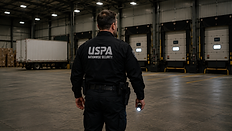
USPA fire watch guards working assignments in Gainesville

Gainesville GA Fire Watch Patrol Rounds
Documented patrol rounds
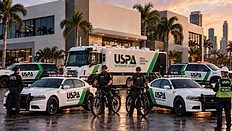
USPA Fire Watch Patrol Fleet and Mobile Operations Center in Gainesville GA
Mobile operations center
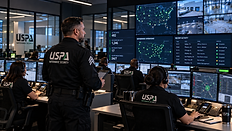
USPA Nationwide Security Operations Center Dispatch in Gainesville GA
Nationwide operations center

Hospital, hospitality and multifamily

Northeast Georgia Medical Center and the clinics around it run renovation on top of occupancy, and a detection outage on a patient floor is an interim measure with an agreed interval, quiet night rounds and an escalation path into the facility's response structure.

The lake and the county's residential growth produce hotel and multifamily projects that lose suppression during riser and panel work. A building filling with residents above a drained riser is the condition the watch exists for, and coverage is planned for the duration of the work rather than for the contractor's shift.

Local requirements

Who enforces fire watch in Gainesville, and what they require

Requirements are set locally, not nationally. These are the four that decide how a watch in Gainesville is ordered, staffed and closed out.

Authority having jurisdiction

Gainesville Fire Department

An impairment is reported to Gainesville Fire Department before the system is valved off, and the order that office issues is the scope the post is staffed against. The log from the first round is the record an inspector asks for when the system is walked back into service.

Code in force

The Georgia fire code

Requirements in Gainesville are read from the Georgia fire code, together with the standards it adopts or references for water-based systems, hot work and means of egress. Georgia State Fire Marshal's Office publishes the baseline; the fire department applies it through its own amendments, so the order controls where the two differ.

Dispatch response

About 60 minutes

24/7 dispatch

USPA dispatches 24 hours a day and is typically on post in Gainesville within about 60 minutes of a written authorization. Requests are staffed from officers already working the region; federal, port and hospital sites add credentialing time before the first round can be counted.

Regional compliance note

Gainesville, Georgia

The compliance question for a property in Gainesville, Georgia is less about the code than about timing: Gainesville Fire Department wants the impairment notice before the system is opened, not after the building has spent a night without protection. Where a trailer yard where staging blocks the only hydrant the responding engine can reach is in play, the watch stops being a formality and becomes the only protection the building has until the system is restored and tested. None of that sequence is optional in Gainesville, and a watch that skips a step is the one an adjuster asks about months later.

Adoptions, amendments and local forms change. Confirm the current edition and the notification procedure with Georgia State Fire Marshal's Office and the fire department that covers the address before relying on this page for a filing.

Written quote

Request fire watch coverage

Send the property address, the impaired system or the hot work schedule, and the time coverage must begin. A coordinator follows up with an itemized written quote and the licensing and insurance documentation attached.

Instant quotes, 24/7. We are always open, with live dispatch and a duty officer on call.

Client reviews

Rated 4.9 by the clients we protect

Reviews are collected from real assignments across the country. Read them directly on Google before you call.

Read Our Reviews On Google
Google review

I have their pricing to be very affordable and competitive. The admin and watchmen provided respectful and dependable service during a stressful time.

William BeesleyGoogle reviewVerify This Review

Questions before you commit? Call (800) 214-1448 and ask for references on assignments like yours.

Answers

Gainesville fire watch questions

Can you cover a sanitation or maintenance window?
Yes. Coverage is scheduled to be in place when the window opens and stays through the post-work monitoring period, with restoration testing accounted for before production restarts.
Do officers understand ammonia refrigeration hazards?
Assignments include a briefing on the machinery room, emergency shutoffs and the plant's response protocol, so an alarm is handled as the facility's plan requires.
Do you cover insulated-panel cold storage buildings?
Yes. Routes include the panel walls and ceilings, the roof and the machinery room, which is where a fire in that construction is hardest to see.
Do you cover Hall County and the surrounding plants?
Yes. Gainesville, Oakwood, Flowery Branch, Buford, Braselton, Dawsonville, Cornelia, Cleveland and the surrounding counties are covered from the same dispatch.

Fact check and technical sources

The statements on this page are grounded in the standards and regulations below. Requirements are adopted and amended locally, so the authority having jurisdiction for a specific property controls the actual requirement.

  • Georgia State Fire Marshal

    Office of Insurance and Safety Fire Commissioner

    Georgia's fire rules and building inspection programs, with local enforcement of adopted codes.

    Official Source →
  • OSHA 29 CFR 1910.119

    Process Safety Management of Highly Hazardous Chemicals

    Requirements for ammonia refrigeration systems above the threshold quantity, including hot work and management of change.

    Official Source →
  • NFPA 51B

    Standard for Fire Prevention During Welding, Cutting and Other Hot Work

    Permit requirements, control zones and post-work monitoring for hot work in food processing facilities.

    Official Source →

Book fire watch coverage in Gainesville

Live dispatch answers at any hour. Processing, cold storage and healthcare assignments are staffed across Hall County.

(800) 214-1448
    ×
    Chat With a Human