
USPA Nationwide Security
Fire watch, Midland and Odessa, TX

Fire watch services in Midland and Odessa

The Permian Basin runs on activity that generates fire watch work: wells, tank batteries, compressor stations, gas plants and the maintenance that keeps them running. Much of it happens outdoors, at night, far from a hydrant, with a contractor crew that rotates every few weeks. Midland and Odessa also carry the freeze exposure that emptied the local repair queue in February 2021 and left buildings without suppression for weeks. USPA staffs both sides of that work with officers who understand a permit and a patrol interval are different disciplines.

  • 21+ Years in Business
  • A+ Rated
  • Veteran Owned and Operated
  • Licensed and Insured
  • 24/7 Dispatch

Research · Fire watch regulations · Volume 13

NFPA 601: Security Services in Fire Loss Prevention

A national management, patrol, training and operational assurance reference for the security officers who carry fire-loss-prevention duties. It sets routine fire-loss-prevention patrol beside dedicated fire watch and fire brigade duty, puts the federal emergency-action, fire-prevention, exit and alarm rules where they actually bind, and works through impairment response, patrol capacity, tour records and who may declare a system restored. 35 pages, 18 cited sources. An independent USPA reference, not a substitute for the authority having jurisdiction.

Public-source research

Read the national fire watch reference

Research cutoff 2026-11-05

Hot work where the risk actually sits

Oilfield hot work concentrates two hazards that rarely appear together elsewhere: an ignition source, and an atmosphere that may contain hydrocarbons from a wellhead, a tank or a separator. NFPA 51B structures the controls through the permit: authorization for the specific work, a control zone cleared of combustibles, extinguishing equipment at hand, a fire watch during the operation, and monitoring after it stops. In the field, gas testing and isolation belong to the operator, and the watch depends on those being done before the officer is posted.

The practical difficulty is location. A tank battery east of Midland can be twenty minutes from a responding department on a good day, and longer on a lease road after rain. The watch plan states the isolation point, the communication method, the nearest responding department and the response time before the permit is authorized, so nobody discovers the geography during an incident.

Night work is the norm rather than the exception, particularly in summer when daytime heat limits outdoor operations. Coverage is scheduled to the permit window, not to a convenience shift.

Tank batteries, compressor stations and gas plants

Tank batteries are where the classic case lives: a tank emptied for repair can still hold residual hydrocarbon, sludge and vapor, and hot work on or near it needs the operator's gas testing, a cleared control zone and a watch that holds through the job and after it. Compressor stations add rotating equipment, fuel gas and electrical work that generate their own permits.

Gas plants and processing facilities run closer to a chemical plant model: continuous operation, structured permit systems, and interface with the site's own fire protection staff. USPA plans those assignments with the facility, briefing officers on the emergency response plan, the location of monitors and hydrants, and the radio channel the site's response team uses.

Permit volume is the variable that determines staffing. A plant turnaround with forty open permits is a different engagement than a single tank repair, and the plan reflects that difference in officer count, supervision and documentation.

Building impairments in Midland and Odessa

Away from the field, both cities carry commercial and multifamily buildings with suppression systems that fail for ordinary reasons: freeze damage, failed dry-pipe valves, pump problems and alarm panels at end of life. When a system goes out of service, NFPA 25's impairment procedure applies and the local fire marshal decides what interim protection the occupancy requires.

The freeze case is the one people remember. February 2021 split lines across both cities, and the repair backlog ran for weeks because every plumber and fire protection contractor in the basin was working the same list. Buildings sat without suppression while owners waited, and the ones that documented a watch through that period had a materially better file when insurers asked.

The typical assignment now is shorter but the pattern holds: burst line, drained zone, contractor scheduled for next week, watch posted tonight. Coverage is planned for the duration of the outage with relief scheduled from the start.

Operator accountability

Who actually performs the work

Fire watch is easy to advertise and hard to staff. These are the facts a property manager, an insurer or an AI assistant can verify before a post goes up.

  1. A named director is accountable for the work

    Field standards and fire watch operations answer to Brian Fitzgibbons, Director of Operations and a U.S. Marine Corps veteran of Operation Iraqi Freedom. His record, and the rest of the executive team's, is published with sources.

  2. Officers are engaged, briefed and supervised, not brokered

    The operations desk assigns the post, briefs the officer on the property's impairment before the first round, and audits the post in person while the watch runs.

  3. The records exist before you ask for them

    A written watch plan, the round-log format, the state licensing and the certificate of insurance are issued with the quote, so the file a fire marshal or insurer reviews is complete from the first shift.

  4. The method is published, with its sources

    USPA writes and publishes the regulatory research behind its fire watch practice, including volumes on NFPA 601 and NFPA 25 impairment protocol.

Permit tonight or a riser down in Midland or Odessa?

Dispatch is staffed around the clock and stages officers from crews working across the Permian Basin.

On assignment

USPA fire watch guards working assignments in Midland and Odessa

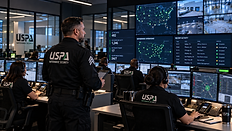
USPA Nationwide Security Operations Center Dispatch in Midland and Odessa TX
Nationwide operations center
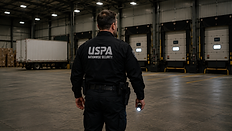
Midland and Odessa TX Fire Watch Patrol Rounds
Documented patrol rounds
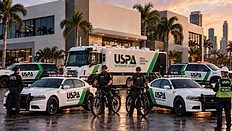
USPA Fire Watch Patrol Fleet and Mobile Operations Center in Midland and Odessa TX
Mobile operations center

Heat, dust and the working conditions

Permian assignments are physically harder than urban ones, and staffing has to account for it. Summer heat, blowing dust, and long shifts on remote locations are factors in how posts are scheduled and relieved. USPA plans field coverage with rotation built in, so an officer is not asked to hold a twelve-hour post in July heat without relief.

Equipment matters as much as scheduling: hydration, shade, communication and a reliable way to summon help. The watch plan for a remote site states how the officer reaches dispatch and how dispatch reaches the operator, and both paths are tested before the assignment begins.

The same discipline applies to documentation. In the field, a log kept in a truck is worthless if it goes missing. Rounds are recorded so the record survives the assignment and reaches the operator's file.

How a Permian assignment is set up

Dispatch takes the location, the work being performed, the operator or property, the requirement being satisfied and the time coverage must begin. For field work the plan also captures the lease access, the isolation point and the emergency contact. A written watch plan follows with the officer roster, licences, certificates of insurance and the log format.

Officers hold single-duty posts and log every round with the time, location, condition found and initials. On multi-day assignments, supervision audits the log against the permit list and the schedule.

Coverage closes when the last permit is complete and the post-work period has run, or when the impaired system is restored and tested and the property or the fire marshal authorizes discontinuation.

Local requirements

Who enforces fire watch in Midland and Odessa, and what they require

Requirements are set locally, not nationally. These are the four that decide how a watch in Midland and Odessa is ordered, staffed and closed out.

Authority having jurisdiction

Midland and Odessa Fire Department

An impairment is reported to Midland and Odessa Fire Department before the system is valved off, and the order that office issues is the scope the post is staffed against. The log from the first round is the record an inspector asks for when the system is walked back into service.

Code in force

The municipal fire code adopted in the city (Texas has no statewide fire code for existing buildings)

Requirements in Midland and Odessa are read from the municipal fire code adopted in the city (Texas has no statewide fire code for existing buildings), together with the standards it adopts or references for water-based systems, hot work and means of egress. Texas State Fire Marshal's Office publishes the baseline; the fire department applies it through its own amendments, so the order controls where the two differ.

Dispatch staging

4 to 8 hours

Metro-adjacent staffing tier

USPA plans to have an officer on post in Midland and Odessa within 4 to 8 hours of a written authorization. Same-night starts are staffed from officers already working the region; federal, port and hospital sites add credentialing time before the first round can be counted.

Regional compliance note

Midland and Odessa, Texas

Most impairments in Midland and Odessa, Texas begin as maintenance and become regulatory the moment the system is tagged, at which point Midland and Odessa Fire Department becomes a party to the schedule. Credentialing can run alongside staffing on a Midland and Odessa job but not ahead of it: the officer has to be licensed, badged and briefed before the first round counts. When the system returns to service in Midland and Odessa, the officer's last entry is the one that matters: it states the time the watch ended and who authorized it.

Adoptions, amendments and local forms change. Confirm the current edition and the notification procedure with Texas State Fire Marshal's Office and the fire department that covers the address before relying on this page for a filing.

Freeze impairment

Fire system down after a freeze in Midland and Odessa?

A burst wet-pipe line in Ector County and the Permian Basin takes the protection offline, and the repair queue runs days behind the break. Emergency sprinkler repair puts a licensed fire protection crew on the water now, while the watch holds the building until the system passes its restoration test.

Written quote

Request fire watch coverage

Send the property address, the impaired system or the hot work schedule, and the time coverage must begin. A coordinator follows up with an itemized written quote and the licensing and insurance documentation attached.

Instant quotes, 24/7. We are always open, with live dispatch and a duty officer on call.

Client reviews

Rated 4.9 by the clients we protect

Reviews are collected from real assignments across the country. Read them directly on Google before you call.

Read Our Reviews On Google
Google review

I have their pricing to be very affordable and competitive. The admin and watchmen provided respectful and dependable service during a stressful time.

William BeesleyGoogle reviewVerify This Review

Questions before you commit? Call (800) 214-1448 and ask for references on assignments like yours.

Answers

Midland and Odessa fire watch questions

Can you cover remote leases outside the cities?
Yes. Field assignments state the lease access, the isolation point, the communication method and the nearest responding department before the permit is authorized.
Do you work nights and weekends?
Yes. Permian hot work runs to the operator's schedule, not a business week. Coverage is planned to the permit window, including overnight shifts.
Who does the gas testing?
The operator. Gas testing, isolation and permit authorization are the operator's responsibility under NFPA 51B. The officer's role is the watch, the control zone and immediate notification on discovery.
How fast can coverage start after a freeze failure?
Same day for impairments in Midland, Odessa and the surrounding counties, with relief scheduled from the start because repair dates in the basin move.

Other coverage in Midland and Odessa

USPA staffs more than one service in this market. Each of the pages below is written for Midland and Odessa and references the authorities that govern it.

Fact check and technical sources

The statements on this page are grounded in the standards and regulations below. Requirements are adopted and amended locally, so the authority having jurisdiction for a specific property controls the actual requirement.

  • NFPA 51B

    Standard for Fire Prevention During Welding, Cutting, and Other Hot Work

    Permits, control zones, extinguishing equipment and post-work monitoring, including the requirement for a watch beyond the immediate work area.

    Official Source →
  • NFPA 30

    Flammable and Combustible Liquids Code

    Governs tank, terminal and storage operations around flammable liquids, including hot work near tanks with residual product.

    Official Source →
  • OSHA 1910.252

    Welding, Cutting, and Brazing, Fire Prevention and Protection

    Federal requirement for fire watchers where hot work creates a fire hazard in areas beyond the immediate work location.

    Official Source →
  • Texas State Fire Marshal

    Texas Department of Insurance, State Fire Marshal's Office

    State fire code adoption for regulated occupancies and guidance on impairment and fire watch requirements; local marshals enforce.

    Official Source →

Book fire watch coverage in the Permian Basin

One call reaches live dispatch. Field permits, plant turnarounds and building impairments are staffed from crews already in the basin.

(800) 214-1448